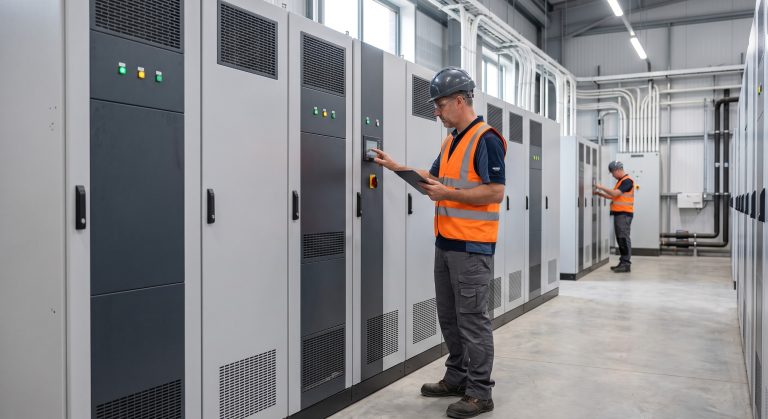
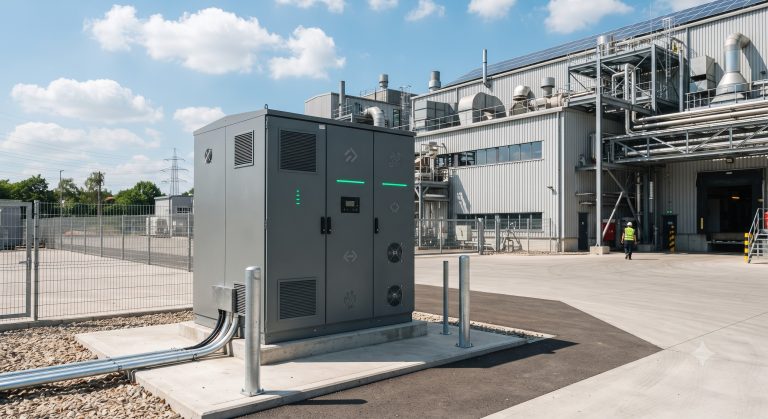
Overview
For commercial and industrial (C&I) sites, the Energy Management System (EMS) is the intelligence layer that transforms a solar-plus-storage installation from a simple backup asset into a dynamic revenue-generating machine. By continuously forecasting solar generation, analyzing load profiles, and executing real-time dispatch commands, the EMS maximizes self-consumption, minimizes demand charges, and extends battery life. This FAQ addresses the most critical technical and procurement questions plant engineers and EPCs ask when evaluating a BESS for solar energy harvesting.
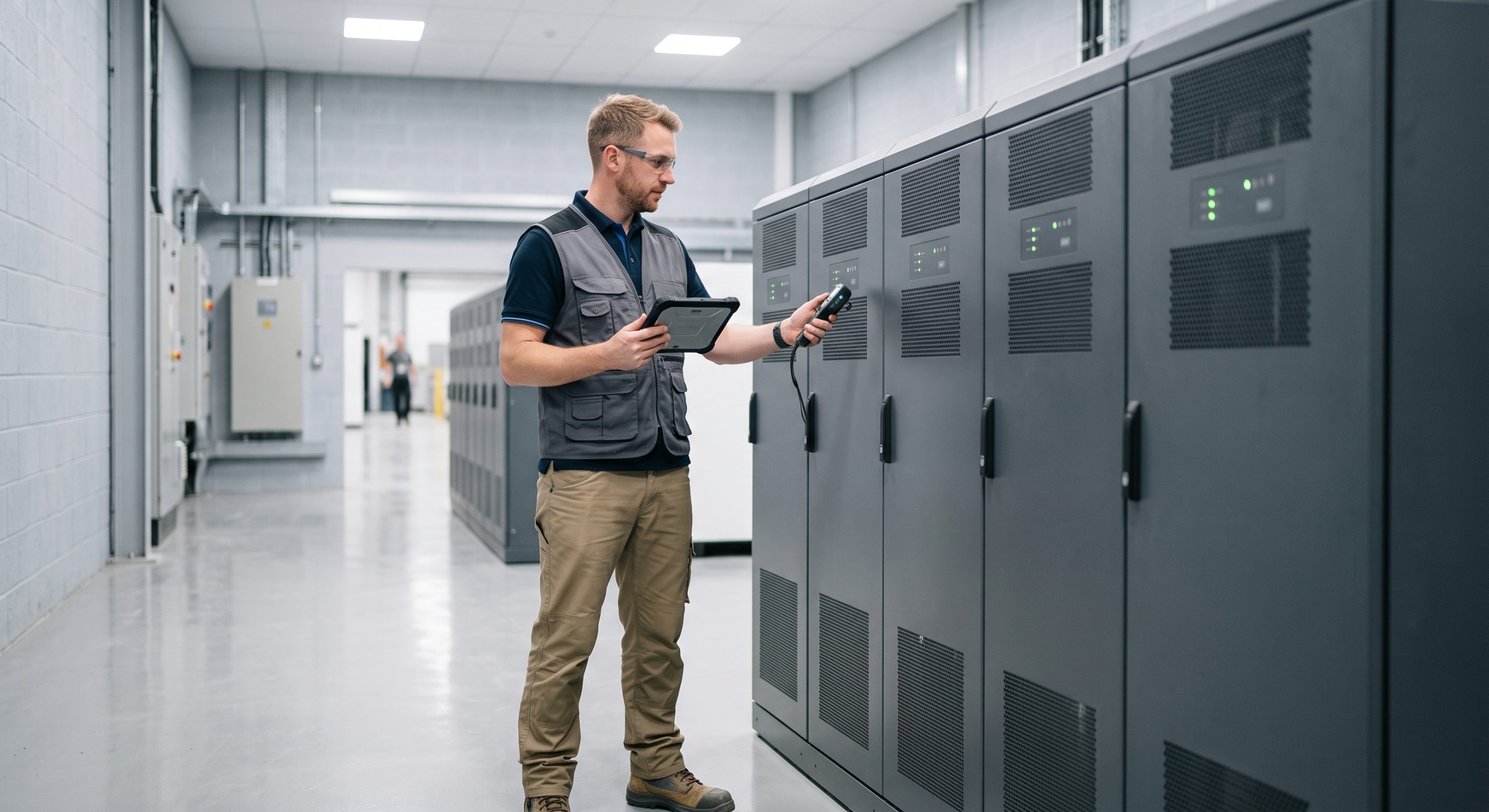
Frequently Asked Questions
- Q1: How does the EMS optimize solar energy harvesting for commercial sites?
- The EMS optimizes solar harvesting by using machine-learning algorithms to predict PV generation and site load, then dynamically charging the battery during peak solar hours and discharging during high-tariff periods or peak demand events. It performs peak shaving, load shifting, and renewable smoothing to maximize self-consumption and reduce electricity costs. This typically increases solar utilization by 20–40% compared to a PV-only system.
- Q2: What battery chemistry and cycle life are standard for commercial solar BESS?
- Tier-1 LFP (Lithium Iron Phosphate) is the standard chemistry, offering 6,000–8,000 cycles at 80% DoD with a 10-year performance warranty. LFP provides superior thermal stability and a lower levelized cost of storage (LCOS) than NMC. Most C&I systems are rated for 20–30 MWh total throughput per cabinet.
- Q3: How does the liquid cooling system protect battery life and safety?
- Liquid cooling maintains cell temperature uniformity within ±2°C, which is critical for preventing localized degradation and thermal runaway. Unlike air cooling, liquid cooling supports higher C-rates and extends cycle life by 15–20% in high-ambient commercial environments. It also enables precise thermal management during rapid charge/discharge cycles.
- Q4: Can the BESS scale from 100 kWh to multi-MWh for large commercial sites?
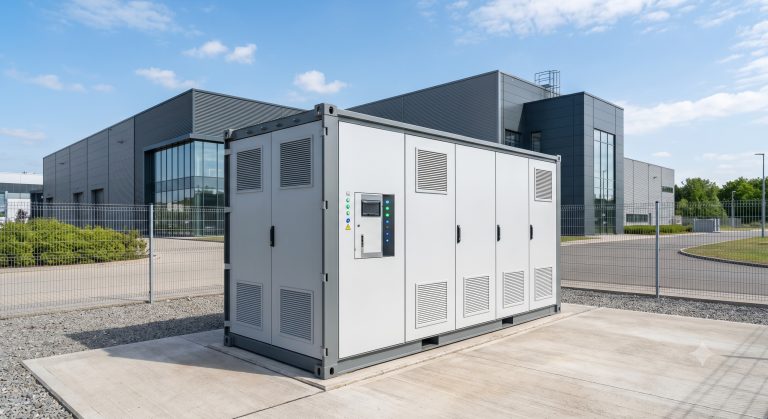
- Yes, modular cabinet designs allow parallel expansion from 100 kWh to 10+ MWh using a shared DC busbar and master EMS controller. Each cabinet operates independently, so you can add capacity without replacing existing units. The EMS automatically balances power across all connected cabinets for seamless scalability.
- Q5: How do I calculate ROI for a commercial solar-plus-storage system?
- ROI is calculated by comparing the installed cost per kWh against annual savings from peak shaving, demand charge reduction, TOU arbitrage, and solar self-consumption. Most C&I BESS projects achieve a 4–7 year payback with a 10-year NPV positive return. Key inputs include local utility tariffs, solar production profile, and battery degradation curve.
- Q6: How does the BMS monitor and balance cells after installation?
- The active BMS continuously monitors cell voltage, temperature, and state of charge (SOC), performing inter-cell balancing every few seconds. It reports anomalies via the EMS dashboard and can trigger alarms or derate power to prevent damage. Remote firmware updates ensure the BMS algorithms improve over the system lifetime.
- Q7: What is the difference between grid-tie and off-grid configuration for a commercial BESS?
- Grid-tie configuration allows bi-directional power flow with the utility for peak shaving, demand response, and backup power, while off-grid (islanded) operation disconnects from the grid and relies solely on solar-plus-storage. Most commercial sites use grid-tie with seamless islanding transfer via a static switch, enabling both economic optimization and resilience.
- Q8: How does the system prevent fire and thermal runaway?
- Multi-tier safety includes UL 9540A-tested cell chemistry, liquid cooling, pack-level gas and smoke detection, and aerosol or clean-agent fire suppression. The EMS isolates faulty modules and triggers emergency shutdown before propagation. Optional deflagration panels and remote monitoring provide 24/7 protection for commercial installations.