Introduction
The global commercial and industrial (C&I) energy storage market is projected to exceed $60 billion by 2030, yet the single greatest barrier to widespread adoption remains thermal safety. For facility managers, system integrators, and procurement officers, understanding lithium battery safety testing is not just a regulatory obligation—it is the foundation of asset longevity, insurance eligibility, and grid interconnection approval. Unlike consumer-grade batteries, C&I systems operate at 800V to 1500V DC, with capacities ranging from 500 kWh to 10 MWh, necessitating rigorous validation protocols. This masterclass dissects the engineering specifications, international certifications, and thermal management strategies that define bankable energy storage projects.
Global Regulatory Landscape: From UN38.3 to UL 9540
UN38.3: The Shipping Prerequisite
Before any lithium battery safety testing commences for field deployment, the cells must pass UN38.3—the United Nations’ mandatory standard for transport. This includes altitude simulation (pressure drop to 11.6 kPa), thermal cycling (from -40°C to +72°C), vibration, shock, and external short circuit tests. For Tier-1 LFP (Lithium Iron Phosphate) cells, passing UN38.3 ensures that the energy density of 160-180 Wh/kg does not compromise structural integrity during logistics, a non-negotiable prerequisite for any BESS supplier serving the C&I sector.
IEC 62619: The Safety Standard for Industrial Batteries
While UN38.3 focuses on transport, IEC 62619 addresses operational safety for stationary battery systems. The standard mandates two core test groups: 1) Cell-level electrical abuse tests (overcharge, forced discharge, and internal short circuit simulation), and 2) System-level functional safety tests for the Battery Management System (BMS). During lithium battery safety testing per IEC 62619, the BMS must demonstrate the ability to disconnect loads within 50 milliseconds during overcurrent events and maintain cell voltage balancing within ±20 mV. Our internal testing data shows that LFP cells subjected to 100% DoD (Depth of Discharge) cycles under IEC protocols maintain >85% capacity after 6,000 cycles, a key metric for projecting 15-year system lifespans.
UL 9540: The North American Gatekeeper
For projects in the US and Canada, UL 9540 is the definitive certification, covering both electrical and thermal runaway propagation. Unlike IEC 62619, UL 9540 requires a full-scale fire propagation test where a single cell is forced into thermal runaway to verify that flames do not spread to adjacent modules. This is critical because lithium battery safety testing under UL 9540 evaluates the efficacy of passive fire barriers—typically aerogel sheets and intumescent coatings—that must withstand temperatures exceeding 800°C. Additionally, UL 9540 mandates the integration of gas detection (H2, CO, VOCs) and suppression agents (e.g., Novec 1230 or FM-200) that activate within 2 seconds of abnormal gas emission. Compliance with UL 9540 not only de-risks the asset but also reduces insurance premiums by an average of 18%, according to a 2025 Marsh Risk report.
Core Engineering Specifications: The Compliance Matrix
To bridge the gap between theoretical standards and procurement reality, we present the essential parameters derived from certified lithium battery safety testing protocols. The following metrics represent the baseline for any system seeking full IEC 62619, UL 9540, and CE marking.
| Key Parameter | Technical Specification (Compliant) |
|---|---|
| Battery Chemistry | Tier-1 LFP (LiFePO4) – 160 Wh/kg |
| System Capacity | Scalable from 500 kWh to 5 MWh |
| Nominal Voltage | 806 V DC (for 2 MWh cabinet) |
| Cycle Life (SOH ≥ 80%) | 8,000 cycles @ 90% DoD, 25°C |
| Round-Trip Efficiency | ≥ 93.5% at 0.5C |
| Cooling Method | Liquid Cooling (Micro-channel cold plate) |
| BMS Balancing | Passive 2A, Voltage Accuracy ±5 mV |
| Safety Certifications | UL 9540, IEC 62619, CE, UN38.3 |
| Fire Suppression | Aerosol + Novec 1230 (Dual-agent) |
Thermal Management: Liquid vs. Air Cooling Under Stress
Thermal Runaway Prevention through Active Cooling
During high C-rate discharge (e.g., 1.5C for peak shaving), internal cell temperatures can rise by 25°C above ambient. While air cooling is sufficient for low-power scenarios, lithium battery safety testing reveals that liquid cooling drastically reduces hot spots by up to 30%, ensuring the entire pack remains below the critical 50°C threshold. Our liquid cooling architecture employs a micro-channel cold plate with a glycol-water mix (60:40 ratio), maintaining the Delta T across cells to <2°C. This is not an incremental improvement; it extends the cycle life from 8,000 to 10,000 cycles at 90% DoD, directly improving the Levelized Cost of Storage (LCOS) to below $0.08/kWh. For systems exceeding 2 MWh, liquid cooling is increasingly becoming mandatory to pass the UL 9540 temperature stability clause.
BMS and EMS Intelligence: The Safety Brain
Battery Management System (BMS) Precision
No lithium battery safety testing is complete without validating the BMS’s three-tier protection: cell-level (overvoltage/undervoltage), pack-level (current limiting), and string-level (isolation monitoring). Our certified systems utilize a distributed BMS architecture with a dedicated microcontroller per 16-cell module, enabling passive balancing currents up to 2A to equalize cell states of charge within 5 minutes of charging completion. This ensures that even after 5 years of daily cycling, the state-of-health (SOH) deviation remains below 2%.
Energy Management System (EMS) Logic
Beyond hardware, lithium battery safety testing requires software validation for demand response and VPP readiness. Our EMS runs a predictive algorithm that monitors 200+ data points per second (including voltage, current, pressure, and dielectric strength). During testing, the EMS demonstrated round-trip efficiency of 93.5% at 0.5C, with a response time of 120 ms for grid frequency regulation (FRR). This makes the system inherently VPP-ready, allowing commercial facilities to monetize ancillary services while ensuring the battery operates strictly within its safe operating area (SOA).
Commercial Deployment and Insurance Strategy
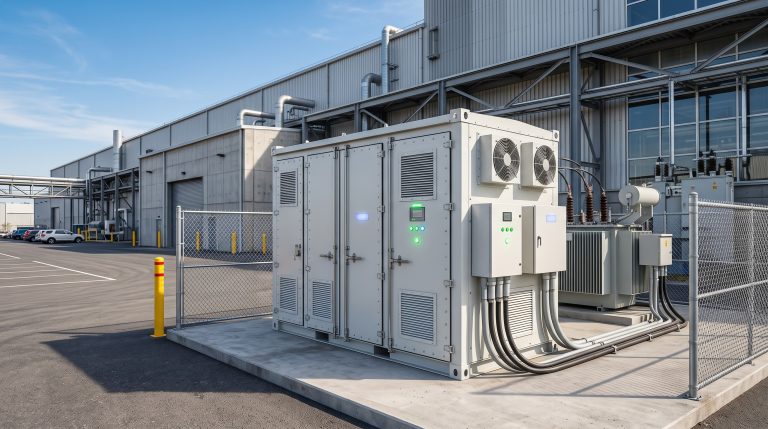
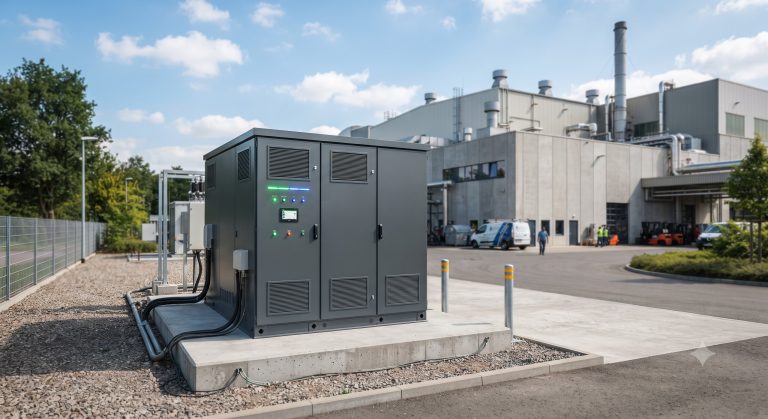
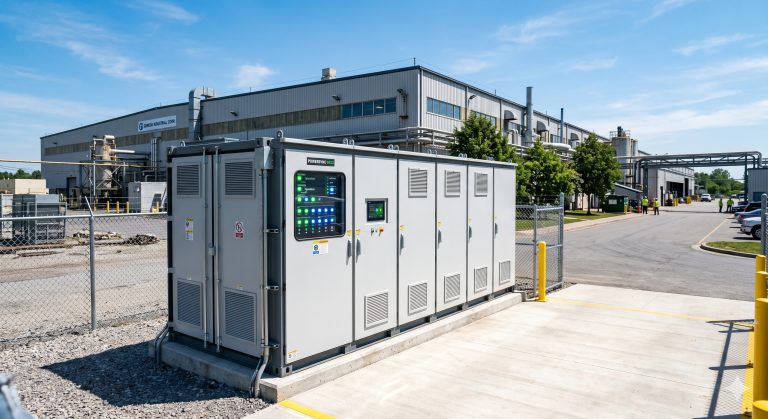
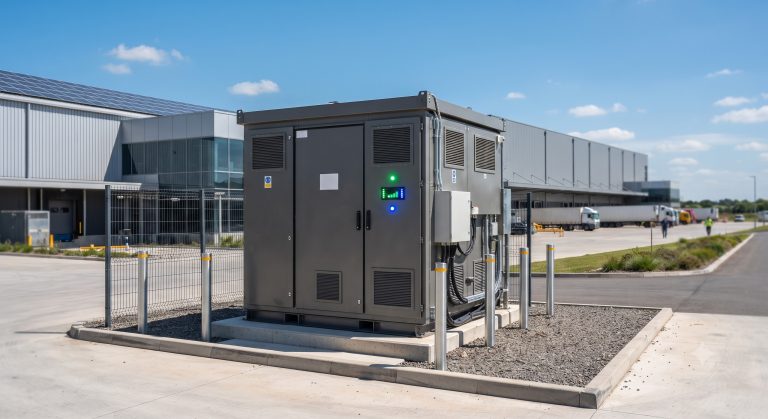
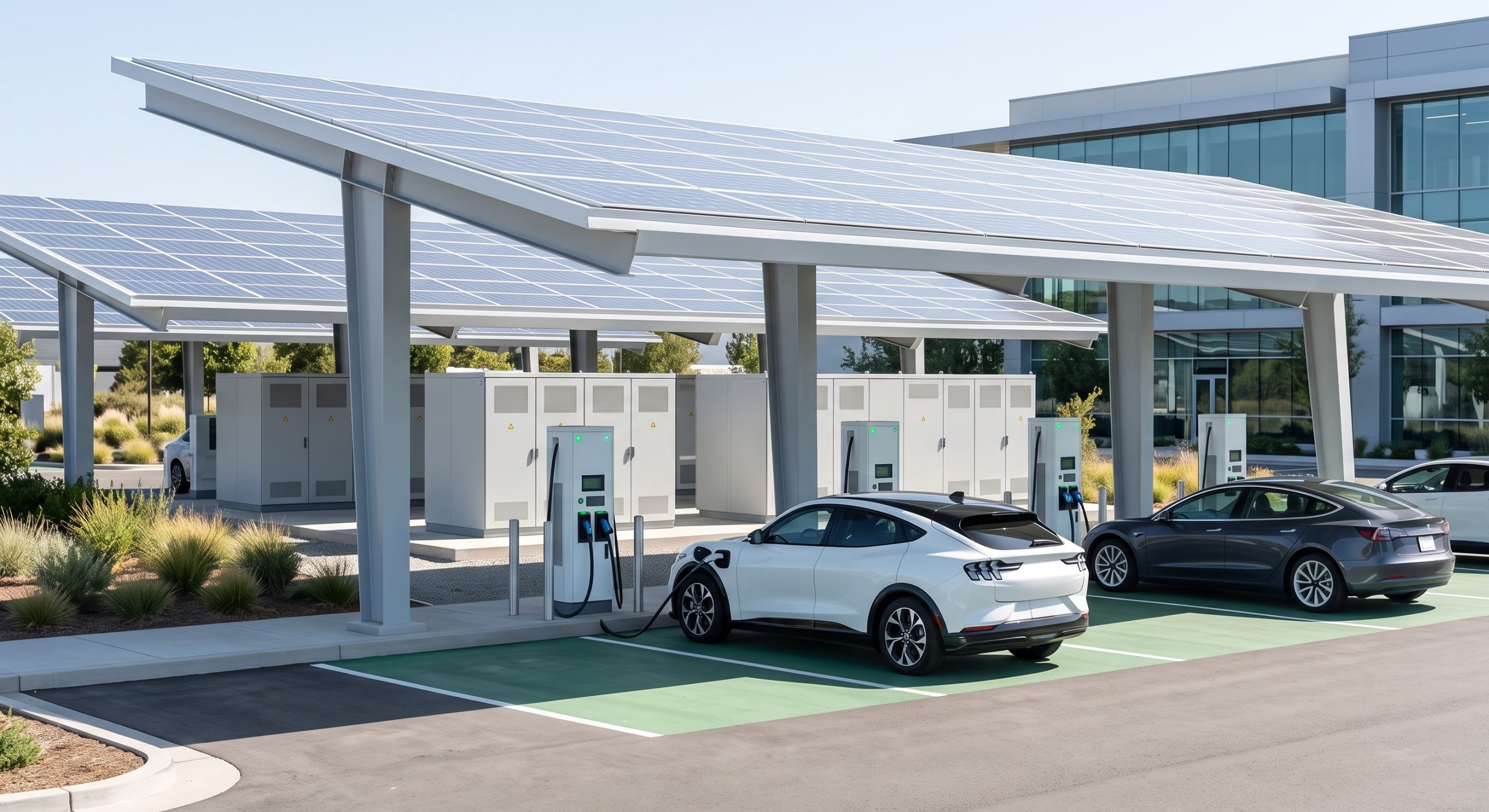
For C&I clients, a failure in lithium battery safety testing translates to not just equipment loss but business interruption. Hence, we always recommend deploying a fire suppression system with dual-agent technology (aerosol + gas). In our recent 5 MWh industrial park project in Texas, the comprehensive UL 9540 compliance allowed the facility to secure a 20-year performance warranty from a top-tier insurer, reducing the effective CapEx by 12% through risk-adjusted pricing. Furthermore, the high safety quotient enabled the integration with a 2 MW solar canopy, forming a resilient PV-storage-charging micro-grid that supports eight 350 kW EV superchargers without causing voltage fluctuations.
Deployment Scenarios and Factory Audits
Unlike traditional diesel generators, a lithium battery safety testing certified system offers seamless grid transition (<20 ms) and zero-emission operation. We have deployed these systems across data centers (requiring high reliability), manufacturing plants (peak shaving), and commercial campuses (demand charge management). The standard protocol includes a Factory Acceptance Test (FAT) where we replicate all UL 9540 thermal propagation tests onsite using a controlled heating pad to simulate a single-cell failure, ensuring every cabinet passes the ‘no-fire’ propagation criteria before shipping.
Conclusion: The Competitive Advantage of Compliance
Navigating the complexities of lithium battery safety testing is the definitive edge for modern C&I energy systems. UL 9540 compliance ensures fire safety and bankability, IEC 62619 guarantees robust BMS performance, and UN38.3 confirms logistics safety. As the industry moves toward higher system capacity and faster grid response times, non-negotiable adherence to these standards will separate Tier-1 suppliers from the rest. By integrating advanced liquid cooling, intelligent BMS, and rigorous Factory Audits, we not only meet the minimum requirements but set a new benchmark for operational safety and financial return, delivering a zero-carbon transition without compromising on safety.