Introduction: The Imperative of Supply Chain Transparency in Commercial Energy Storage
In the rapidly evolving landscape of Commercial & Industrial (C&I) energy storage, the conversation has shifted from mere capacity metrics to the critical domain of B2B battery supply chain transparency. For system architects, procurement officers, and facility managers, understanding the provenance, chemistry, and safety mechanisms of battery systems is no longer a due diligence checkbox—it is a financial and operational imperative. The global energy storage market is projected to exceed 500 GWh annually by 2030, yet the industry grapples with opaque supply chains that can obscure risks ranging from thermal runaway to performance degradation. This technical blog dissects the engineering layers of transparent battery procurement, focusing on how Advanced Battery Management Systems (BMS), robust fire suppression technologies, and adherence to stringent safety standards like UL 9540 and IEC 62619 form the bedrock of a resilient and trustworthy supply chain. By integrating liquid cooling thermal control and Tier-1 LFP cell metrics, we present a data-driven framework for mitigating risk while maximizing ROI in BESS wholesale deployments.
Core Architecture: Battery Management Systems (BMS) and Safety Integration
Multi-Level BMS Topology for Transparent Performance
At the heart of supply chain transparency lies the BMS, which functions as the digital twin of the energy storage system. A transparent supply chain mandates that every Tier-1 LFP cell is traceable to its manufacturing batch, with cell balancing algorithms ensuring uniform performance across all modules. Advanced BMS architectures employ a hierarchical topology—cell-level monitoring, module-level aggregation, and system-level orchestration—to deliver real-time data on voltage, temperature, and State of Charge (SoC). For C&I facilities, this granularity is indispensable for predicting cycle life and scheduling maintenance, directly impacting the Total Cost of Ownership (TCO).
Thermal Control: Liquid Cooling vs. Air Cooling Dynamics
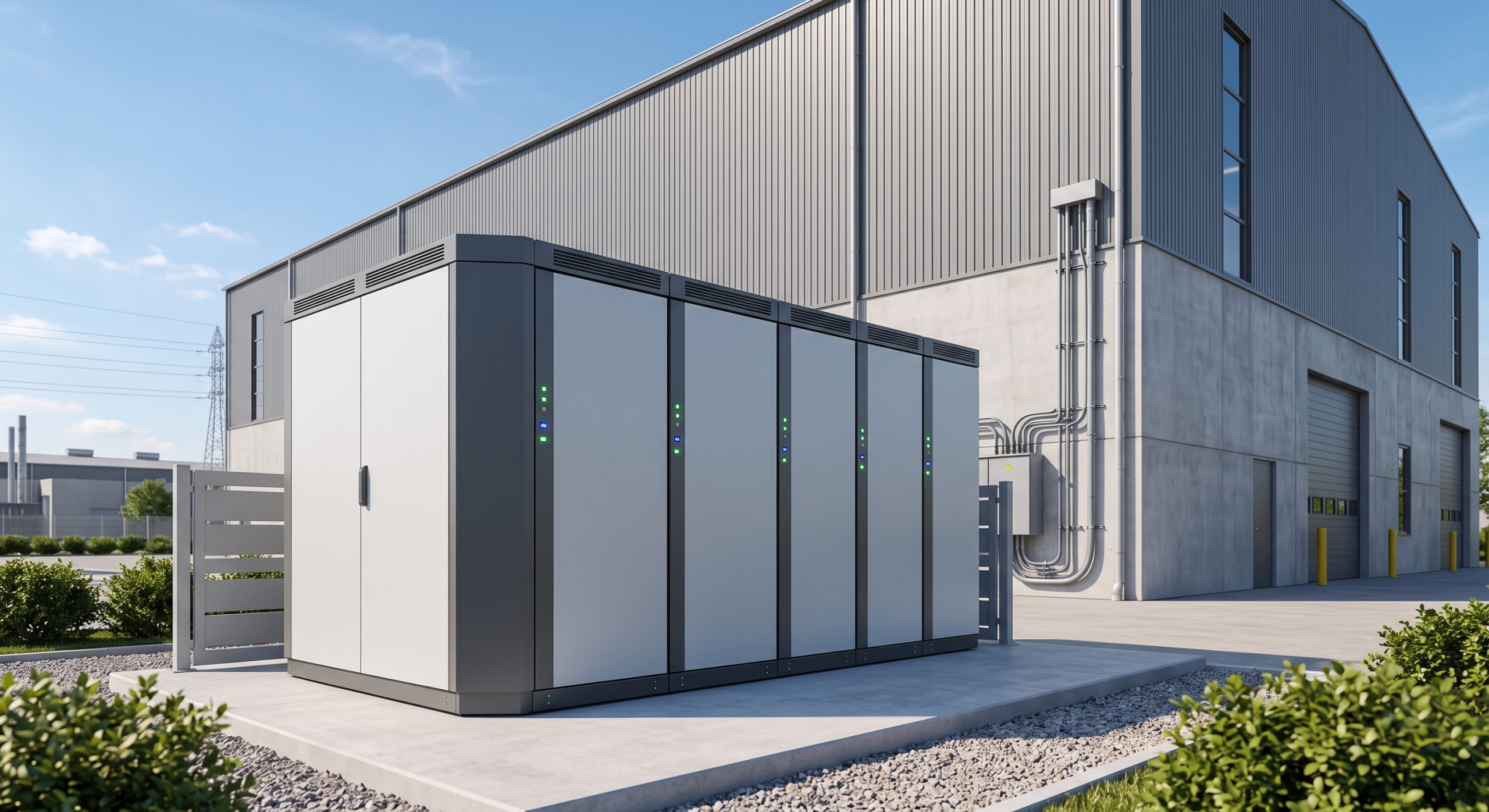
Thermal management is the linchpin of battery safety. While air cooling systems are cost-effective, they struggle to maintain uniform temperature gradients in high-capacity systems (>1 MWh). Liquid cooling thermal control emerges as the superior choice for preventing thermal runaway, offering a round-trip efficiency improvement of 2-3% by maintaining cell temperatures within a 2°C deviation. This is achieved through fluid pipeline connectors and smart flow logic that dissipates heat from high-current PCS (Power Conversion Systems) operations. The integration of liquid cooling not only prolongs the cycle life to >8,000 cycles at 90% DoD but also enables denser energy storage in confined industrial spaces, a critical factor for energy storage cabinet design.
Fire Suppression and UL 9540 Compliance
A transparent supply chain is inherently a safe one. UL 9540 certification ensures that the entire system—battery modules, BMS, and thermal management—has undergone rigorous Factory Acceptance Tests (FAT) and Site Acceptance Tests (SAT). Advanced fire suppression systems integrate aerosol-based or gaseous agents (e.g., Novec 1230) that activate upon detection of off-gas emissions, a precursor to thermal runaway. This multi-level safety architecture, combined with IEC 62619 compliance for industrial batteries, provides procurement managers with verifiable proof of system integrity, a cornerstone of B2B battery supply chain transparency.
Technical Specifications
The following technical matrix outlines the key parameters that define a transparent and high-performance C&I energy storage system. These metrics are essential for evaluating bids and ensuring alignment with project-specific LCOE and grid support objectives.
| Key Parameter | Technical Specification |
|---|---|
| Battery Chemistry | Tier-1 LFP (Lithium Iron Phosphate) with cell traceability |
| Usable Capacity (C&I) | 100 kWh – 5 MWh (modular scaling) |
| Cycle Life | >8,000 cycles @ 90% Depth of Discharge (DoD) |
| Round-Trip Efficiency | >92% (with liquid cooling thermal control) |
| Safety Certifications | UL 9540, IEC 62619, CE, UN38.3 |
| Thermal Management | Liquid cooling (ΔT < 2°C) / Air cooling optional |
| BMS Topology | 3-tier hierarchical (cell, module, system) |
| Fire Suppression | Aerosol / Novec 1230 with off-gas detection |
| PCS Integration | Bi-directional, 1500V DC link |
Commercial ROI and Grid Support Economics
Peak-Shaving ROI and Total Cost of Ownership
For commercial enterprises, the business case for energy storage hinges on peak-shaving ROI. By deploying a transparently sourced BESS, facilities can reduce demand charges by up to 40%, with typical payback periods of 3-5 years. A detailed LCOE analysis reveals that transparent supply chains reduce CapEx through competitive bidding and OpEx through predictable performance warranties. When coupled with demand response programs, the financial benefits multiply, allowing C&I entities to capture utility incentives by exporting stored energy during peak grid stress.
Grid Support and Frequency Regulation
Beyond peak shaving, transparent systems are pivotal for grid support. With smart EMS dispatch algorithms, these systems can provide frequency regulation and voltage support, enhancing grid stability. The ability to integrate seamlessly with PV-storage-charging hubs for EV supercharging stations further diversifies revenue streams, transforming the BESS from a cost center into a profit-generating asset.
Deployment Scenarios and Zero-Carbon Integration
The versatility of transparent BESS is evidenced across varied C&I environments. In industrial parks, modular systems support energy independence by mitigating grid dependency. For commercial real estate, they enable zero-carbon migration by optimizing on-site renewables. The deployment of MWh-scale systems in data centers, coupled with liquid cooling, ensures both energy resilience and operational continuity. As enterprises commit to net-zero goals, the ability to document the carbon footprint of each battery cell through transparent supply chains becomes a strategic advantage, aligning with global ESG mandates.

Conclusion: Building Resilience Through Transparency
In conclusion, B2B battery supply chain transparency is not merely a compliance exercise but a strategic enabler for the next generation of commercial energy storage. By prioritizing UL 9540 and IEC 62619 certifications, adopting liquid cooling thermal control, and demanding traceable Tier-1 LFP cells, system architects can significantly reduce the risk of thermal runaway while optimizing peak-shaving ROI. The data-driven insights provided in this guide—from cycle life benchmarks to grid support capabilities—empower procurement teams to navigate the complex landscape of BESS wholesale with confidence. As the energy transition accelerates, the businesses that embed transparency into their supply chains will lead the charge toward a resilient, decarbonized future.