Overview
For B2B engineers, procurement specialists, and plant managers, understanding the maintenance schedule of a utility-scale containerized Battery Energy Storage System (BESS) is critical for ensuring long-term profitability, safety, and grid reliability. A reactive ‘wait-and-see’ approach to maintenance is financially reckless; a structured, proactive program is the only way to protect your investment and maximize system lifespan . This FAQ provides expert answers to the most common pre-sales and post-sales questions, covering everything from battery chemistry and cooling systems to fire safety and ROI calculations.
Frequently Asked Questions
- Q1: What is the standard maintenance schedule for a utility-scale container BESS, and what does it include?
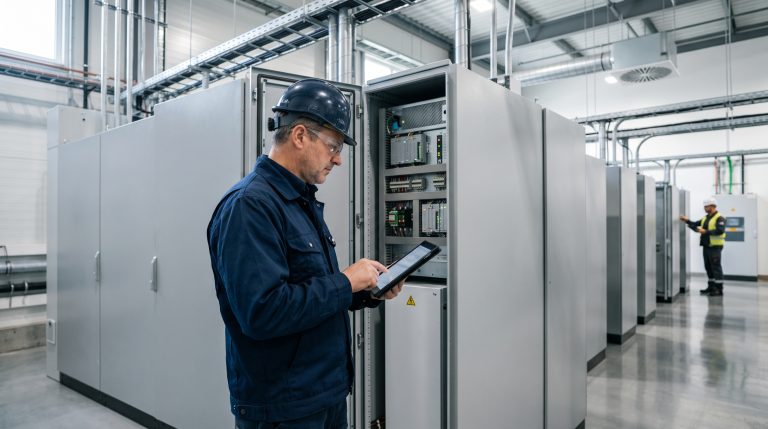
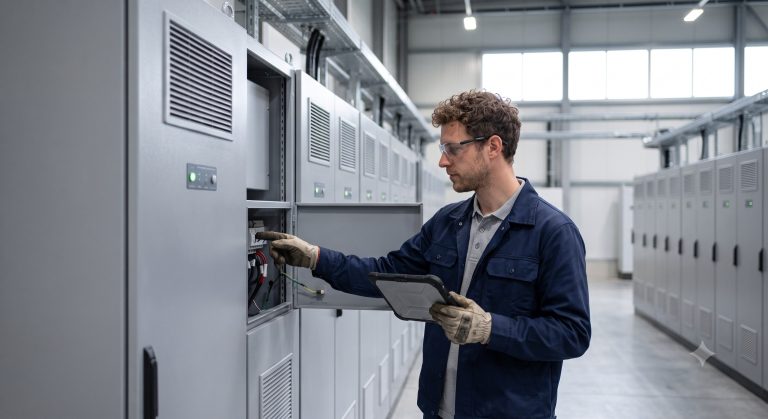
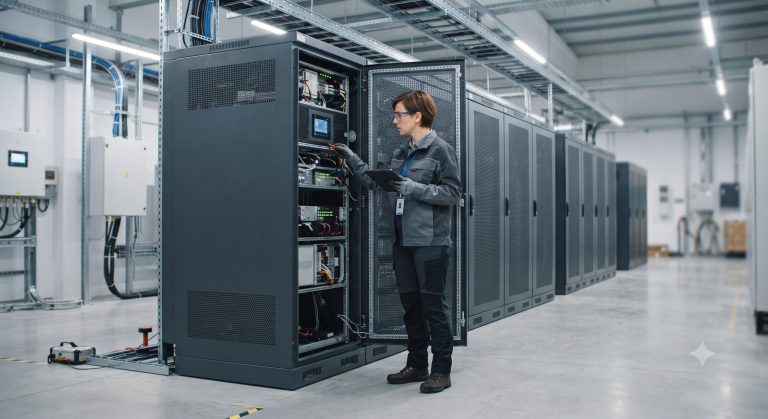
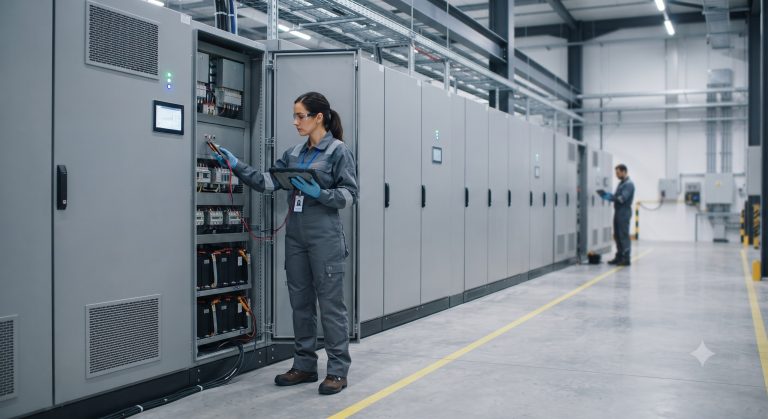
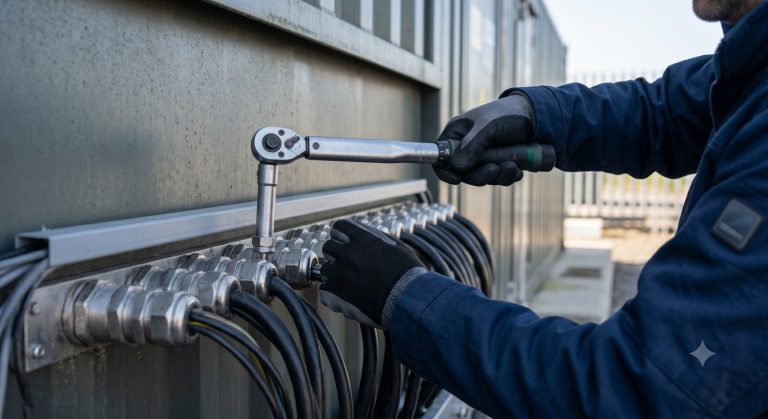
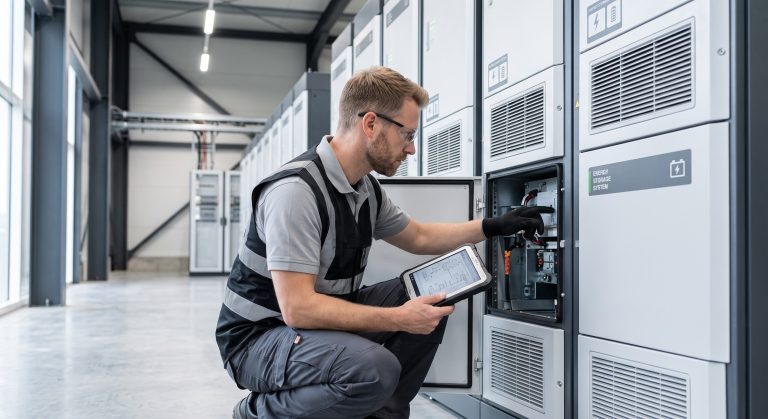
- The standard maintenance schedule follows a tiered timeline: key preventative tasks are performed annually and biennially (once every two years), with ongoing system monitoring in between . Annual maintenance typically includes inspecting the container for damage and water ingress, checking cable integrity and torque on power connections, verifying grounding resistance (<4Ω), cleaning HVAC filters, and confirming fire suppression system status . Biennial tasks are more comprehensive, involving detailed inspections of battery racks for damage/deformation, checking for corrosion, and verifying the status of surge protection devices (SPDs) and fuses . Crucially, avoid leaving the system with a cell voltage below 2.8V or a State of Charge (SOC) of 0% for more than 120 hours to prevent permanent damage .
- Q2: What is the maximum cycle life and recommended depth of discharge (DoD) for LFP chemistry in a utility BESS?
- The standard cycle life for a utility-scale LFP (Lithium Iron Phosphate) BESS is typically 6,000 to 8,000 cycles at an 80% Depth of Discharge (DoD) . Operating at a lower DoD can extend cycle life, while higher DoD accelerates degradation. This long cycle life is achieved through advanced liquid cooling systems and precise cell balancing performed by the Battery Management System (BMS), which ensures all cells operate within their optimal voltage and temperature ranges. To guarantee this performance, a robust preventative maintenance program and continuous data logging are essential for validating degradation rates and supporting warranty claims .
- Q3: How does the liquid cooling system impact BESS performance and what maintenance does it require?
- The liquid cooling system is critical for thermal management, preventing overheating and ensuring uniform cell temperatures, which directly improves performance and prolongs cycle life . Maintenance focuses on verifying coolant levels and pH, checking for leaks, and ensuring the BMS’s thermal setpoints trigger the cooling system correctly . Annual checks must include clearing dust from the air inlets and outlets of the liquid cooling unit . A failure in thermal management is often a monitoring problem that can escalate into a costly hardware failure; therefore, an effective Energy Management System (EMS) should use temperature data to derate power requests before conditions become dangerous .
- Q4: What are the key fire safety and thermal runaway prevention measures in a container BESS?
- Fire safety and thermal runaway prevention are paramount, governed by multi-layered safety systems and strict regulations like California’s updated General Order 167, which mandates specific maintenance standards and emergency response plans . Key measures include early gas/smoke detection systems, multi-tier fire suppression (e.g., aerosol or gas-based agents), and a Battery Management System (BMS) that actively monitors cell temperatures and voltages to prevent conditions that could lead to thermal runaway . Routine maintenance involves checking the fire suppression system, ensuring no flammable objects are inside the container, and verifying that all safety interlocks are operational . A holistic maintenance plan must cover the full stack: battery modules, power electronics, and thermal management .
- Q5: Why is BMS monitoring and inter-cell balancing important, and how is it maintained?
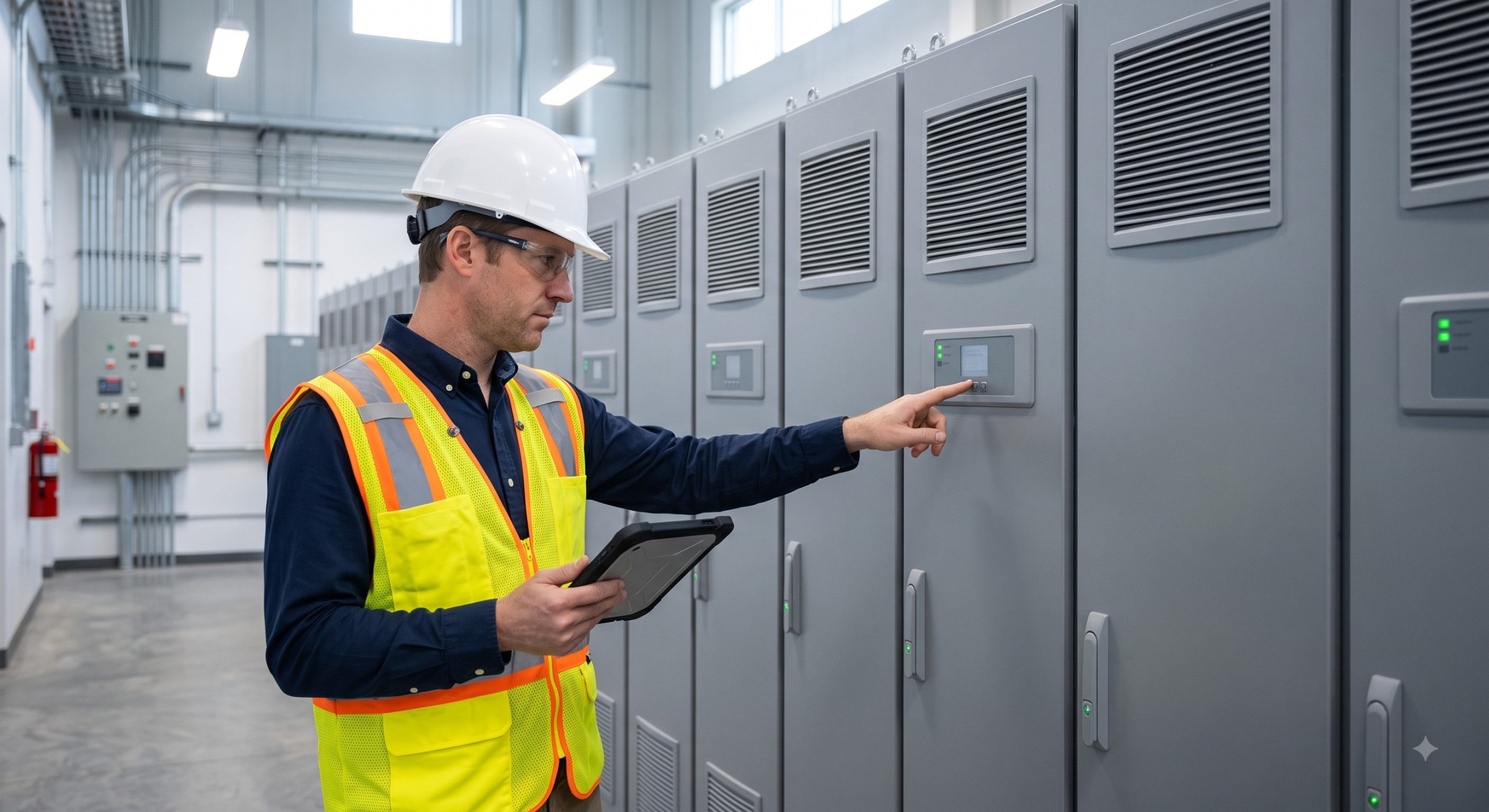
- The Battery Management System (BMS) is the brain of the BESS; it is essential for preventing cell imbalance, which can force adjacent modules to work harder, generate excess heat, and accelerate degradation . Maintenance involves verifying the accuracy of the BMS’s State of Charge (SOC) readings against actual capacity tests and monitoring impedance trends of individual cell strings . Active BMS monitoring and inter-cell balancing protocols ensure all cells are equally charged and discharged, maximizing the usable capacity and lifespan of the entire system . Data from the BMS is also the critical evidentiary record for winning warranty disputes and operational claims .
- Q6: What is the difference between grid-tie and off-grid configuration for a BESS, and which is right for my project?
- The primary difference is operational: a grid-tie configuration is designed to operate in parallel with the main utility grid to perform functions like peak shaving and frequency regulation, while an off-grid (or island) configuration is designed to operate independently to provide power to a standalone microgrid or critical load . For grid-tie systems, maintenance includes verifying anti-islanding protection response times and testing the Power Conversion System’s (PCS) reaction to grid frequency deviations (per UL 1741 and IEEE 1547) . Off-grid systems require stringent validation of the PCS’s ability to handle load steps and maintain voltage/frequency stability without grid support.
- Q7: How can I calculate the ROI of a BESS, and how does maintenance affect the Levelized Cost of Energy (LCOE)?
- The ROI of a BESS is calculated by factoring in revenue streams like peak shaving arbitrage (buying low, selling high), demand charge reduction, and grid service payments, then subtracting the total cost of ownership (TCO) . Proactive maintenance is critical for improving ROI because inconsistent O&M can increase the Levelized Cost of Storage (LCOE) by up to 30% . By preventing costly downtime, extending system life, and maintaining high round-trip efficiency, a solid maintenance plan directly improves the project’s bottom line and ensures the asset’s reliability over its 10+ year lifespan .
- Q8: How do I ensure my BESS complies with international safety and interconnection standards (UL 9540, IEC 62619)?
- Compliance is achieved by selecting a system that is certified to the relevant standards and then enforcing those standards through rigorous maintenance and operational protocols. For instance, a maintenance checklist must include ongoing conformity with UL 9540 (system safety), IEEE 1547 (grid interconnection), and IEC 62443 (cybersecurity) . This involves performing scheduled inspections, thermographic surveys of connections, and functional testing of all electrical protection equipment to ensure the system meets its certification requirements . A comprehensive logbook, as required by new regulations, is vital for proving compliance and safety .