COMMERCIAL SYSTEMS ENGINEERING REFERENCE MANUAL: INDUSTRIAL MICROGRID INTEGRATION HANDBOOK
EXECUTIVE SUMMARY
This Engineering Reference Manual details the comprehensive integration and operational framework for the Industrial Microgrid Integration Handbook, defining a new standard for commercial and industrial (C&I) energy storage systems. Designed to serve as a definitive technical resource, this document outlines the specifications, safety architectures, and deployment strategies for our Tier-1 LFP-based energy storage platform, purpose-built to enhance grid resilience, optimize energy costs, and facilitate the transition to sustainable power for heavy-load facilities and microgrids. The system represents a convergence of advanced liquid cooling technology, intelligent energy management, and robust, field-proven power electronics, delivering a turnkey solution for peak shaving, load shifting, and backup power applications.
SYSTEM ARCHITECTURE & SAFETY
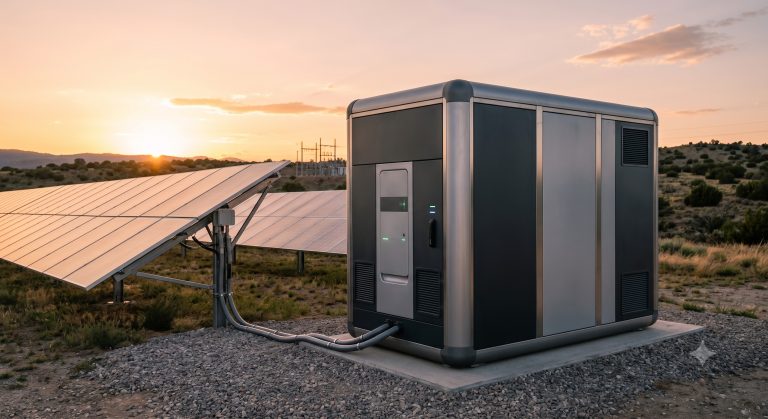
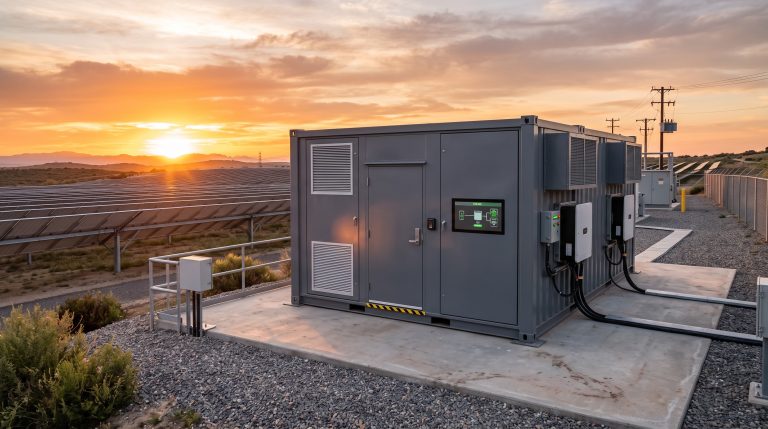
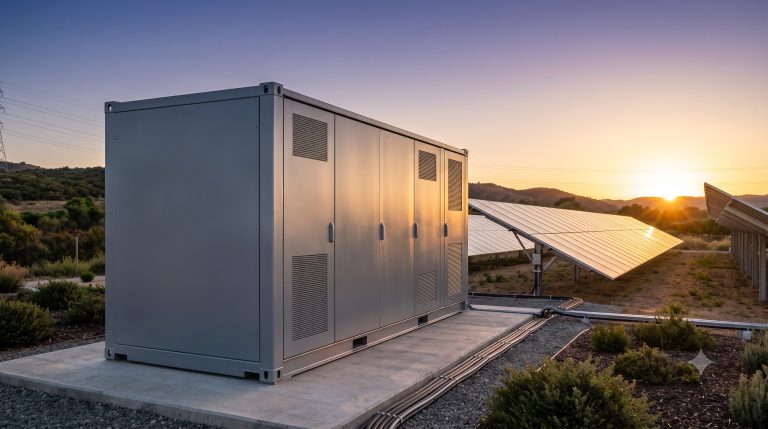
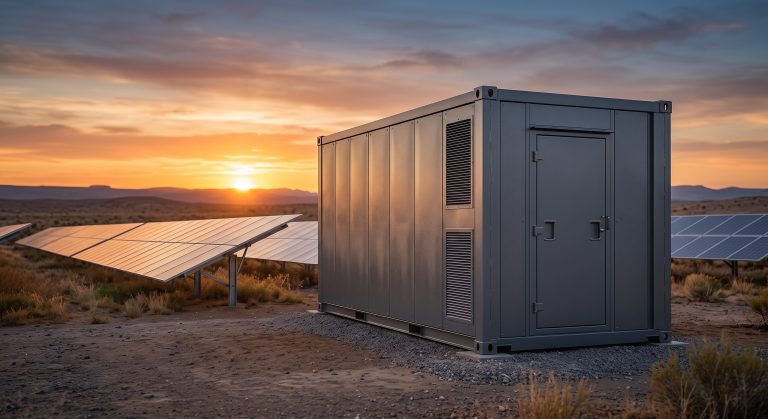
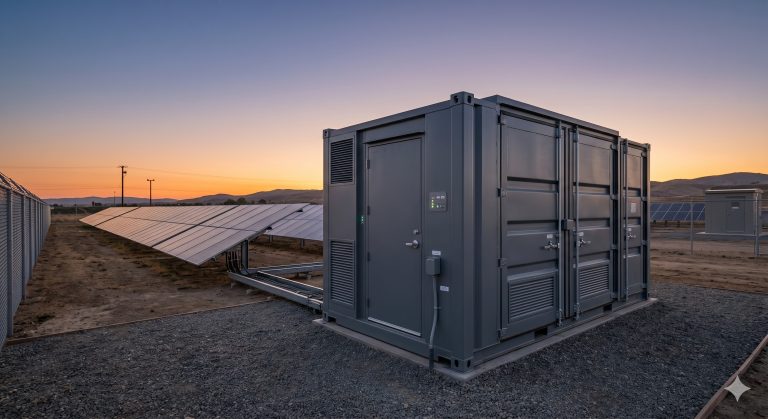
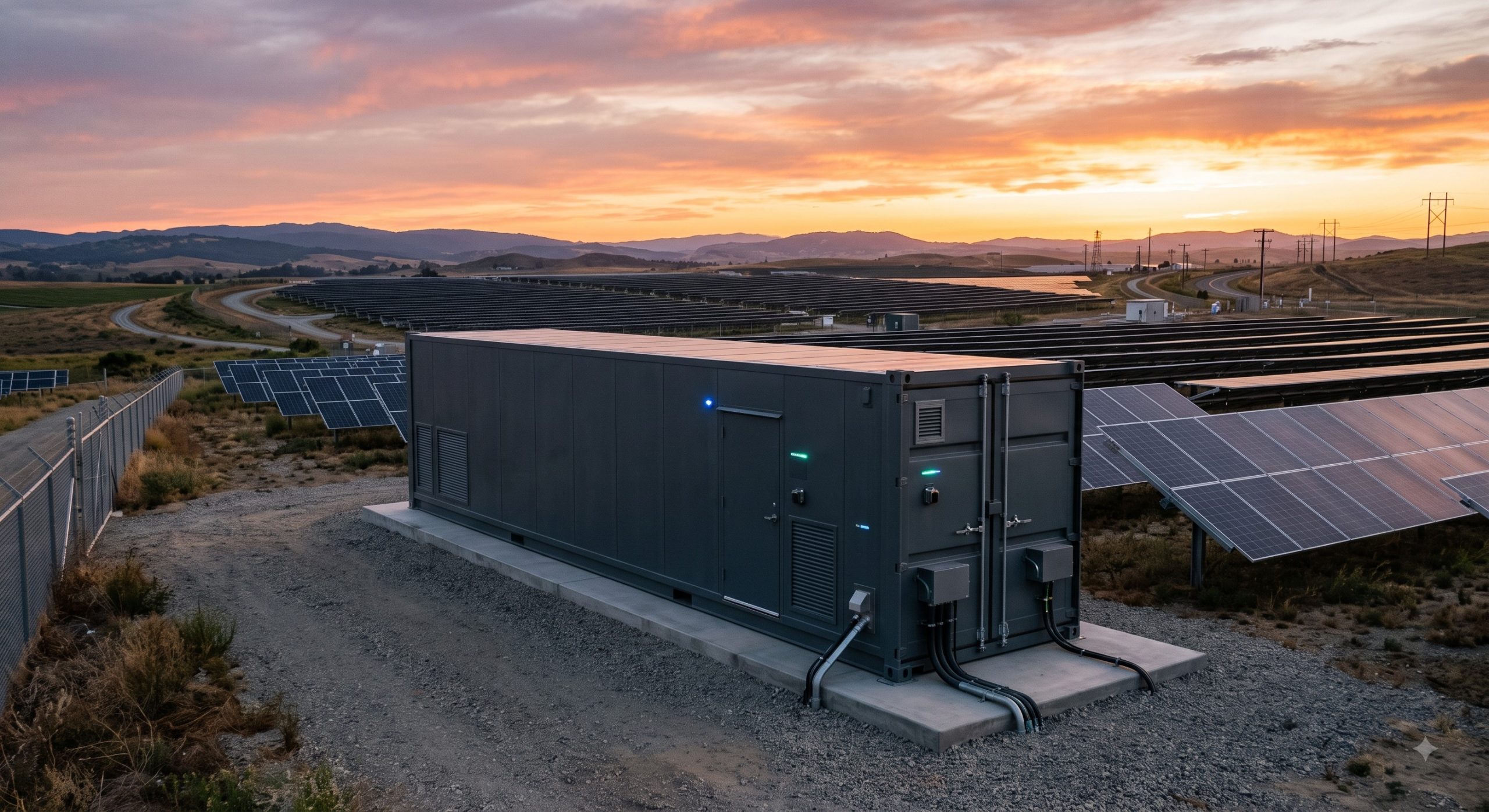
The platform is engineered around a modular, containerized architecture that integrates high-density LFP battery racks, a bi-directional Power Conversion System (PCS), and a sophisticated Battery Management System (BMS). The architecture supports parallel expansion configurations via a common DC busbar, allowing for scalable capacity from 215 kWh to multi-MWh installations without significant redesign. Central to the system’s safety philosophy is a multi-layered protection strategy that includes proactive cell monitoring, a state-of-the-art liquid cooling system for precise thermal regulation, and an advanced thermal runaway suppression engine. The mechanical structure is an IP55-rated, reinforced outdoor housing, built to withstand harsh environmental conditions while ensuring the integrity of all internal components.
KEY FEATURES
– Intelligent Liquid Cooling Thermal Management: An advanced, isolated fluid flow architecture maintains optimal battery temperature across all operating conditions, significantly enhancing cycle life, reducing cell degradation, and ensuring uniform thermal distribution to prevent hotspots. This precision regulation is critical for maintaining high round-trip efficiency, even under extreme ambient temperatures.
– High-Efficiency Bi-Directional Power Conversion: The integrated PCS supports seamless grid-interfacing for both AC coupling and islanding operations. It is designed for peak shaving, demand response, and PV-storage-charging integration, offering a clean power output with minimal harmonic distortion and a high charge/discharge efficiency rating.
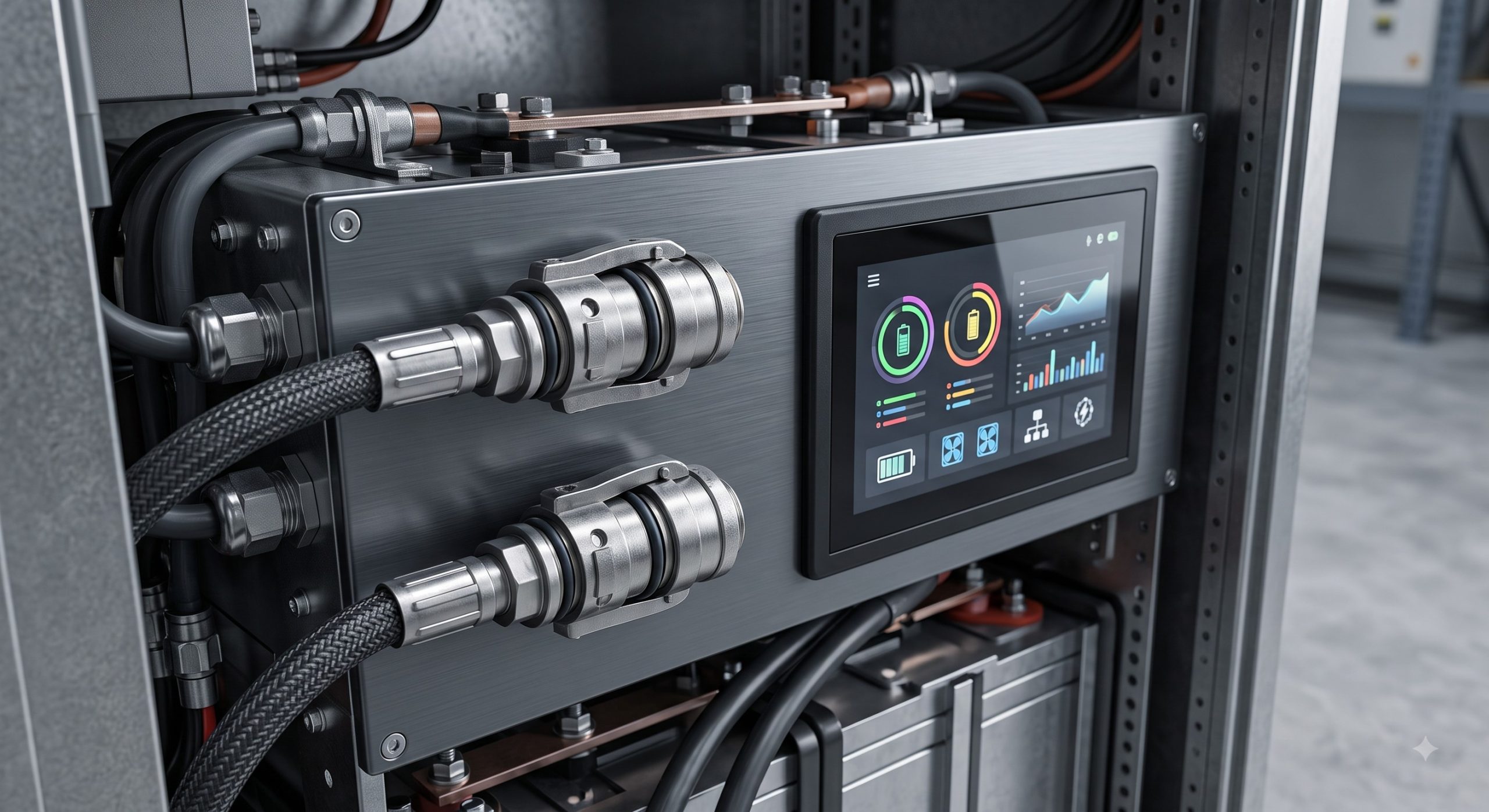
– Advanced EMS Smart Control Interface: The cloud-based Energy Management System (EMS) utilizes a sophisticated dispatch logic, enabling automated, real-time decision-making for energy arbitrage and load management. It provides fleet O&M foundation support, facilitating remote monitoring, firmware updates, and proactive maintenance scheduling to optimize the system’s operational lifespan.
– Tier-1 LFP Cell Integration & Durability: The platform utilizes high-quality, Tier-1 LFP cells known for their inherent safety, long cycle life (≥6000 cycles at 80% DoD), and excellent thermal stability. This chemistry choice provides a superior safety profile and a lower Levelized Cost of Storage (LCOS) over the system’s lifetime.
– Active Equalization Capabilities: The BMS balancing protocols feature an active cell equalization function, ensuring all battery cells within a rack are maintained at a uniform state of charge (SoC). This reduces cell-to-cell variability, minimizes capacity fade, and maximizes the extractable energy of the battery bank.
COMPLIANCE & STANDARDS
The Industrial Microgrid Integration Handbook and the accompanying hardware are designed and type-tested to meet the most stringent international safety and performance standards. The system holds comprehensive certifications, validating its suitability for global deployment in diverse commercial and industrial environments.
TECHNICAL SPECIFICATIONS
The following specifications provide a detailed overview of the platform’s core electrical, mechanical, and environmental performance parameters, suitable for detailed engineering planning.
| Parameter | Specification |
|---|---|
| Nominal Capacity | 215 kWh / 372 kWh per cabinet (Parallel Expansion up to 10MWh+) |
| Cooling Method | Intelligent Liquid Cooling with Isolated Fluid Flow |
| Cell Chemistry | Tier-1 LFP (Lithium Iron Phosphate) |
| System Efficiency (DC) | ≥ 94% (Round-trip) |
| System Efficiency (AC) | ≥ 90% (Round-trip) |
| Rated Power Output (PCS) | 100 kW / 200 kW (Scalable) |
| Voltage Range (DC) | 600 V – 900 V |
| Operating Temperature Range | -20°C to +50°C (Derating above +45°C) |
| Protection Rating | IP55 (Outdoor Enclosure) |
| Cycle Life | ≥ 6000 cycles at 80% DoD (at 25°C) |
| Safety Certifications | UL 9540, IEC 62619, UN 38.3 |
| Communication Protocols | Modbus RTU/TCP, CANBus, IEC 61850 |
| Dimensions (W x D x H) | Customizable standard 20ft / 40ft container footprint |
| Weight | ~3,000 kg per 215kWh cabinet |
INDUSTRIAL DEPLOYMENT
This system is ideally suited for a wide array of industrial applications, including manufacturing facilities, data centers, commercial real estate complexes, EV supercharging hubs, and remote microgrids. The turnkey nature of the solution, combined with the detailed engineering data provided in this reference manual, simplifies the planning, permitting, and installation phases. Field deployment is expedited by the pre-commissioned skid design, which minimizes on-site assembly and integrates seamlessly with existing facility electrical infrastructure. For project developers and facility engineers, this manual serves as a critical resource for accurately sizing, specifying, and validating a resilient, high-performance energy storage asset that supports both immediate operational savings and long-term sustainability goals.
📥 Download Technical Specification
Click the button below to view or download the full official PDF datasheet.