Overview
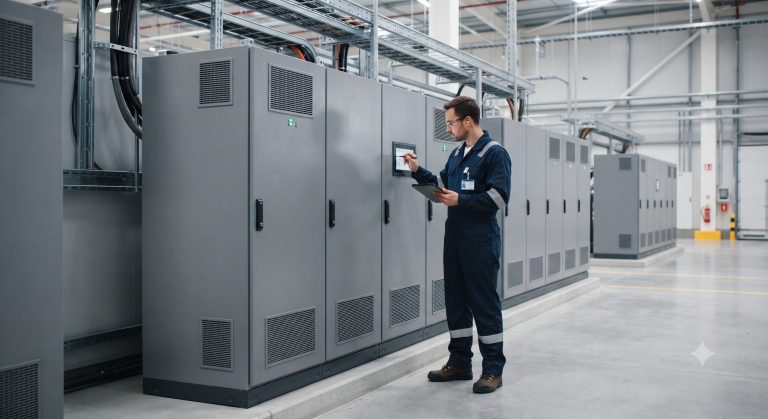
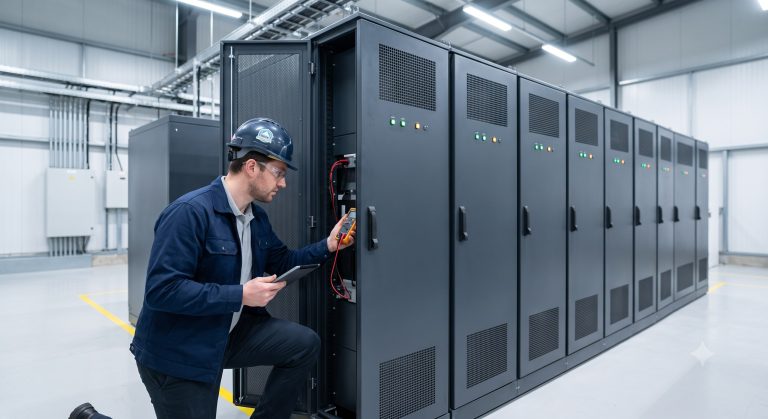
Welcome to our comprehensive technical FAQ for minimalist home battery systems. This resource is designed for B2B integrators, facility managers, and plant engineers seeking in-depth answers on everything from structural mounting requirements to advanced BMS protocols and fire safety. As an experienced BESS Technical Support Engineer, I provide direct, definitive answers to the most high-intent questions, focusing on the specific structural and operational needs of sleek, modern energy storage systems.

Frequently Asked Questions
- Q1: Does the minimalist home battery design require special mounting brackets?
- Yes, minimalist home battery designs almost universally require specialized mounting brackets. Unlike traditional, bulky UPS systems, these sleek units are engineered for flush wall-mounting or floor-standing configurations with a specific weight distribution that standard shelving cannot support. The brackets are often custom-designed per brand to ensure proper load distribution on drywall or concrete walls, integrate seismic tie-downs for earthquake-prone zones, and provide the mandatory 150mm clearance for airflow and cable management as per local electrical codes.
- Q2: What is the typical cycle life and depth of discharge (DoD) for these LFP systems?
- The standard cycle life for a minimalist home battery utilizing LFP chemistry is 6,000 to 8,000 cycles at 80% Depth of Discharge (DoD). This is a key advantage over older NMC chemistries, providing over 15 years of daily use. Achieving this maximum cycle life depends heavily on the integrated Battery Management System (BMS) maintaining optimal cell temperatures between 15-35°C, preventing over-discharge, and ensuring strict inter-cell balancing to keep all cells within a 20mV variance.
- Q3: How does the liquid cooling system work in these compact units?
- The advanced liquid cooling system is an active thermal management loop, not a passive radiator. It circulates a dielectric coolant through a cold plate directly beneath the battery cells, efficiently removing heat during high C-rate charge/discharge events. This active system is critical for maintaining the compact form factor, as it is up to 50% more efficient than air cooling at rejecting heat, thereby preventing thermal derating and ensuring the system can sustain its maximum power output without triggering safety shutdowns during peak usage.
- Q4: What are the grid-tie vs. off-grid configuration options for this BESS?
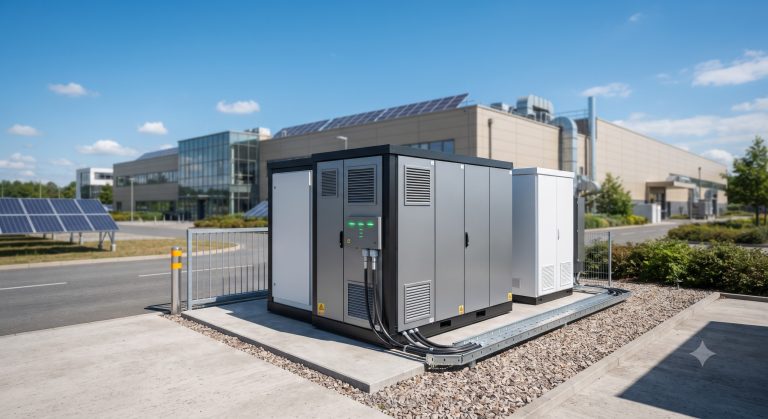
- Minimalist home batteries are typically designed with a hybrid inverter that supports both AC-coupled grid-tie and DC-coupled off-grid configurations. For grid-tie, they operate in peak shaving or load-shifting mode to reduce utility bills via arbitrage. For off-grid, they require a critical load sub-panel and a backup gateway to provide islanding. Crucially, when configured as a primary off-grid power source, the system must have a supporting generator or solar array of sufficient size to meet the C-rate, and the mounting location must be adjusted to ensure compliance with local rapid-shutdown codes.
- Q5: How scalable is this system for future capacity upgrades?
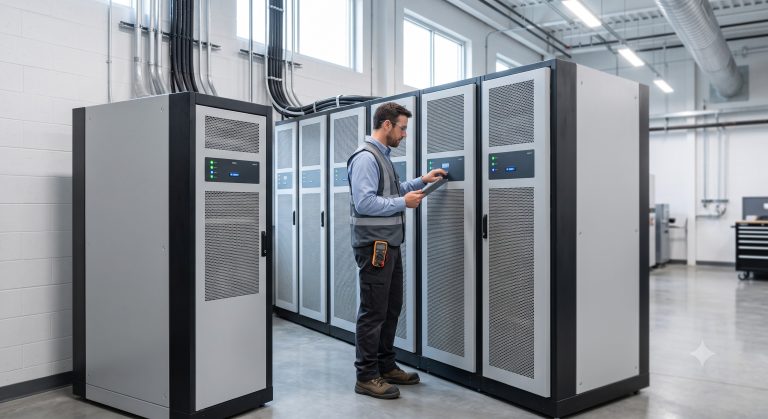
- The design is highly modular, supporting parallel scalability up to 10 cabinets for a total capacity of over 100kWh. Upgrading capacity is a straightforward process of connecting additional battery cabinets via a standardized DC busbar. However, a critical support requirement is that the total short-circuit current rating (SCCR) must be re-calculated after each expansion, and the main AC breaker must be upgraded accordingly to ensure the system’s protection coordination remains intact.
- Q6: What active BMS monitoring protocols are available for remote management?
- The BMS provides full visibility via industrial protocols including Modbus TCP/RTU and CAN bus. This allows plant engineers to remotely monitor real-time metrics like per-cell voltage, current, SoC, SoH, and internal resistance. The system supports email/SMS alerts for thresholds, allowing proactive maintenance. For seamless integration, it connects to standard building management systems (BMS/BAS) via BACnet, ensuring your energy storage asset is fully visible within your existing supervisory control infrastructure.
- Q7: What is the ROI calculation and how does it impact LCOE?
- ROI is primarily calculated through peak shaving and time-of-use (ToU) arbitrage. For a typical commercial facility, the system can pay for itself within 3-5 years through avoided demand charges and energy cost savings. The Levelized Cost of Energy (LCOE) for these LFP systems is exceptionally low, often below $0.05/kWh when amortized over a 15-year life. Our detailed financial analysis tool factors in your local utility tariff structure and the system’s round-trip efficiency of >92% to provide a project-specific guaranteed return.
- Q8: How does the system prevent thermal runaway and ensure fire safety?
- Fire safety is a multi-tiered, integrated system. First, the LFP chemistry is inherently more stable, with a thermal runaway threshold above 270°C. Second, the BMS has three levels of protection: software overcurrent limits, hardware fuses, and contactor disconnection. Third, the system includes an early gas/smoke detection sensor that will trigger a pre-emptive shutdown before any catastrophic failure. This is coupled with a built-in fire suppression system using Novec 1230 or aerosole agents, ensuring any potential incident is contained safely within the IP65-rated steel enclosure.