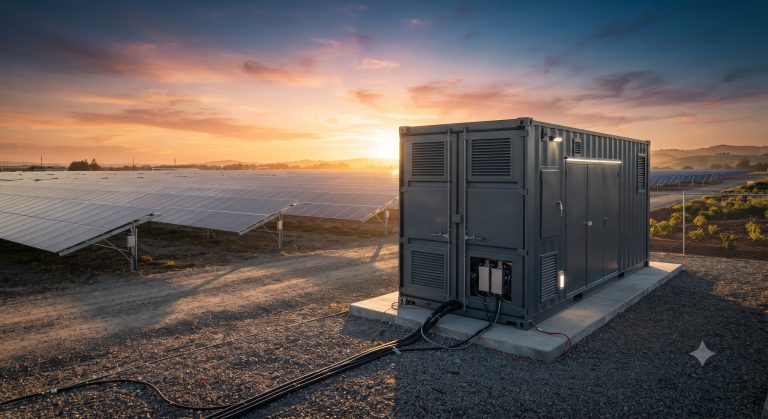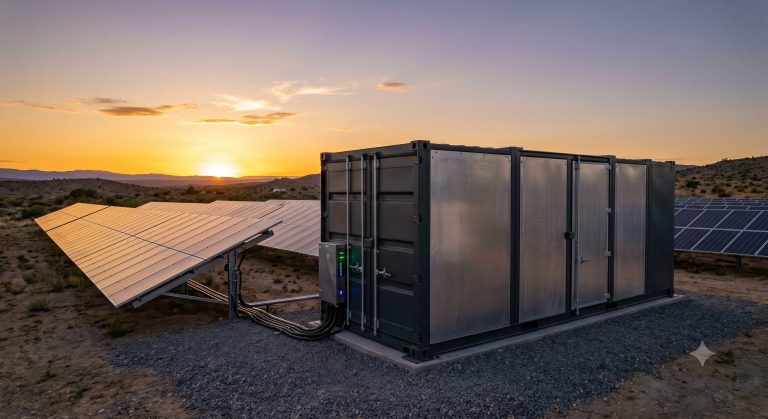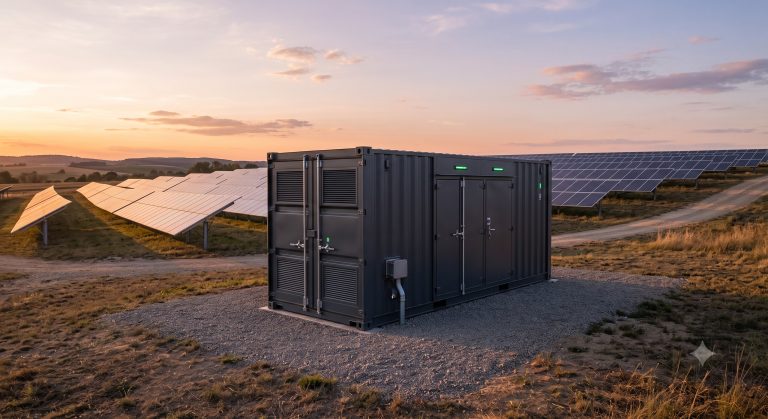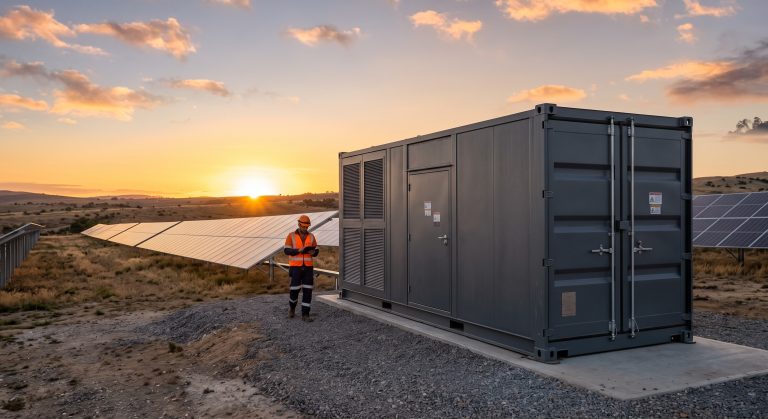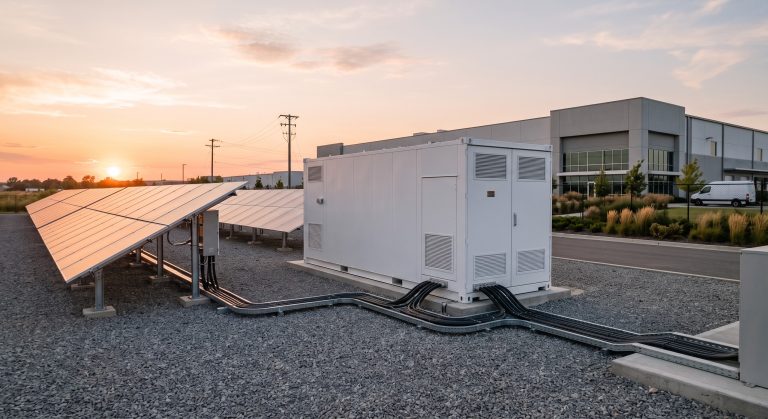
20FT CONTAINERIZED ENERGY STORAGE SYSTEM (ESS) – OFFICIAL COMMERCIAL BESS TECHNICAL OVERVIEW & DATASHEET
EXECUTIVE SUMMARY
This document presents the technical overview and detailed specifications for the 20ft Containerized Energy Storage System (ESS), a turnkey, high-capacity solution engineered for utility-scale, commercial & industrial (C&I), and micro-grid applications. This platform integrates Tier-1 LFP battery cells, a bi-directional Power Conversion System (PCS), an advanced Battery Management System (BMS), and a smart Liquid Cooling Thermal Management System (TMS) within a rugged, IP54-rated 20-foot ISO container. Designed for global deployment, this system offers a scalable, safe, and reliable solution for peak shaving, demand response, renewable energy time-shifting, and grid stabilization. The architecture emphasizes a low Levelized Cost of Storage (LCOS), high round-trip efficiency, and adherence to the most stringent international safety and performance standards.
SYSTEM ARCHITECTURE & SAFETY
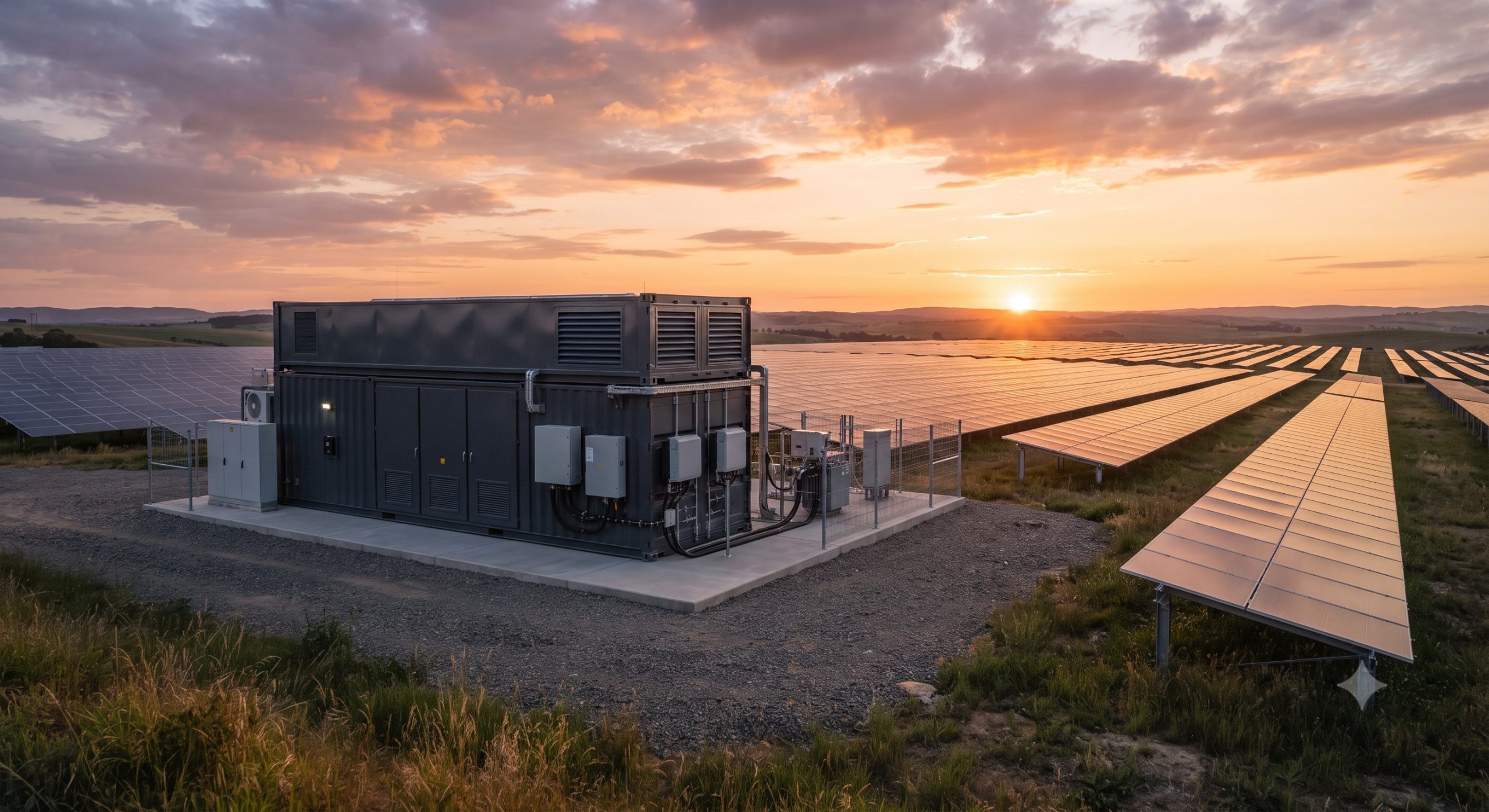
The 20ft ESS platform is built upon a modular and integrated architecture, ensuring seamless on-site integration and optimal performance. The core subsystems are housed within a structurally reinforced, thermally insulated 20ft container, designed for outdoor installation.
CELL INTEGRATION: The system utilizes high-cycle-life, prismatic Tier-1 LFP (Lithium Iron Phosphate) cells, known for their exceptional thermal and chemical stability, intrinsic safety, and long calendar life. Cells are configured in a series-parallel arrangement within modular racks to achieve the nominal DC voltage and total energy capacity.
BATTERY MANAGEMENT SYSTEM (BMS): A multi-layered, redundant BMS provides real-time monitoring and control at the cell, module, and rack levels. Key functions include:
– State of Charge (SoC) and State of Health (SoH) estimation.
– Cell voltage and temperature balancing (passive and active balancing strategies).
– Over-voltage, under-voltage, over-current, over-temperature, and under-temperature protection.
– Insulation monitoring and ground fault detection.
– Communication with the PCS and Energy Management System (EMS) via standard protocols (Modbus, CAN).
POWER CONVERSION SYSTEM (PCS): The integrated bi-directional PCS acts as the interface between the battery DC bus and the AC grid or load. It is designed for high efficiency (>98% peak) and features:
– Four-quadrant operation for charging and discharging.
– Grid-forming and grid-following capabilities for on-grid and off-grid operation.
– Active and reactive power control (PF control).
– Low-voltage ride-through (LVRT) and high-voltage ride-through (HVRT) capabilities.
– Anti-islanding protection.
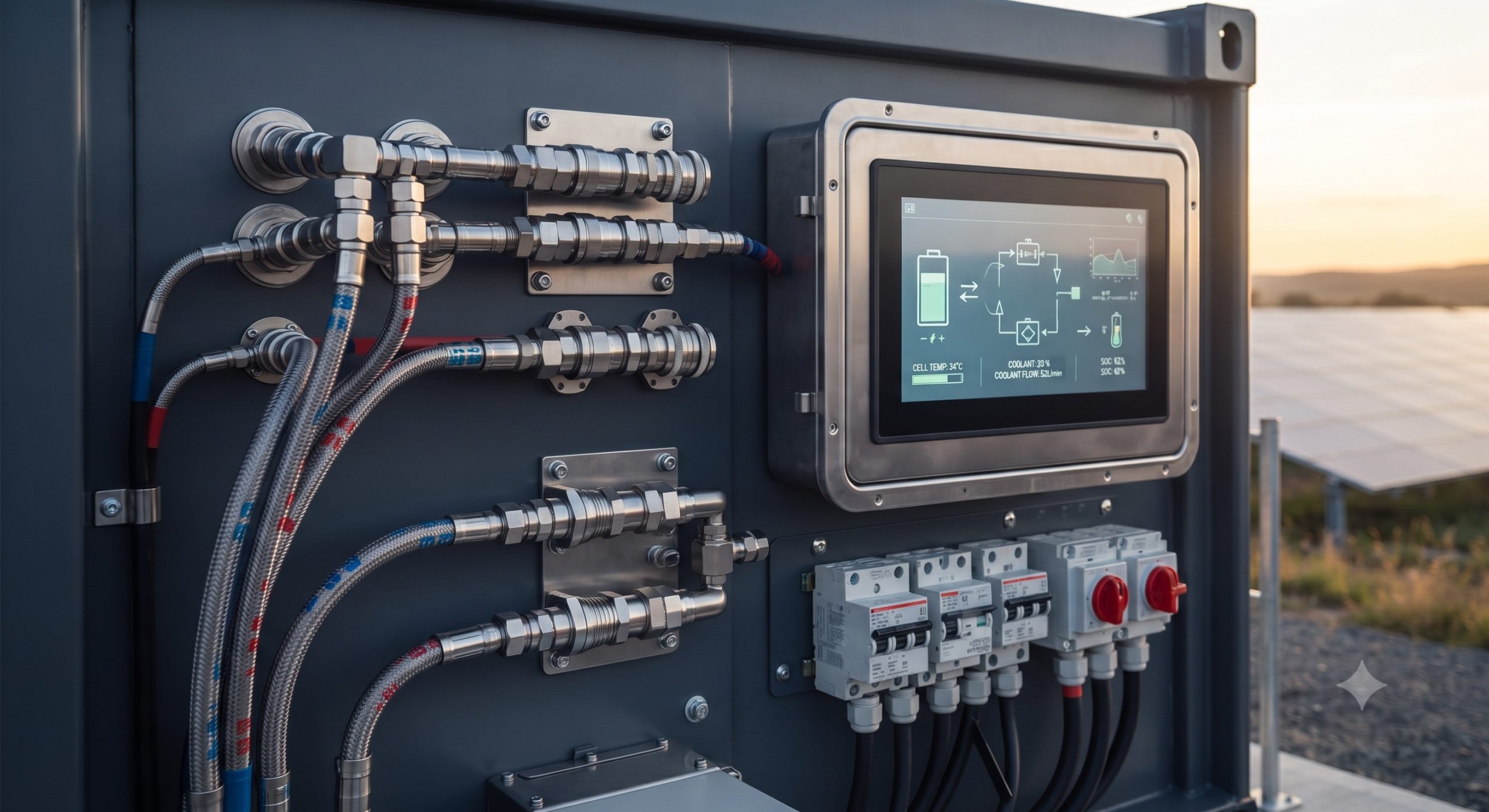
THERMAL MANAGEMENT SYSTEM (TMS): An advanced liquid cooling system is employed to maintain the battery cells within their optimal operating temperature range (25±3°C). This active TMS significantly enhances cycle life, improves system efficiency, and ensures performance stability under extreme ambient conditions. The system comprises a chiller unit, coolant distribution pipelines, and cold plates integrated directly into the battery module design.
FIRE SAFETY & SUPPRESSION: The container is equipped with a multi-level safety system, including:
– Aerosol or gas-based fire suppression system (e.g., FM-200, Novec 1230).
– Early warning smoke and gas (CO, VOC) detectors.
– Explosion venting panels.
– Internal and external emergency stop (E-Stop) buttons.
– The system is designed in compliance with NFPA 855 and other local fire codes.
KEY FEATURES
– HIGH ENERGY DENSITY: Optimized packaging within a 20ft footprint maximizes energy capacity, reducing the physical footprint per MWh.
– ENHANCED SAFETY: LFP chemistry combined with a multi-tiered BMS and robust fire suppression ensures the highest level of operational safety.
– LIQUID COOLING EXCELLENCE: Superior thermal management improves cell life by up to 20% and ensures consistent performance in diverse climates (-30°C to +50°C).
– MODULAR & SCALABLE: Designed for simple paralleling, allowing for system expansion from a single unit to multi-MWh power plants.
– SEAMLESS INTEGRATION: Pre-commissioned and factory-tested for plug-and-play deployment, significantly reducing on-site construction and commissioning time.
– GRID SUPPORT FUNCTIONS: Provides essential grid services including frequency regulation, voltage support, and black-start capability.
– SMART EMS CONNECTIVITY: Equipped with a local EMS that supports remote monitoring, data logging, and OTA firmware updates via a secure cloud platform.
– ROBUST ENCLOSURE: IP54-rated container protects internal components from dust, water ingress, and physical impact, ensuring durability in harsh outdoor environments.
COMPLIANCE & STANDARDS
The 20ft Containerized ESS is designed and certified to meet the most stringent international standards, ensuring global bankability and project acceptance.
– IEC 62619: Safety requirements for secondary lithium cells and batteries for industrial applications.
– IEC 62477: Safety requirements for power electronic converter systems and equipment.
– UL 1973: Standard for Batteries for Use in Stationary, Vehicle Auxiliary Power, and Light Electric Rail (LER) Applications.
– UL 9540: Standard for Energy Storage Systems and Equipment.
– UL 9540A: Test method for evaluating thermal runaway fire propagation in battery energy storage systems.
– IEEE 1547: Standard for Interconnection and Interoperability of Distributed Energy Resources with Associated Electric Power Systems Interfaces.
– CE, UKCA, EAC, etc. (depending on regional configurations).
– Compliance with local grid codes (e.g., VDE-AR-N 4110, ENTSO-E).
– RoHS and REACH compliant.
TECHNICAL SPECIFICATIONS
| Parameter | Specification |
|---|---|
| Cell Chemistry | Tier-1 Lithium Iron Phosphate (LFP) |
| Nominal Energy Capacity | 2.0 MWh – 2.5 MWh |
| Usable Energy (DoD 90%) | 1.8 MWh – 2.25 MWh |
| Rated AC Power | 1000 kW – 1250 kW |
| Peak AC Power (10s) | 1200 kW – 1500 kW |
| Max DC Voltage | 1500 Vdc |
| Nominal DC Voltage | 1300 Vdc |
| Min DC Voltage | 1000 Vdc |
| Cooling Method | Active Liquid Cooling (Chiller + Coolant) |
| Operating Temperature Range | -30°C to +50°C (Derating >45°C) |
| Relative Humidity | 0% – 95% (Non-condensing) |
| Max Altitude | 2000 m (Derating above) |
| AC Grid Connection | 3W + N + PE, 380/400/480 Vac, 50/60 Hz |
| Max AC Current | ~1500 A (at rated power) |
| Total Harmonic Distortion (THDi) | <3% (at rated power) |
| Power Factor Range | 0.99 leading – 0.99 lagging |
| Round-Trip Efficiency (AC-AC) | ≥ 92% (at nominal conditions) |
| Enclosure Protection | IP54 (Indoor and outdoor installation) |
| Fire Suppression | Aerosol / Gas-based system |
| Communication Protocols | Modbus TCP/RTU, CAN, IEC 61850 |
| Container Dimensions (W x H x D) | ~ 6058 x 2896 x 2438 mm (20ft HC) |
| Container Weight | ~ 22,000 – 25,000 kg (depending on capacity) |
| Warranty | 10 years / 6000 cycles (at 80% EOL) |
INDUSTRIAL DEPLOYMENT
The 20ft Containerized ESS is ideally suited for a wide range of demanding applications. Its robust construction and advanced control systems make it a versatile asset for the future of energy.
– RENEWABLE INTEGRATION: Smoothing the output of solar and wind farms, reducing curtailment, and enabling time-shifting of energy to peak demand periods.
– PEAK SHAVING & DEMAND RESPONSE: For commercial and industrial facilities, reducing peak demand charges and participating in demand response programs to generate revenue.
– GRID ANCILLARY SERVICES: Providing fast-responding frequency regulation (FCR, aFRR), voltage support, and spinning reserve to enhance grid stability and reliability.
– MICRO-GRIDS: Serving as a primary energy storage component for off-grid and grid-tied micro-grids, supporting islanded operation and ensuring energy independence.
– EV CHARGING INFRASTRUCTURE: Buffering the grid connection to reduce peak loads and enable ultra-fast charging without costly grid upgrades.
📥 Download Technical Specification
Click the button below to view or download the full official PDF datasheet.