Introduction: The Critical Imperative of Thermal Runaway Prevention
As the global energy storage market surges past an estimated 358 GWh by the end of 2024, the focus on safety has never been more paramount . While the adoption of inherently stable Lithium Iron Phosphate (LFP) battery chemistry has significantly reduced the risk of violent combustion, the energy density required for Commercial and Industrial (C&I) applications means that thermal runaway remains a critical engineering challenge. Thermal runaway—an uncontrollable exothermic reaction within a battery cell—can cascade through a module and entire energy storage system (ESS) if not effectively mitigated. For B2B system architects, facility managers, and energy procurement officers, understanding the multi-layered defense strategies against this phenomenon is essential for asset protection and operational continuity.
Today’s advanced BESS integrate sophisticated Battery Management Systems (BMS), multi-level fire suppression, and intelligent thermal management to create a robust safety envelope. This blog provides a deep technical dive into the mechanisms of thermal runaway prevention, analyzing the architecture, compliance standards, and data-driven metrics that define Tier-1 energy storage solutions. We will explore how advanced thermal control and proactive safety systems are setting new benchmarks for reliability in the C&I sector.
Core Architecture: The Multi-Layered Defense Strategy
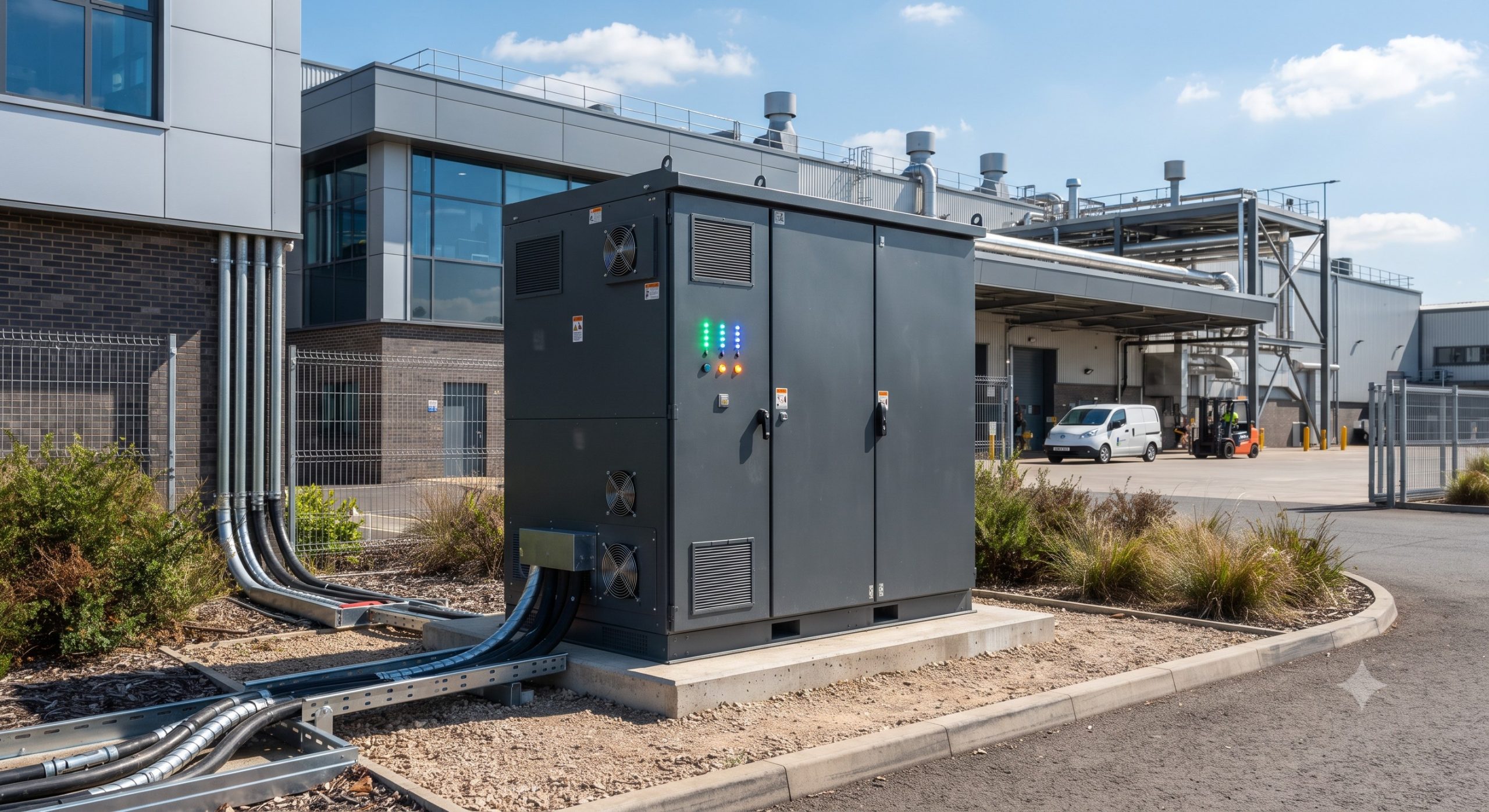
Preventing thermal runaway is not about a single feature, but a coordinated defense-in-depth strategy that spans from the cell-level chemistry to the enclosure’s fire suppression systems. Leading manufacturers like SolaX have pioneered this approach with their TRENE series, which integrates a comprehensive 4-level fire protection system .
Cell-Level Intrinsic Safety & Detection
The first line of defense is the battery cell itself. Tier-1 LFP (Lithium Iron Phosphate) cells are the industry standard due to their superior thermal stability compared to NMC chemistries. They release significantly less oxygen during thermal decomposition, making them the safer choice for large-scale deployments . However, even LFP can experience thermal events under extreme duress. Advanced Battery Management Systems (BMS) provide the first line of active defense by continuously monitoring cell voltage, current, and temperature. A state-of-the-art BMS utilizes cell-level thermal runaway detection to identify anomalies before they escalate. Furthermore, innovations in electrolyte design, such as microencapsulation of flame-retardants or temperature-responsive shutdown additives, are emerging to improve intrinsic safety, raising thermal runaway onset temperatures significantly .
Modular Containment: Compartmentalization & Cooling
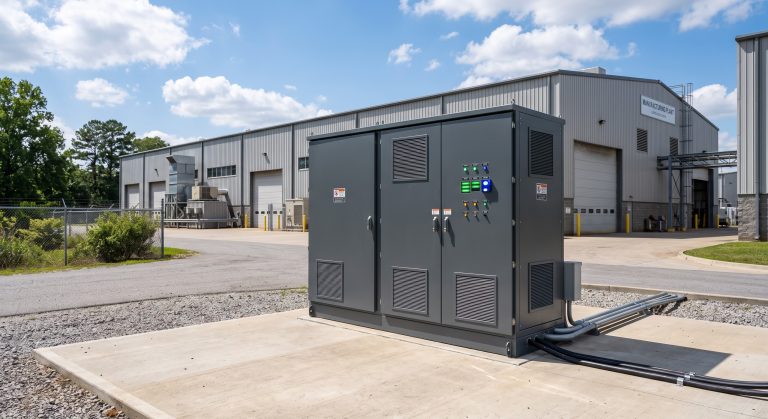
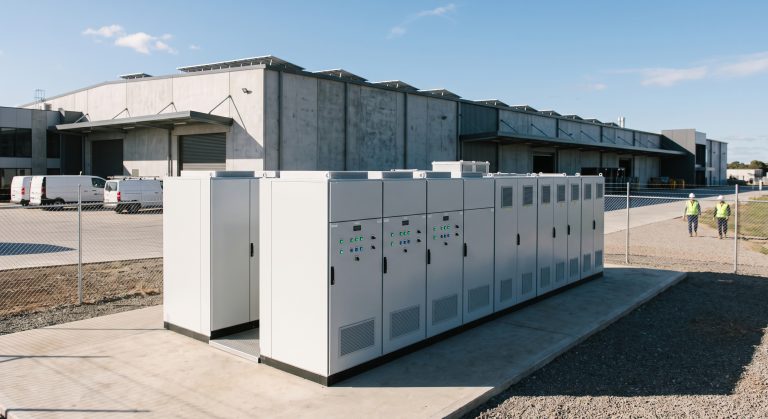
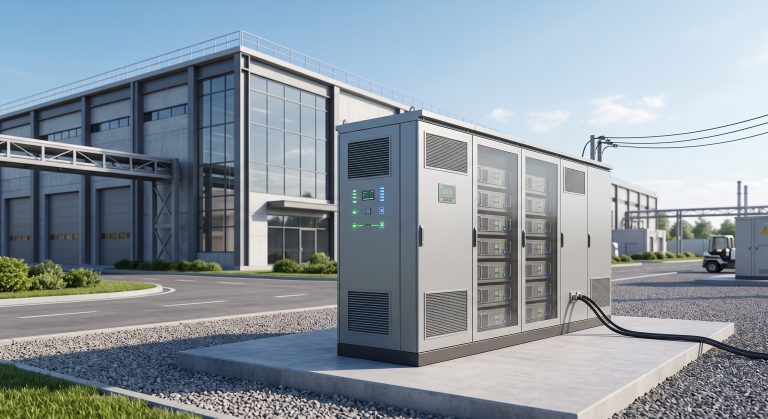
Once thermal runaway is detected, containment is key. High-end C&I cabinets utilize a compartmentalized design to prevent the spread of fire between modules, offering up to 1.5 hours of fire resistance to protect critical system components . This passive barrier is coupled with active thermal management. For example, SolaX’s TRENE system employs a liquid-cooling system that maintains precise temperature control within ±3°C, ensuring that battery packs operate within their optimal thermal envelope and minimizing the risk of hotspots that can trigger thermal events .
Active Gas Mitigation & Fire Suppression
A critical and often overlooked aspect of thermal runaway is the off-gassing of flammable and toxic vapors. In an enclosed ESS container, these gases can accumulate and, if ignited, lead to a devastating deflagration. To counter this, the industry is moving beyond reactive containment. Wärtsilä’s proprietary Active Ignition Mitigation System (AIMS) represents a paradigm shift by deliberately and safely igniting flammable gases at the earliest stage of a thermal event using sparker systems in combination with door-mounted deflagration panels . This early intervention prevents significant off-gas build-up and reduces the likelihood of deflagration. This proactive approach is validated by rigorous tests simulating worst-case scenarios, where the system prevented uncontrolled deflagrations and maintained enclosure integrity . Should an event progress, systems are equipped with aerosol and water spray fire suppression systems designed to contain and extinguish potential fires instantly .
Technical Specifications & Compliance Metrics
When evaluating BESS for thermal safety, specific technical metrics and compliance with international standards are non-negotiable. System integrators must adhere to rigorous standards like IEC 62619 for industrial battery safety, UL 9540 for ESS certification, and the stringent UL 9540A test method for evaluating thermal runaway fire propagation. A recent benchmark was set by Huawei Digital Power’s C&I GFM ESS, which passed an extreme ignition test witnessed by TÜV Rheinland under the latest UL 9540A:2025 standard, simulating a pack-level overcharge that triggered thermal runaway in 60 battery cells simultaneously .
Furthermore, venting strategies are a crucial design consideration for containerized systems. Research indicates that the design and placement of vents have a decisive influence on flame behavior and the thermal exposure of adjacent equipment during a post-deflagration fire . An optimized system design considers these factors to minimize external fire hazards.
| Key Parameter | Technical Specification |
|---|---|
| Battery Chemistry | Tier-1 LFP (Lithium Iron Phosphate) |
| System Capacity | 261kWh per cabinet, scalable to MWh (e.g., 2610kWh) |
| Nominal Power | 125kW (per cabinet) |
| Cycle Life | >8000 cycles @ 90% DoD |
| Thermal Management | Liquid Cooling with ±3°C Temperature Control |
| Safety Standards | IEC 62619, UL 9540, UL 9540A, UN38.3 |
| Enclosure Rating | IP67 |
| Fire Suppression | 4-Level: Cell Detection, Fusible MSD, Aerosol/Water Spray, Compartmentalized Design |
Commercial ROI & Asset Protection
While the primary goal of thermal runaway prevention is safety, it is intrinsically linked to financial performance. A catastrophic fire event results in significant CapEx loss, operational downtime, insurance premium hikes, and potential liability. Therefore, investing in a system with advanced safety features protects the asset’s lifetime value. Systems built with high-cycle-life LFP cells (e.g., >8000 cycles @ 90% DoD) and advanced thermal management (<3°C variation) ensure more stable performance, lower degradation rates, and higher round-trip efficiency, directly improving the Total Cost of Ownership (TCO). Features like SolaX’s AI-driven EMS, which optimizes performance and can increase dispatch revenue by up to 10%, are only viable if the underlying hardware is reliable and safe . A robust safety architecture is the bedrock upon which profitable peak-shaving and demand-response strategies are built.
Deployment Scenarios: Protecting Critical Infrastructure
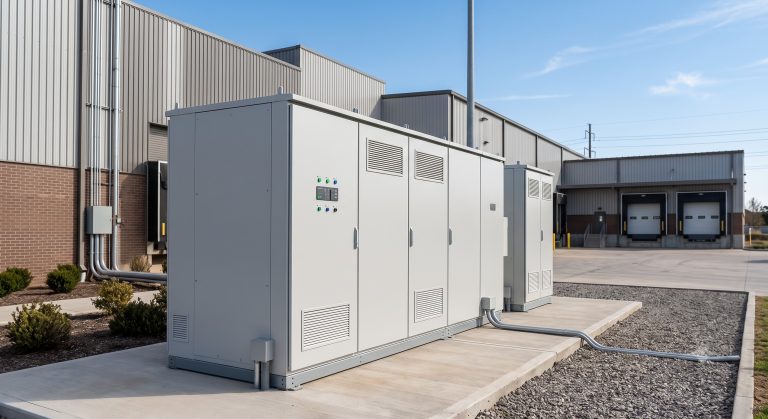
The deployment of C&I BESS spans a wide range of critical applications, from manufacturing facilities and logistics centers to EV supercharging stations and micro-grids . In these settings, continuous operation is essential. A thermal event not only halts operations but can damage sensitive adjacent equipment and disrupt grid support services. For instance, in a PV-Storage-Charging hub, a BESS fire could compromise the entire charging infrastructure. Similarly, in an industrial park, the failure of a central storage asset could lead to costly production stoppages. This drives the demand for integrated solutions where fire suppression is not an afterthought but a core design principle, ensuring the resilience of the entire energy ecosystem.

Conclusion: Building a Resilient Energy Future
Preventing thermal runaway in commercial energy storage is a complex, multi-faceted challenge that demands a holistic approach. It begins with the intrinsic thermal stability of LFP chemistry, extends through rigorous cell-level BMS monitoring and balancing, incorporates active thermal management via liquid cooling, and culminates in advanced, multi-level gas mitigation and fire suppression systems. For system architects and facility owners, the choice of a BESS partner must be guided by a deep technical evaluation of their safety architecture and adherence to international standards like UL 9540 and IEC 62619. As the industry moves toward higher-capacity, MWh-scale deployments, the sophistication of these prevention strategies will be the defining factor between a sustainable energy asset and a potential liability. Investing in advanced thermal runaway prevention is not just a safety measure; it is a fundamental pillar of a sound, long-term energy strategy.