Overview
Deploying containerized Battery Energy Storage Systems (BESS) in remote desert environments presents unique challenges and opportunities. Extreme temperatures, sand and dust ingress, and logistical isolation demand specialized engineering. This FAQ addresses critical pre-sales and post-sales concerns for B2B clients, from battery chemistry and thermal management to grid configuration and fire safety, ensuring your project achieves optimal performance and longevity in harsh arid climates.
Frequently Asked Questions
- Q1: What is the maximum cycle life and depth of discharge (DoD) for LFP batteries in desert container storage?
- The standard cycle life for Tier-1 LFP cells in desert-rated containers is 6,000 to 8,000 cycles at 80% DoD, ensuring a 10+ year operational lifespan under normal conditions. This is achieved through advanced liquid cooling that maintains optimal cell temperatures (25-35°C) and a sophisticated Battery Management System (BMS) that actively balances cells to prevent degradation from thermal stress, preserving capacity even in extreme diurnal temperature swings.
- Q2: How does the liquid cooling system work to protect the BESS in extreme desert heat?
- The integrated liquid cooling system functions as a closed-loop thermal regulation circuit, circulating a water-glycol coolant through cold plates attached to each battery module to efficiently dissipate heat generated during charge/discharge cycles. In desert environments with ambient temperatures exceeding 50°C, the system dynamically adjusts flow rates and chiller operation to maintain a consistent internal temperature, preventing thermal runaway and ensuring the system operates within its optimal efficiency window, which is critical for maintaining cycle life guarantees.
- Q3: What fire safety and thermal runaway prevention mechanisms are standard for desert container BESS?
- Desert container BESS are equipped with multi-tiered fire safety systems, including early gas detection (H2, CO), aerosol or water-mist suppression, and explosion venting panels, all designed to isolate a thermal event before it propagates. The system’s BMS continuously monitors cell voltage, temperature, and internal resistance; in the event of an anomaly, it initiates an automatic shutdown and triggers the suppression system, providing critical protection in remote locations where external emergency response times are extended.
- Q4: Can the BESS be configured for both grid-tie and off-grid operation in a remote desert site?
- Yes, the bi-directional Power Conversion System (PCS) is designed for seamless grid-tie and off-grid (islanding) configuration, enabling black start capability and stable micro-grid formation when the main grid is unavailable. In off-grid mode, the system’s Energy Management System (EMS) prioritizes load stability and PV integration, while in grid-tie mode, it can execute peak shaving and demand response strategies to maximize ROI, making it versatile for remote mining, military, or community projects.
- Q5: How is the BMS monitored and maintained remotely in a desert environment?
- Remote monitoring and maintenance are conducted via a cloud-based EMS platform that provides real-time data on cell voltages, temperatures, SoC, and SoH, with automated alerts for any performance deviations or pre-fault conditions. The system supports secure API integration for SCADA compatibility, allowing engineers to remotely calibrate settings, perform firmware updates, and conduct diagnostics, which significantly reduces the need for costly on-site visits and enhances operational uptime in isolated desert locations.
- Q6: What is the ROI calculation and payback period for a desert deployment considering harsher conditions?
- The ROI calculation is robust, driven by high solar PV yield in deserts, peak shaving against expensive diesel peaker plants, and potential revenue from frequency regulation, typically yielding a payback period of 4 to 6 years. While capital costs are higher due to reinforced cooling and IP65+ enclosures, the operational expenditure (OPEX) is minimized through increased solar self-consumption and reduced diesel dependency, with our 10-year performance warranty providing a solid assurance on LCOE (Levelized Cost of Energy) projections.
- Q7: What scalability and expansion options are available for desert container BESS projects?
- The modular architecture supports parallel scalability, allowing you to start with a standard container (e.g., 2-5 MWh) and expand by connecting additional containers in parallel on the AC or DC busbar to meet growing energy demands. This ‘pay-as-you-grow’ model allows for predictable capital expenditure (CAPEX) and seamless system integration, ensuring the initial deployment is cost-effective and the infrastructure can be upgraded without major re-engineering.
- Q8: What IP and corrosion protection ratings ensure the BESS survives sandstorms and dust?
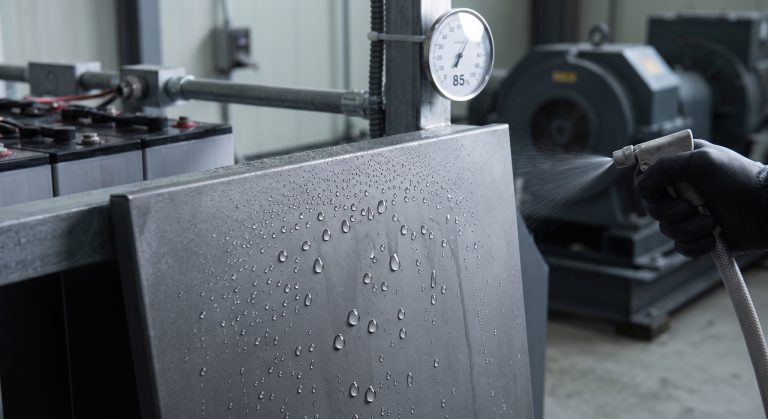
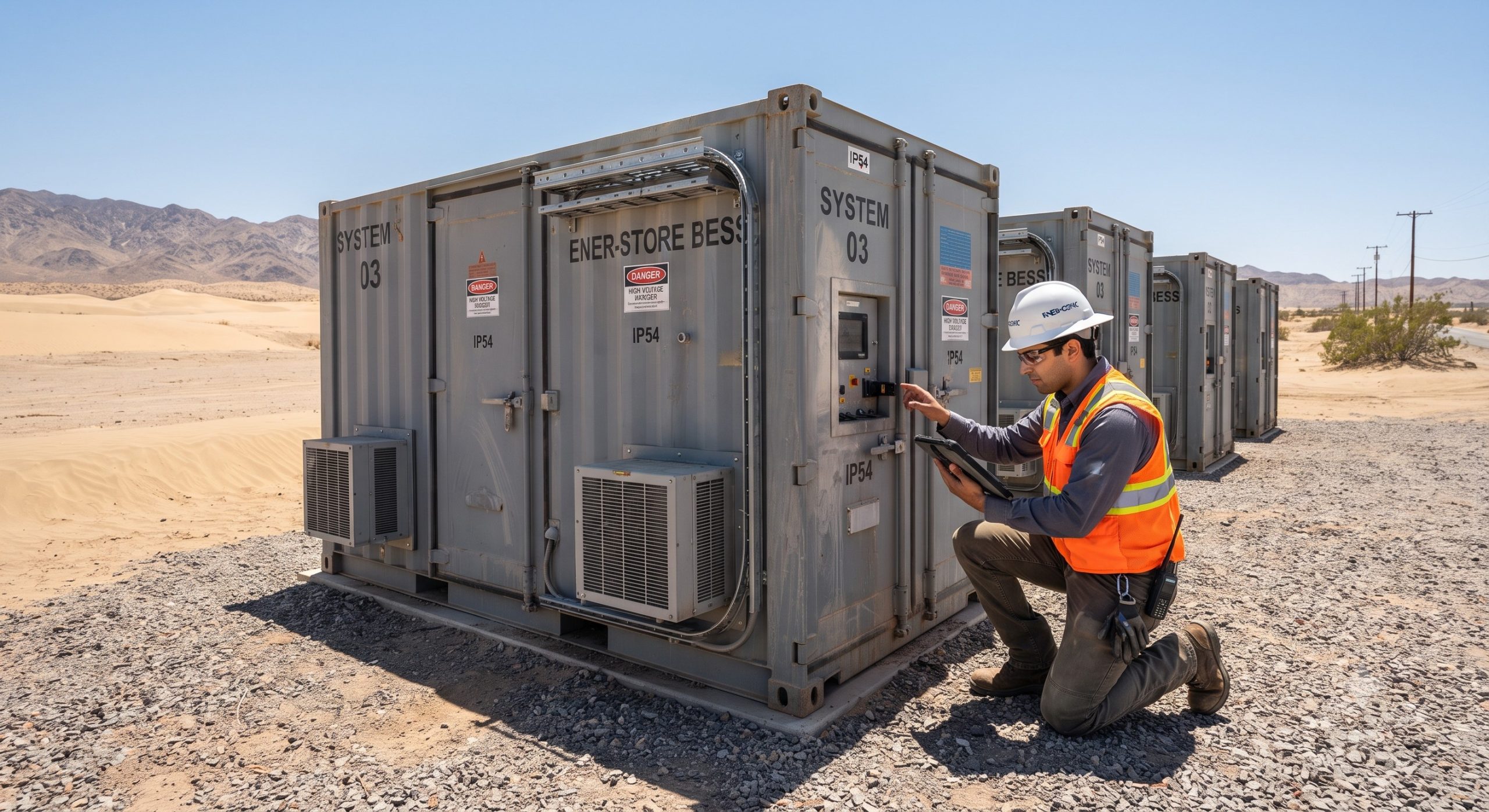
- Desert containers are engineered with an IP65 rating for the electronic and battery compartments, offering complete dust-tight protection and protection against low-pressure water jets, effectively shielding internals from fine sand and dust ingress. Additionally, the enclosure incorporates C5-M corrosion protection (high anti-corrosion coating) to withstand the abrasive and corrosive effects of sandstorms, ensuring the structural integrity and electrical safety of the system over its entire lifecycle.