Overview
For B2B engineers and procurement specialists, understanding the physical and technical specifications of an outdoor commercial battery cabinet is the first step toward a successful energy storage deployment. While the weight of a standard outdoor battery cabinet varies by capacity and cooling system, a typical 200kWh+ LFP cabinet weighs between 2,000 kg and 2,800 kg, with high-capacity units reaching nearly 3,800 kg. This FAQ covers critical pre-sales and post-sales questions, from system weight and cycle life to safety protocols and ROI calculation.
Frequently Asked Questions
- Q1: What is the standard weight of an outdoor commercial battery cabinet?
- The standard weight of a 200-215 kWh outdoor commercial battery cabinet is approximately 2,000 kg to 2,800 kg (4,400 to 6,170 lbs). For example, a 212 kWh Discover AES 210 cabinet weighs 2,490 kg , while a SolaX 215 kWh system weighs 2,800 kg . Lower capacity units around 100 kWh typically weigh about 1,400 kg, and high-capacity 400 kWh+ cabinets can weigh up to 3,800 kg .
- Q2: What battery chemistry is used in these cabinets, and what is their cycle life?
- Most modern outdoor cabinets utilize Lithium Iron Phosphate (LFP) battery cells for their thermal stability and long lifespan. The standard cycle life for these systems is typically 3,500 cycles at 90-100% Depth of Discharge (DoD), maintaining over 80% State of Health (SOH) . This long cycle life is guaranteed through active BMS cell balancing and advanced liquid cooling systems that maintain optimal operating temperatures .
- Q3: How does the cooling system affect the cabinet’s performance and weight?
- Advanced liquid cooling is the gold standard for C&I BESS, as it maintains cell temperature uniformity and extends battery life, with some coolant systems rated for 10 years without replacement . While liquid cooling adds weight due to the coolant and heat exchange hardware, it enables higher energy density and performance in outdoor environments ranging from -25°C to 55°C .
- Q4: Is the system scalable, and how many cabinets can be connected in parallel?
- Yes, these systems are modular and highly scalable. Depending on the manufacturer, you can connect up to 16 units in parallel to scale from a single 100kWh cabinet to multi-MWh commercial systems . For instance, SolarEdge CSS-OP systems allow parallel connections up to 1 MWh . Scalability is achieved through custom DC busbar linkage and an integrated Energy Management System (EMS).
- Q5: How is ROI and the Levelized Cost of Energy (LCOE) calculated for commercial BESS?
- ROI is primarily calculated through peak shaving arbitrage—charging during low-cost off-peak hours and discharging during high-cost peak periods to reduce demand charges. The LCOE is optimized by the system’s round-trip efficiency (>95%) and 10-year performance warranty, ensuring minimal conversion losses and consistent battery degradation rates of less than 20% over 3,500 cycles .
- Q6: What is the difference between grid-tie and off-grid configuration for these cabinets?
- Grid-tie configuration is used for peak shaving and demand response, synchronizing with the utility grid to offset high energy costs. Off-grid (islanding) mode allows the cabinet to provide backup power during grid outages or operate as a standalone micro-grid . Most modern cabinets feature a bi-directional PCS and an integrated grid-connected and off-grid switching unit for seamless transition .
- Q7: How does the BMS monitor and prevent thermal runaway?
- The Battery Management System (BMS) provides real-time monitoring of cell voltage, current, and temperature. To prevent thermal runaway, cabinets feature multi-tier fire safety mechanisms including early gas/smoke detection, IP67-rated pack isolation, double-level aerosol fire suppression, and AI-driven risk warnings . These systems are designed to meet international safety standards such as UL 9540 and IEC 62619.
- Q8: What are the recommended O&M practices for outdoor cabinets?
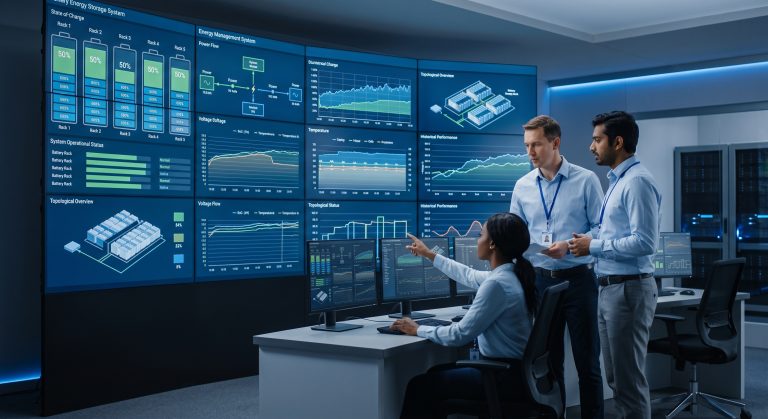
- Comprehensive Operations and Maintenance (O&M) includes annual visual inspections of the IP55/IP66 enclosure for corrosion, checking air conditioning and liquid cooling coolant levels, and verifying BMS software updates. Post-sales support typically includes a 10-year standard warranty and remote monitoring through the EMS platform to track the health of individual battery modules .