COMMERCIAL SYSTEMS ENGINEERING REFERENCE MANUAL: REMOTE AREA POWER SUPPLY SOLUTIONS
EXECUTIVE SUMMARY
This document serves as the definitive technical reference for the deployment and operation of our Tier-1 Remote Area Power Supply (RAPS) solutions. Designed to address the unique challenges of off-grid and weak-grid environments, these systems provide reliable, sustainable, and cost-effective power for mining operations, island communities, critical infrastructure, and rural electrification projects. Leveraging advanced liquid-cooled LFP battery technology and intelligent bi-directional inverters, our RAPS platform ensures high availability, low total cost of ownership, and seamless integration with renewable energy sources, forming the backbone of independent, resilient micro-grids.
SYSTEM ARCHITECTURE & SAFETY
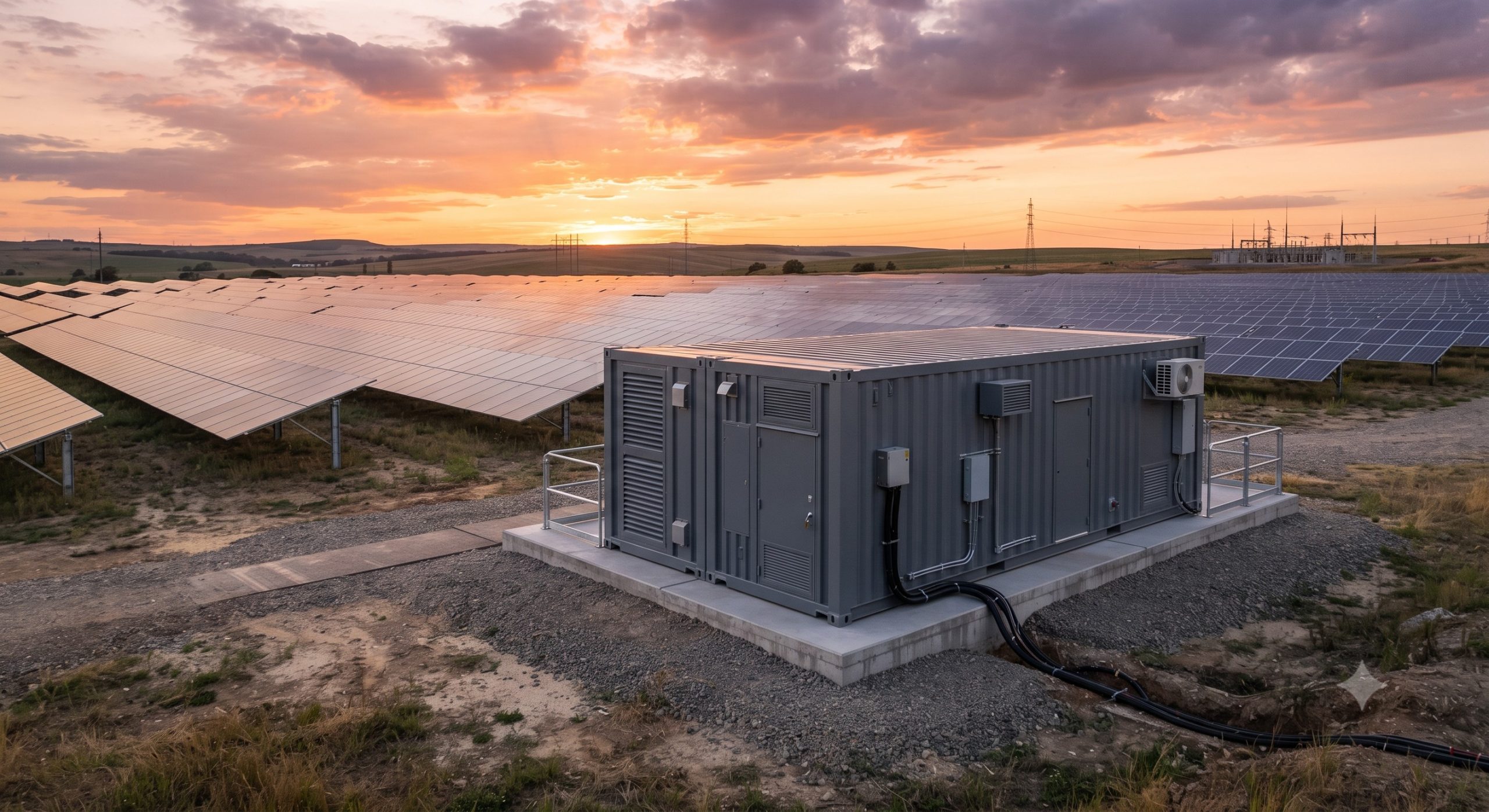
The architecture of our RAPS solution is predicated on a modular, containerized design that simplifies logistics, installation, and maintenance. The core system integrates four primary subsystems:
1. POWER CONVERSION SYSTEM (PCS): A bi-directional, grid-forming inverter with a wide DC input voltage range, capable of providing a stable AC output under extreme load variances. It supports seamless islanding and black-start capabilities, essential for remote applications.
2. BATTERY ENERGY STORAGE SYSTEM (BESS): High-capacity, Tier-1 LFP battery racks housed in a thermally managed enclosure. The system utilizes a high-voltage DC bus to minimize current losses and improve overall system efficiency.
3. BATTERY MANAGEMENT SYSTEM (BMS): A multi-layered BMS provides cell-level voltage, temperature, and current monitoring. Its active balancing algorithm ensures maximum usable capacity and extends battery life, even under demanding charge-discharge cycles.
4. ENERGY MANAGEMENT SYSTEM (EMS): An intelligent control platform that optimizes system dispatch based on load profiles, PV generation forecasts (if applicable), and battery state-of-charge. It manages the transition between grid-connected and islanded modes, ensuring power continuity.
Safety is an architectural cornerstone. We implement a multi-level protection scheme including: redundant contactors, high-speed fuses, insulation monitoring, and an advanced three-stage fire suppression system. The system is engineered to prevent thermal runaway propagation at the cell, module, and rack levels, meeting the most stringent international safety standards.
KEY FEATURES
– FEATURE 1: Robust Islanding & Black-Start Capability: Designed to operate as a standalone grid and restart from a complete shutdown without external power, ensuring reliability in the most isolated locations.
– FEATURE 2: High-Efficiency Liquid Cooling: Maintains optimal battery temperature (within ±2°C range) to maximize cycle life, improve system efficiency, and allow for high C-rate applications in demanding climates, from desert heat to arctic cold.
– FEATURE 3: Tier-1 LFP Cell Chemistry with Active Balancing: Utilizes the safest and most durable lithium-ion chemistry. The advanced BMS employs active balancing to ensure all cells are kept at an equal state of charge, mitigating capacity loss and extending the system’s operational lifespan beyond 10,000 cycles.
– FEATURE 4: Scalable & Modular Design: Allows for parallel expansion of multiple energy storage containers to meet growing power and energy needs. This modularity offers a ‘pay-as-you-grow’ approach, reducing initial capital expenditure.
– FEATURE 5: Comprehensive Remote Monitoring & Diagnostics: Our cloud-based EMS platform provides 24/7 visibility into system performance, health, and status. Predictive analytics and remote firmware updates minimize site visits and operational expenditure.
COMPLIANCE & STANDARDS
Our RAPS solutions are engineered and certified to meet the full spectrum of global standards, ensuring seamless project financing and regulatory approval. Key certifications include:
– SAFETY: UL 9540 (Energy Storage Systems and Equipment), IEC 62619 (Secondary Cells and Batteries), and NFPA 855 (Standard for the Installation of Stationary Energy Storage Systems).
– PERFORMANCE: IEC 62933 (Electrical Energy Storage Systems), IEEE 1547 (Standard for Interconnection and Interoperability of Distributed Energy Resources with Associated Electric Power Systems Interfaces).
– ENVIRONMENTAL: RoHS, REACH, and compliance with UN 38.3 for transportation.
Our commitment to quality is reflected in our ISO 9001 and ISO 14001 certified manufacturing facilities. All systems undergo rigorous factory acceptance testing (FAT) prior to shipment to guarantee performance upon arrival at the project site.
TECHNICAL SPECIFICATIONS
Below are the primary technical parameters for our standard RAPS platform. For customized engineering solutions, please consult our project engineering team.
| Parameter | Specification |
|---|---|
| Nominal DC Voltage Range | 600 – 900 Vdc |
| Nominal AC Power Output | 250 kW / 500 kW / 1000 kW |
| Usable Energy Capacity (C-Rate Dependent) | 500 kWh / 1000 kWh / 2000 kWh |
| Battery Cell Chemistry | Tier-1 LFP (Lithium Iron Phosphate) |
| Cooling Method | Smart Liquid Cooling (Ethylene-Glycol/Water) |
| Ambient Operating Temperature Range | -30°C to +55°C (With Derating) |
| Cycle Life (@80% EOL, 25°C) | 10,000 cycles (at 0.5C, 25°C) |
| Response Time | < 20 ms (for full power dispatch) |
| Integrated Fire Suppression System | Aerosol / Gaseous Agent (FM-200 equivalent) |
| Dimensions (LxWxH) | Standard 20ft (6.06m x 2.44m x 2.59m) / 40ft (12.19m x 2.44m x 2.59m) Container |
– Core Subsystems: Containerized ESS, Bi-directional PCS, BMS, Local EMS
– System Round-Trip Efficiency: ≥ 90% at nominal operating point
– Nominal AC Output Voltage: 400 V (3P4W) / 480 V (3P4W)
– Nominal Frequency: 50 Hz / 60 Hz (Switchable)
– Protection Rating (Enclosure): IP 55 (Ingress) / C3-M (Corrosion)
– Communication Protocols: Modbus TCP/IP, IEC 61850, CAN 2.0
INDUSTRIAL DEPLOYMENT
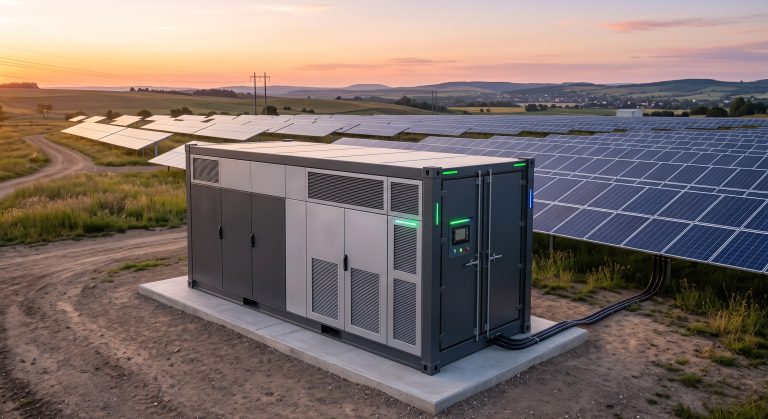
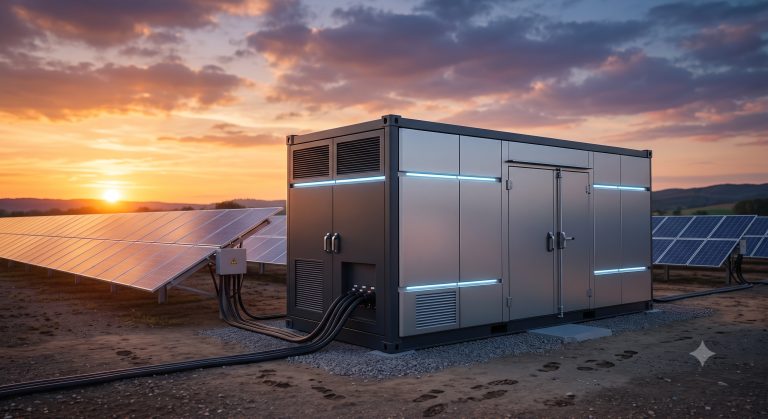
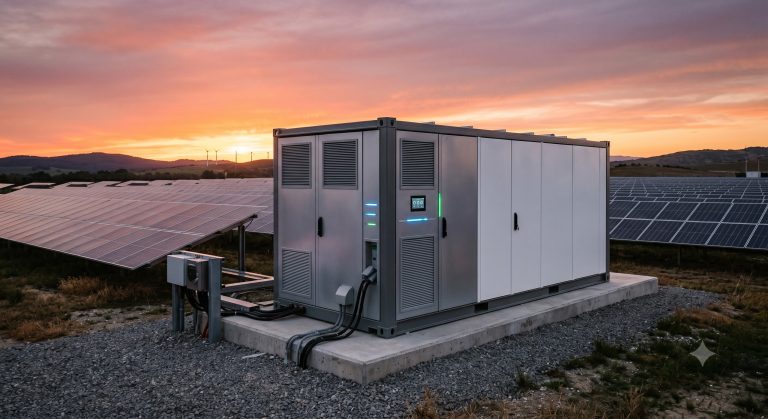
A typical RAPS installation involves the integration of the storage container with a PV array and/or diesel generator to form a hybrid micro-grid. The core operational modes are:
– MODE 1: PV-STORAGE HYBRID: The system is primarily charged by solar PV, providing clean energy during the day and discharging stored energy during peak demand and nighttime hours to maximize renewable fraction and minimize fuel consumption.
– MODE 2: DIESEL-STORAGE HYBRID: The storage system allows the diesel generator to operate at its most efficient load point, significantly reducing fuel consumption and maintenance. The ESS also acts as a spinning reserve, providing instant power during generator start-up or in case of failure.
– MODE 3: WEAK GRID SUPPORT: The system can stabilize a weak or unstable grid by providing rapid frequency and voltage regulation, acting as a virtual synchronous generator to improve power quality and prevent outages.
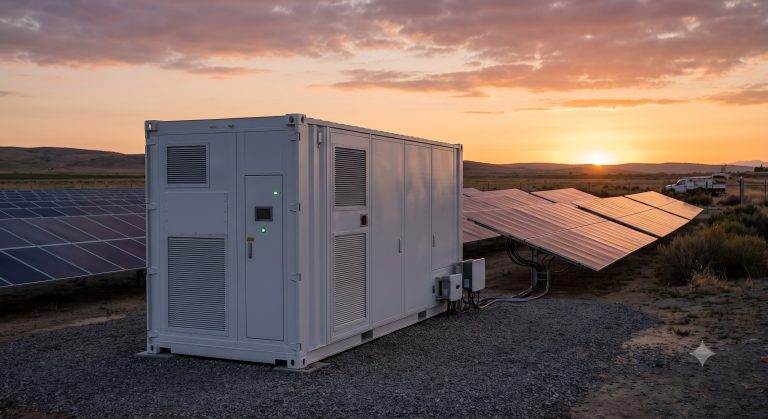
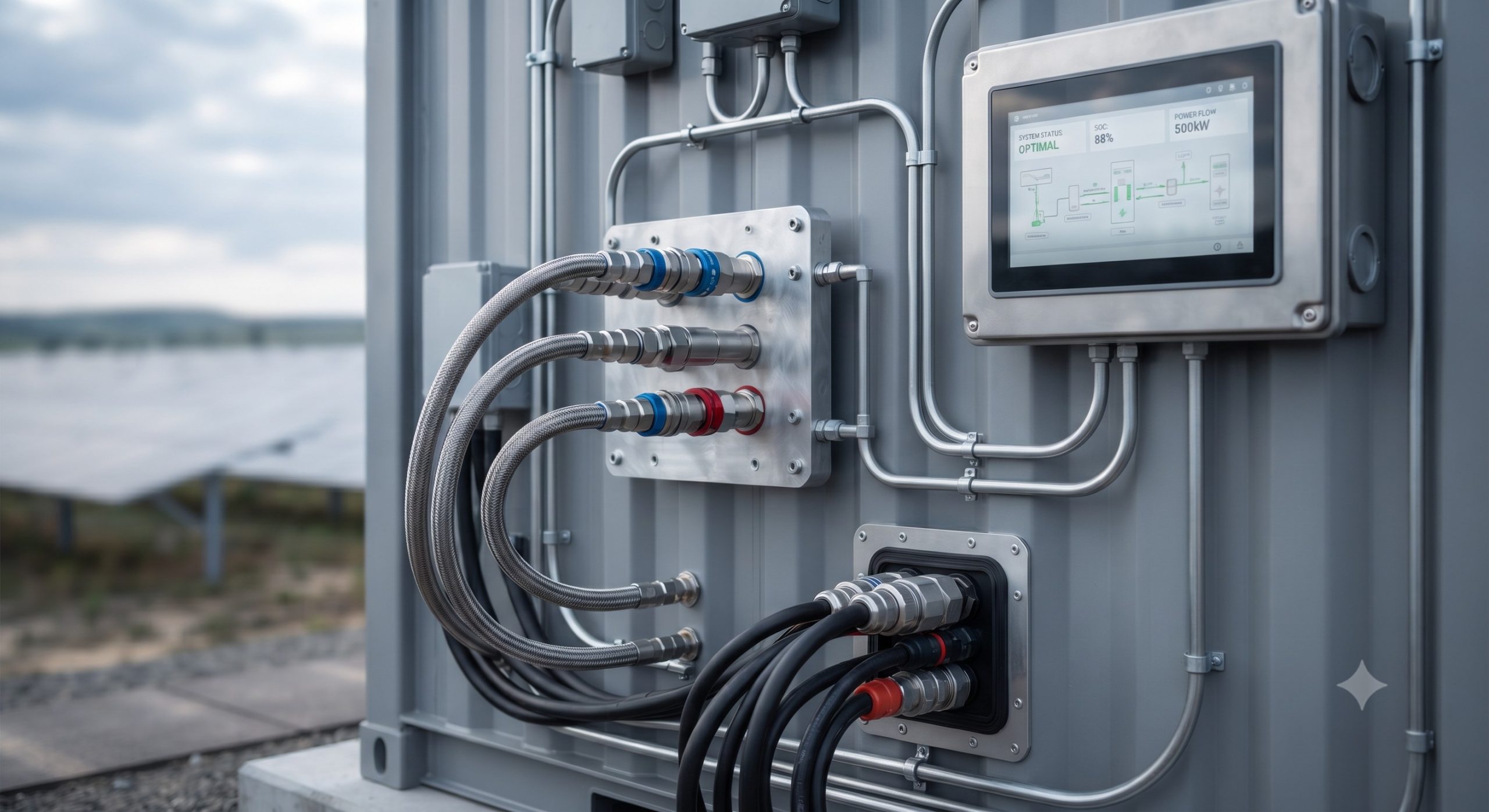
The platform is designed for rapid deployment. The standardized 20ft/40ft container footprint allows for efficient transport via sea or road. On-site installation is simplified with pre-wired power and communication terminals, enabling a ‘plug-and-play’ setup that minimizes construction time and risk.
📥 Download Technical Specification
Click the button below to view or download the full official PDF datasheet.