Overview
Commercial and Industrial (C&I) battery energy storage systems (BESS) are critical assets for energy resilience and cost savings. However, extreme weather conditions—from scorching heatwaves to freezing cold snaps—pose unique challenges to their performance, safety, and lifespan. This FAQ addresses the most pressing technical concerns from B2B engineers, procurement specialists, and facility managers, focusing on how to maintain system integrity, ensure safe operation, and protect your investment when the mercury soars or plummets.
Frequently Asked Questions
- Q1: How does extreme heat impact the cycle life and safe operation of a C&I battery system?
- Extreme heat accelerates the degradation of lithium-ion cells, directly reducing the total cycle life by up to 30% for every 10°C increase above the optimal 25°C operating temperature. Our advanced liquid cooling systems maintain a stable core temperature, even in ambient heat up to 50°C, ensuring a full 6,000+ cycle life at 90% Depth of Discharge (DoD). This active thermal management prevents the risk of thermal runaway by dissipating heat evenly and keeping cells within their safe operating window.
- Q2: What happens to the BMS and battery performance during a freezing cold snap?
- In sub-zero temperatures, a Battery Management System (BMS) will automatically activate internal heaters to warm the cells to a safe charging temperature (typically above 0°C) before allowing charge current. While lithium-ion batteries cannot be charged below 0°C without causing permanent damage, our system’s self-heating function ensures reliable discharging for grid support and will delay charging until the pack is thermally preconditioned, preventing lithium plating and preserving long-term capacity.
- Q3: How does the fire safety system and thermal runaway prevention work in extreme conditions?
- Our multi-tier fire safety system provides active protection through early gas and smoke detection, triggering isolation and suppression before thermal runaway can propagate. In extreme heat, the system’s sensors have enhanced sensitivity and work in concert with the liquid cooling to rapidly extract excess heat from a suspect cell. The enclosure is constructed with fire-retardant materials and features a venting path to safely direct any potential outgassing away from personnel and critical equipment, maintaining compliance with UL 9540A standards even under duress.
- Q4: Can the system maintain grid-tie functionality during severe storms or flooding?
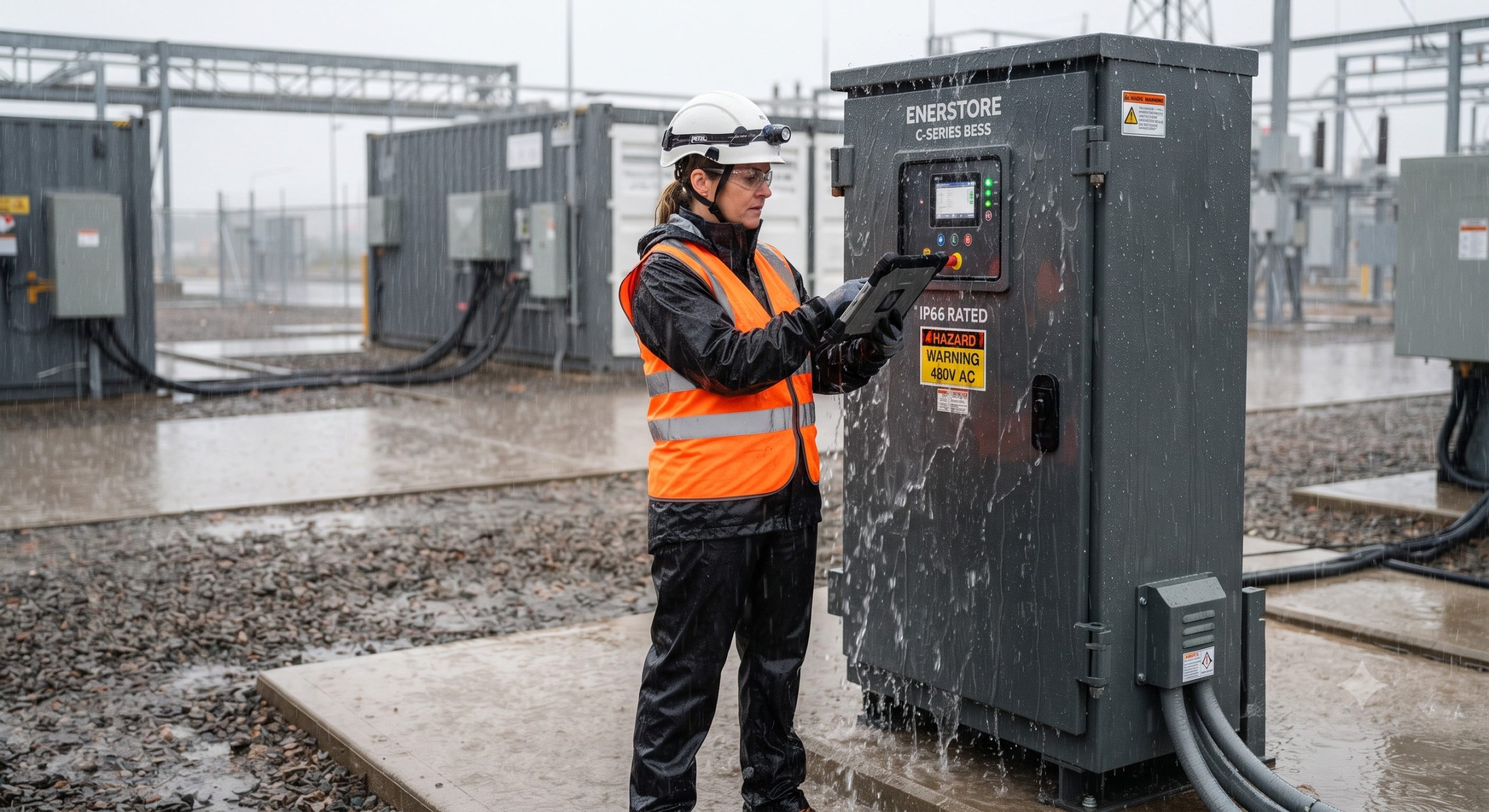
- Yes, the system’s grid-tie functionality is designed to be resilient, with the PCS (Power Conversion System) featuring rapid islanding detection to automatically disconnect from the grid in milliseconds during a disturbance. The cabinet boasts an IP65+ enclosure rating, providing complete protection against dust and powerful water jets, safeguarding all internal electronics and the BMS from flood damage. This ensures seamless transition to off-grid island mode to keep your critical facility loads powered, even when the utility grid fails during a storm.
- Q5: How do I calculate the ROI and LCOE for the system given climate-related derating?
- The Return on Investment (ROI) calculation must factor in a conservative derating factor (typically 2-3% per year) to account for accelerated aging in harsh climates, alongside peak shaving arbitrage revenues. Our Levelized Cost of Energy (LCOE) is calculated using a 10-year performance guarantee that includes capacity degradation limits, ensuring your financial model is accurate. By integrating demand response and time-of-use (ToU) optimization within the EMS, you can maximize returns and typically see a payback period of 3-5 years, even when accounting for the system’s protective self-consumption.
- Q6: What BMS monitoring parameters should I watch closely during extreme heat events?
- During heatwaves, you should vigilantly monitor the BMS for maximum cell temperature, delta-T (temperature variance between cells), and internal impedance. Our remote monitoring platform allows you to set custom alerts for these parameters, notifying your team if a cell exceeds a 5°C variance or if cooling system pressure drops. Proactive monitoring of these inter-cell balancing protocols ensures that no single cell is overstressed, maintaining the overall pack’s health and safety during prolonged high-temperature exposure.
- Q7: Are the cooling systems and electrical components corrosion-resistant in coastal or humid environments?
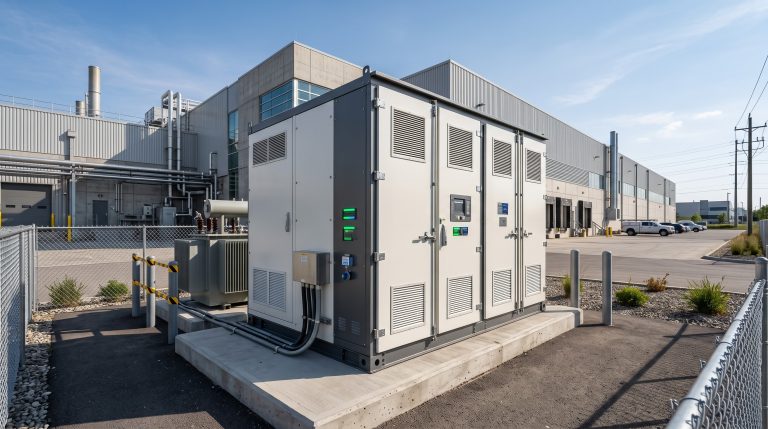
- Absolutely. The outdoor enclosure is built with marine-grade aluminum and features an anti-corrosion coating (C5-M level) to protect against salt mist and high humidity. The liquid cooling loop uses a corrosion-inhibited coolant, and all electronic connections are sealed and protected, ensuring the system remains reliable in industrial environments near the coast where salt spray can be a major issue.
- Q8: What is the recommended maintenance schedule to ensure reliability post-extreme weather?
- We recommend a comprehensive post-weather inspection, including a visual check of the enclosure for breaches, verification of cooling system fluid levels, and a full BMS diagnostic scan to review historical data for any anomalies. Regular O&M (Operation and Maintenance) every six months includes tightening of electrical connections, calibration of the BMS sensors, and a functional test of the fire suppression system to ensure everything is ready for the next weather event.