MWH-SCALE LIQUID COOLED STORAGE CAPABILITIES BLUEPRINT: UTILITY-SCALE BESS DIMENSIONAL DRAWINGS
EXECUTIVE SUMMARY
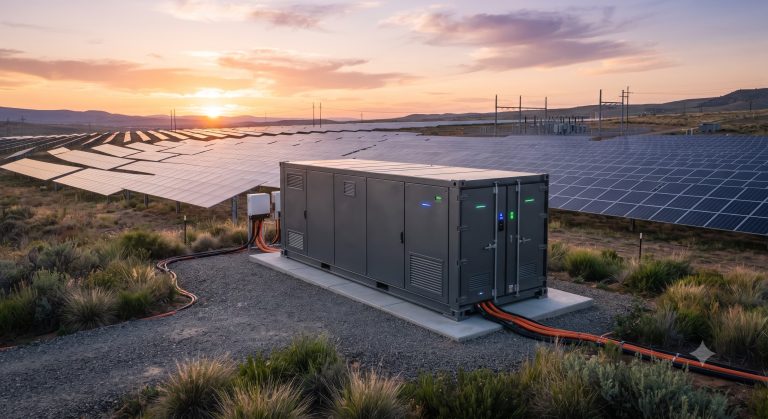
This document serves as the official commercial technical overview and dimensional datasheet for our Utility-scale Battery Energy Storage System (BESS) platform. Designed for seamless integration into high-capacity renewable plants, transmission and distribution (T&D) grid support, and large-scale industrial micro-grids, this platform is anchored by advanced liquid thermal management and a robust, containerized architecture. The system is engineered to deliver superior performance over a 20-year operational life, ensuring optimal levelized cost of storage (LCOS) for utility owners and independent power producers (IPPs).
This overview details the critical dimensional drawings, internal topology, and key performance indicators necessary for preliminary engineering, site layout, and system integration planning. All data presented reflects the standard 20-foot ISO container-based configuration, scalable to multi-MWh sites through parallel AC busbar connection.
SYSTEM ARCHITECTURE & SAFETY
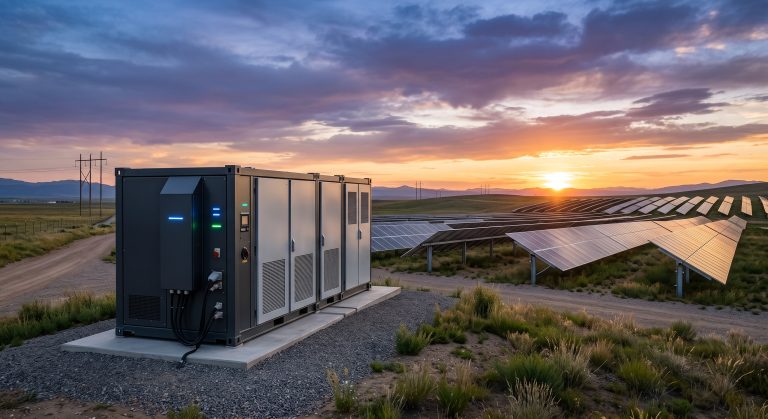
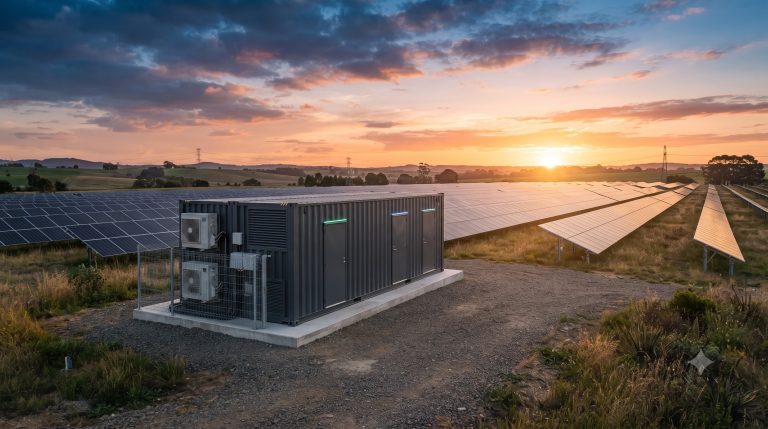
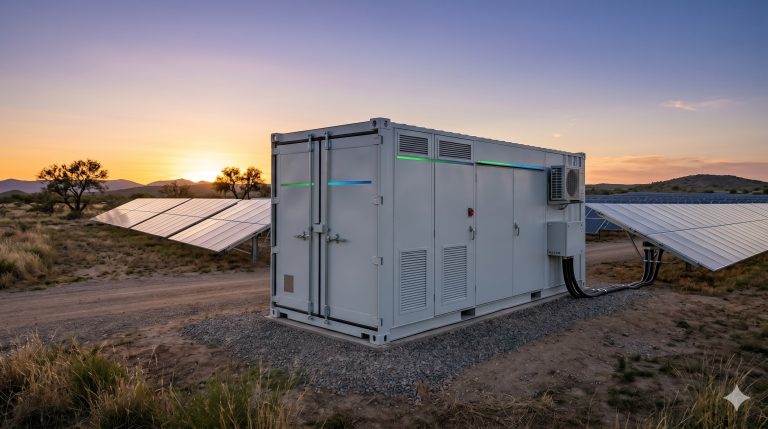
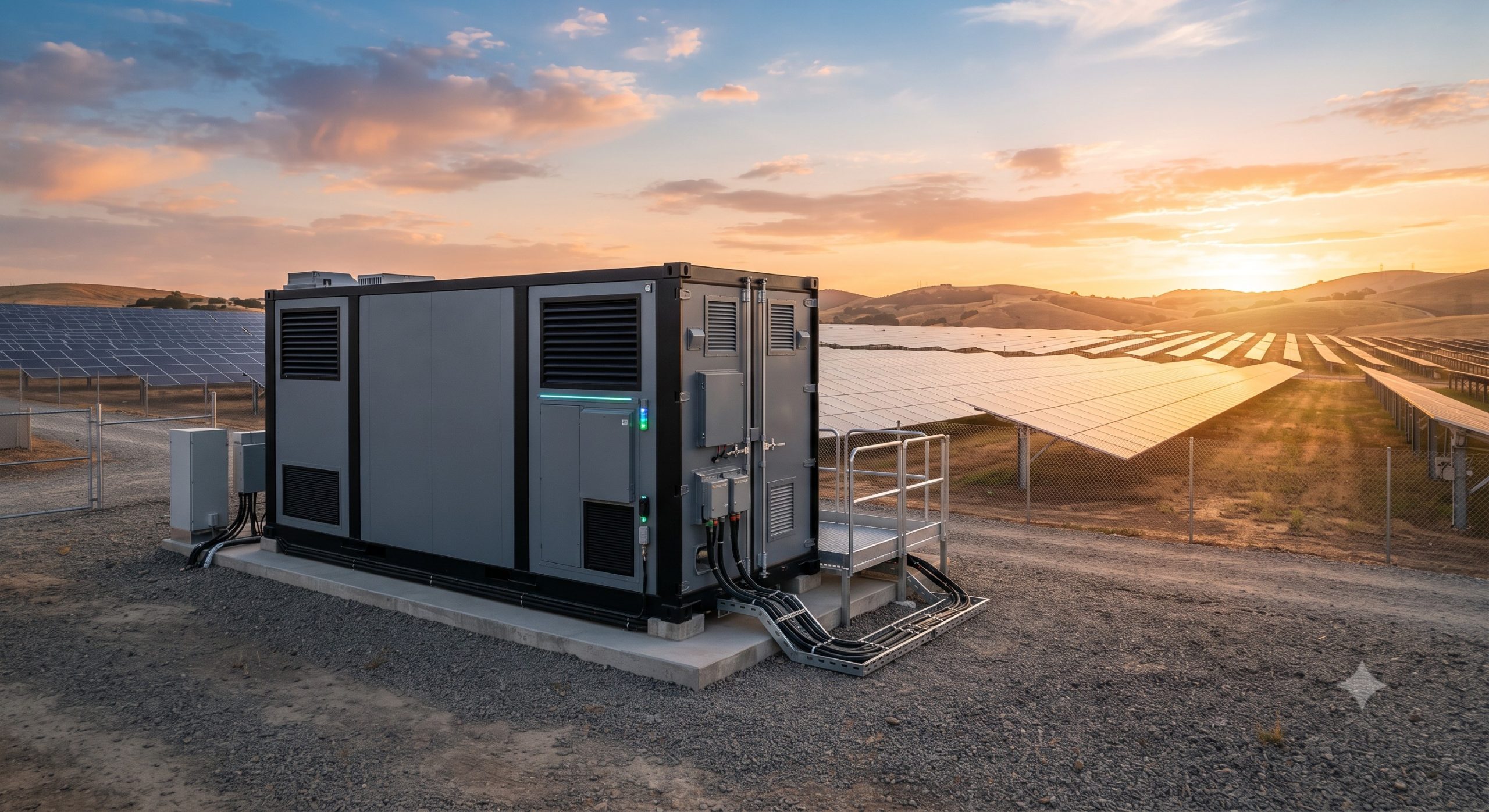
The system is housed within a ruggedized, weatherproof 20-foot ISO container chassis, engineered for outdoor deployment across diverse environmental conditions (rated for -30°C to +55°C). The architecture is a modular, three-layer system:
– BATTERY RACK LAYER: Comprising multiple independent racks populated with Tier-1 prismatic LFP cells. Each rack is equipped with a dedicated Battery Management System (BMS) for real-time cell voltage, temperature, and state-of-charge (SoC) monitoring.
– THERMAL MANAGEMENT LAYER: An integrated liquid cooling and heating system circulates a dielectric coolant through cold plates in direct contact with the battery modules. This closed-loop system ensures a cell temperature gradient of <5°C, dramatically enhancing cycle life and enabling high C-rate operation.
- POWER CONVERSION LAYER: A bi-directional Power Conversion System (PCS) is integrated directly into the container or housed in an adjacent inverter station. The PCS manages AC-to-DC conversion for charging and DC-to-AC for discharging, providing grid-forming and grid-following capabilities.
SAFETY PROTOCOLS: Safety is the paramount design principle. The system includes multi-layered active protection: continuous off-gas detection (H2, CO, VOCs), aerosol-based fire suppression (NFPA 69 compliant), and an emergency venting system. The dimensional design allocates specific buffer zones (pressure relief pathways) as detailed in the appended structural diagrams.
KEY FEATURES
- UNMATCHED ENERGY DENSITY: Leverages high-capacity 314Ah LFP cells to achieve a nominal energy capacity of 5.0 MWh per 20-foot container.
- SUPERIOR THERMAL STABILITY: Liquid cooling maintains optimal operating temperatures, reducing auxiliary power consumption and preventing thermal runaway propagation.
- HIGH CYCLE LIFE: Guarantees > 8,000 cycles at 0.5C charge/discharge to 90% Depth of Discharge (DoD), with a calendar life exceeding 20 years.
– INTEGRATED SAFETY SYSTEMS: Active hazard management with multilevel gas detection, automatic fire suppression, and fail-safe contactors.
– GRID-SCALE PERFORMANCE: Rapid response time of < 50ms, supporting primary frequency response, peak shaving, and black-start capabilities.
- MODULAR & SCALABLE: Designed for parallel interconnection via standard AC busbars, allowing easy scaling from 5 MWh to multi-hundred MWh projects.
COMPLIANCE & STANDARDS
This BESS platform is designed and verified in accordance with the most stringent international standards:
- UL 9540A: Test method for evaluating thermal runaway fire propagation in battery systems. Passed with no propagation.
- UL 9540: Standard for Safety for Energy Storage Systems and Equipment.
- IEC 62619: Requirements for secondary lithium cells and batteries used in industrial applications.
- IEC 62477-1: Safety requirements for power electronic converter systems and equipment.
- UN 38.3: Transport of dangerous goods for lithium batteries.
- IEEE 1547: Standard for Interconnection and Interoperability of Distributed Energy Resources with Associated Electric Power Systems Interfaces.
All critical components, including BMS, PCS, and EMS, are certified to these standards, ensuring bankability and ease of permitting.
TECHNICAL SPECIFICATIONS
DIMENSIONAL DRAWINGS (STANDARD 20-FT CONTAINER):
- EXTERNAL DIMENSIONS (L x W x H): 6,058 mm x 2,438 mm x 2,896 mm (20 ft x 8 ft x 9.5 ft).
- INTERNAL USABLE FLOOR AREA: Approx. 12.6 m², optimized for high-density racking.
- CONTAINER WEIGHT (UNLADEN): 12,500 kg.
- SYSTEM WEIGHT (FULLY LOADED): 43,000 kg.
- CABLE ENTRY: Bottom-entry via cable glands (A/C and communication) to maintain a clean exterior profile.
- GROUND CLEARANCE: 300 mm to facilitate airflow and flood protection.
- ACCESS DOORS: Two sets of double doors at opposing ends for maintenance and airflow, requiring a minimum service clearance of 1,500 mm on each side.
| Parameter | Specification |
|---|---|
| Nominal Energy Capacity | 5.0 MWh (at 0.5C, +25°C) |
| Nominal Voltage (DC) | 1331.2 Vdc |
| Operating Voltage Range (DC) | 1128 Vdc to 1456 Vdc |
| Standard Charge / Discharge Power | 2.5 MW (0.5C) |
| Peak Power (1C, 10 min) | 5.0 MW |
| Round-Trip Efficiency (DC, 0.5C) | ≥ 95.0% |
| Cooling Method | Smart Liquid Cooling (Ethylene Glycol/Water mix) |
| Cell Chemistry | Tier-1 LFP (Lithium Iron Phosphate) |
| Cell Model & Capacity | 314 Ah Prismatic |
| Cycle Life (@ 0.5C, 25°C, 90% DoD) | > 8,000 cycles to 70% EOL |
| Operating Temperature Range | -30°C to +55°C (Derating above +45°C) |
| Ingress Protection (IP) Rating | IP 54 (Container chassis) |
| Fire Suppression System | Aerosol-based, with off-gas detection |
| Communication Interface | Modbus TCP, IEC 61850, DNP3 |
| Certifications | UL 9540, IEC 62619, UN 38.3 |
INDUSTRIAL DEPLOYMENT
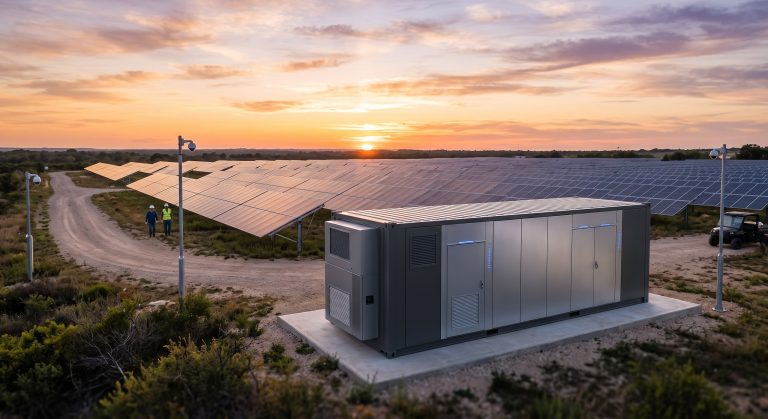
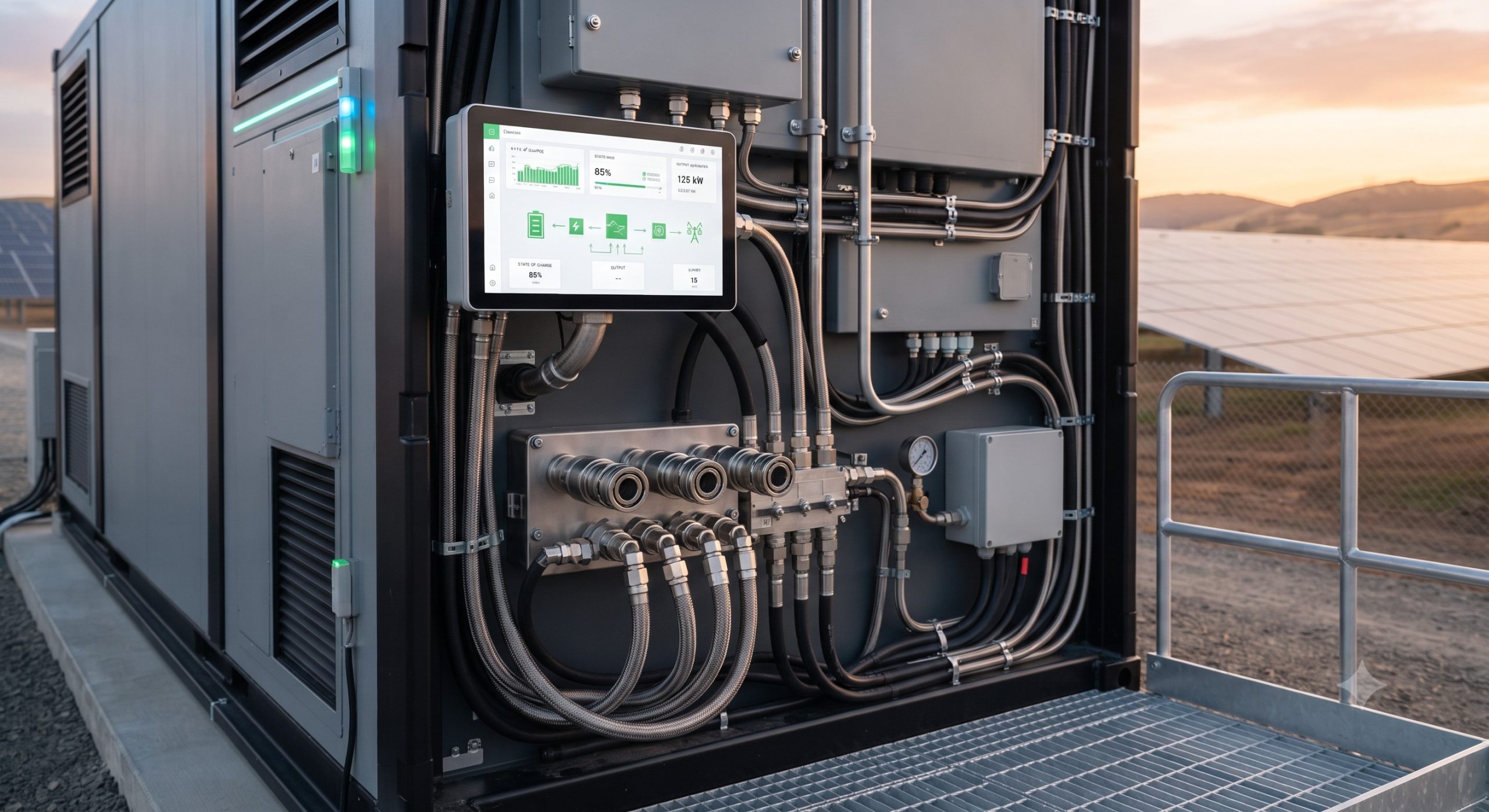
The dimensional footprint and mechanical design of this platform are optimized for rapid, turnkey deployment. The standard 20-foot container can be transported via standard flatbed trucks, rail, or shipping vessels, simplifying logistics for global projects.
– SITE PREPARATION: Requires a compact, level concrete pad (e.g., 7.0 m x 3.0 m) with a suitable grounding grid. The bottom-entry cable routing allows for clean, underground conduit integration, minimizing visual impact and cable wear.
– CIVIL WORKS: The weight distribution is engineered for standard commercial foundations, with specific load-bearing points identified for even weight distribution.
– INSTALLATION: Crane lifting lugs are integrated into the container corner castings per ISO standards, allowing for quick offloading and positioning. Systems are pre-commissioned at the factory, reducing site installation and testing time by up to 40%.
For multi-MWh plants, multiple containers can be arranged in a modular block layout. The recommended spacing between adjacent containers for thermal management and maintenance access is a minimum of 2.0 meters. The engineered AC busbar system enables straightforward, low-inductance parallel connections. This standardized, dimensionally consistent platform is the optimal foundation for large-scale, utility-grade energy storage assets, ensuring a balance between energy density, safety, and maintainability.
📥 Download Technical Specification
Click the button below to view or download the full official PDF datasheet.