COMMERCIAL SYSTEMS ENGINEERING REFERENCE MANUAL: LIFEPO4 BATTERY PACK TECHNICAL DATA
1. EXECUTIVE SUMMARY
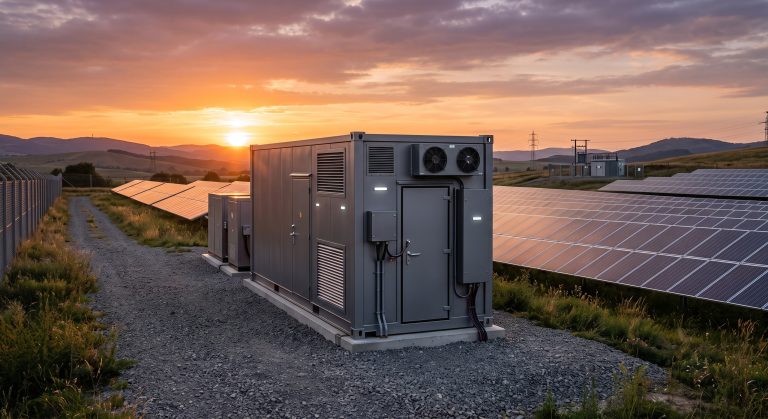
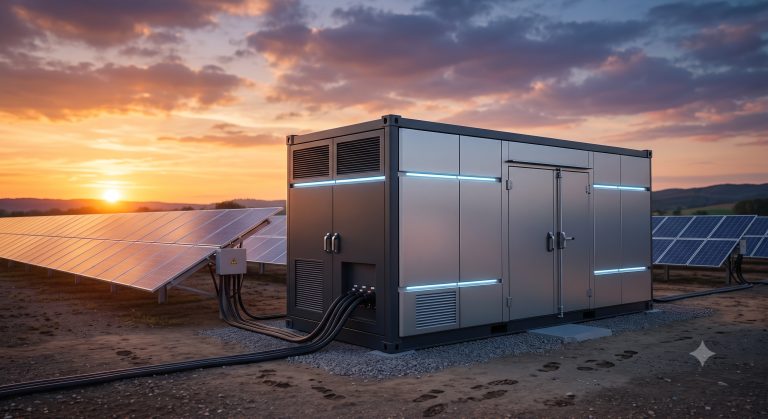
This document serves as the definitive engineering reference for the deployment and integration of our next-generation LiFePO4 (LFP) battery pack platform, engineered for high-cycle Commercial & Industrial (C&I) and utility-scale energy storage applications. As a vertically integrated Tier-1 manufacturer, we have optimized every aspect of the cell-to-system architecture to deliver superior energy density, enhanced safety, and an industry-leading operational lifespan. This manual provides system architects, integrators, and facility engineers with the critical technical data required for system design, grid interconnection, and lifecycle asset management.
2. SYSTEM ARCHITECTURE & SAFETY
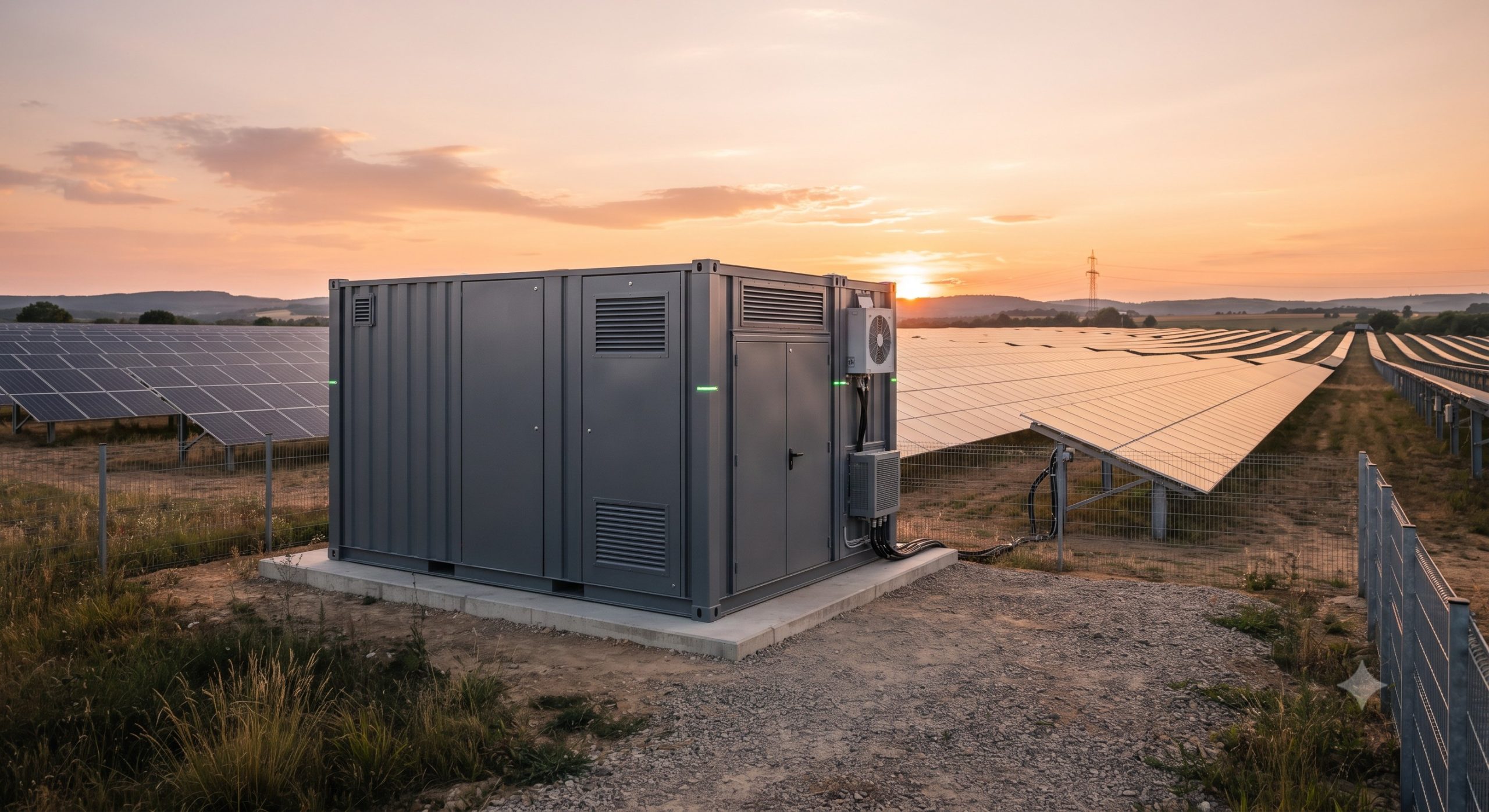
The battery pack platform is built upon a modular, scalable architecture designed for flexible parallel expansion. At the core of each pack is a high-capacity prismatic LFP cell, managed by a distributed, three-level Battery Management System (BMS). This topology ensures that every cell operates within its optimal voltage and temperature window, maximizing performance and longevity.
– CELL-TO-PACK INTEGRATION: The architecture minimizes passive components, reducing internal resistance and improving thermal uniformity.
– INTELLIGENT BMS PROTOCOL: The BMS provides real-time state-of-charge (SoC), state-of-health (SoH), and state-of-power (SoP) calculations, communicating via CAN 2.0 or Modbus RTU/TCP.
– MULTI-LAYER SAFETY SHIELD: A robust, multi-layered safety system protects against thermal runaway. This includes ceramic-coated separators, flame-retardant enclosures, and a dedicated gas detection and exhaust system.
– HIGH-VOLTAGE DISCONNECT: Integrated high-voltage DC contactors and fuses provide rapid, failsafe electrical isolation, compliant with IEC 60950 and UL 9540A.
KEY FEATURES
– Ultra-High Cycle Life: >8,000 cycles at 25°C with 80% DoD, ensuring >20 years of system life.
– Wide Operating Temperature Range: -30°C to +55°C, with intelligent pre-heating and cooling management.
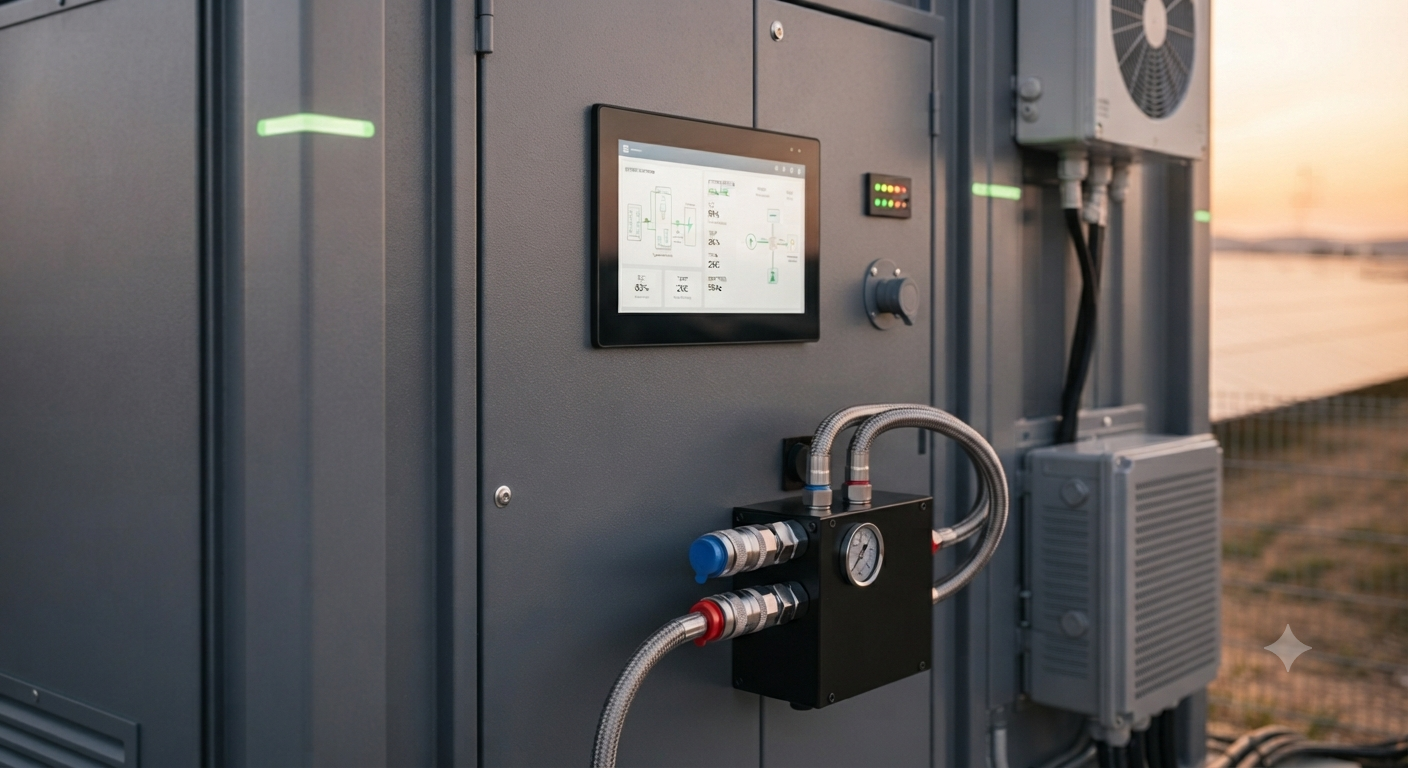
– Advanced Liquid Cooling Interface: Ensures cell temperature variance of ≤ 3°C across the entire string, optimizing performance and preventing thermal derating.
– Enhanced Modularity: Each battery cabinet is a standalone unit that can be paralleled to build any capacity from 215 kWh to over 100 MWh.
– Remote Monitoring & OTA: Full compatibility with our cloud-based Energy Management System (EMS) for predictive diagnostics and remote firmware upgrades.
COMPLIANCE & STANDARDS
The entire battery system is designed and rigorously tested to meet the most stringent international standards.
– CE: EN 62477-1, EN 61000-6-2/4
– UL 9540A: Thermal Runaway Fire Propagation Tested
– UL 1973: Standard for Batteries for Use in Stationary, Vehicle Auxiliary Power, and Light Electric Rail Applications
– IEC 62619: Safety requirements for secondary lithium cells and batteries for industrial applications
– IEC 63056: Safety requirements for secondary lithium batteries and battery installations for use in electrical energy storage systems
– UN 38.3: Transport of Dangerous Goods – Lithium Batteries
| Parameter | Specification |
|---|---|
| Nominal Energy (per cabinet) | 250 kWh (at 0.5C, 25°C) |
| Cell Chemistry | Prismatic LiFePO4 (LFP) |
| Cell Capacity | 280 Ah |
| System Voltage Range | 600 V – 900 V DC |
| Rated Power (Charge/Discharge) | 125 kW / 125 kW (0.5C) |
| Peak Power (15s) | 200 kW |
| Round-Trip Efficiency (AC) | ≥ 92% @ 0.5C |
| Cycle Life (EoL 70%) | > 8,000 cycles @ 25°C |
| Thermal Management | Active Liquid Cooling & Heating |
| Ingress Protection | IP55 (Outdoor, NEMA 3R) |
INDUSTRIAL DEPLOYMENT
The LiFePO4 battery platform is optimized for a diverse range of high-demand applications. Typical deployments include: commercial and industrial peak shaving, PV-storage-charging stations, frequency regulation (FR) services, micro-grid islanding, and behind-the-meter (BTM) arbitrage.
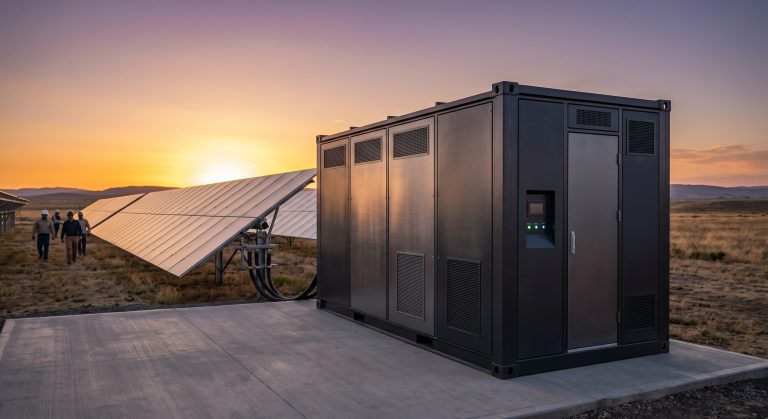
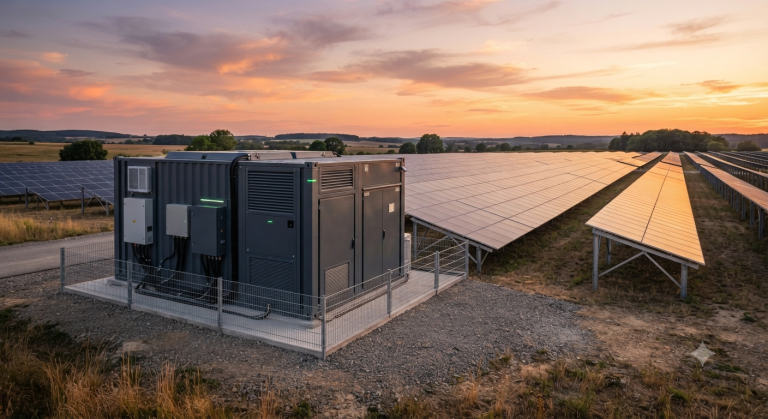
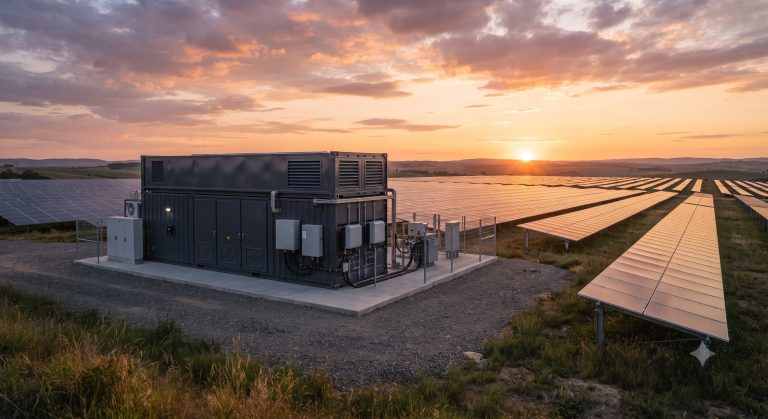
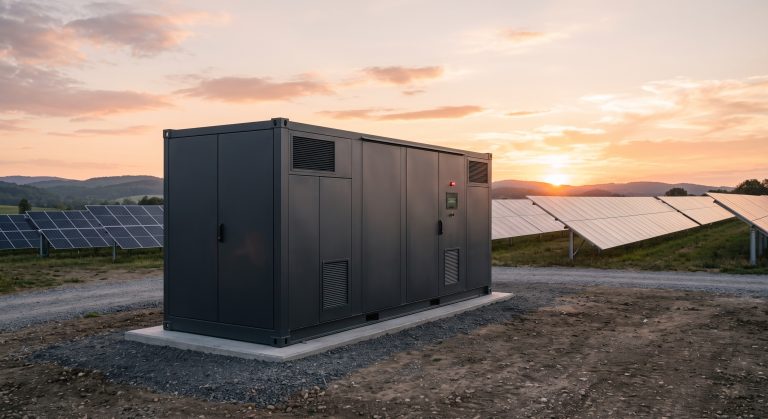
System integrators will benefit from our comprehensive commissioning toolkit, which simplifies the process of paralleling multiple battery packs to achieve target MWh capacities. The system’s compact footprint and IP55/NEMA 3R outdoor rating allow for versatile installation, whether in existing facilities or as part of a greenfield development. A standard system layout is depicted below, highlighting the optimized spacing for HVAC and maintenance access.
📥 Download Technical Specification
Click the button below to view or download the full official PDF datasheet.