Overview
In the rapidly evolving landscape of Battery Energy Storage Systems (BESS), ensuring operational integrity under extreme climatic conditions is not just a technical requirement—it’s a prerequisite for project bankability and safety. As a senior technical support engineer, I understand that our clients, from utility-scale developers to C&I facility managers, need definitive data on how our systems withstand thermal stress. This FAQ addresses the most critical pre-sales and post-sales queries, starting with our stringent thermal testing protocols. We subject our systems to high-temperature impact tests at +60°C (+140°F) and low-temperature impact tests at -30°C (-22°F) to guarantee performance, safety, and longevity across diverse global climates.
Frequently Asked Questions
- Q1: What specific high and low temperatures do you use for your BESS impact tests, and why?
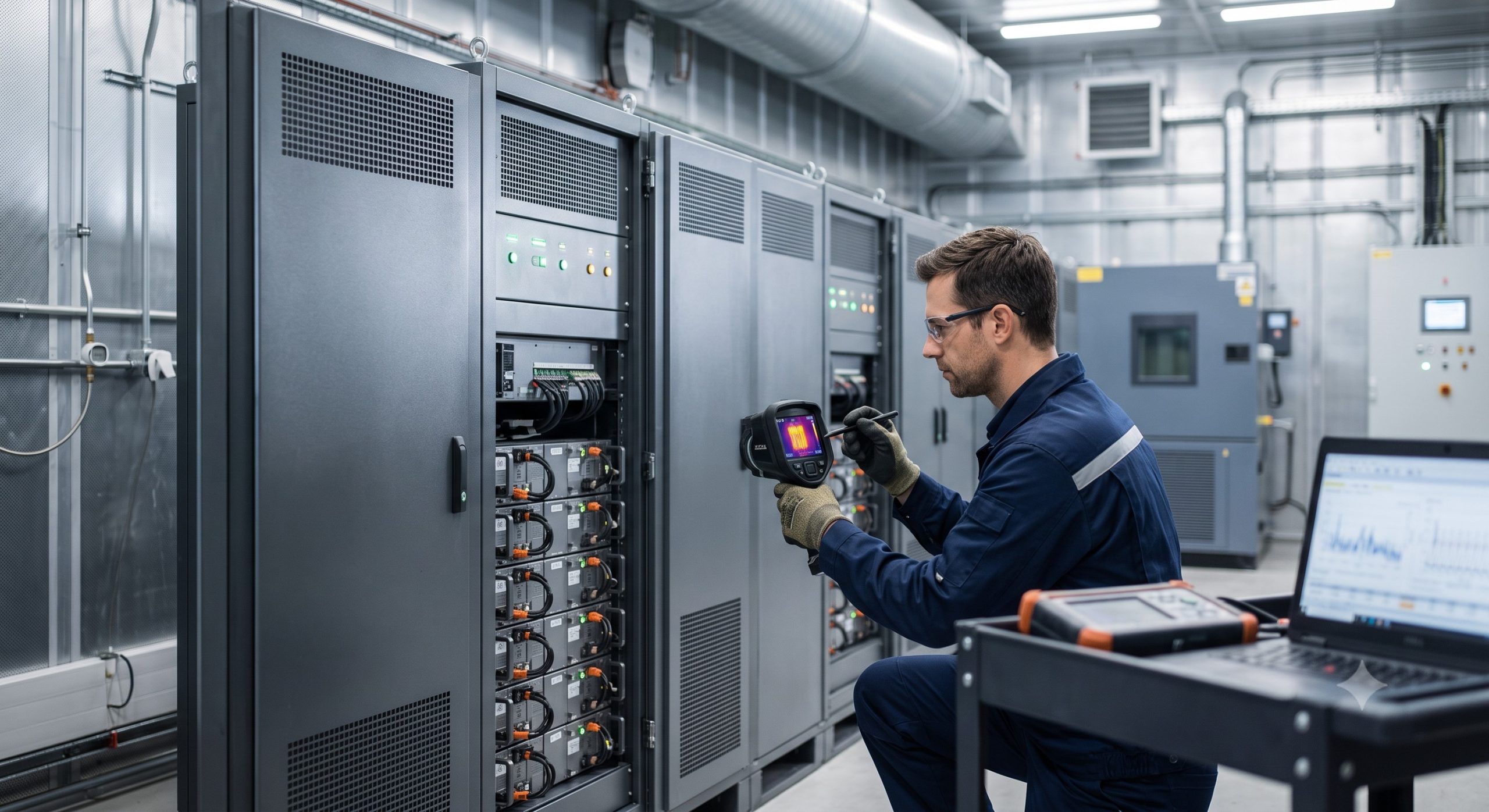
- Our extreme temperature impact tests are conducted at a high-temperature threshold of +60°C (+140°F) and a low-temperature threshold of -30°C (-22°F). These limits are selected to exceed the operational specifications of most global markets, ensuring reliable performance in desert solar farms and cold-climate microgrids. The testing includes thermal shock, thermal cycling, and prolonged exposure to guarantee the stability of the LFP cells, BMS electronics, and liquid cooling systems.
- Q2: How do these extreme temperatures affect the degradation profile and cycle life of your LFP chemistry?
- Our Tier-1 LFP cells are engineered to maintain a cycle life of over 6,000 cycles at 80% Depth of Discharge (DoD) even after extreme temperature exposure. While thermal stress can accelerate degradation, our advanced liquid cooling system maintains core cell temperatures within an optimal 15-35°C range, mitigating degradation. This ensures that the guaranteed 10-year performance warranty remains valid, with a minimal impact on long-term capacity retention.
- Q3: What fire safety and thermal runaway prevention mechanisms are activated during a high-temperature impact test?
- During high-temperature impact tests, the multi-tier fire safety system is rigorously evaluated. This includes early gas detection, aerosol-based fire suppression, and module-level thermal isolation to prevent propagation. Our systems are certified to UL 9540A, and testing confirms that our proactive cooling and active BMS monitoring can detect and mitigate thermal runaway precursors before they escalate.
- Q4: Does your BMS calibration and monitoring adapt to environmental temperature changes?
- Yes, our Active Battery Management System (BMS) features dynamic calibration algorithms that adjust parameters based on real-time temperature data from multiple sensors. The BMS continuously performs inter-cell balancing and adjusts charge/discharge rates to protect cells during extreme ambient temperatures. This adaptive protocol is a critical component of our post-sales support and is validated during our thermal testing phases.
- Q5: What cooling system do you use, and how does it perform under a +60°C impact test?
- The system utilizes a high-efficiency liquid cooling and thermal preservation circuitry. Under a +60°C ambient test, the cooling system successfully manages the heat load to keep the battery cells below a 45°C surface temperature, ensuring operational stability. This performance is crucial for maximizing round-trip efficiency and preventing derating during peak demand periods.
- Q6: Are these test results factored into your LCOE and ROI calculations?
- Absolutely. The operational data from our extreme temperature tests directly inform our Levelized Cost of Energy (LCOE) models. By understanding the system’s performance and degradation under stress, we can offer precise ROI projections, including peak shaving arbitrage and demand response savings, giving our clients a reliable picture of long-term financial returns.
- Q7: What international standards do your thermal impact tests comply with?
- Our thermal impact tests are conducted in compliance with the strictest international interconnection standards, including IEC 62619 (safety requirements for industrial batteries) and UL 9540 (energy storage systems and equipment). We also adhere to CE and UN38.3 transportation testing, ensuring our products are safe for deployment and global shipping, reinforcing our commitment to quality and safety.
- Q8: How do extreme temperature tests affect system scalability and parallel cabinet connectivity?
- Thermal testing ensures that our modular expansion and parallel cabinet connectivity remain reliable regardless of ambient conditions. The tests confirm that the custom DC busbar linkage scaling and external communications are unaffected by thermal expansion or contraction, guaranteeing seamless scalability for projects up to multi-MWh. The robust IP65-rated enclosure also ensures anti-corrosion and protection against dust and water ingress.