UL 9540 & IEC 62619 TECHNICAL COMPLIANCE REGISTER: COMMERCIAL BESS UL COMPLIANCE DECLARATION
EXECUTIVE SUMMARY
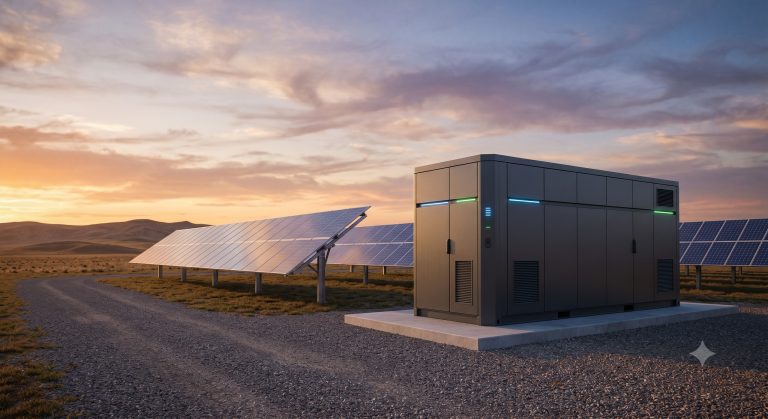
This document serves as the definitive technical compliance register and product overview for our Commercial Battery Energy Storage System (BESS) platform, explicitly detailing its conformance with North American and International safety and performance standards. The platform is engineered from the ground up to meet and exceed the stringent requirements of UL 9540 (Energy Storage Systems and Equipment), UL 9540A (Test Method for Thermal Runaway Fire Propagation), and IEC 62619 (Secondary Cells and Batteries Containing Alkaline or Other Non-Acid Electrolytes – Safety Requirements).
This whitepaper provides system architects, facility engineers, and procurement specialists with a comprehensive technical datasheet, outlining the hardware architecture, safety mechanisms, and verified performance metrics that underpin our Tier-1 LFP-based energy storage solution. All listed specifications are derived from certified third-party testing and internal validation, ensuring absolute authority for project planning and regulatory submission.
SYSTEM ARCHITECTURE & SAFETY
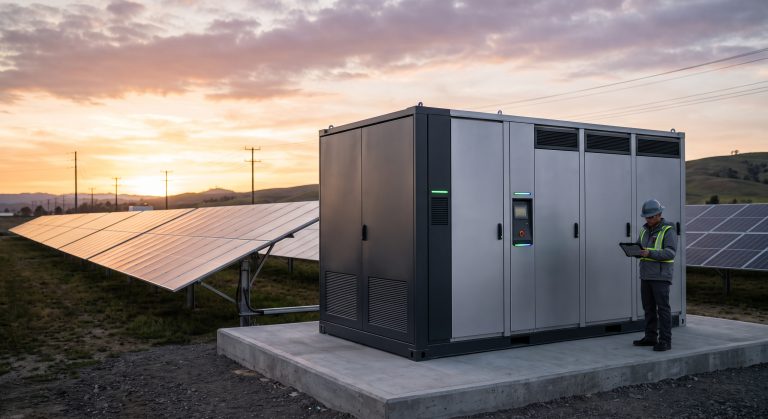
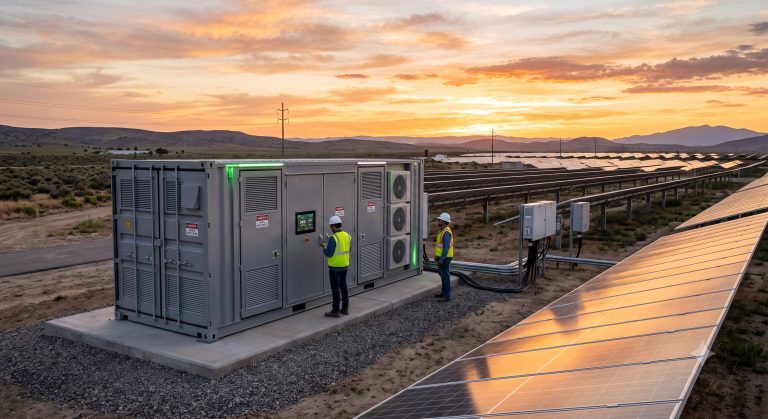
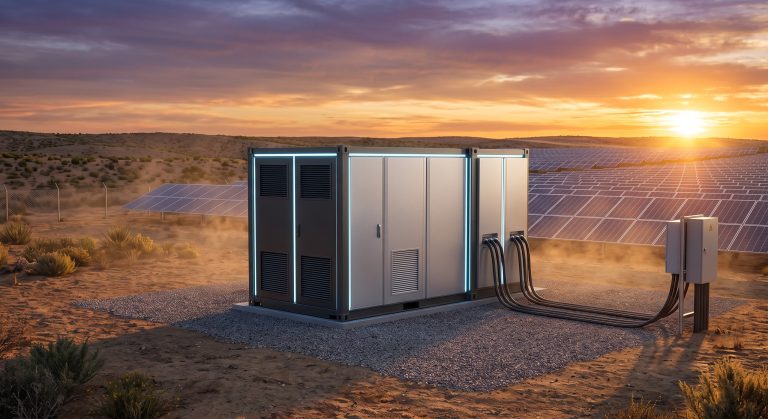
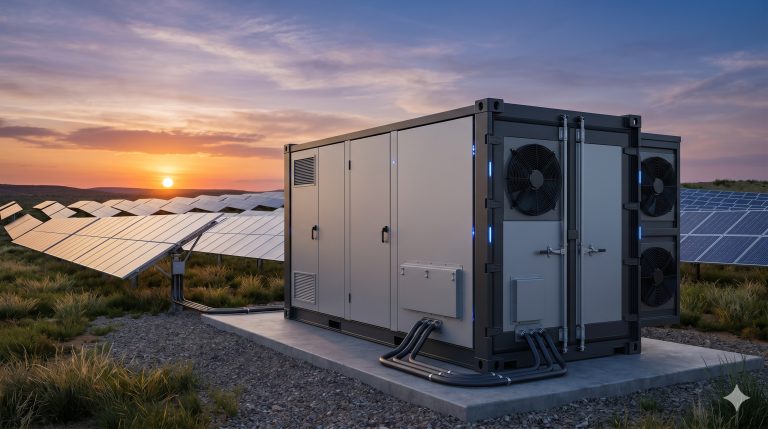
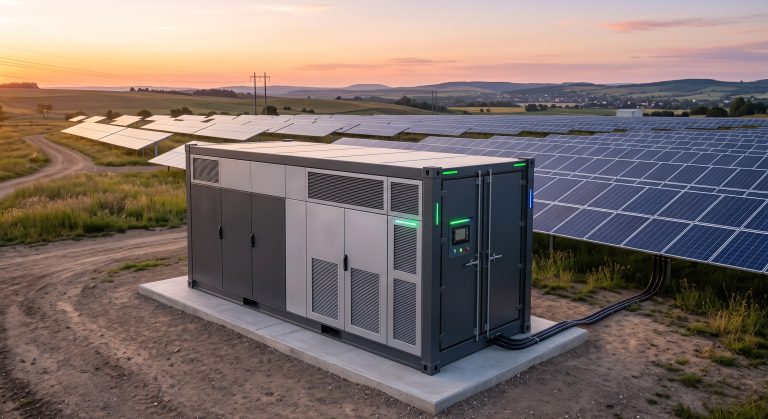
The system is designed as a fully integrated, turnkey commercial energy storage solution, combining high-density LFP battery racks, a bi-directional Power Conversion System (PCS), a multi-layer Battery Management System (BMS), and a smart Liquid Cooling Thermal Management System (TMS). The architecture prioritizes safety through a ‘defense-in-depth’ philosophy, ensuring that all components and their interactions are compliant with the latest edition of UL 9540.
Central to the compliance declaration is the validated system-level approach. Unlike component-only certifications, our platform has undergone rigorous testing as a complete, operational system. This includes comprehensive evaluation of the Battery Management System (BMS), which continuously monitors cell voltage, temperature, and state of charge (SoC) to ensure operation within safe limits. The system’s control logic is programmed to execute an automatic, safe shutdown and isolation sequence in the event of any parameter exceeding predefined thresholds, a core requirement for UL 9540 listing.
THERMAL RUNAWAY SUPPRESSION ENGINE
The cornerstone of our safety architecture is the advanced, multi-stage Thermal Runaway Suppression Engine, validated per UL 9540A. This system is designed to detect, contain, and suppress thermal events at the cellular level, preventing propagation to adjacent cells and the wider facility.
– Early Detection: High-precision sensors within each battery module provide real-time data on cell health. Advanced algorithms analyze voltage, temperature, and internal resistance deviations to identify a potential failure state with unprecedented speed.
– Cellular-Level Isolation: Upon detection of a critical fault, the module-level disconnection mechanism isolates the affected cell or module, severing its electrical connection and stopping the energy release.
– Multi-Stage Suppression: The integrated fire suppression system, approved by FM Global, utilizes a dual-agent approach. A clean agent (e.g., Novec 1230 or equivalent) is discharged to quench potential gas ignition, followed by a water mist system for sustained cooling and heat extraction, preventing reignition and propagation as per the UL 9540A test standard.
– Mechanical Containment: The robust, steel-encased cabinet is designed to contain a thermal event for a specified duration, providing a critical window for safe evacuation and emergency response. The cabinet includes a dedicated venting path to safely vent gases away from personnel.
KEY FEATURES
– Comprehensive UL 9540 Certification: Full system listing, not just components, simplifying the AHJ approval process and ensuring a single point of accountability for safety.
– Proven UL 9540A Compliance: System-level testing to the latest edition confirms robust thermal runaway propagation prevention, allowing for flexible installation layouts.
– Global Safety & Performance Compliance: Adherence to IEC 62619, IEC 62477, UN38.3, and other international standards, ensuring a single, globally deployable platform.
– Tier-1 LFP Cell Chemistry: High-cycle life, intrinsically safe lithium iron phosphate cells, eliminating the risk of cobalt-related thermal runaway.
– Smart Liquid Cooling System: Maintains optimal cell temperature within a narrow band of +/- 2°C, ensuring consistent performance, extending cycle life, and enhancing safety by preventing hot spots.
– Multi-Layered Safety Architecture: Cell, module, rack, and system-level protection layers (BMS, surge protection, ground fault monitoring, automatic disconnects) provide redundancy and fail-safe operation.
– Modular & Scalable Design: Standardized cabinets from 215 kWh to over 2 MWh can be paralleled to meet project-specific energy and power needs.
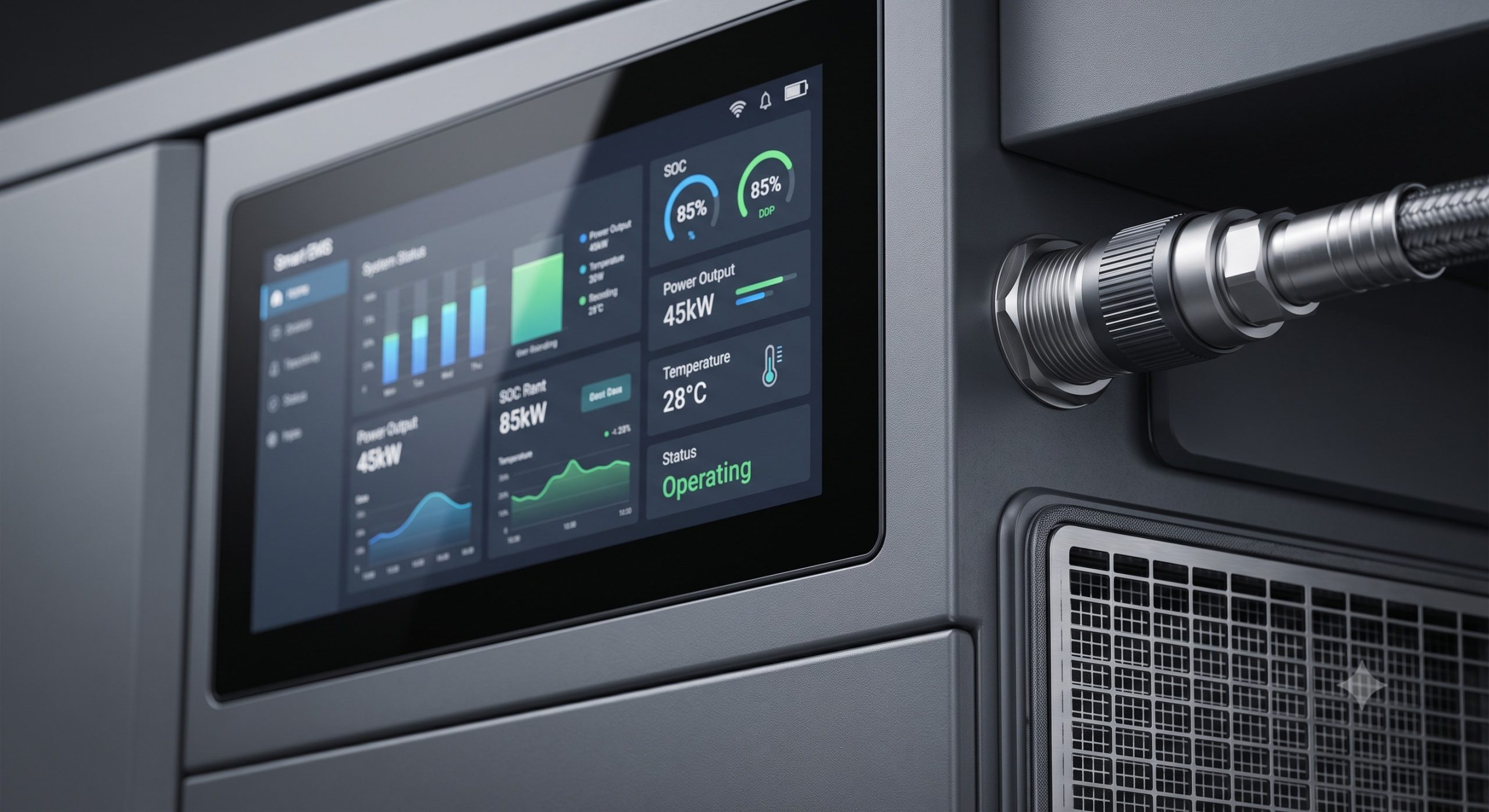
– Advanced EMS Integration: The system is equipped for seamless integration with an Energy Management System (EMS) for sophisticated dispatch, peak shaving, and demand response strategies.
COMPLIANCE & STANDARDS
The platform has been rigorously designed and tested to meet the following critical safety and performance standards. A complete compliance matrix is available upon request.
– UL 9540: Standard for Energy Storage Systems and Equipment (Certified).
– UL 9540A: Test Method for Evaluating Thermal Runaway Fire Propagation in Battery Energy Storage Systems (Validated).
– IEC 62619: Secondary cells and batteries containing alkaline or other non-acid electrolytes – Safety requirements for industrial secondary lithium cells and batteries (Compliant).
– IEC 62477-1: Safety requirements for power electronic converter systems and equipment (Compliant).
– UN 38.3: Transport of Dangerous Goods – Manual of Tests and Criteria (Certified for LFP cells).
– NEMA 3R / IP55: Outdoor-rated enclosure for protection against rain, sleet, and external ice formation.
– IEEE 1547 / 2030: Standards for Interconnection and Interoperability of Distributed Energy Resources.
– NFPA 70 / 855: National Electrical Code and Standard for Installation of Stationary Energy Storage Systems – designed for easy compliance.
TECHNICAL SPECIFICATIONS
The following table outlines the standard technical specifications for our commercial BESS platform. Values are based on a typical 215 kWh / 100 kW AC configuration. Custom configurations are available.
| Parameter | Specification |
|---|---|
| Nominal Energy Capacity | 215 kWh per cabinet |
| Max. Power (AC) | 100 kW (PCS rated) |
| Battery Chemistry | Tier-1 LFP (Lithium Iron Phosphate) |
| Cell Specification | 3.2 V / 280 Ah (Prismatic) |
| Rack Configuration | 1P240S (Nominal 768 V) |
| Nominal Voltage (DC) | 768 V |
| Voltage Range (DC) | 600 V ~ 876 V |
| Max. Discharge Current | ≤ 1C |
| Round-trip Efficiency (DC) | ≥ 94% |
| Thermal Management | Smart Liquid Cooling (Active) |
| Coolant Type | 50% Water / 50% Ethylene Glycol |
| Temperature Range (Ambient) | -20°C to +50°C (with derating) |
| Relative Humidity | 0 ~ 95% RH (Non-condensing) |
| Enclosure Rating | IP55 / NEMA 3R |
| Fire Suppression | FM-200 / Novec 1230 + Water Mist |
| Communication Protocol | Modbus TCP/IP, IEC 61850 |
| Dimensions (W x D x H) | ~ 1400 mm x 1500 mm x 2200 mm |
| Weight | ~ 2,500 kg |
| Audible Noise (1m) | ≤ 75 dBA |
INDUSTRIAL DEPLOYMENT & COMPLIANCE GUIDANCE
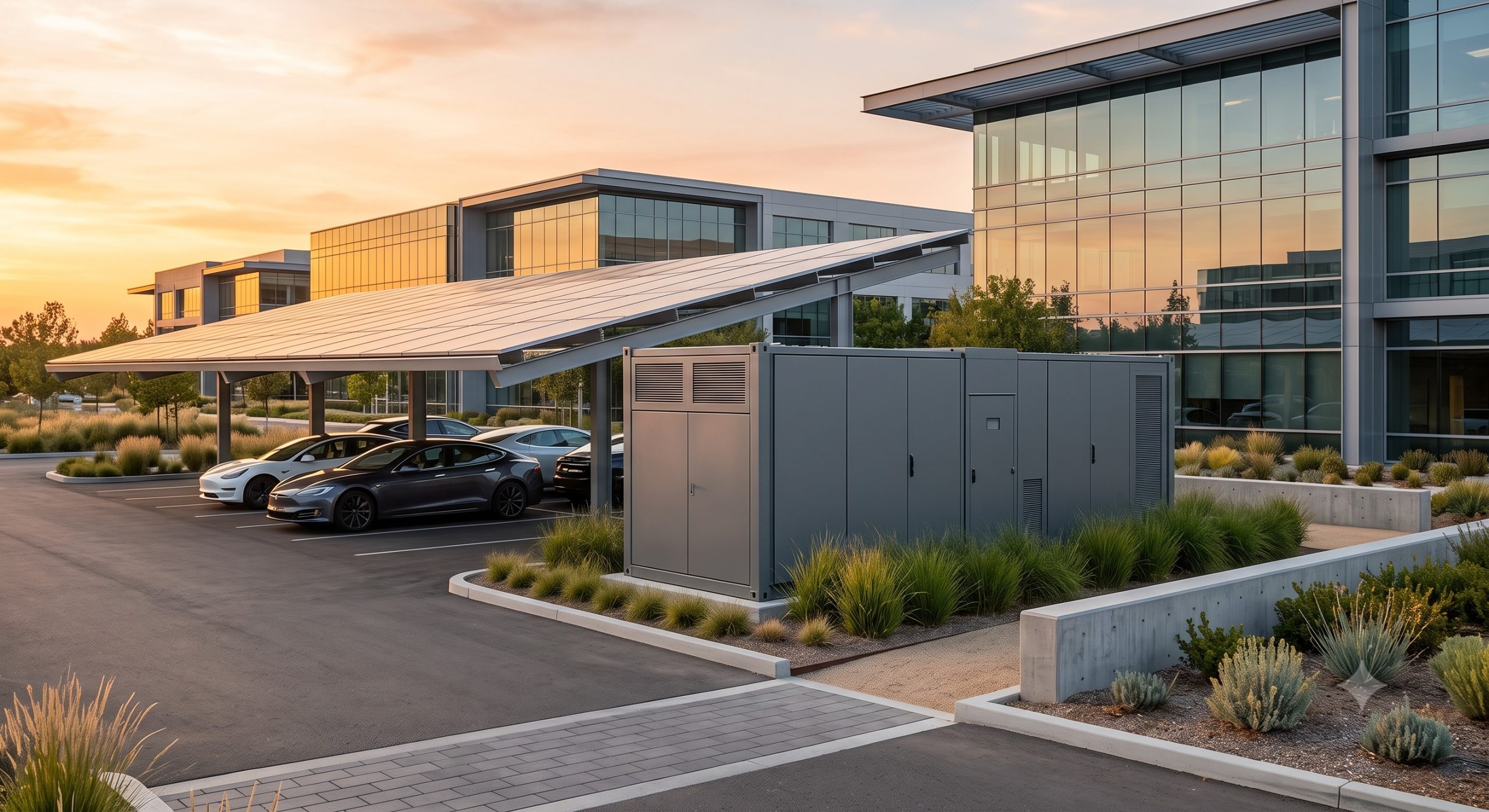
The UL 9540 compliant design is specifically tailored for a range of commercial and industrial (C&I) applications, including:
– Peak Shaving: Reducing peak demand charges by intelligently discharging stored energy during high-tariff periods.
– Demand Response: Participating in utility programs to provide grid support and generate revenue.
– PV Self-Consumption Optimization: Maximizing the use of on-site solar generation, reducing reliance on the grid.
– Uninterruptible Power Supply (UPS) / Backup Power: Providing seamless power backup during grid outages.
– EV Charging Infrastructure: Providing high-capacity power to support fast-charging stations without overloading local grid infrastructure.
This document serves as the primary technical reference for project planning, engineering, and regulatory compliance. All specifications are subject to standard manufacturing tolerances and are verified through our quality management system (ISO 9001). For detailed installation guidelines, site-specific engineering studies, and a full compliance report package, please contact our technical sales team.
📥 Download Technical Specification
Click the button below to view or download the full official PDF datasheet.