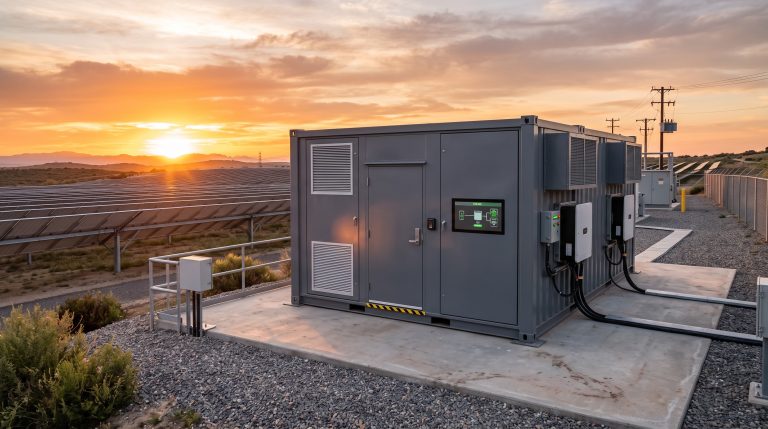
OVERVIEW: OVERCURRENT PROTECTION FOR ENERGY STORAGE SYSTEMS
This document provides a comprehensive technical overview of the Overcurrent Protection (OCP) architecture integrated within our commercial Battery Energy Storage Systems (BESS). Designed for Tier-1 C&I, utility-scale, and micro-grid deployments, this protection suite ensures hardware longevity, operational safety, and grid code compliance under all fault conditions.

SYSTEM ARCHITECTURE & SAFETY LOGIC
The Overcurrent Protection framework operates across four hierarchical layers: Cell-level internal current interrupt devices (CID), Module-level DC fast-acting fuses, Rack-level high-speed molded case circuit breakers (MCCB), and System-level PCS AC/DC coordination with solid-state limiters. Redundant trip logic based on real-time busbar current sensing (1 kHz sampling) and thermal modeling ensures disconnection within <2 ms for short-circuit events. KEY FEATURES - Multi-tier Selective Coordination: Coordination curves engineered to isolate only the affected branch without de-energizing healthy parallel strings. - Bi-directional Fault Interruption: Rated for both charge and discharge fault currents (up to 50 kAIC at 1500 Vdc). - Smart BMS Overcurrent Prediction: Predictive algorithm using historical impedance trends to pre-trip before hard thresholds. - Arc-Flash Suppression Ready: Integrated arc-flash mitigation with optical detection triggering ultra-fast mechanical or pyrotechnic switches. - Remote Trip & Reset: EMS-controlled remote opening and manual-remote reset capability for unmanned substations. COMPLIANCE & STANDARDS - UL 489 (Molded-Case Circuit Breakers) - UL 248 (Low-Voltage Fuses) - IEC 60947-2 (Circuit-breakers) - IEC 60269-7 (Battery fuses) - IEEE C37.27 (Application guidelines for low-voltage fuses in BESS) - NFPA 70 (NEC Article 706 – Energy Storage Systems) TECHNICAL SPECIFICATIONS
| Parameter | Specification |
|---|---|
| Max DC Voltage | 1500 Vdc |
| DC Short-Circuit Interrupting Rating (Icn) | 50 kA (standard) / 80 kA (high-break option) |
| AC Overcurrent Protection (PCS AC side) | 100 kAIC @ 480 Vac / 50 kAIC @ 690 Vac |
| Fuse Type (Module-level) | UL 248-19, 1500 Vdc, aR class, 300 A max rating |
| Breaker Type (Rack-level) | UL 489, 1500 Vdc, electronically controlled MCCB |
| Trip Response Time (short-circuit) | < 2 ms (solid-state limiter) / < 10 ms (MCCB) |
| Selective Coordination Ratio | Fuse-to-Breaker: 1:1.6 (I2t) |
| BMS Overcurrent Alarm Threshold | Adjustable, 1.05x to 1.5x nominal current |
| Operating Temperature (OCP devices) | -20°C to +55°C (derating above 45°C) |
| Remote Trip Interface | Dry contact + Modbus RTU/TCP |
| Arc-Flash Detection Option | Point sensor (UV/IR) or shunt-trip with light pipe |
DEPLOYMENT CONSIDERATIONS
String sizing must verify that maximum available fault current from parallel strings and grid-tied PCS does not exceed OCPD interrupting rating. Use dedicated coordination study for systems exceeding 3 MWh. For retrofit or expansion, recalculate prospective fault current at the point of common coupling.
CONCLUSION
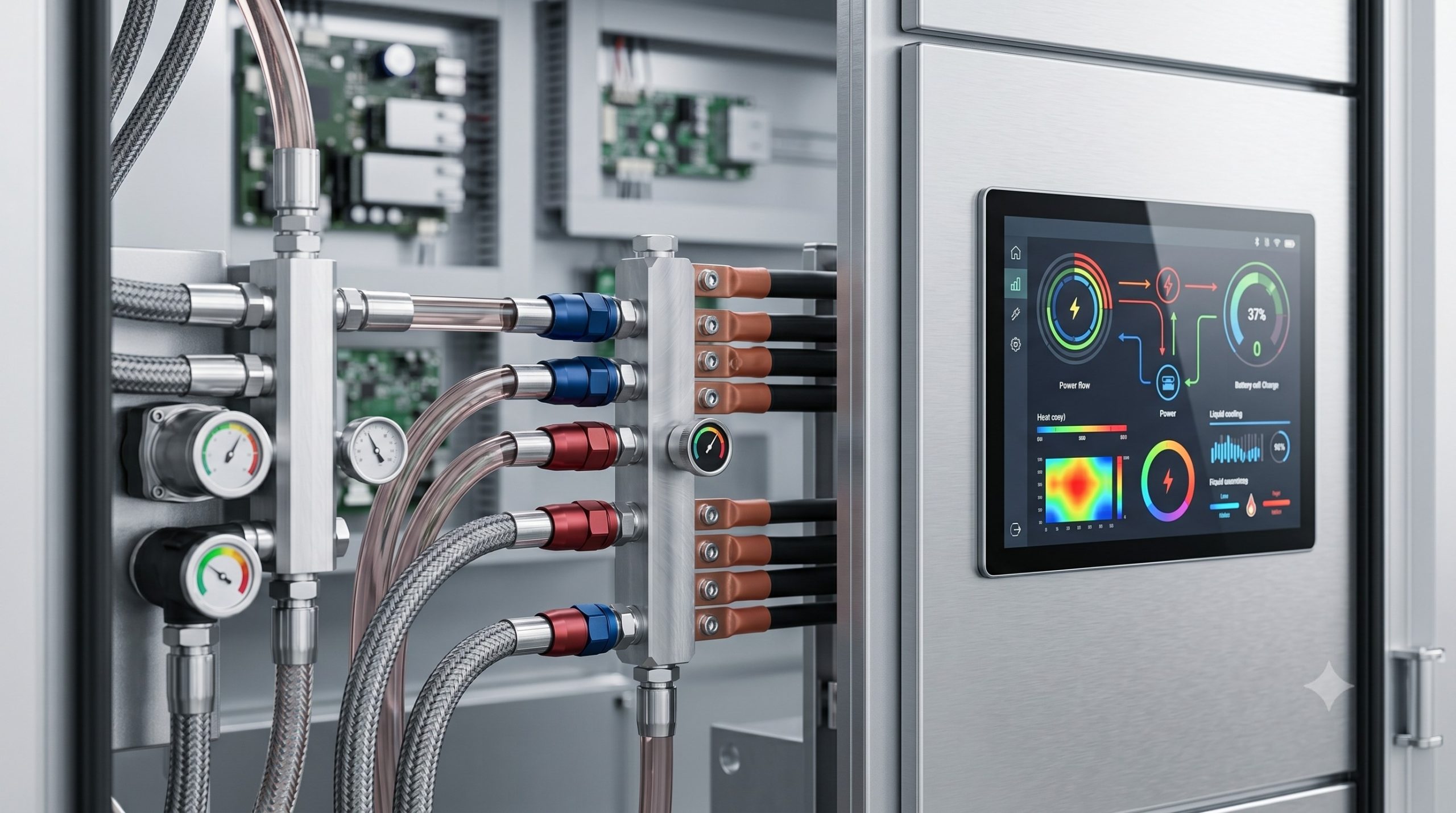
The Overcurrent Protection suite meets or exceeds global standards for selective coordination, fault clearing speed, and remote operability, making it a reference design for safe, code-compliant energy storage infrastructure.
📥 Download Technical Specification
Click the button below to view or download the full official PDF datasheet.