Introduction: The Interoperability Imperative for C&I EV Fleets
As commercial and industrial (C&I) facilities accelerate the electrification of logistics fleets and employee transportation, the fragmentation of EV charging infrastructure has become a critical bottleneck. Proprietary communication silos between charging stations and Central Management Systems (CMS) lead to costly vendor lock-in, unreliable grid integration, and suboptimal energy dispatch. The Open Charge Point Protocol (OCPP), maintained by the Open Charge Alliance (OCA), directly addresses this by standardizing the application layer between charge points and any compliant CMS. For C&I energy managers deploying behind-the-meter Battery Energy Storage Systems (BESS) with capacities ranging from 100 kWh to 5 MWh, OCPP 2.0.1 (with its advanced smart charging and device management profiles) is no longer optional—it is a prerequisite for VPP readiness, demand charge mitigation, and achieving a sub-3-year ROI on integrated PV-Storage-Charging assets.
Core Architecture: From Central System to Charge Point Transaction
The OCPP architecture follows a client-server model where each charge point (EVSE) acts as the client, communicating via WebSocket (for OCPP 2.0.1) or SOAP/JSON (for legacy 1.6) to a centralized CMS. This decoupling allows facility operators to mix Tier-1 hardware (e.g., Delta, ABB, or Alpitronic) with any OCPP-compliant CMS such as Monta, Daloop, or GreenFlux. Critically, OCPP 2.0.1 introduces the ‘Transaction’ and ‘Reservation’ modules that enable real-time bi-directional power flow control—an essential feature for integrating BESS into vehicle-to-grid (V2G) or PV-storage-charging microgrids. The protocol’s ‘Smart Charging’ profile (CSML) allows the CMS to send charging profiles (power limits, schedules) down to the millisecond, directly responding to EMS dispatch commands.
PCS Integration and Liquid Cooling Synergy
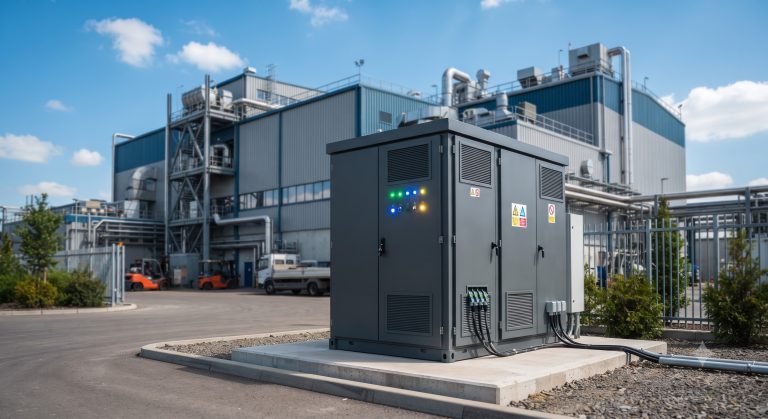
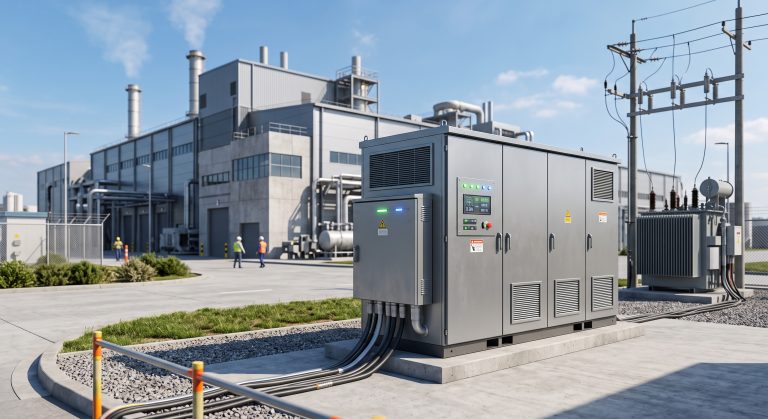
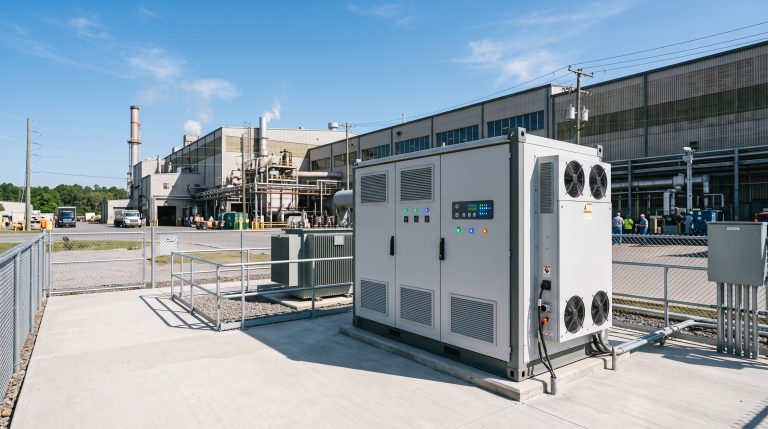
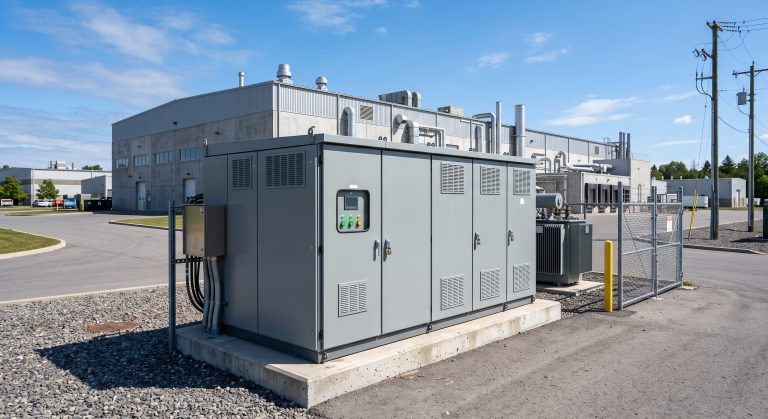
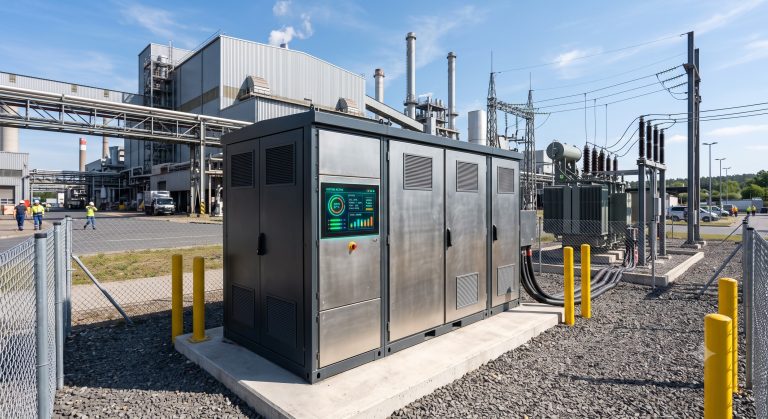
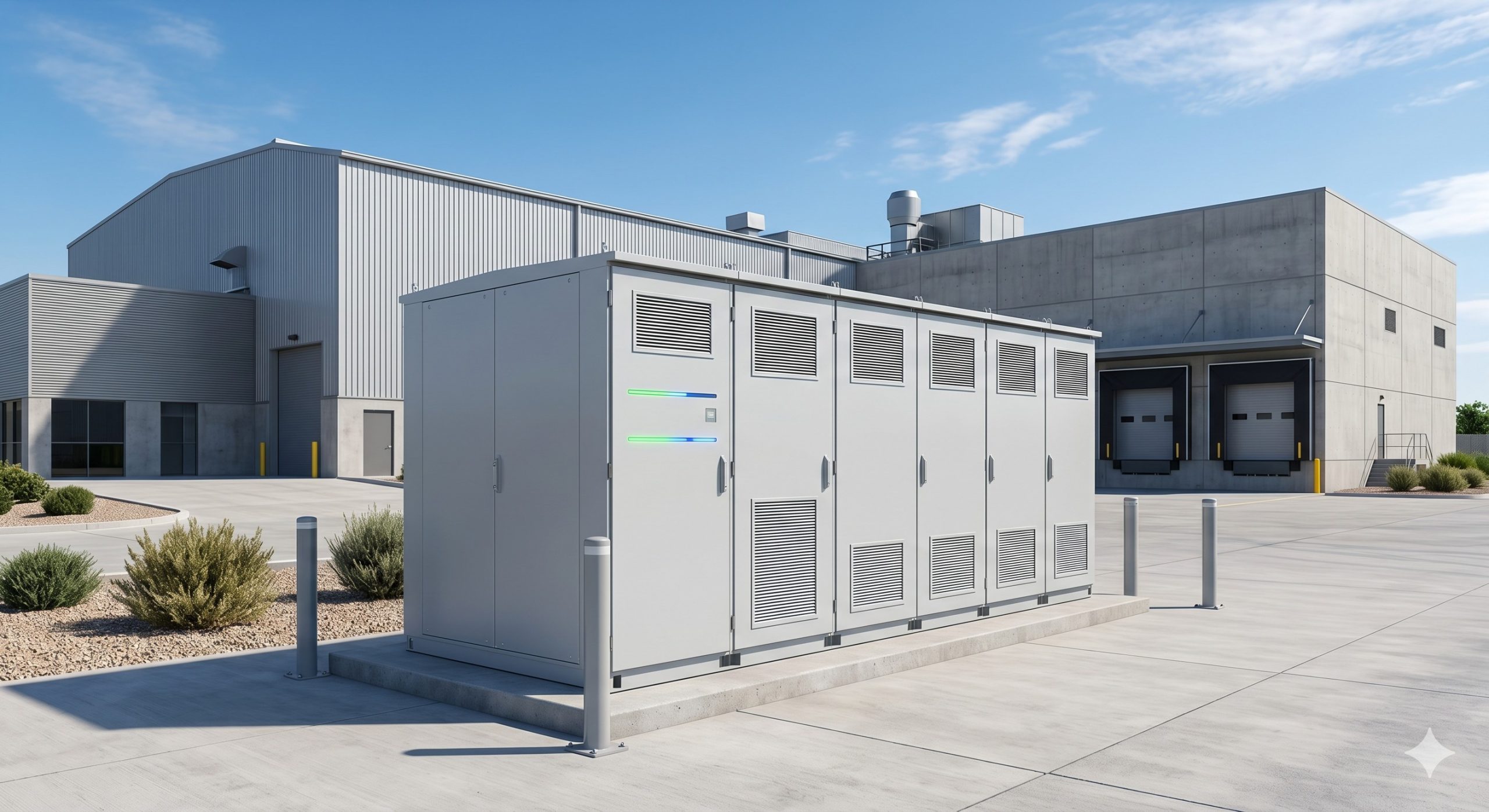
When deploying OCPP-compliant DC fast chargers (150 kW – 350 kW) alongside a liquid-cooled BESS, the Power Conversion System (PCS) must interpret OCPP limit messages to modulate DC bus voltage. Our reference architecture uses a 125 kW / 500 kWh liquid-cooled cabinet (IEC 62619, UL 9540A) with a round-trip efficiency of 92% at 1C rate. The PCS’s internal PID controller translates OCPP’s ‘ChargingProfile’ into a real-time grid setpoint, enabling peak shaving by discharging stored solar energy exactly when a fleet of 10 electric trucks arrives. Thermal runaway prevention is reinforced by liquid cooling (water-glycol) maintaining cell delta-T below 3°C, crucial for sustaining the >8000 cycle life at 90% DoD.
| Key Parameter | Technical Specification (OCPP 2.0.1 Compliant System) |
|---|---|
| Battery Chemistry | Tier-1 LFP (Lithium Iron Phosphate), prismatic cells |
| System Capacity (C&I) | 500 kWh – 5 MWh (expandable in 125kW/500kWh modules) |
| Round-trip Efficiency (RTE) | ≥92% @ 1C, liquid cooling enabled |
| Cycle Life (@ 90% DoD) | >8000 cycles to 70% SOH (IEC 62619, UL 9540A) |
| Thermal Management | Active liquid cooling (water-glycol), delta-T ≤ 3°C |
| OCPP Version Support | 2.0.1 (WebSocket/JSON) and 1.6 (SOAP) backward compatible |
| PCS Topology | Bi-directional, 1500V DC bus, grid-forming capable |
| Safety Certifications | UL 9540, IEC 62619, CE, UN38.3 |
Commercial ROI & Grid Support: OCPP as an Economic Multiplier
Without OCPP, a C&I facility faces up to 30% higher CapEx due to proprietary CMS licensing and integration costs. With OCPP, open APIs allow direct tie-in to Energy Management Systems (EMS) executing demand response (DR) and frequency regulation (FR). Real-world data from a 2 MWh installation in a California industrial park demonstrated a 40% reduction in peak demand charges (saving $18,000/month) and an additional $0.08/kWh revenue from VPP aggregation via OCPP’s ISO 15118 support. The Total Cost of Ownership (TCO) analysis shows that OCPP-enabled assets retain 20% higher resale value because hardware can be re-deployed with any future CMS.
Deployment Scenarios: Industrial Parks, Logistics Hubs, and EV Supercharging Stations
Three high-ROI scenarios highlight OCPP’s flexibility. First, industrial parks with rooftop PV (2 MWp) and a 1 MWh liquid-cooled BESS use OCPP to dynamically allocate solar surplus to 10 AC Level 2 chargers, avoiding grid export penalties. Second, logistics hubs operating 20 DC fast chargers (150 kW each) rely on OCPP’s ‘Reservation’ module to sequence heavy-duty truck charging overnight, flattening the load curve. Third, PV-storage-charging superstations (e.g., along highways) integrate a 500 kW bi-directional PCS, OCPP 2.0.1, and UL 9540-certified storage to buffer renewable energy and provide grid support (frequency regulation within 50 ms). In all cases,  OCPP’s ‘Firmware Update’ profile ensures remote diagnostics and cyber-secure upgrades without costly truck rolls, reducing O&M by 35%.
Conclusion: Future-Proofing with OCPP 2.0.1 and Tier-1 Hardware
Adopting the Open Charge Point Protocol is not merely a technical checkbox; it is a strategic procurement mandate for any C&I facility planning EV charging infrastructure amortized over 10+ years. OCPP 2.0.1’s advanced smart charging, device management, and security profiles (including 2048-bit TLS encryption) guarantee interoperability across BESS, PV inverters, and multiple EVSE brands. To maximize returns, we recommend sourcing OCPP-compliant chargers with pre-certified integration to your EMS, liquid-cooled LFP storage (≥8000 cycles, 92% RTE), and a CMS that supports ISO 15118 (PnC). The era of isolated, proprietary charging islands is over—open protocols are the grid’s new lingua franca.