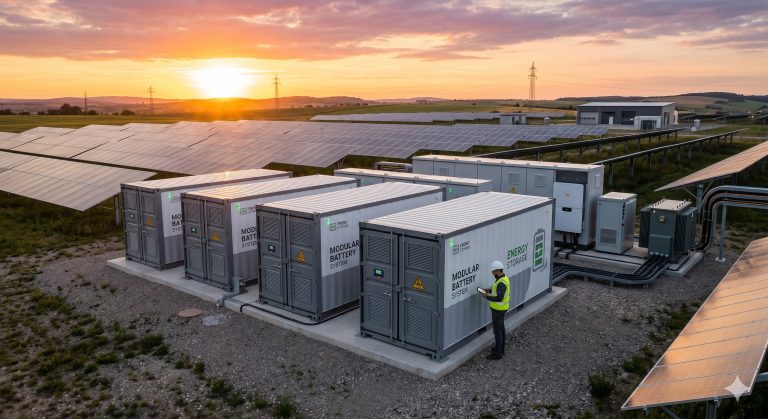
OPEN CHARGE POINT PROTOCOL (OCPP) – BESS INTEGRATION OVERVIEW
This document provides a comprehensive technical overview of the Open Charge Point Protocol (OCPP) as implemented within our commercial Battery Energy Storage System (BESS) portfolio. Designed for interoperability, remote management, and grid-edge intelligence, OCPP enables seamless communication between our storage assets and charge point management systems (CPMS), electric vehicle supply equipment (EVSE), and micro-grid controllers.

SYSTEM ARCHITECTURE & INTEROPERABILITY
Our implementation follows OCPP 1.6J and 2.0.1 (JSON over WebSocket) profiles, ensuring backward compatibility and future-proof integration. The BESS acts as an OCPP-compliant charge point or energy management intermediary, relaying real-time state-of charge (SoC), available discharge capacity, and session data to central systems. Key architectural components include:
– OCPP Gateway Module: Embedded within the Energy Management System (EMS) with TLS 1.2 encryption.
– Message Profiles: Core, Firmware Management, Reservation, Smart Charging, and ISO 15118 integration readiness.
– Fault & Event Handling: Standardized error codes (e.g., ConnectorLockFailure, EVCommunicationError) mapped to BESS internal alarms.
KEY FEATURES
– Plug-and-Play CPMS Onboarding: Automatic registration via OCPP boot notification.
– Demand Response Ready: Real-time charge/discharge power adjustments based on CPMS load balancing signals.
– Smart Charging Integration: Use BESS stored energy to shift EV charging loads without grid upgrade.
– Remote Diagnostics: OCPP GetDiagnostics, Reset, and UpdateFirmware commands fully supported.
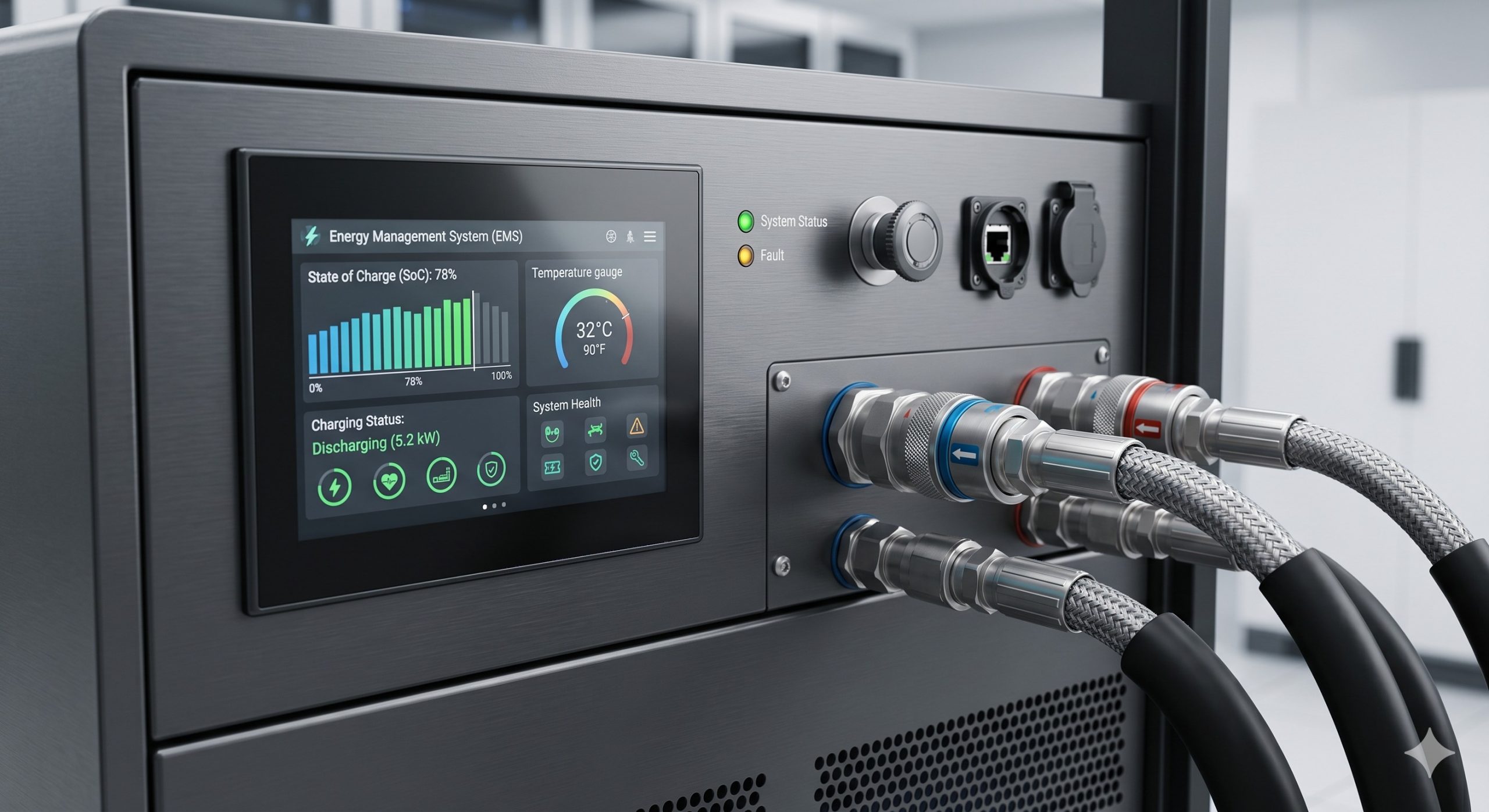
– Data-Rich Metrics: SoC, SoH, temperature, and session energy logs sent via OCPP transactions.
SAFETY & COMPLIANCE STANDARDS
OCPP communication layer is decoupled from internal BESS safety logic. All external commands are validated against local protection thresholds (over-voltage, under-voltage, temperature). Compliant with:
– IEC 61850 (mapping to OCPP extensions where applicable)
– ISO 15118-2 (V2G readiness)
– UL 1741 & IEEE 1547 for grid interconnection (OCPP does not override grid code)
– GDPR / data privacy: OCPP endpoints support anonymized transaction IDs
TECHNICAL SPECIFICATIONS
OCPP SUPPORT SUMMARY
– Supported Versions: OCPP 1.6J, OCPP 2.0.1
– Transport Protocol: WebSocket over TLS 1.2 / 1.3
– Message Encoding: JSON
– Authentication Method: BasicAuth or Security Profile 2 (certificate-based)
– Typical Response Time: < 200 ms for ChargePoint.Heartbeat and MeterValues
- Concurrent Sessions: Up to 50 simultaneous CPMS connections (scalable)
BESS INTEGRATION PARAMETERS (per OCPP endpoint)
- Connector ID Mapping: Virtual connector 1 = BESS discharge, virtual connector 2 = BESS charge (bidirectional).
- MeterValues Sampled: Voltage, current, instantaneous power, SoC (%), temperature (°C).
- Supported Trigger Messages: BootNotification, Heartbeat, StatusNotification, MeterValues, StopTransaction.
- Supported Remote Procedures: RemoteStartTransaction, RemoteStopTransaction, ChangeConfiguration, GetDiagnostics, Reset, UnlockConnector.
| Parameter | Specification |
|---|---|
| OCPP Supported Versions | 1.6J, 2.0.1 (JSON) |
| Max Concurrent CPMS Connections | 50 (scalable to 200) |
| Heartbeat Interval (configurable) | 30 – 3600 seconds |
| MeterValues Sample Interval | 1 – 300 seconds |
| BESS Control Response Latency | < 500 ms from OCPP command to PCS power change |
DEPLOYMENT & CONFIGURATION SCENARIO
Our OCPP-compliant BESS is ideal for:
– EV fast-charging hubs with on-site storage to reduce demand charges.
– Fleet depots requiring scheduled BESS discharge aligned with OCPP charging sessions.
– Micro-grids where CPMS controls both PV, BESS, and EV chargers via a single protocol.
Configuration Example: When an OCPP RemoteStartTransaction is received, the EMS automatically allocates up to 150 kW of BESS discharge capacity to the specified connector ID, logging all energy data in the transaction record.
📥 Download Technical Specification
Click the button below to view or download the full official PDF datasheet.