Overview
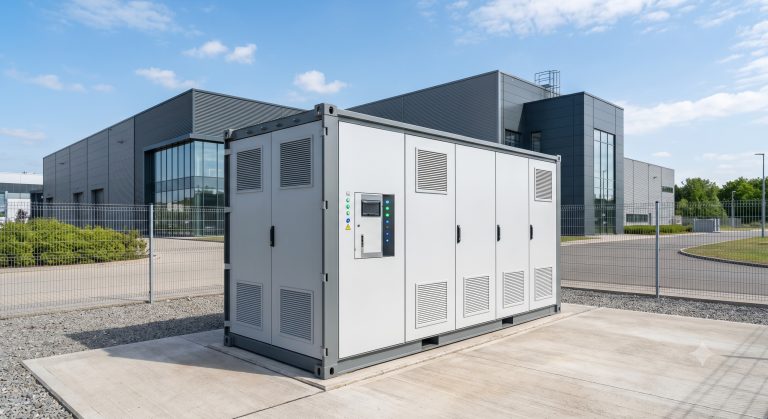
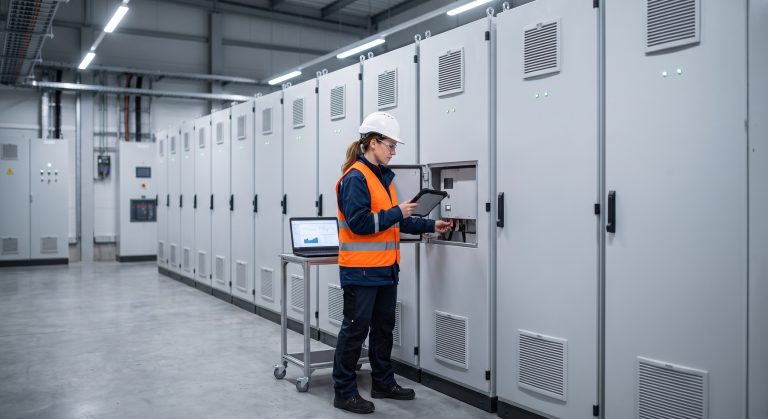
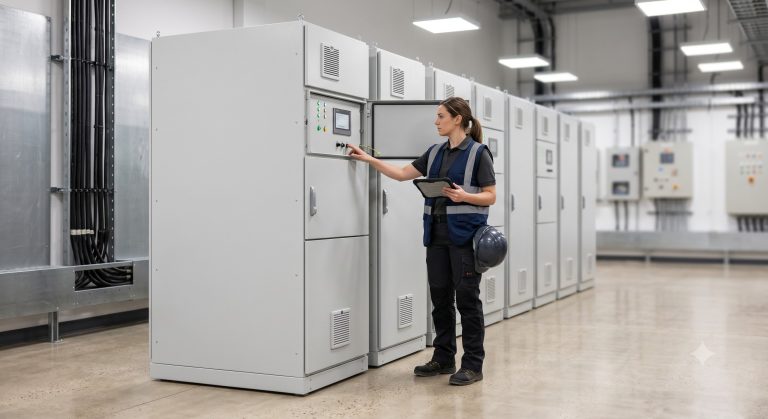
Cloud energy management platforms are transforming how BESS (Battery Energy Storage Systems) are monitored, dispatched, and optimized. Whether you’re a plant engineer, project developer, or procurement manager, understanding the intersection of cloud-based EMS (Energy Management System), battery chemistry, safety protocols, and grid integration is critical for maximizing ROI and operational uptime. Below we answer the most technical, high-intent questions from pre-sales sizing to post-sales fire safety and parallel scalability.

Frequently Asked Questions
- Q1: What is the standard cycle life and recommended depth of discharge (DoD) for LFP-based cloud-managed BESS?
- The standard cycle life for Tier-1 LFP (Lithium Iron Phosphate) cells in a cloud-managed BESS is 6,000 to 8,000 cycles at 90% depth of discharge (DoD) under 25°C ambient temperature. With advanced liquid cooling and AI-driven cell balancing via cloud EMS, this can extend to 10,000+ cycles at 80% DoD. Key factors include: real-time inter-cell voltage monitoring, adaptive charge/discharge rate limiting, and thermal preconditioning based on load forecasts.
- Q2: How does cloud-based BMS monitoring prevent thermal runaway and ensure fire safety?
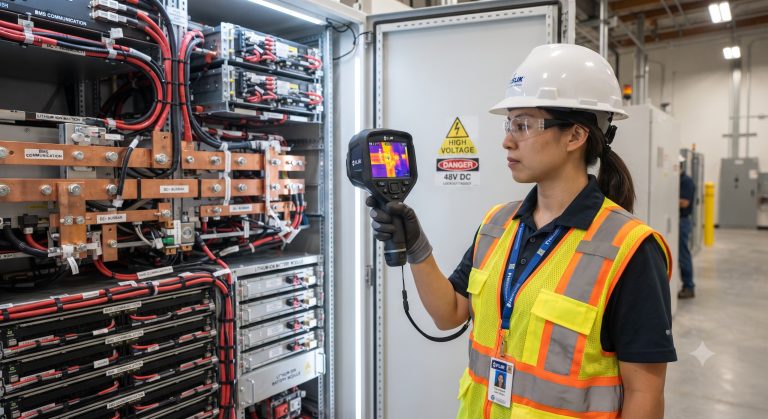
- Cloud-integrated BMS prevents thermal runaway through multi-layer detection: cell-level voltage/temperature sampling every 100ms, gas venting sensors (CO/H2), and aerosol-based suppression triggers. When anomalies are detected, the cloud EMS executes automated actions: reduces charge current by 30% per second, isolates the affected cabinet via DC contactors, and sends real-time alerts to local fire panels. Systems compliant with UL 9540A (cell-level thermal runaway propagation test) and NFPA 855 require less than 0.5°C/min temperature rise across adjacent cells.
- Q3: Can cloud energy management support both grid-tied peak shaving and seamless off-grid islanding?
- Yes, modern cloud energy management platforms support hybrid operation with a seamless off-grid transfer switch (STS) in under 20ms. In grid-tied mode, the cloud EMS executes peak shaving based on real-time utility tariff data and demand response signals. During grid failure, the system automatically switches to islanding mode, using the PCS (Power Conversion System) to form a local micro-grid. The cloud platform continuously synchronizes voltage and frequency (typically 50/60Hz ±0.5Hz) and re-closes to the grid only after 5 minutes of stable utility power verification.
- Q4: How do I calculate ROI for cloud-managed BESS including arbitrage, ancillary services, and demand charge reduction?
- ROI calculation uses the Levelized Cost of Storage (LCOS) formula: (Total lifecycle cost + O&M + cloud subscription) / (Total MWh throughput * round-trip efficiency). A typical 1MW/2MWh system achieves 3-4 year payback when stacking three revenue streams: 1) Peak shaving: $15-25/kW-month demand reduction, 2) Energy arbitrage: $30-50/MWh spread, 3) Frequency regulation ancillary service: $8-12/kW-month. Cloud EMS adds 8-12% higher ROI via predictive dispatch algorithms that optimize charge/discharge based on 72-hour solar and load forecasts.
- Q5: How does liquid cooling compare to forced air cooling for cloud-managed BESS in high-temperature environments?
- Liquid cooling maintains cell temperature difference (ΔT) below 2°C between any two cells in the same rack, compared to 5-7°C for air cooling. This directly improves cycle life by up to 40% in ambient temperatures above 35°C. Cloud-managed liquid cooling systems use variable-speed pumps and plate heat exchangers, achieving an IP65+ enclosure rating. The thermal preservation algorithm reduces auxiliary power consumption by 25-30% compared to fixed-speed air conditioning, because the cloud EMS modulates coolant flow based on real-time IR temperature imaging from internal sensors.
- Q6: Is parallel scalability supported for expanding from 500kWh to 5MWh using the same cloud management platform?
- Yes, cloud-native EMS architectures support modular parallel scalability via a common DC busbar or AC-coupled configuration. Each additional cabinet (typically 100-200kWh increments) auto-identifies itself to the cloud platform within 2 seconds using CAN 2.0 or Modbus TCP. The cloud EMS then dynamically re-allocates charge/discharge schedules, balances SoC across up to 64 parallel units, and updates the site-level power envelope. No hardware controller reprogramming is required; all scaling logic is handled via OTA (Over-The-Air) configuration pushes.
- Q7: What international safety and interconnection standards must a cloud-managed BESS comply with for commercial deployment?
- A commercial cloud-managed BESS must hold the following minimum certifications: UL 9540 (system-level safety), UL 9540A (thermal runaway propagation), UL 1973 (stationary battery), IEC 62619 (industrial battery safety), IEC 62477-1 (PCS safety), IEEE 1547 (grid interconnection), and CE (EMC & LVD). For cloud-specific compliance, the platform must meet IEC 62351 (cybersecurity for power systems) and SOC 2 Type II for data integrity. Utilities additionally require third-party validation of demand response commands with timestamped audit trails.