Overview
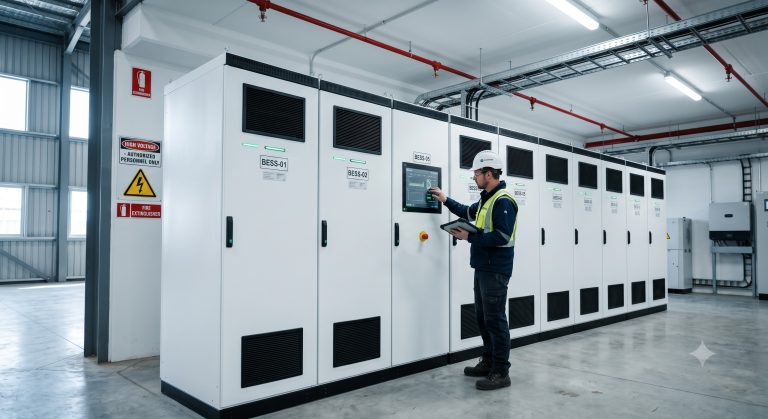
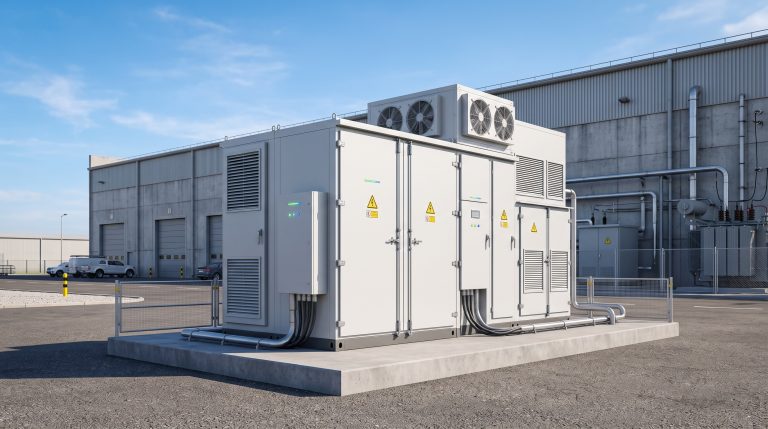
Modular battery systems are transforming commercial and industrial energy storage by offering scalable, redundant, and serviceable architectures. Unlike monolithic battery cabinets, modular designs allow capacity expansion in discrete blocks (typically 50-200 kWh per module), simplify maintenance, and reduce total cost of ownership. This FAQ addresses the most frequent technical and commercial questions from plant engineers, procurement teams, and system integrators.

Frequently Asked Questions
- Q1: What is the typical cycle life and recommended depth of discharge (DoD) for a modular battery system using LFP chemistry?
- The standard cycle life of a modular battery system with Tier-1 LFP cells is 6,000 to 8,000 cycles at 80% DoD under 25°C ambient conditions. At 90% DoD, cycle life reduces to approximately 4,500-5,000 cycles. For optimal longevity and ROI, most BESS integrators recommend programming the EMS to limit DoD to 90% for daily peak shaving and 80% for backup applications. Degradation is non-linear: after 3,000 cycles, typical remaining capacity is ≥85%.
- Q2: How does the Battery Management System (BMS) monitor cell balancing and prevent thermal runaway?
- The active BMS in a modular battery system performs passive or active balancing at the cell level, typically activating when voltage deviation exceeds 20-30 mV. It continuously monitors individual cell voltages, internal temperatures (4-8 sensors per module), and current. For thermal runaway prevention, three-layer protection is standard: (1) cell-level CID (current interrupt device) and venting, (2) module-level fused busbars, and (3) cabinet-level gas detection and aerosol fire suppression. If any cell exceeds 65°C, the BMS commands the PCS to reduce charge/discharge current by 50%; at 75°C, it triggers a full contactor disconnect.
- Q3: Can I scale a modular battery system from 100 kWh to 1 MWh, and what are the parallel connectivity limits?
- Yes, modular battery systems are designed for linear scalability up to 2-5 MWh per EMS cluster, typically limited by DC busbar ampacity and BMS communication latency. Each battery module (e.g., 5-15 kWh) connects to a common DC bus via dedicated circuit breakers. Up to 48 modules can run in parallel within a single cabinet, and 10-20 cabinets can be paralleled using a master-slave BMS architecture. The practical upper limit is 1,500-2,000 modules per EMS instance. Always verify that your BMS supports CAN 2.0 or Modbus TCP with a scan cycle ≤100 ms to maintain cell balancing across all strings.
- Q4: What are the key differences in wiring and control strategy between grid-tied and off-grid configurations for modular BESS?
- A grid-tied modular battery system requires a bi-directional PCS that synchronizes to grid frequency (50/60 Hz ±2%) and supports export limiting, peak shaving, and frequency response modes. No generator is required. For off-grid (island) operation, the same hardware can be used but requires a grid-forming inverter capable of establishing a voltage reference. Critical differences: (1) Off-grid must include a diesel generator or PV array for long-duration autonomy, (2) The EMS must implement a load-shedding algorithm to preserve minimum SOC (typically 20-30%), and (3) Start-up black-start capability from the battery itself is mandatory (requires pre-charged BMS auxiliary power). Many commercial modular systems support seamless transition between modes using a static transfer switch.
- Q5: How do I calculate the ROI for a modular battery system in a peak shaving + demand charge reduction application?
- ROI for a modular battery system is calculated as: Annual Savings = (Peak demand kW reduction × $/kW monthly charge × 12) + (Energy arbitrage: discharged kWh × price spread $/kWh × 250 operating days) – (Cycle degradation cost: total capex × 0.7 / total cycles). For example, reducing a 500 kW peak by 200 kW at $15/kW/month saves $36,000/year. Adding 400 kWh daily arbitrage at $0.10/kWh spread adds $10,000/year. Against a $150,000 system cost (200 kW/400 kWh modular), simple payback is ~3.3 years. Most integrators offer 10-year performance warranties guaranteeing ≥70% remaining capacity, giving an LCOE of $0.12-0.18/kWh over the asset life.
- Q6: What cooling system is used in high-power modular battery systems, and how does it maintain cell temperature uniformity?
- High-power modular battery systems (C-rate ≥0.5C) use liquid cooling (typically water-glycol 30/70 mixture) circulated through cold plates integrated into each module tray. Unlike air cooling which has a ΔT of 5-8°C across modules, liquid cooling maintains all cells within ±1.5°C of setpoint (typically 25-30°C). The cooling circuit includes a chiller unit or dry cooler, a variable-speed pump, and deionization filters to prevent galvanic corrosion. For 200 kW/400 kWh systems, heat rejection is approximately 5-8 kW at 1C discharge. Critical spec: at 35°C ambient, the cooling system must maintain cell max temperature below 45°C to prevent accelerated aging (every 10°C above 35°C halves cycle life).
- Q7: What fire safety standards (UL 9540A, NFPA 855) apply to modular battery system installations, and how is thermal runaway propagation prevented?
- For commercial installations in North America, a modular battery system must be UL 9540 (complete system) and each cell must pass UL 9540A thermal runaway propagation testing. NFPA 855 limits individual fire zones to 600 kWh for indoor installations without sprinklers, or 50 kWh for non-sprinklered spaces. Propagation prevention uses four strategies: (1) Ceramic fiber or aerogel separators between cells (≥3mm thickness), (2) Module-level flame arrestor vents, (3) Cabinet-level gas detection (CO, H2, VOCs) triggering contactor opening before thermal event, and (4) Aerosol or Novec 1230 fire suppression injection at the module level. UL 9540A requires no fire propagation beyond the initiating module for 2 hours.
- Q8: How does the Energy Management System (EMS) interface with existing building or microgrid controllers via API?
- The EMS in a modular battery system exposes a REST API (typically JSON over HTTPS) or Modbus TCP interface for third-party integration. Standard functions include: real-time telemetry (SOC, SOH, power, voltage per module), setpoint control (charge/discharge kW limits, target SOC), and scheduling (time-of-use profiles, peak shaving triggers). For microgrids, the EMS supports open protocols like IEC 61850 or SunSpec Modbus. Critical implementation detail: the API must have a response time ≤200 ms for closed-loop control. Most commercial EMS platforms also provide MQTT broker integration for IoT data pipelines. Always verify that the API rate limit allows at least 1 Hz polling for dynamic demand response applications.
Summary
Selecting a modular battery system requires evaluating cell chemistry (LFP is dominant), BMS granularity (active balancing preferred), thermal management (liquid cooling for high C-rate), and EMS interoperability. Prioritize systems with UL 9540A certification, a 10-year capacity warranty, and demonstrated API integration capabilities. For project-specific sizing or compliance questions, consult a licensed BESS engineer.