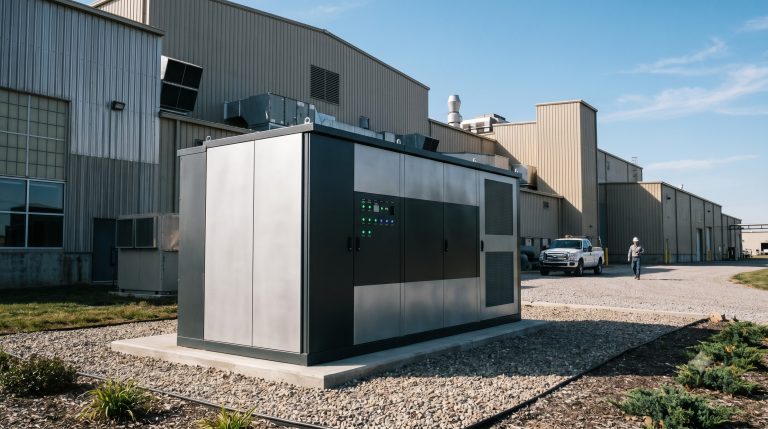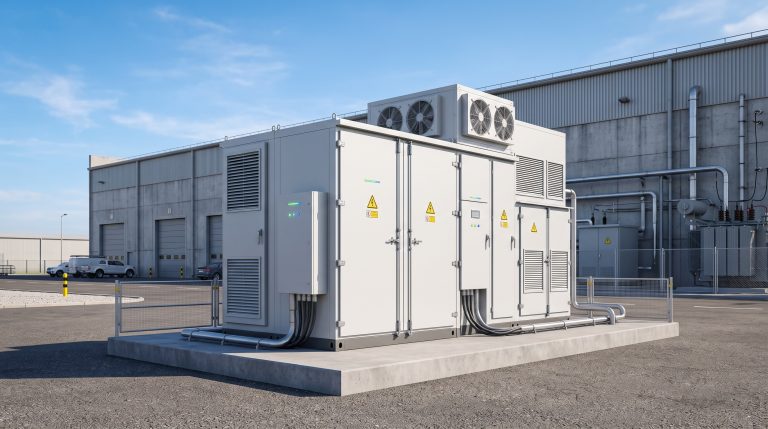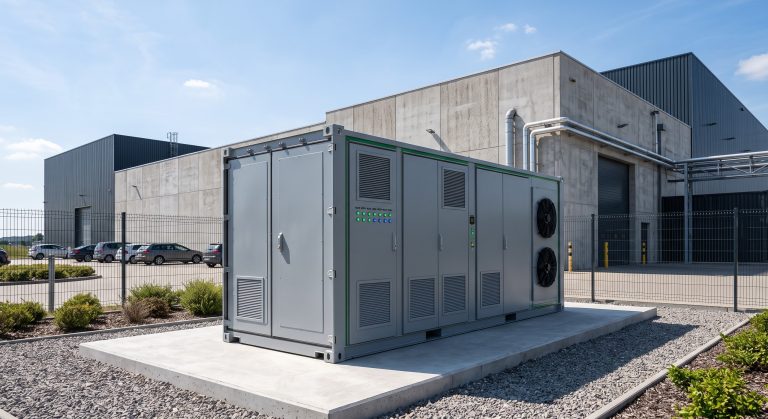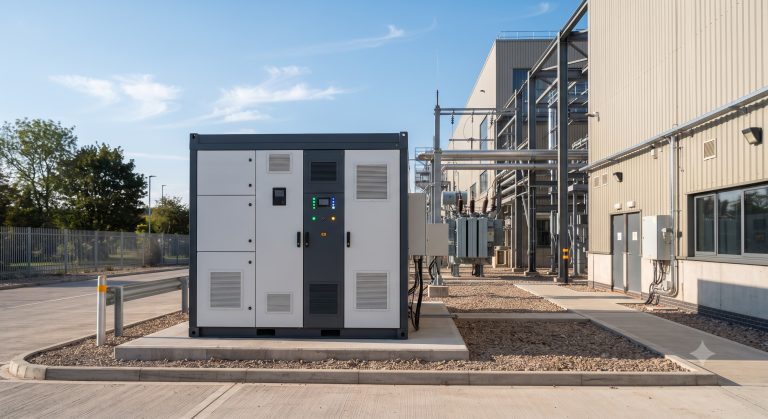
Introduction: The Thermal Management Imperative for 5MWh+ C&I Systems
As commercial and industrial (C&I) facilities scale their energy storage capacity to 5MWh and beyond, the thermal dynamics of the battery system shift from a design consideration to a critical operational bottleneck. The ST5015kWh-2500kW-MV-2h, a high-capacity, medium-voltage integrated BESS, presents unique challenges for heat dissipation. Inefficient thermal control directly accelerates cell degradation, reduces round-trip efficiency, and increases the risk of thermal runaway. This analysis provides a data-driven comparison of advanced liquid cooling technology versus conventional air cooling, specifically as applied to this high-density, 2500kW power-rated system, evaluating metrics including cell temperature uniformity, auxiliary energy consumption, and long-term cycle life projection under full DoD scenarios.
Core Architecture & Battery Management: Enabling High C-Rate Performance
The ST5015kWh-2500kW-MV-2h is architected around a Tier-1 LFP (Lithium Iron Phosphate) cell matrix, configured to deliver a system voltage of 1500Vdc. This high-voltage architecture reduces current flow, minimizing resistive (I²R) heat losses in cabling and busbars. However, the 2500kW power rating implies a C-rate of approximately 0.5C (charge) to 1C (peak discharge), generating significant internal heat. The Battery Management System (BMS) integrates cell-level voltage and temperature monitoring (typically ±2mV and ±0.5°C accuracy), employing a passive or active balancing algorithm to maintain state-of-charge (SOC) equilibrium. For the liquid-cooled variant, a micro-channel cold plate is bonded directly to the cell pouch or prismatic can, using a water-glycol mixture circulated by a variable-speed pump. This system achieves a temperature differential (ΔT) between cells of less than 3°C, compared to air-cooled systems where ΔT can exceed 8°C, a critical factor for preventing current imbalance and premature capacity fade.
Fluid Dynamics and Thermal Interface Materials
The thermal efficiency of the liquid cooling system is governed by the flow rate (L/min) and the thermal conductivity of the interface material (TIM), often rated >3 W/m·K. By maintaining a lower and more uniform average cell temperature (e.g., 25°C ± 2°C), the liquid-cooled ST5015kWh-2500kW-MV-2h reduces internal resistance growth, directly improving round-trip efficiency (RTE) by an estimated 2-3% compared to an air-cooled baseline, moving from ~88% to >91% at full rated power.
Technical Specifications: Liquid vs. Air Performance Metrics
To make an informed procurement decision, buyers must compare quantified parameters, not just marketing claims. The following table contrasts the core specifications of the ST5015kWh-2500kW-MV-2h when equipped with an advanced liquid cooling (LC) versus a forced-air cooling (AC) system, both compliant with IEC 62619 and UL 9540A thermal runaway propagation standards.
| Key Parameter | Liquid Cooling (ST5015kWh-LC) | Air Cooling (ST5015kWh-AC) |
|---|---|---|
| Battery Chemistry | Tier-1 LFP (Lithium Iron Phosphate) | Tier-1 LFP (Lithium Iron Phosphate) |
| Total Capacity / Power | 5015 kWh / 2500 kW (2h rating) | 5015 kWh / 2500 kW (2h rating) |
| Round-Trip Efficiency (RTE) | >91% @ 25°C ambient | >88% @ 25°C ambient |
| Cell Temp. Uniformity (ΔT) | <3°C across all cells | ≤8°C across all cells |
| Cycle Life | >8,000 cycles @ 90% DoD (to 70% SOH) | >5,500 cycles @ 90% DoD (to 70% SOH) |
| Auxiliary Power Draw | 2.5-3.5% of rating (pump + chiller) | 1.5-2.0% of rating (fans only) |
| Operating Temp. Range | -30°C to +55°C (no derating to 50°C) | -20°C to +45°C (derating >35°C) |
| Certifications | IEC 62619, UL 9540, UN38.3, CE | IEC 62619, UL 9540, UN38.3 |
Commercial ROI & Grid Support: The Thermal-Driven TCO Model
The total cost of ownership (TCO) for the ST5015kWh-2500kW-MV-2h is heavily influenced by its thermal management system. While the upfront capital expenditure (CapEx) for the liquid-cooled version is approximately 12-15% higher due to the pump, micro-channel plates, and chiller unit, the operational expenditure (OpEx) delivers compelling advantages. Firstly, the higher RTE reduces energy loss: with 2500kW throughput over 2 hours, a 3% RTE improvement saves 150kWh per cycle. At $0.15/kWh industrial rate and 300 cycles/year, this yields $6,750/year in direct electricity savings. Secondly, the superior temperature uniformity extends cycle life beyond 8,000 cycles to 90% DoD (vs. 5,000-6,000 cycles for air cooling), adding 3-5 years of usable life. This prolongs the peak-shaving ROI period and enables greater participation in demand response programs, where fast-ramp (sub-100ms) grid support is achievable due to the consistent cell kinetics. For VPP readiness, the liquid-cooled system maintains stable frequency regulation capabilities even under continuous high-power pulses, avoiding de-rating that plagues air-cooled designs in hot ambient conditions (>35°C).
Deployment Scenarios: Where Liquid Cooling Provides Unmatched Value
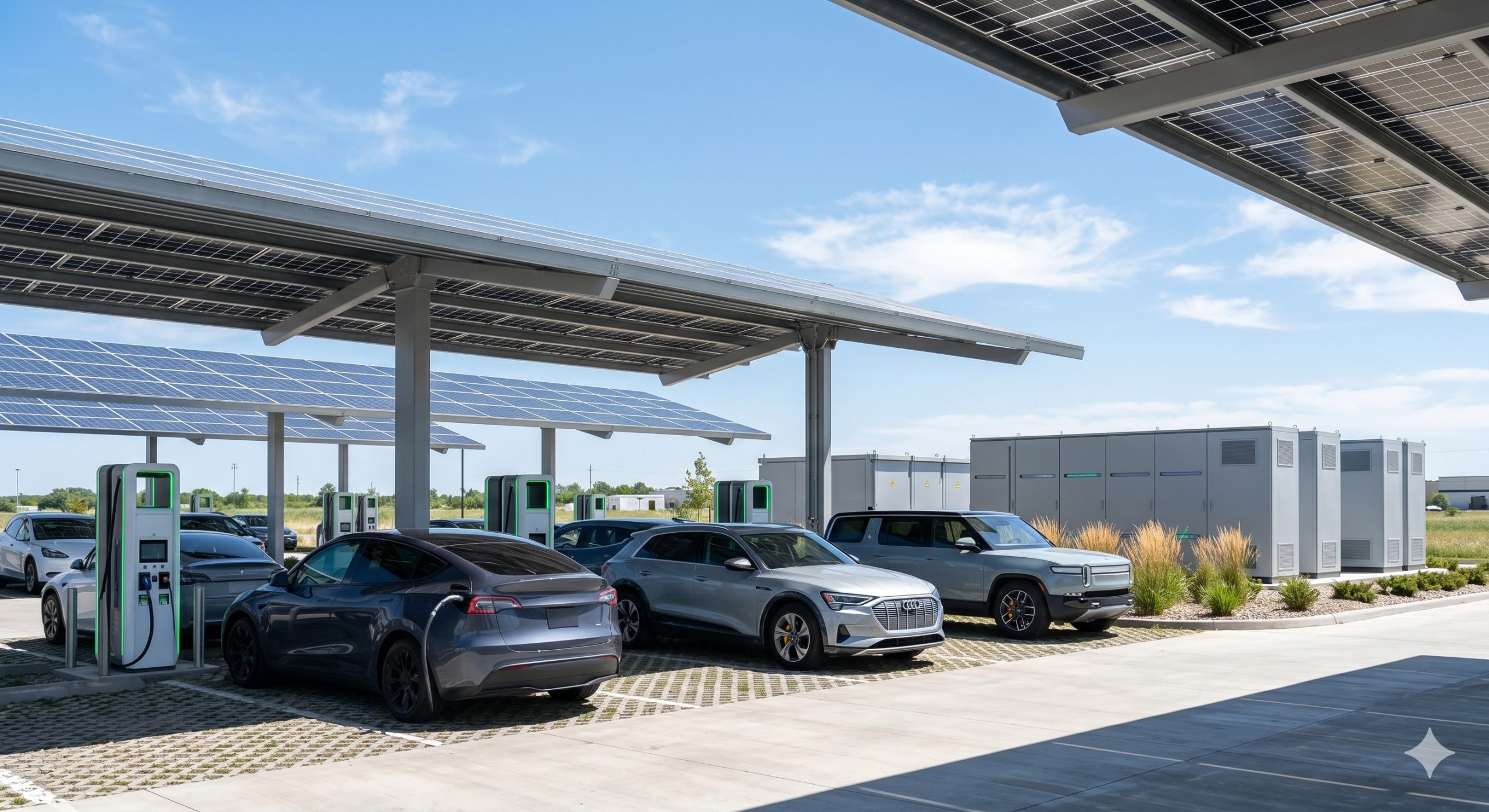
Liquid cooling transforms the ST5015kWh-2500kW-MV-2h into a deployable asset for high-ambient-temperature environments and space-constrained sites. Ideal applications include: Data Center UPS augmentation requiring 15+ year operational life; EV supercharging hubs where multiple 2500kW rapid discharge events per day demand consistent thermal performance; Isolated micro-grids relying on PV-storage-charging synergy where ambient desert heat would cripple air-cooled systems; and industrial parks seeking to eliminate diesel generators entirely, leveraging the liquid-cooled BESS for both peak shaving and black-start capability. In all scenarios, the liquid cooling system’s IP65-rated enclosure allows outdoor installation without derating, reducing civil works costs.
Conclusion: Liquid Cooling as the New Benchmark for High-Capacity C&I ESS
For the ST5015kWh-2500kW-MV-2h, liquid cooling is not a luxury but a performance enabler. The data confirms that while the initial investment is higher, the extended cycle life, superior RTE, and consistent power delivery under all climatic conditions result in a lower LCOE over the asset’s lifetime. System integrators and C&I facility managers should prioritize liquid-cooled configurations for any application requiring daily deep cycling or operating in regions with >30°C summer temperatures. Always request cell ΔT data from the BMS logs during factory acceptance testing (FAT) and ensure compliance with both UL 9540 (fire safety) and IEC 62619 (functional safety) before deployment.