Overview
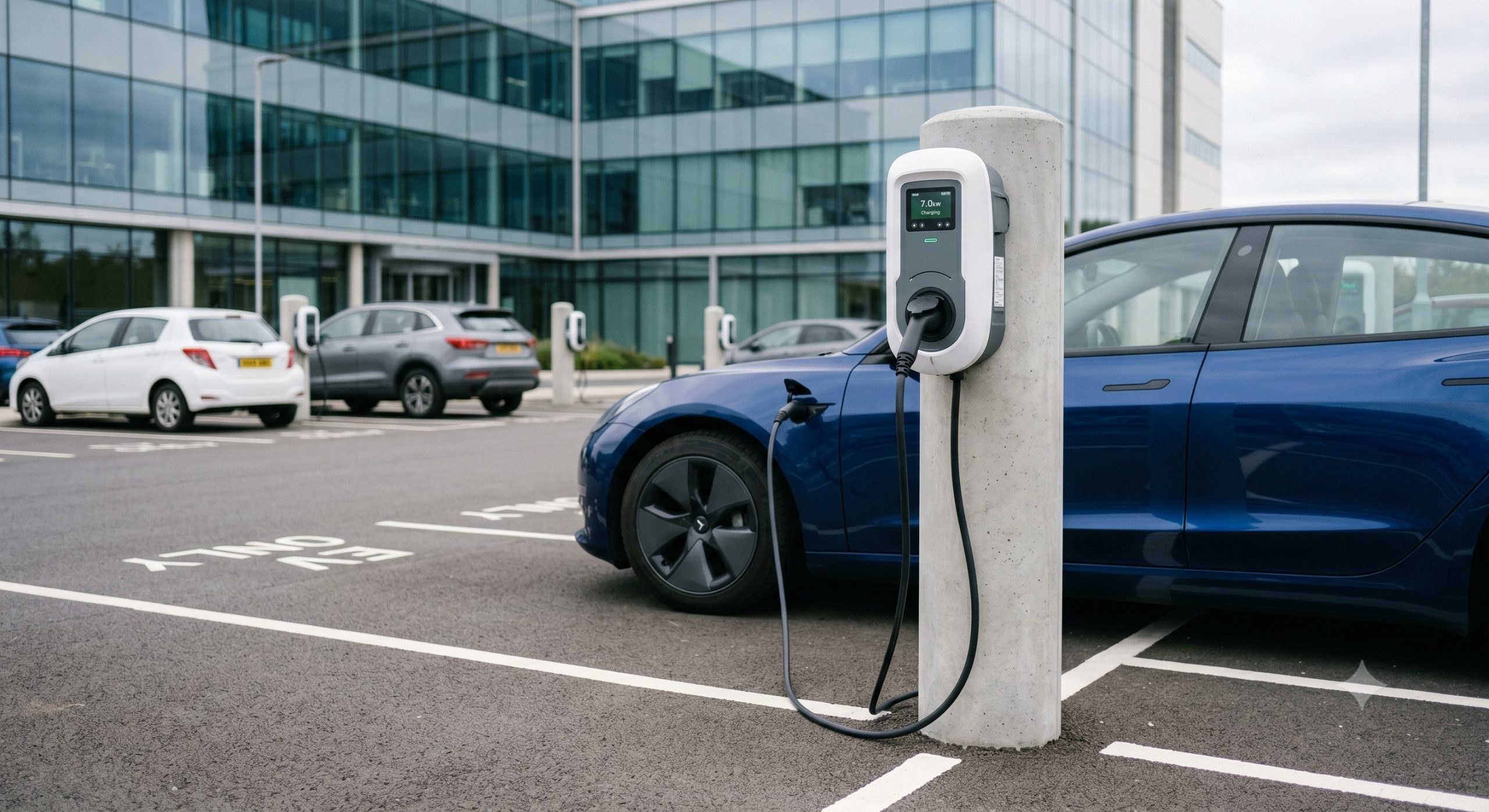
The AC007 is a commercial-grade 7kW single-phase AC EV charger engineered for fleet depots, workplace parking, and destination charging networks. Featuring OCPP 1.6J backend compatibility, integrated Type A + 6mA DC leakage protection, and an IP54 vandal-resistant enclosure, the AC007 delivers cost-effective, grid-friendly EV charging for B2B operators. Below are expert answers to the most frequent pre-sales and post-sales technical questions.
Frequently Asked Questions
- Q1: What load management and grid-tie capabilities does AC007 support for multi-unit installations?
- The AC007 supports dynamic load balancing (DLB) via external CT clamps and OCPP-based central management. This allows up to 32 chargers to share a single grid connection while preventing main breaker overload. For grid-tie scenarios, the charger continuously monitors real-time facility load and reduces EV current from 32A down to 6A per phase. No internal battery or islanding mode is present – the AC007 strictly operates as a grid-tied AC EVSE.
- Q2: What are the exact electrical and communication specs for the AC007 7kW charger?
- Rated output: 7kW (230V AC ±10%, single-phase, 32A max). Input frequency: 50/60 Hz. Connector type: Type 2 socket or tethered cable (5m standard, optional 7.5m). Communication: 4G (Cat 1), Ethernet, Wi-Fi (2.4GHz), and RS485 for load balancing. OCPP: 1.6J (JSON) with certified backend compatibility for Mobilyze, Monta, and GreenFlux. Metering: Built-in MID-certified Class B energy meter (±1% accuracy). Enclosure: IP54 (indoor/outdoor), IK08 impact resistance. Operating temp: -30°C to +50°C. Warranty: 5 years standard, extended to 7 years upon registration.
- Q3: How does the AC007 handle fire safety, residual current protection, and thermal runaway prevention?
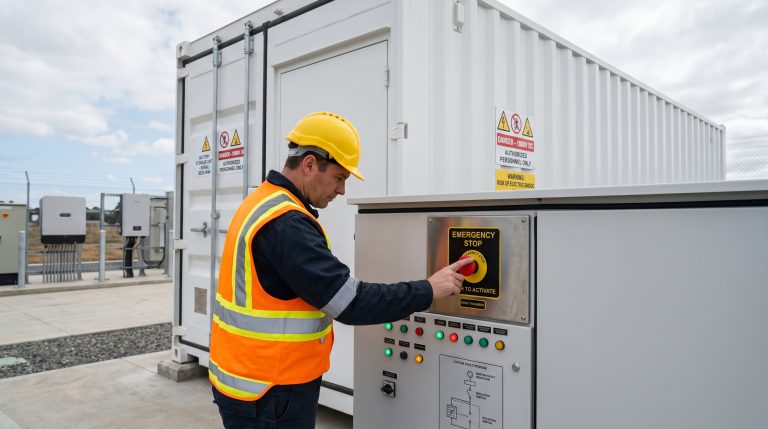
- The AC007 includes dual RCD protection: a Type A (30mA) residual current device plus integrated 6mA DC leakage detection (IEC 62955 compliant) to prevent EV battery DC injection into the grid. For thermal safety, the charger has three onboard thermistors monitoring relay contacts and PCB temperature – automatic current derating at +75°C and full shutdown at +85°C. While the AC007 does not contain a battery (so no thermal runaway risk), it includes a manual emergency stop button and dry contact input for external fire alarm system integration.
- Q4: What is the typical ROI calculation for deploying AC007 chargers in a commercial fleet depot?
- Based on 2026 B2B electricity rates (€0.25/kWh commercial average) and a 7kW charger operating 6 hours per day at 85% efficiency (5.95 kWh delivered), each AC007 generates €544 annual revenue at 100% utilization. After accounting for 30% O&M and platform fees (€163/year), net annual income per charger = €381. At an installed cost of €1,450 (hardware + cabling + installation), simple payback = 3.8 years. For workplace charging offered as employee benefit, ROI models shift to retention value – typically 15-20% reduction in staff turnover when free charging is provided.
- Q5: Can AC007 units be scaled from 1 to 100+ chargers, and what backend monitoring is required?
- Yes, the AC007 supports modular expansion from single-unit installations to 100+ charger networks using OCPP 1.6J central management. No proprietary controller is required – any OCPP-compliant CMS (Charge Management System) provides real-time monitoring of: per-session kWh, online/offline status, connector lock state, temperature, and fault codes. For advanced scalability, the AC007 supports automatic load distribution across clusters and RFID/USER authentication for access control.
- Q6: What BMS-level monitoring does AC007 provide, and how does it interact with EV battery management?
- The AC007 does not directly access EV battery BMS data via PWM or CAN bus (reserved for DC fast chargers). Instead, it monitors AC-side parameters: voltage, current, power factor, and total delivered energy (MID meter). However, through OCPP advanced extensions, the AC007 can receive limited EV BMS data if the vehicle supports ISO 15118 Plug & Charge – including battery state of charge (SoC) and estimated range. For fleet operators, this allows smart charging to stop at 80% SoC to preserve EV battery cycle life.
- Q7: What is the standard cycle life of AC007 components, and what consumable parts require maintenance?
- The AC007 contactor (relay) has a mechanical life of 100,000 cycles at rated 32A load – equivalent to 14 years of daily 20-cycle operation. The built-in power supply (Mean Well) is rated for 50,000 hours MTBF at 40°C. Consumable parts requiring 12-24 month inspection: Type 2 socket locking pin (replace after 10,000 insertions), cable strain relief (visual check for cracks), and thermal pad between relay and heatsink (replacement every 5 years). Recommended annual maintenance: torque check on input terminals (3.5 Nm) and firmware update via OCPP.
- Q8: What international certifications and grid codes does the AC007 comply with for B2B procurement?
- The AC007 holds CE (RED, LVD, EMC), UKCA, and CCC certifications. Grid compliance: EN 61851-1 (2019), IEC 62955 (DC leakage), and VDE-AR-N 4100 for German grid connection. For subsidy applications, the charger includes MID-certified metering (Class B) and OCPP local logging with 90-day data retention. Important: AC007 is not UL listed for North American markets – for US/Canada, specify AC007-NA variant with UL 2594 and CSA C22.2.