Overview
As utility-scale and commercial energy storage projects scale up, the 960kW Power Cabinet has emerged as a critical building block for high-power BESS applications. This FAQ addresses the most common technical, safety, and financial questions from plant engineers, system integrators, and procurement teams. Whether you are evaluating LFP chemistry, planning peak shaving strategies, or ensuring UL9540 compliance, these answers are designed to help you make informed decisions.
Frequently Asked Questions
- Q1: What is the standard cycle life and recommended depth of discharge (DoD) for a 960kW Power Cabinet using LFP cells?
- The standard cycle life is 6,000 to 8,000 cycles at 90% DoD (Depth of Discharge) under nominal temperature conditions (25°C ± 2°C). Using Grade-A LFP prismatic cells, the calendar life typically exceeds 15 years. For optimal degradation control, we recommend limiting daily DoD to 90%, with the BMS automatically managing cell balancing to prevent over-discharge below 10% state of charge (SOC).
- Q2: How does the liquid cooling system in a 960kW Power Cabinet prevent thermal runaway and improve safety?
- The active liquid cooling system maintains cell temperature variation within < 3°C across all modules, which is critical for preventing thermal runaway. Unlike air cooling, liquid cooling directly extracts heat from cell tabs and busbars, eliminating hotspots even at 1C continuous discharge rates. In event of a single cell overheating, the BMS triggers immediate coolant flow increase and isolates the affected module within 50ms. The system also integrates with a multi-tier fire suppression unit (aerosol or perfluorohexanone) that activates upon gas detection.
- Q3: What are the key BMS monitoring parameters I should access for real-time health assessment of a 960kW Power Cabinet?
- The BMS provides real-time monitoring of at least 12 critical parameters per cell: voltage (0-5V ±0.5%), temperature (-20°C to 85°C ±1°C), SOC, SOH (State of Health), insulation resistance, internal DC impedance, and cumulative Ah throughput. For B2B technical support, the most predictive indicators are cell voltage delta (should remain <50mV) and temperature delta (<5°C). A growing delta >100mV indicates imminent cell replacement. The BMS also logs all protection events (over-voltage, under-voltage, over-current, short-circuit) with millisecond timestamps.
- Q4: Can I parallel multiple 960kW Power Cabinets for scalable MWh capacity, and what is the maximum configuration?
- Yes, you can parallel up to 10 units (9.6MW total power) via a common DC busbar and synchronized AC coupling through a central PCS controller. Each cabinet communicates via CAN 2.0 or Modbus TCP, and the master-slave BMS architecture automatically balances SOC across all cabinets during charge/discharge. For larger microgrids, you can cascade up to 50 cabinets using a hierarchical EMS (Energy Management System), achieving 48MW power output. We recommend using dedicated DC breakers (1500V, 1600A) and busbar impedance matching to prevent circulating currents.
- Q5: How do I calculate the ROI and Levelized Cost of Energy (LCOE) for a 960kW Power Cabinet in peak shaving applications?
- The payback period typically ranges from 2.8 to 4.2 years for a 960kW/1.92MWh configuration (2-hour duration) used in daily peak shaving. Calculate LCOE using: (Total CAPEX + 10-year O&M) / (Total lifetime MWh throughput × DoD × round-trip efficiency). With current LFP pricing at ~$85/kWh (CAPEX) and 85% round-trip efficiency, LCOE falls between $0.058–$0.072/kWh. For a facility with a $0.25/kWh peak demand charge, shaving 960kW for 2 hours daily saves ~$175,200 annually. Add 30% ITC (US) or local subsidies, and IRR often exceeds 22%.
- Q6: What is the difference between grid-tie and off-grid configuration for a 960kW Power Cabinet, and which inverters are compatible?
- In grid-tie configuration, the cabinet operates in grid-following mode, requiring a stable external voltage reference (typically 480V AC, 60Hz) and is used for peak shaving, frequency regulation, and demand response. In off-grid (island) mode, the cabinet must be paired with a grid-forming inverter (e.g., SMA Sunny Central or Schneider Conext) that synthesizes the voltage and frequency reference. Most 960kW cabinets use a DC voltage range of 800–1500V, making them compatible with any bi-directional PCS rated at ≥1MW. Critical: Off-grid requires a minimum battery-to-inverter power ratio of 1.2:1 to handle motor starting loads.
- Q7: What international safety certifications (UL9540, IEC 62619) should a 960kW Power Cabinet have, and why do they matter for procurement?
- A fully compliant 960kW Power Cabinet must carry UL 9540 (energy storage system), UL 1973 (batteries), and IEC 62619 (industrial safety). For European projects, CE compliance with IEC 62477-1 (power conversion) is mandatory. These certifications validate thermal propagation resistance (no fire spread between cells during nail penetration test) and electrical protection (type 2 overvoltage, 1500V insulation). Without UL9540, your project cannot obtain building permits or insurance in North America. Always request third-party test reports (e.g., TUV, Intertek) showing cell-level propagation testing.
- Q8: How do I integrate the 960kW Power Cabinet with an existing EV supercharging station or solar PV array?
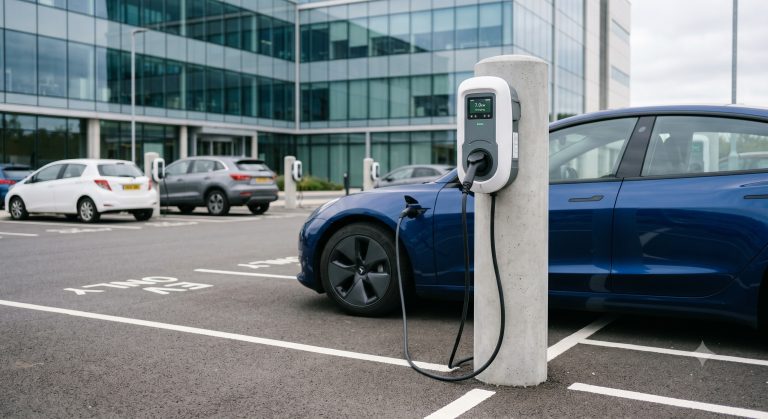
- For PV-storage-charging integration, connect the cabinet’s DC/DC converter directly to the solar array’s DC busbar (1200–1500V) before the common inverter, enabling solar self-consumption without AC conversion losses. For EV supercharging (CCS or CHAdeMO), the cabinet must support peak power delivery of 960kW – this requires a DC fast-charge dispatcher that communicates with the BMS via OCPP 2.0.1. The optimal topology places the cabinet between the PV inverter (DC side) and EV charger (DC side) with an EMS that prioritizes solar > battery > grid. This yields 40% higher round-trip efficiency than AC-coupled systems.