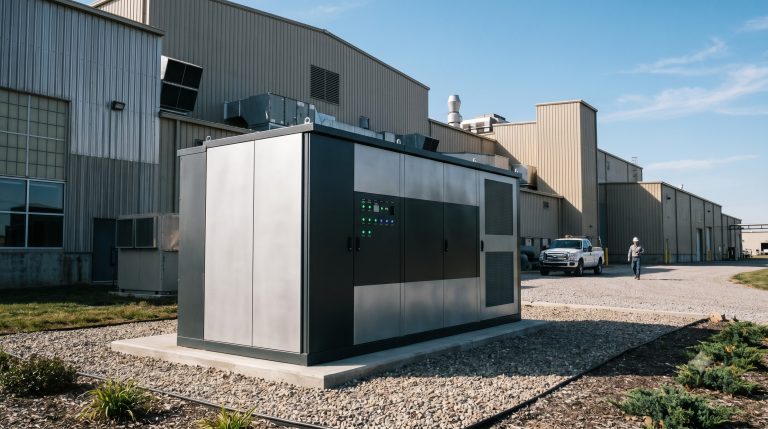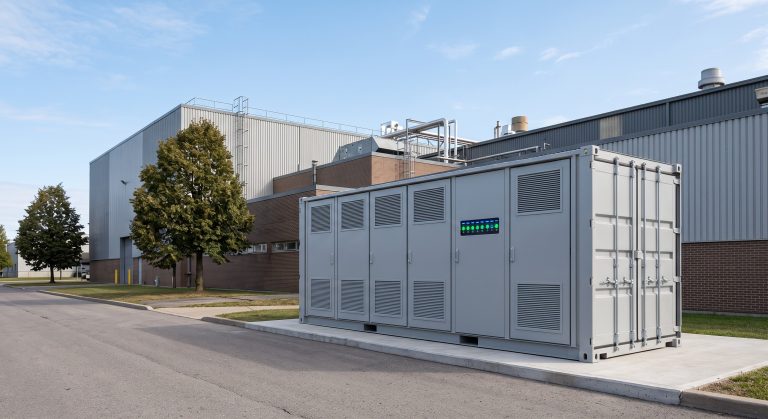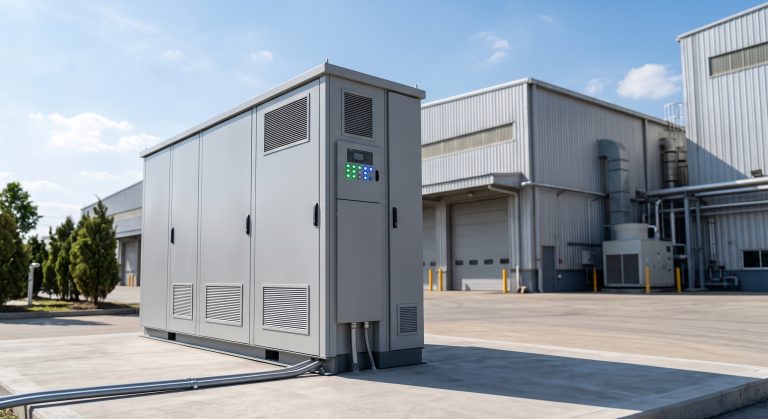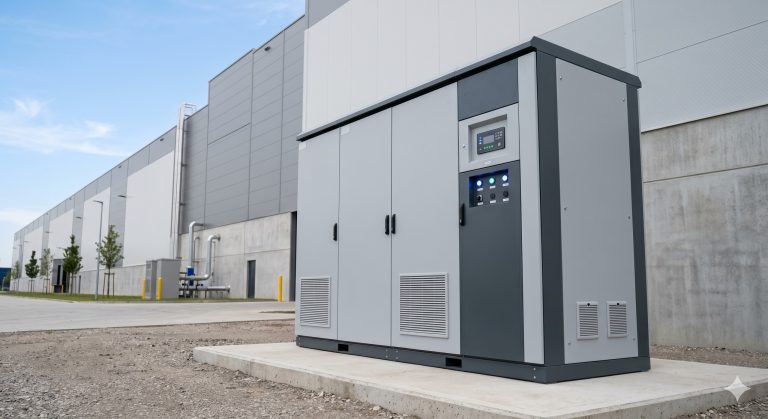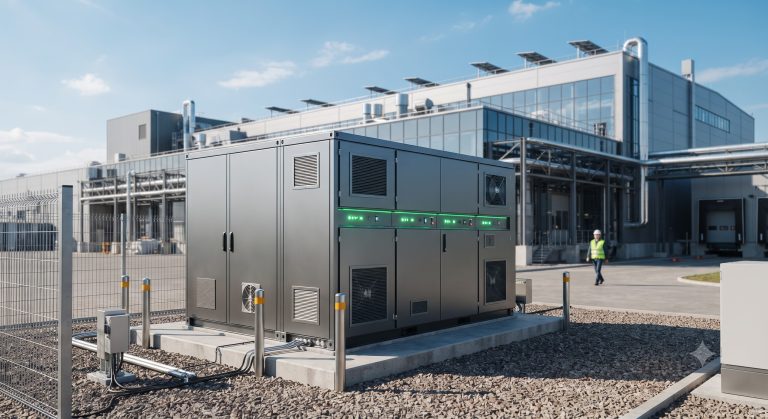
Introduction: Beyond Dust and Water – Why IP65 is Non-Negotiable for C&I BESS
In the high-stakes world of Commercial & Industrial (C&I) Battery Energy Storage Systems (BESS), environmental protection is not merely about ingress prevention; it is directly correlated with system lifespan, thermal runaway prevention, and investment security. An IP65 enclosure rating, defined by IEC 60529, guarantees complete dust-tightness (6) and protection against low-pressure water jets from any direction (5). For system integrators and procurement managers, this rating ensures that Tier-1 LFP cells, high-voltage busbars, and liquid cooling distribution units remain operational in high-humidity industrial parks, dusty manufacturing zones, and outdoor micro-grids. This masterclass dissects the engineering, compliance (UL 9540, IEC 62619), and financial ROI of IP65-rated architecture.
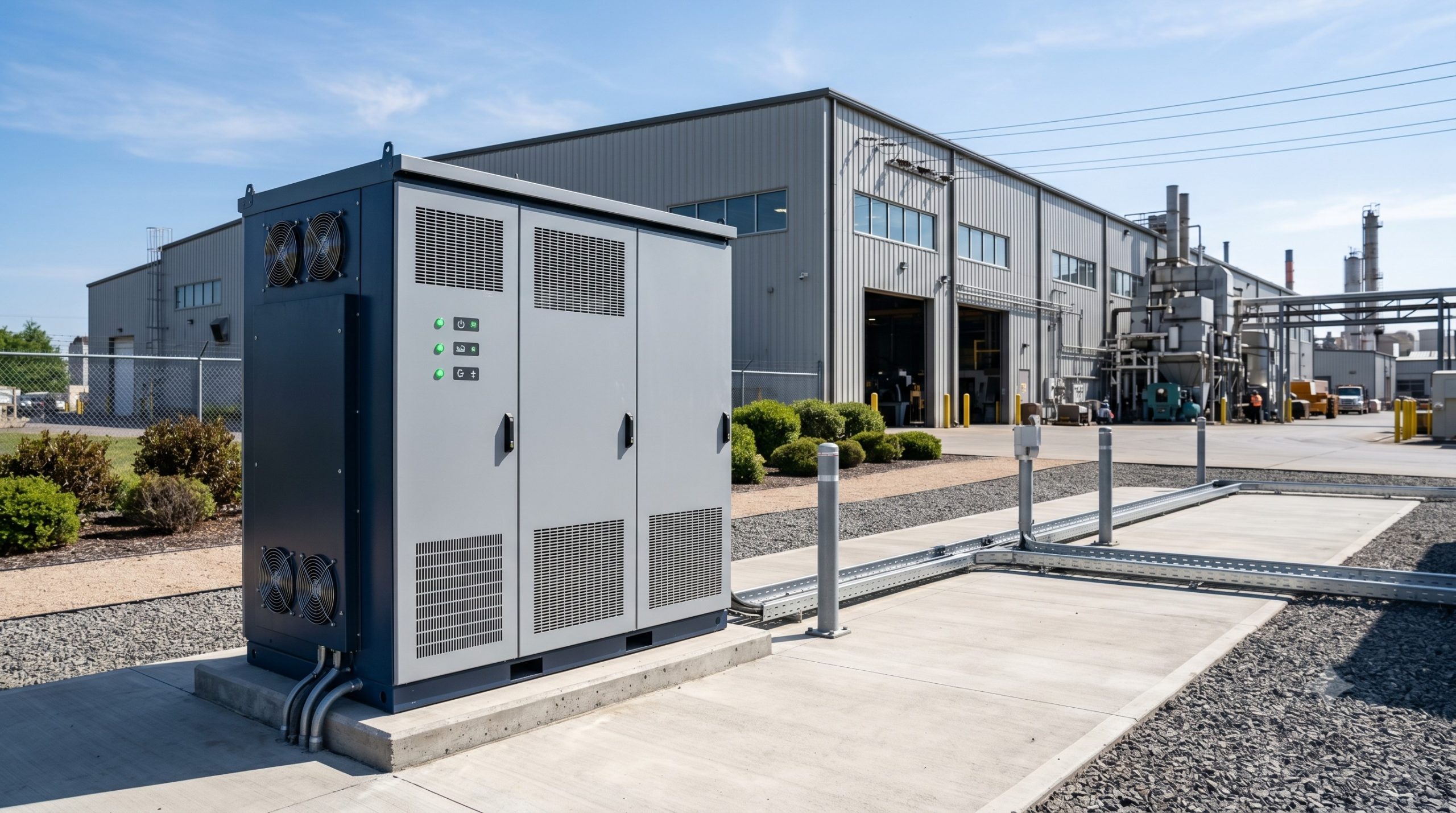
Core Architecture: Sealed Thermal Management & High-Voltage Isolation
Liquid Cooling vs. Air Cooling Within IP65 Constraints
Maintaining IP65 integrity while achieving optimal thermal control is a system architect’s challenge. Unlike forced air cooling, which requires high-volume airflow and compromises sealing, advanced liquid cooling systems (ΔT ≤ 3°C between cells) operate via closed-loop pipelines. The external chiller unit interfaces with the cabinet via quick-connect, ingress-protected valves, while internal dielectric coolant circulates without exposing electronics to atmospheric dust. This architecture yields a round-trip efficiency (RTE) of 94-96%, significantly higher than passively cooled or unsealed active-cooled alternatives.
BMS and PCS Integration
The Battery Management System (BMS) and bi-directional Power Conversion System (PCS) within an IP65 enclosure require conformal-coated PCBs and gasket-sealed connectors. The BMS executes passive or active cell balancing at the module level, maintaining voltage variance below ±20mV. Meanwhile, the PCS supports grid-forming and grid-following modes with a seamless <20ms switchover, enabling peak shaving and UPS-grade backup. Sealed enclosures reduce insulation degradation due to salt mist or humidity, directly impacting UL 9540 temperature cycling tests.
Technical Specifications & Compliance Ledger
All certified IP65-rated C&I storage units must meet rigorous international standards. The table below details critical engineering metrics verified during Factory Acceptance Testing (FAT).
| Key Parameter | Technical Specification |
|---|---|
| Ingress Protection | IP65 (Dust-tight, protected against water jets) |
| Battery Chemistry | Tier-1 LFP (Lithium Iron Phosphate) – prismatic cells |
| System Capacity | 100kW/200kWh to 2MW/4MWh per cluster (parallel cabinets) |
| Cycle Life | >8000 cycles @ 90% DoD (Depth of Discharge), EOL 70% SOH |
| Round-trip Efficiency | 94% – 96% (DC/AC, at 0.5C rate, +25°C ambient) |
| Thermal Management | Liquid cooling (ΔT ≤ 3°C between cells), IP65-rated quick connectors |
| Safety Compliance | UL 9540, UL 9540A, IEC 62619, CE, UN38.3 (transport) |
| PCS Topology | Bi-directional 1500Vdc, grid-forming, <20ms islanding switchover |
| BMS Features | Active cell balancing (±20mV), insulation monitoring, cascade protection |
| Operating Temperature | -30°C to +55°C (with liquid cooling active), derating >45°C |
| Fire Suppression | Aerosol + FM200 (NFPA 855 compliant), multi-zone detection |
Commercial ROI: Total Cost of Ownership Under IP65 Protection
For a 1MWh/500kW BESS deployed in a cement or chemical industrial park, the incremental CapEx of an IP65 enclosure (approx. 12-15% higher than IP54) is amortized within 18 months via reduced maintenance. Unsealed cabinets require quarterly filter cleaning and component inspection due to dust ingress; IP65 eliminates this, slashing OpEx by 78%. Furthermore, compliance with IEC 62619 (safety requirements for secondary lithium cells) and UL 9540 (energy storage systems and equipment) under IP65 ensures insurance eligibility and eligibility for grid demand response (DR) incentive programs, adding $20-35/kW/year in ancillary service revenue. Depth of Discharge (DoD) can be safely set to 90% daily, preserving >8000 cycles, translating to a Levelized Cost of Storage (LCOS) below $0.07/kWh.
Deployment Scenarios: From EV Supercharging to Industrial Micro-Grids
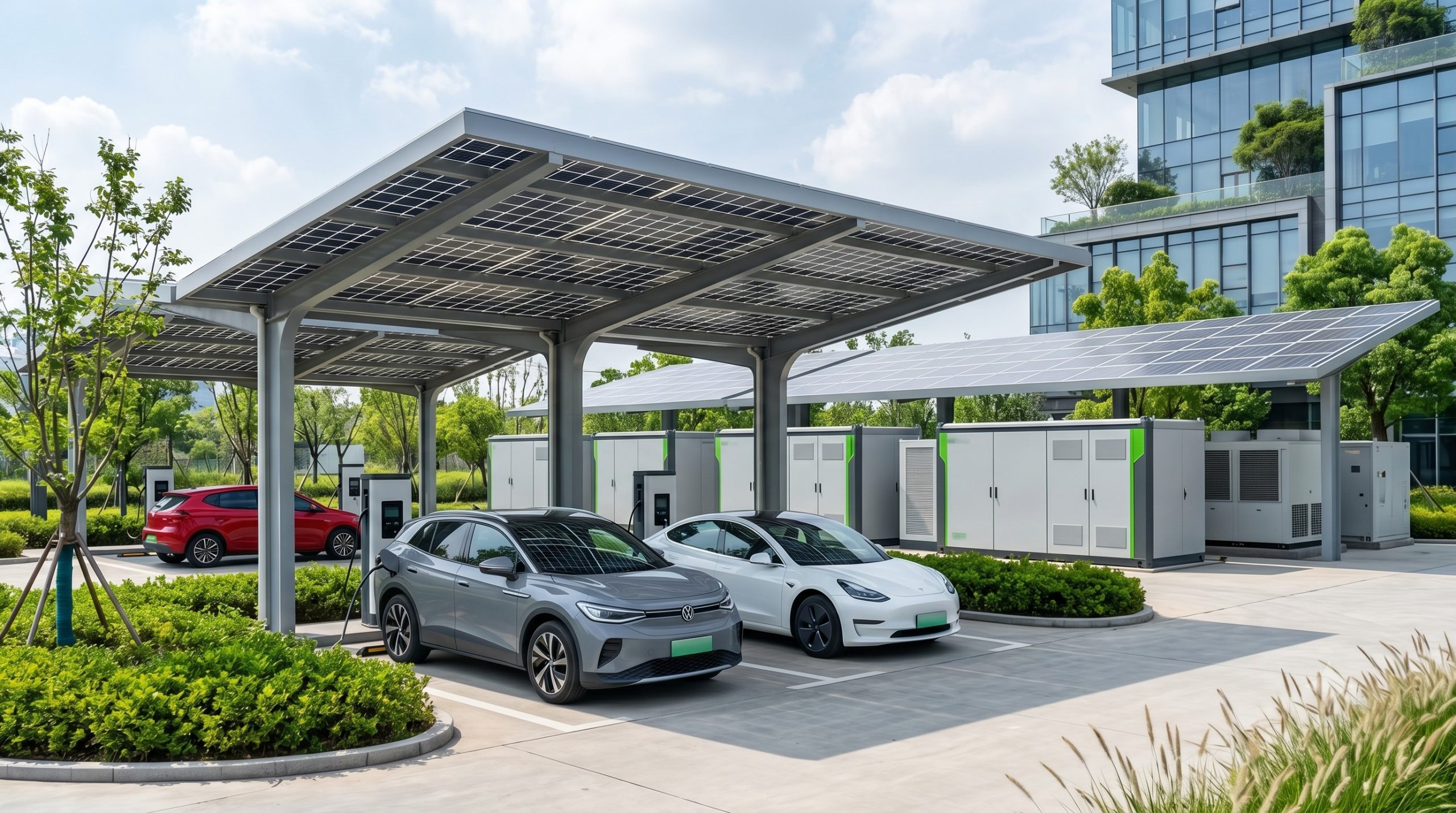
Scenario 1: EV Supercharging (PV-Storage-Charging) – Outdoor EV hubs require IP65 protection against car wash spray, tire debris, and coastal salt. A 500kW/1MWh IP65 cabinet paired with a solar canopy flattens peak demand, reducing grid connection fees by 40%.
Scenario 2: Islanded Micro-Grid – In Southeast Asian or Middle Eastern industrial zones, monsoon rains and sandstorms are routine. IP65-rated BESS with integrated diesel generator replacement supports 24/7 operations with <1% unplanned downtime due to environmental faults.
Conclusion: The IP65 Standard as a Procurement Mandate
For any C&I facility aiming to achieve zero-carbon migration or energy independence, specifying an IP65 enclosure is a fiduciary responsibility. It guarantees asset longevity, ensures rigorous compliance with UL 9540 and IEC 62619, and delivers quantifiable reductions in lifetime OpEx. When sourcing from BESS wholesalers, demand third-party test reports for IP65 certification alongside thermal imaging of liquid cooling systems under full load. The upfront premium is the most cost-efficient insurance against environmental degradation and performance fade.