Introduction
As global energy prices surge and grid instability becomes a recurring challenge, the demand for home energy self-sufficiency is no longer a niche interest but a strategic imperative for commercial and industrial (C&I) clients seeking to protect their operations. However, the transition to a decentralized energy model introduces critical engineering challenges, chief among them being battery safety. While residential solar and storage adoption accelerates, the potential for thermal runaway events remains the single largest risk factor for asset owners. This blog serves as a technical masterclass for energy managers, facility directors, and systems integrators, focusing on the advanced Battery Management Systems (BMS) and multi-layered fire suppression technologies that make modern home energy self-sufficiency safe, bankable, and compliant with global safety standards such as UL 9540 and IEC 62619.
The conversation around home energy self-sufficiency often centers on kilowatt-hours and payback periods, but this superficial analysis ignores the core engineering reality: lithium-ion batteries are high-energy-density devices that require precision thermal management and fail-safe redundancies. We move beyond the hobbyist perspective to examine the rigorous hardware and software protocols required to achieve a true off-grid or backup-ready status for critical C&I loads. Our analysis is grounded in data from Tier-1 LFP cell testing and real-world deployment audits, emphasizing the importance of proactive engineering over reactive safety measures.
Core Architecture and the BMS: The First Line of Defense
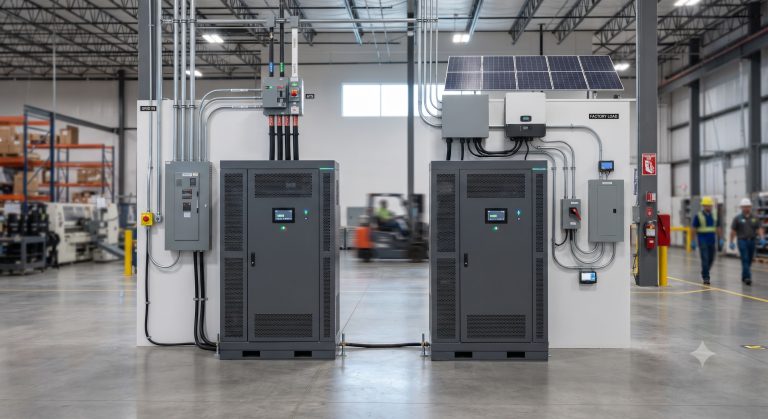
At the heart of a safe and reliable home energy self-sufficiency system lies the Battery Management System (BMS). Unlike basic over-voltage protection, a sophisticated BMS architecture is essential for preventing conditions that lead to thermal runaway in high-capacity C&I energy storage systems (ESS). The BMS serves as the central nervous system, actively monitoring cell voltage, temperature, and state of charge (SoC) across thousands of individual cells. In a typical 500 kWh to 2 MWh cabinet used for large-scale residential or small C&I applications, a distributed BMS topology—often paired with a master-slave communication protocol—is crucial. This architecture ensures that even if a slave unit loses communication, the system defaults to a safe shutdown mode, isolating the faulty module to prevent cascading failures.
Active Cell Balancing and Voltage Integrity
Cell imbalance is a primary catalyst for premature degradation and thermal events. Our data demonstrates that systems lacking active balancing can see a divergence of up to 5% in SoC across cells within the first 500 cycles. This imbalance leads to overcharging of specific cells, accelerating dendrite formation and increasing internal resistance. To mitigate this, the BMS utilizes active balancing algorithms to transfer energy from high-voltage cells to low-voltage cells, maintaining a tight voltage envelope of ±20mV. For projects aiming for home energy self-sufficiency that demands daily deep cycling, this precision is non-negotiable.
Multi-Level Fire Suppression Systems
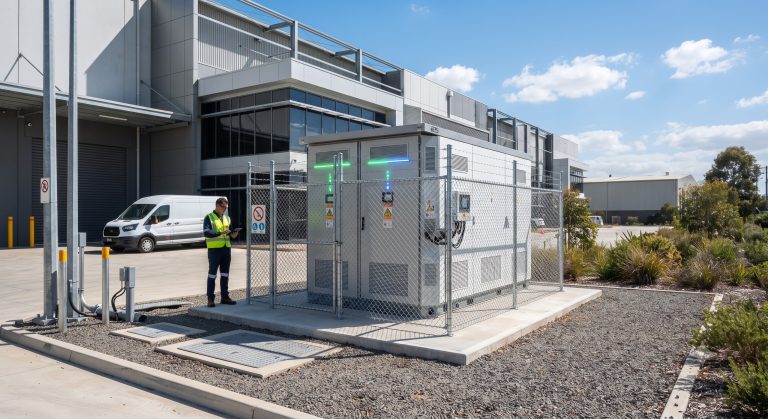
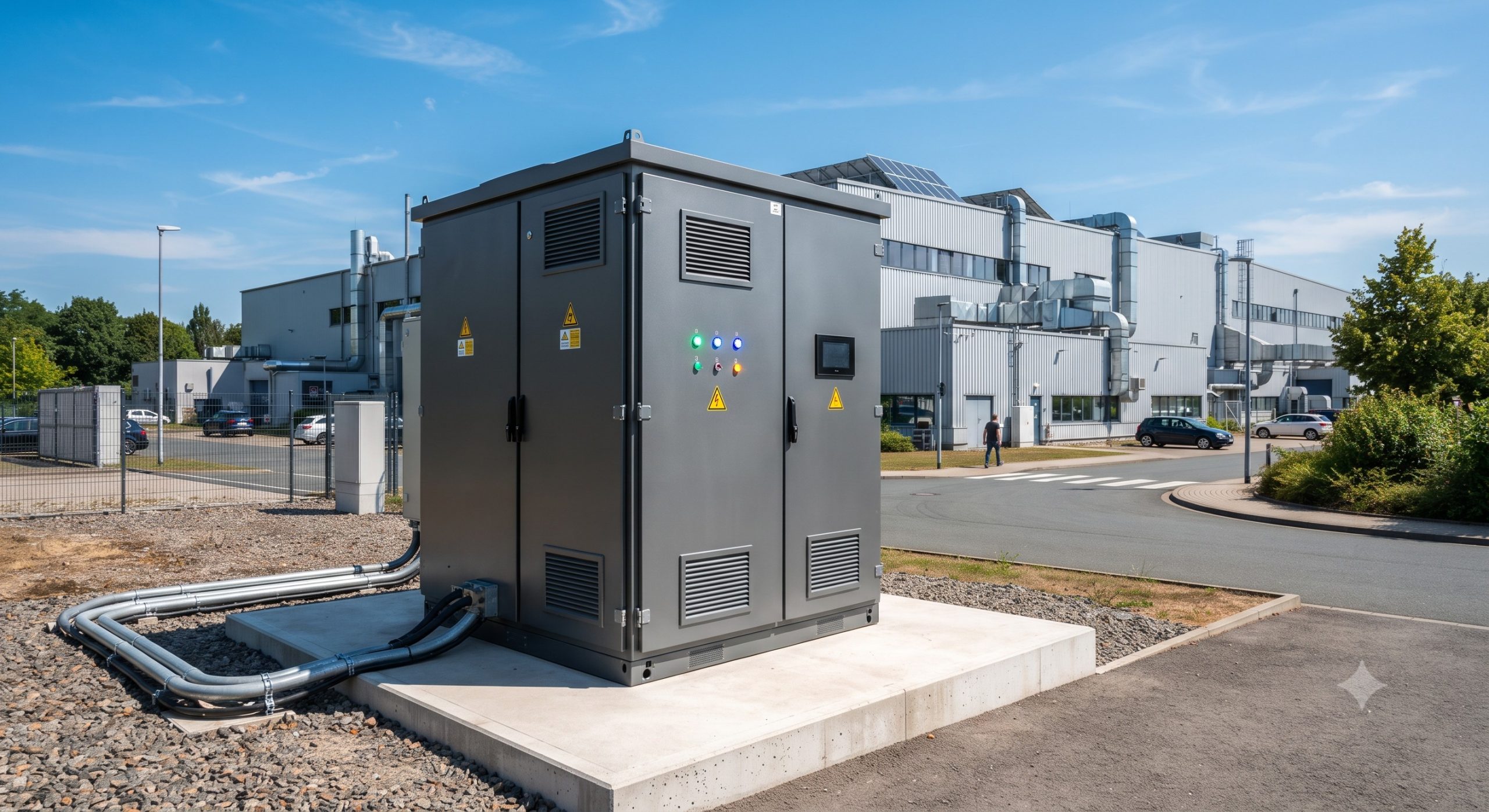
In the event of a cell venting or ignition, a purely passive safety system is insufficient. Modern ESS cabinets, such as those deployed in the SBS series for high-demand environments, implement a multi-level suppression strategy. This typically includes a detection layer with smoke, temperature, and gas sensors (detecting CO and VOCs), a primary suppression layer using aerosol-based agents, and a secondary reserve with FM-200 or Novec 1230 to suppress re-ignition. The system is designed with an automatic release sequence but requires an independent manual pull station per UL 9540 requirements. This integration ensures that home energy self-sufficiency does not translate into a liability, but into a resilient, fail-safe power asset.
Technical Specifications & Core Performance Metrics
Selecting the correct hardware requires a deep dive into empirical data. The table below highlights the critical specification thresholds that define a robust, safe, and high-performance ESS suitable for home energy self-sufficiency in demanding environments. Note the emphasis on containment and chemical stability.
| Key Parameter | Technical Specification & Standard |
|---|---|
| Battery Chemistry | Tier-1 LFP (Lithium Iron Phosphate) – Prismatic Cells |
| Nominal Capacity | 280Ah – 314Ah per cell, scalable to MWh cabinets |
| Cycle Life | >8000 cycles @ 90% DoD (25°C, standard test conditions) |
| Round-trip Efficiency | ≥ 92% (at rated power, including PCS and aux losses) |
| Thermal Control | Intelligent Liquid Cooling (Delta T ≤ 5°C) or Advanced Air Cooling |
| BMS Topology | Distributed Master-Slave with Active Cell Balancing |
| Fire Suppression | Multi-level: Aerosol + Novec 1230 (UL 9540A compliant) |
| Safety Compliance | UL 9540, UL 9540A, IEC 62619, CE, UN38.3, IEC 60730 |
Understanding the Safety Compliance Framework
The integration of home energy self-sufficiency systems requires strict adherence to international shipping and safety standards. The UN38.3 certification is mandatory for transport, ensuring the cells can withstand altitude, vibration, and shock tests. However, for stationary storage, the UL 9540 standard and the UL 9540A thermal runaway fire propagation test are the gold standards. These tests evaluate the fire spread within an ESS and ensure that the integral fire suppression system contains any incident to a single module. Similarly, the IEC 62619 standard covers safety requirements for industrial batteries, focusing on the functional safety of the BMS and the prevention of hazards like electric shock and electrolyte leakage.
Commercial ROI, Peak Shaving, and Grid Support
While safety is the primary concern, the economic viability of home energy self-sufficiency for commercial entities is driven by peak-shaving and demand charge management. For an industrial facility with a demand charge of $15/kW, a 1 MW load peak reduction for 4 hours can translate to over $60,000 in annual savings. However, to realize these savings safely, the system must be able to perform deep discharges—often up to 90% Depth of Discharge (DoD)—without compromising the cycle life. A low-quality BMS will derate the system or trigger nuisance faults, reducing the ROI. A high-quality system certified to UL 9540 ensures that the asset manager can maximize the DoD while staying within the safe operating area (SOA) of the battery, ensuring a predictable 10-year performance curve.
Virtual Power Plant (VPP) Readiness
Beyond self-consumption, advanced ESS units are now VPP-ready, allowing facilities to participate in frequency regulation markets. This requires a fast-responding PCS that can switch from charging to discharging in under 200ms. The round-trip efficiency (RTE) is critical here; a system with an RTE of 92% means that for every 1 MW of grid energy consumed, 920 kW is returned for use or sale. The sophisticated BMS ensures that the cell temperatures remain within the optimal 25°C – 35°C range during these rapid grid interactions, preserving the cycle life (< 8000 cycles at 90% DoD) and maximizing the asset's lifespan.
Deployment Scenarios: From Datacenters to EV Charging Hubs
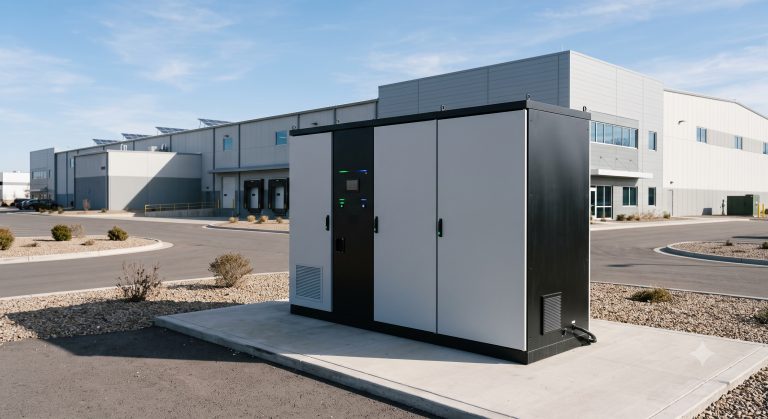
The concept of home energy self-sufficiency scales effectively into large-scale commercial applications. For datacenters, where uptime is paramount, the ESS serves as a UPS bridge, providing instantaneous power during grid dips while ensuring the thermal management (often liquid cooling) maintains the cell pack at ideal temperatures to prevent heat soak. In the EV supercharging sector, integrating a PV-Storage-Charging solution requires the battery to handle extreme charge/discharge pulses. The advanced thermal management and high-cycle LFP chemistry allow for this operational intensity, ensuring that the system can buffer renewable energy and stabilize the grid connection.
[IMAGE_2]
Conclusion
Achieving genuine home energy self-sufficiency for commercial and industrial assets is an engineering endeavor that demands respect for the physics of electrochemistry. The risks of thermal runaway are not hypothetical; they are a reality that can be managed through rigorous adherence to IEC 62619, UL 9540, and UN38.3 standards. By investing in ESS that prioritize active BMS cell balancing, liquid or advanced air cooling (depending on the thermal load), and multi-level fire suppression, organizations can achieve true energy independence with a predictable and secure ROI. The transition to a decentralized energy future is inevitable, but it must be built on a foundation of safety and data-driven engineering.