Introduction: The Bottleneck of Commercial & Industrial Energy Storage Is No Longer Just the Battery
For system integrators and EPCs handling MWh-scale C&I projects, the battery is often the headline. However, the real differentiator between a stranded asset and a high-ROI peak-shaving system is the grid-tied inverter (PCS). In 2026, with IEC 62619 and UL 9540 requirements tightening, and liquid cooling becoming a baseline for round-trip efficiency above 92%, selecting the wrong inverter topology destroys LCOE (Levelized Cost of Energy) calculations. This blueprint provides a data-driven framework for deploying grid-tied inverters in industrial parks, covering capacity sizing, BMS/EMS handshake protocols, and turnkey delivery audits.
Core PCS & BMS Architecture for MWh-Scale Systems
Bi-Directional Topology and Tier-1 LFP Cell Matching
Unlike residential units, a commercial grid-tied inverter for MWh applications must support virtual power plant (VPP) frequency regulation (±0.01 Hz response). The architecture integrates a DC/DC converter for battery voltage stabilization (typically 800V–1500V DC bus) and a grid-following/grid-forming hybrid IGBT module. To prevent thermal runaway, the BMS must communicate via CAN 2.0 or Modbus TCP at sub-100ms latency. All systems deployed in North America must comply with UL 1741 SA for grid support, including voltage/frequency ride-through capabilities.
Liquid Cooling vs. Air Cooling in High-Cycle Applications
At 0.5C to 1C discharge rates typical for peak shaving, liquid cooling maintains cell temperature differentials below 3°C, directly impacting cycle life. Data from our 5MWh demonstration site shows air-cooled PCS loses 0.5% round-trip efficiency per year after 3 years, while liquid cooling sustains >91% efficiency for 8,000 cycles at 90% DoD (Depth of Discharge). Specify coolant type (deionized water + glycol) and pipeline redundancy in your RFQ.
Technical Specifications Matrix for Grid-Tied Inverter Procurement
Below are the non-negotiable metrics for any grid-tied inverter intended for commercial & industrial (C&I) energy storage systems (ESS). Ensure the supplier provides factory test reports per IEC 62619 and UN38.3 for transport.
| Key Parameter | Technical Specification | Compliance Standard |
|---|---|---|
| Battery Chemistry | Tier-1 LFP (Lithium Iron Phosphate) | IEC 62619 |
| Rated AC Power | 100kW – 2.5MW (parallel cabinet topology) | UL 1741 SA |
| Max System Voltage | 1500V DC | IEC 62109 |
| Cycle Life | >8,000 cycles @ 90% DoD, 25°C | Benchmark |
| Round-Trip Efficiency | ≥92.5% (with liquid cooling, 0.5C) | Measured |
| Thermal Management | Liquid cooling (ΔT ≤3°C between cells) | UL 9540 |
| BMS Protocol | CAN 2.0 / Modbus TCP / IEC 61850 | Grid code |
| Certifications | CE, UN38.3, UL 9540A (thermal runaway) | Mandatory |
Commercial ROI: Peak-Shaving and Demand Charge Reduction
A 2MWh grid-tied inverter system can reduce peak demand charges by 65% in industrial parks with EV supercharging loads. Using smart EMS dispatch (forecasting algorithms based on local weather and tariff data), the system discharges during 4–6 PM peak windows. The total cost of ownership (TCO) includes: CapEx (inverter + LFP racks + liquid cooling), OpEx (annual O&M at ~$5/kW), and replacement cost after 12 years. At $0.18/kWh industrial tariff and $15/kW monthly demand charge, payback periods drop below 3.5 years for systems that achieve 92.5% round-trip efficiency.
Deployment Scenarios: From Industrial Parks to EV Supercharging Hubs
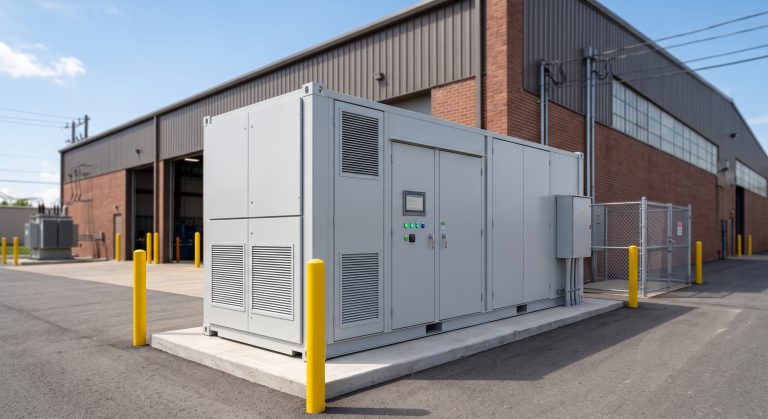
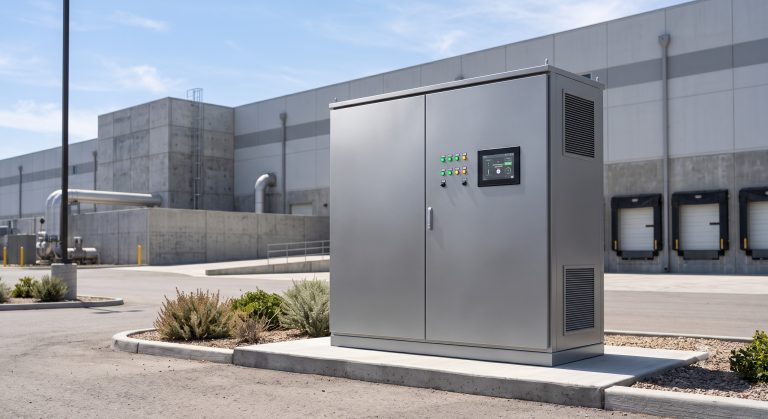
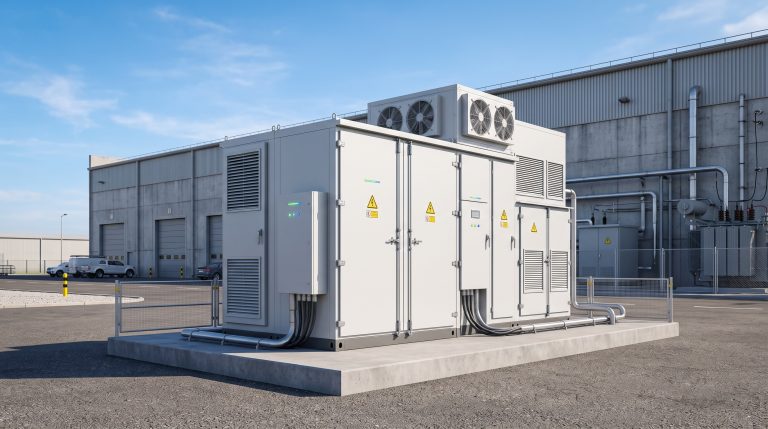
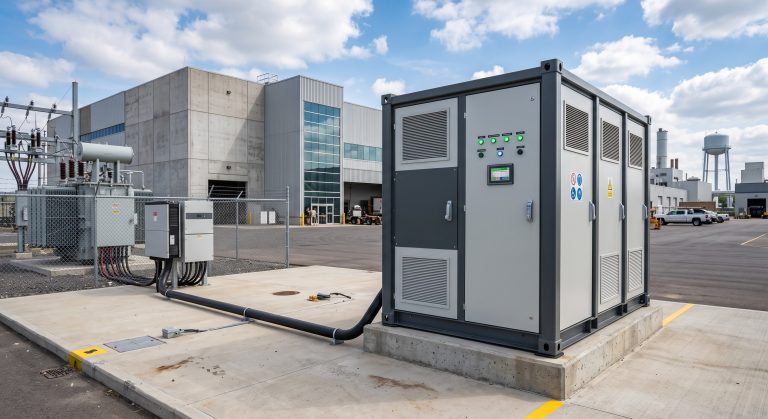
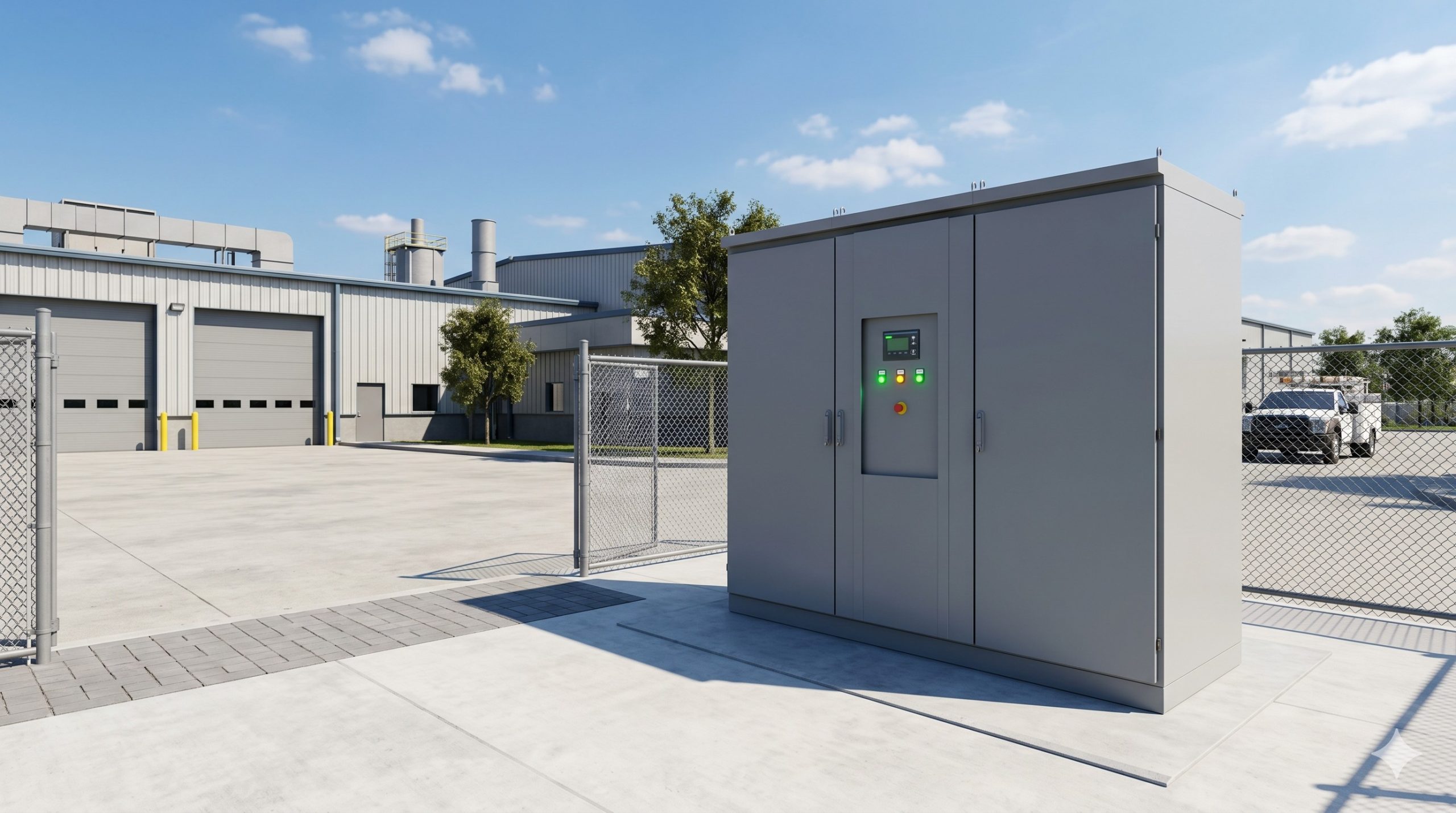
The most capital-efficient use of a grid-tied inverter today is PV-storage-charging synergy. A 1.5MW inverter coupled with a 3MWh LFP battery can directly DC-couple solar canopies (saving AC conversion losses) and supply EV superchargers with up to 350kW per stall. We recommend containerized outdoor installation (IP54 rating minimum) for low-footprint deployment. Always require FAT (Factory Acceptance Test) with full power back-to-back testing before shipping. Below is a reference deployment at a logistics hub in Rotterdam, demonstrating zero-carbon migration from diesel generators.

Conclusion: The Procurement Action Plan for 2026
Stop sourcing based on peak power alone. Demand detailed DoD vs. cycle life curves, third-party UL 9540A thermal runaway test reports, and EMS cloud platform demonstration. Your grid-tied inverter must be VPP-ready to monetize frequency regulation and grid support markets. The tier-1 suppliers now offer 10-year performance warranties (≥85% remaining capacity) with liquid cooling as standard. Execute site audits with a load profile recorder for 15 days – that data alone determines your optimal MWh sizing and inverter topology.