Overview
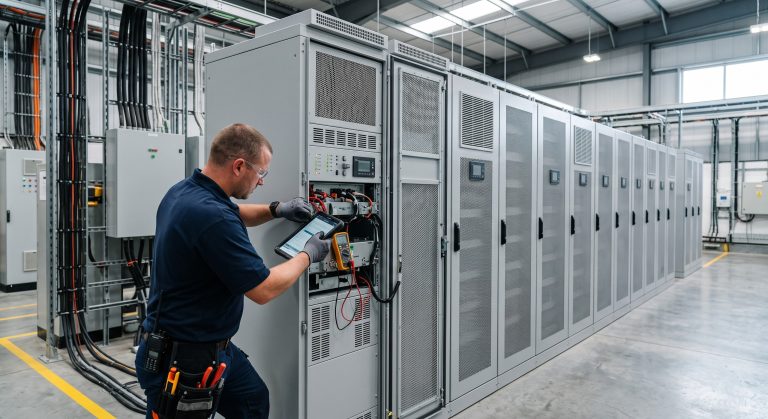
Integrating a containerized Energy Storage System (ESS) with wind turbine generation is not only possible but is increasingly becoming a standard practice for stabilizing renewable output, capturing curtailed energy, and improving grid compliance. As a technical support engineer, I regularly oversee these hybrid installations, which address the core challenge of wind variability by shifting energy from periods of high generation and low demand to peak price windows. In the following FAQ, we address the most critical pre-sales and post-sales questions plant engineers and procurement teams ask, focusing on battery chemistries, safety protocols, and financial payback models for wind-storage co-location.
Frequently Asked Questions
- Q1: Can a standard container ESS be directly connected to a wind turbine’s AC output without a separate transformer?
- Yes, but direct connection requires careful voltage matching. Most wind turbines output medium voltage (e.g., 690V or 3.3kV), which is higher than a standard ESS inverter input (typically 400V-600V). Consequently, a dedicated step-down transformer is almost always required between the wind turbine and the ESS to ensure safe, efficient operation and to protect the PCS from overvoltage damage.
- Q2: What is the typical cycle life and DoD for an LFP-based container ESS used in wind smoothing applications?
- The standard cycle life for a Tier-1 LFP container ESS is 6,000 to 8,000 cycles at 90% Depth of Discharge (DoD). For wind integration, we typically recommend a 80% DoD to provide a buffer for sudden wind gusts, which extends the calendar life beyond 15 years. This performance is achieved through precise active BMS balancing and advanced liquid cooling that maintains cells within an optimal 15-35°C range.
- Q3: How does the container ESS’s liquid cooling system handle the thermal demands of frequent wind ramping events?
- Liquid cooling is the preferred method for wind-storage hybrids because it excels at absorbing rapid, high-C-rate thermal loads caused by sudden wind gusts. Unlike air cooling, liquid systems use a closed-loop coolant circuit that can dissipate heat spikes up to 40% more effectively, ensuring stable cell temperatures and preventing premature degradation even during high-frequency charge/discharge cycles.
- Q4: What BMS monitoring parameters are critical when integrating ESS with a wind farm?
- Beyond standard voltage and temperature, the BMS must actively monitor State-of-Charge (SoC) balancing and State-of-Health (SoH) trends in 15-minute intervals to anticipate wind fluctuations. Crucially, the BMS must be interfaced with the wind farm’s SCADA system via Modbus TCP or IEC 61850 protocols to enable coordinated curtailment and provide real-time alerts for cell voltage drift, which can occur more frequently under turbulent wind conditions.
- Q5: Can the system be configured for off-grid (island) operation with the wind turbine as the primary source?
- Yes, the bi-directional PCS in a container ESS enables seamless off-grid switching, but it requires a grid-forming inverter capable of setting the local voltage and frequency reference. For wind-only off-grid configurations, the ESS must be sized to handle the entire load during periods of low wind speed (e.g., 2-4 hours of autonomy), and often requires a dynamic load bank to dissipate excess energy if the wind is high and batteries are full.
- Q6: What fire safety mechanisms prevent thermal runaway in a wind-integrated ESS, given the remote location?
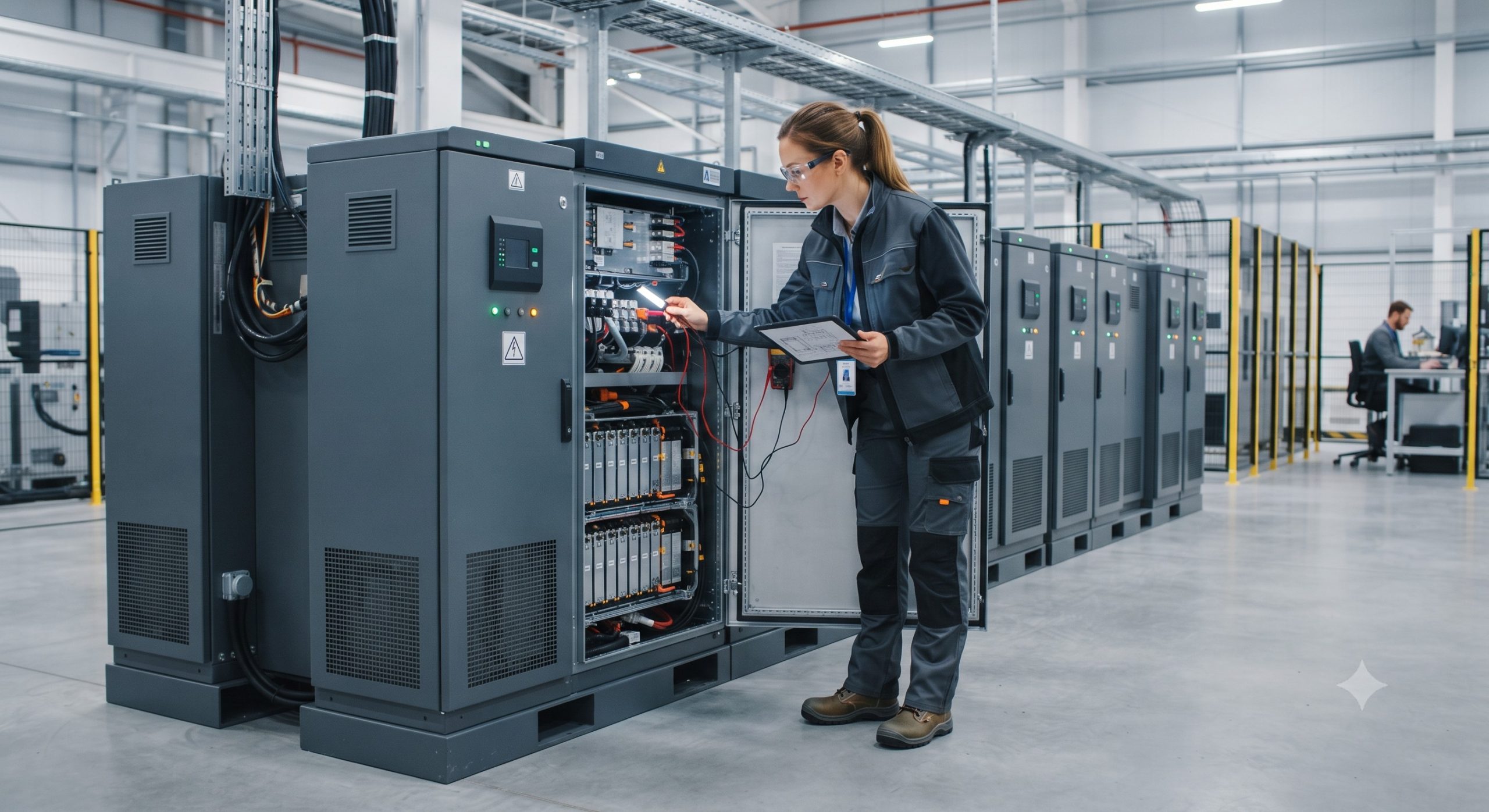
- A multi-tier fire safety system is standard. This includes early gas detection (H2, CO) and aerosol-based suppression (e.g., Novec 1230) that activates at the cell level. For wind farm locations, the container must feature reinforced IP65-rated enclosures with integrated explosion vents. The fire control panel is linked to the wind farm’s central alarm system, allowing for automatic shutdown of the turbine and isolation of the battery string within 2 seconds of detecting a thermal event.
- Q7: How do I calculate the ROI and payback period for a wind+storage project, specifically considering peak shaving?
- The ROI is driven by three pillars: (1) capturing wind energy that would otherwise be curtailed (arbitrage), (2) reducing demand charges by peak shaving, and (3) earning ancillary service revenue. A typical calculation involves the Levelized Cost of Storage (LCOS). For example, assuming a $0.35/kWh price spread and 80% round-trip efficiency, a 5 MWh system can generate an annual revenue of ~$420,000, leading to a payback period of roughly 5-7 years, depending on wind resource quality and local grid incentives.
- Q8: Is the container ESS system scalable if we add more wind turbines to our farm in the future?
- Yes, container ESS systems are inherently modular and scalable. You can easily add more containers in parallel on the AC side, connected to a common point of interconnection (POI). To scale seamlessly, we recommend implementing a parallel DC-busbar design from the start, which allows you to connect up to 10 units in parallel without major reconfiguration, ensuring future capacity expansion simply requires deploying an additional standardized container.