EXECUTIVE SUMMARY
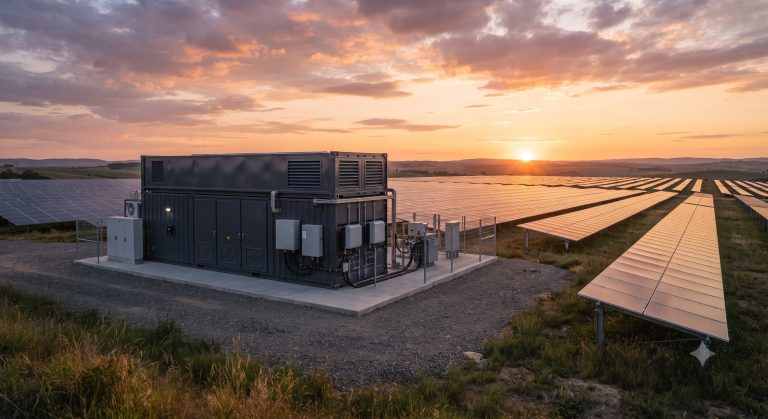
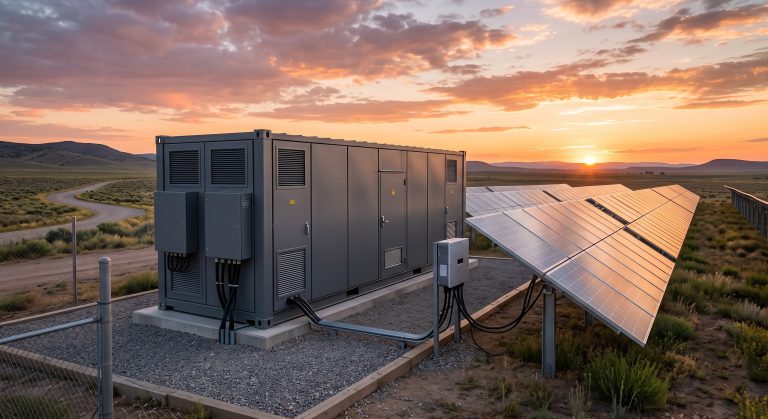
This document serves as the definitive technical overview and performance datasheet for our next-generation Battery Energy Storage System (BESS), distinguished by its fully automated battery pack manufacturing process. This whitepaper details the system architecture, safety protocols, and performance metrics that establish our platform as the industry benchmark for reliability, efficiency, and scalability in Commercial & Industrial (C&I) and utility-scale applications. By integrating cutting-edge automation in cell assembly, we ensure unprecedented consistency, quality, and operational lifespan for every energy storage asset.
SYSTEM ARCHITECTURE & SAFETY
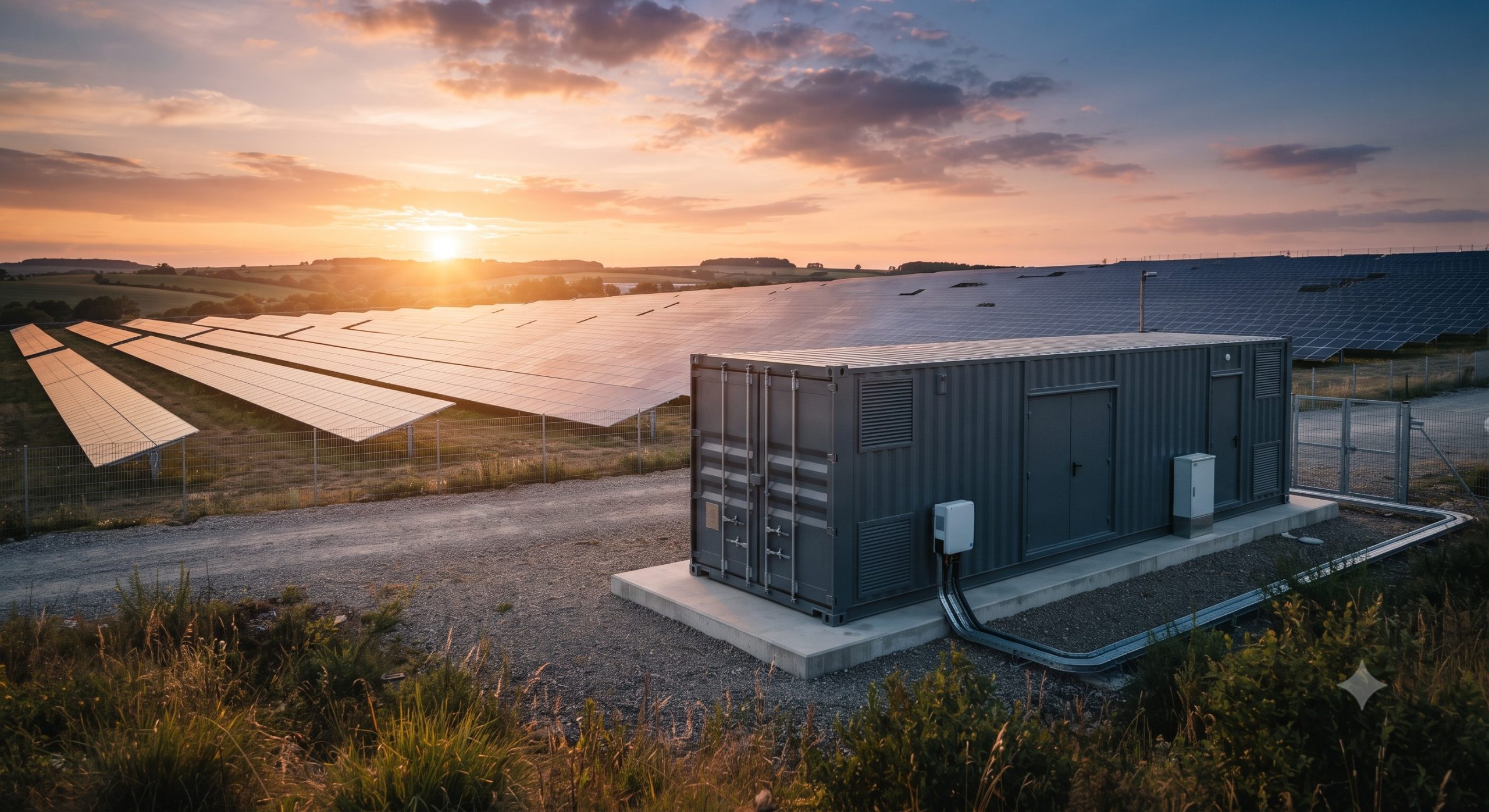
The core of the system is a modular, Tier-1 LFP (Lithium Iron Phosphate) architecture, designed for maximum energy density and safety. Each battery pack is assembled with precision robotics in a clean-room environment, ensuring uniform compression, precise busbar welding, and optimal thermal interface material application. This design incorporates a multi-layered safety strategy, including:
– Cell-Level Fusing: Isolates faulty cells to prevent propagation.
– Module-Level Fire Barriers: Intumescent materials that expand under heat to contain thermal events.
– Rack-Level Breakers & Shunts: High-speed disconnection for overcurrent and short-circuit protection.
– Active Battery Management System (BMS): Continuous monitoring of voltage, current, and temperature at the individual cell level, with cell-balancing algorithms to optimize pack performance and longevity.
KEY FEATURES
– Automated Manufacturing Line: Proprietary robotic assembly ensures micron-level precision in welding and connection, eliminating human error and ensuring consistent quality across all battery packs.
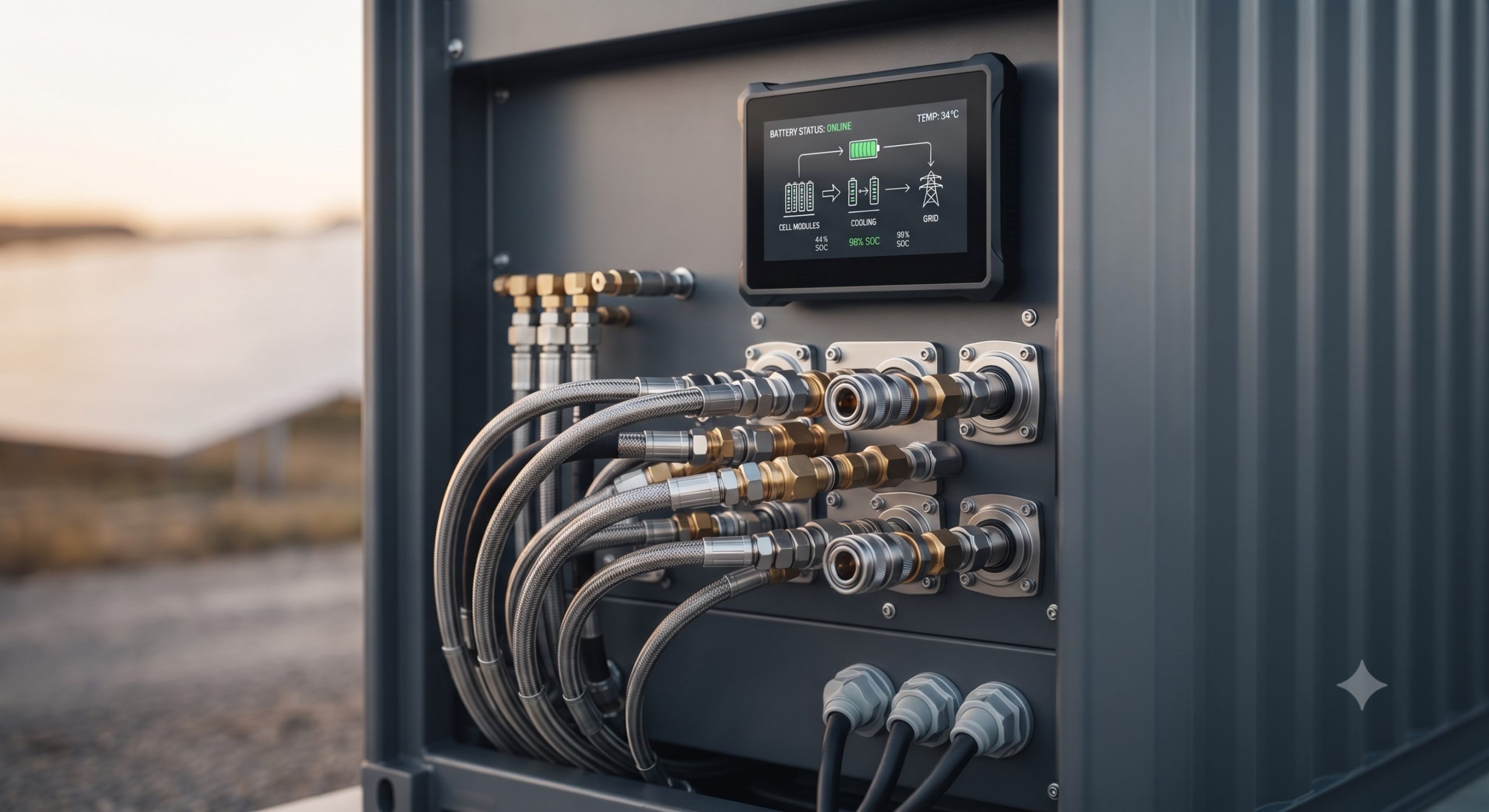
– Smart Liquid Cooling: Advanced cooling technology maintains each cell within a 2°C optimal temperature range, enhancing lifespan and performance even under peak loads.
– Multi-Tier Safety Redundancies: A three-level protection scheme (cell, module, and system) guarantees robust protection against thermal runaway.
– High Energy Density: Optimized pack design maximizes energy storage while minimizing footprint, enabling up to 372 kWh per cabinet and supporting parallel expansion.
– Active Cell Balancing: Ensures all cells operate at the same state of charge, maximizing usable capacity and extending cycle life.
– Cloud & Edge Connectivity: Seamless integration with our Energy Management System (EMS) for real-time monitoring, predictive diagnostics, and remote OTA (Over-The-Air) updates.
COMPLIANCE & STANDARDS
The system is engineered and certified to meet the most stringent global safety and performance standards. The automated manufacturing process is a key enabler of this, ensuring traceability and compliance at every step.
– Safety: Full compliance with UL 9540A (Thermal Runaway Fire Propagation) and UL 9540 (Energy Storage Systems).
– Performance: Meets or exceeds IEC 62619 for industrial battery safety and IEC 63056 for secondary cells.
– Grid Interconnection: Compliant with IEEE 1547 for grid interconnection standards.
– Environmental: RoHS and REACH compliant for hazardous substances.
– Transport: Certified to UN38.3 for safe transport of lithium batteries.
– Quality Management: Manufacturing facility is certified to ISO 9001 and IATF 16949, with the automation process ensuring full traceability from cell to system.
TECHNICAL SPECIFICATIONS
| Parameter | Specification |
|---|---|
| Nominal Capacity | 215 kWh (Pack-Level) / 372 kWh (Cabinet-Level) |
| System Voltage | Up to 1500 V DC |
| Cell Chemistry | Tier-1 LFP (Lithium Iron Phosphate) with Proven Cycle Life |
| Cooling Method | Active Smart Liquid Cooling, ±2°C Cell Uniformity |
| Safety Certifications | UL 9540, IEC 62619, UN38.3 |
| Manufacturing Process | Fully Automated Robotic Assembly with 100% Traceability |
| Round-Trip Efficiency | > 95% (DC-AC-DC) |
📥 Download Technical Specification
Click the button below to view or download the full official PDF datasheet.