EXECUTIVE SUMMARY
The Remote Monitoring EMS Software User Guide serves as the definitive operational and technical reference for facility managers, energy engineers, and asset operators deploying Tier-1 commercial and industrial battery energy storage systems (BESS). This software platform delivers real-time visibility, intelligent dispatch control, and predictive maintenance analytics across distributed energy storage assets. Engineered for seamless integration with PV arrays, EV charging infrastructure, and grid-interactive micro-grids, the EMS enables operators to optimize round-trip efficiency, execute peak shaving strategies, and ensure regulatory compliance from a single unified dashboard. This document provides a comprehensive overview of system architecture, key features, technical specifications, and deployment protocols.
SYSTEM ARCHITECTURE & SAFETY
The Remote Monitoring EMS Software operates on a secure, cloud-native architecture that bridges edge-level BMS controllers with centralized supervisory control. The platform supports Modbus TCP/IP, IEC 61850, and MQTT protocols, ensuring vendor-agnostic compatibility with Tier-1 PCS hardware and third-party SCADA systems. Cybersecurity is enforced through TLS 1.3 encryption, role-based access control (RBAC), and multi-factor authentication. On the safety front, the EMS integrates multi-level fault detection algorithms that trigger automated islanding, cell balancing alerts, and thermal runaway pre-warning notifications. All data is logged with timestamp precision, enabling post-event forensic analysis and compliance auditing.
KEY FEATURES
– Real-Time Asset Monitoring: Live dashboards display State of Charge (SOC), State of Health (SOH), voltage, current, and temperature at rack and cell level.
– Intelligent Dispatch Scheduling: Time-of-use (TOU) arbitrage algorithms automatically optimize charge/discharge cycles based on grid pricing signals.
– Predictive Maintenance Analytics: Machine learning models forecast cell degradation trends and issue maintenance tickets before performance thresholds are breached.
– Remote Firmware Updates: Over-the-air (OTA) updates ensure all connected BESS units run the latest control logic without site visits.
– Multi-Site Fleet Management: Operators can aggregate and compare performance metrics across unlimited geographically dispersed assets.
– Alarm & Event Management: Configurable thresholds trigger SMS, email, or API-based notifications to designated stakeholders.
– Comprehensive Reporting Suite: Automated daily, weekly, and monthly reports cover energy throughput, availability, and round-trip efficiency.
COMPLIANCE & STANDARDS
The Remote Monitoring EMS Software is designed to comply with international standards governing energy storage software and cybersecurity. Key certifications and directives include: IEC 62443 (Industrial Cybersecurity), UL 9540 (Energy Storage Systems and Equipment), IEC 62619 (Secondary Lithium Cells and Batteries), IEEE 1547 (Interconnection and Interoperability of Distributed Energy Resources), and GDPR (Data Privacy). The platform also supports local grid codes for demand response participation in North America, Europe, and Asia-Pacific markets.
TECHNICAL SPECIFICATIONS
| Parameter | Specification |
|---|---|
| Protocol Support | Modbus TCP/IP, IEC 61850, MQTT, REST API |
| Cybersecurity | TLS 1.3, RBAC, MFA, IEC 62443 compliant |
| Monitoring Granularity | Cell-level voltage/temperature, rack-level SOC/SOH |
| Dispatch Control | TOU arbitrage, peak shaving, demand response, islanding |
| Data Retention | 5 years cloud storage, 90 days local edge buffer |
| Alarm Notifications | SMS, Email, API webhook, mobile push |
| Reporting | Automated daily/weekly/monthly PDF & CSV export |
| Compatible Hardware | Tier-1 LFP BESS, PCS, PV inverters, EV chargers |
| Deployment Model | Cloud-native SaaS or on-premise VM |
| Languages Supported | English, Mandarin, Spanish, German, French |
INDUSTRIAL DEPLOYMENT
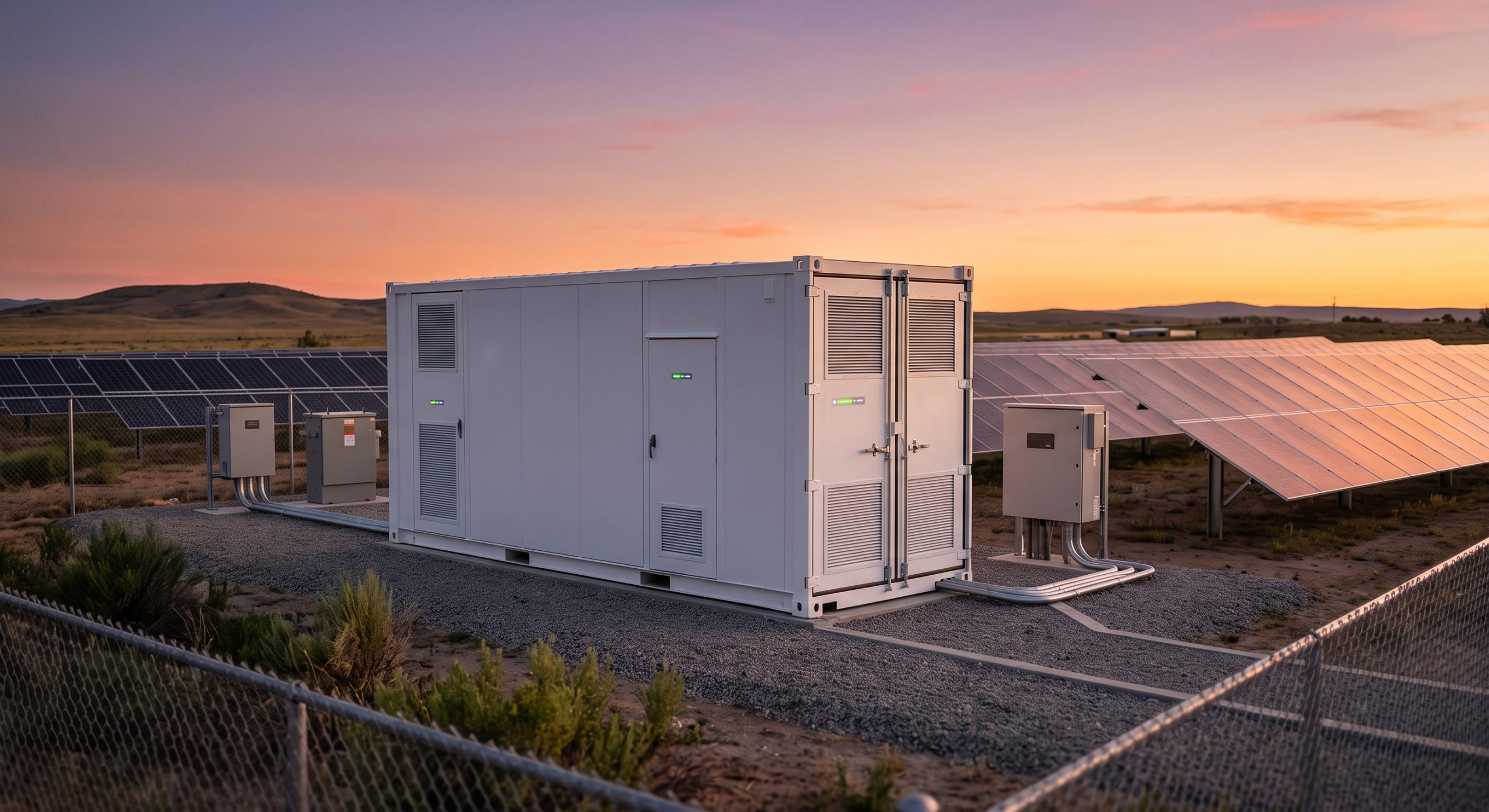
Deployment of the Remote Monitoring EMS Software follows a structured three-phase methodology: site assessment, integration, and commissioning. During site assessment, engineers map existing PCS, BMS, and meter communication interfaces. Integration involves configuring the edge gateway to stream data to the cloud dashboard while establishing secure VPN tunnels. Commissioning includes functional testing of all control setpoints, alarm thresholds, and reporting schedules. The platform supports both greenfield BESS installations and retrofit projects, with typical deployment timelines ranging from 3 to 10 business days depending on system complexity. Recommended facility layouts include dedicated network cabinets, redundant internet connectivity, and UPS-backed edge gateways to ensure uninterrupted monitoring.

📥 Download Technical Specification
Click the button below to view or download the full official PDF datasheet.