Introduction: The Commercial Energy Storage Imperative
As industrial electricity tariffs continue their volatile upward trajectory, Li-ion battery pack technology has transitioned from a niche backup asset to a cornerstone of modern Commercial & Industrial (C&I) energy strategy. For facility managers, EPCs, and energy procurement officers, the question is no longer whether to deploy storage, but how to specify a system that delivers a defensible Levelized Cost of Energy (LCOE) and robust grid support. This guide dissects the engineering and commercial anatomy of Tier-1 Li-ion battery pack technology, moving beyond marketing datasheets to examine the metrics that dictate a 10-to-15-year asset lifecycle.
Core Architecture: PCS, BMS, and Cell-to-Rack Integration
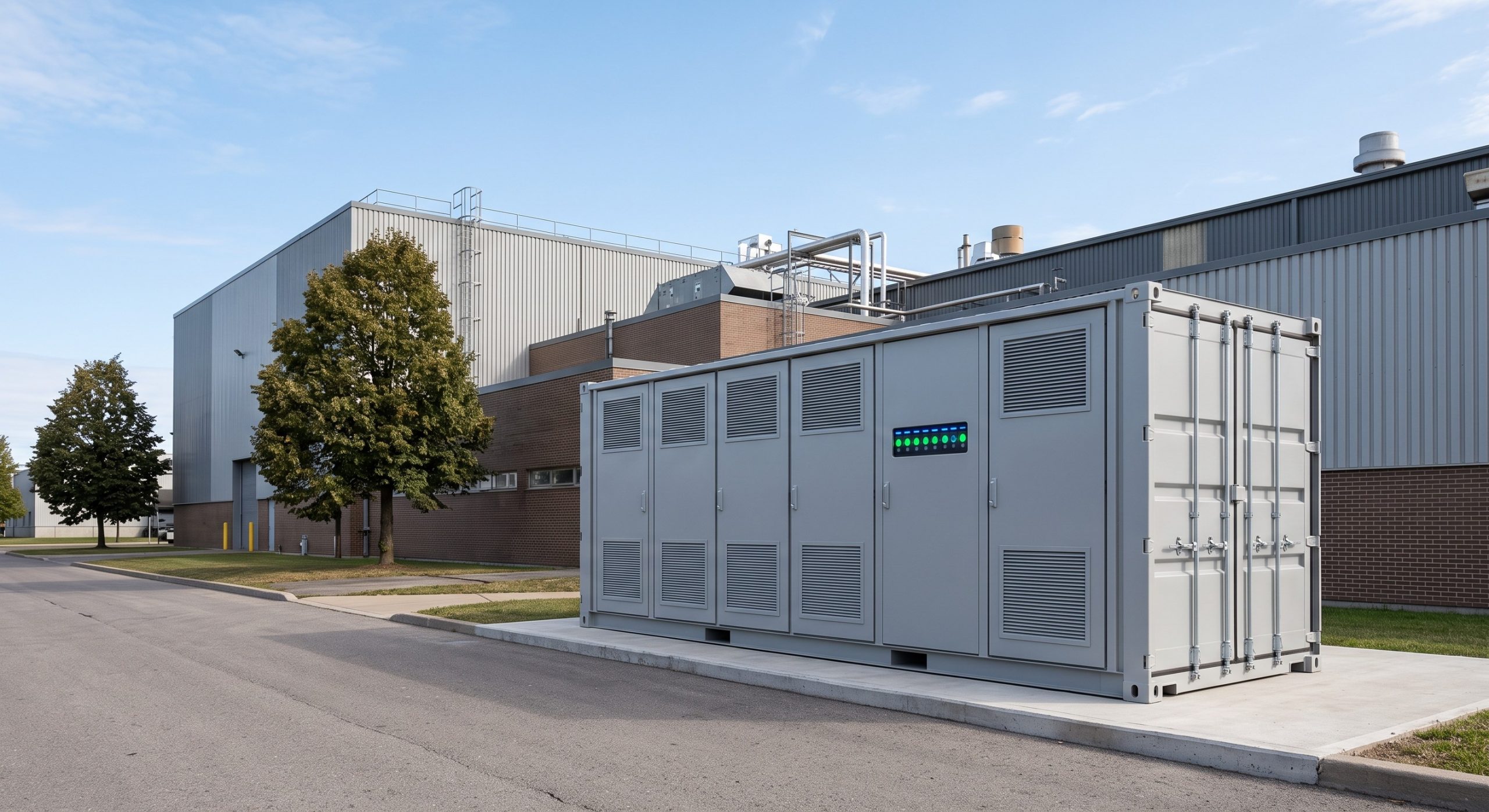
A commercial Li-ion battery pack technology is not a monolithic block. It is a hierarchical assembly: Cell → Module → Rack → Container. The integrity of this chain is governed by two intelligent subsystems working in lockstep.
The Power Conversion System (PCS)
The PCS is the gateway between DC stored energy and AC grid power. In modern C&I applications, bi-directional PCS units achieve round-trip efficiency (RTE) of 92% to 95% at nominal load. Key metrics to audit include:
- AC Voltage Range: Typically 400V/480V, 3-phase, with ±10% tolerance for grid fluctuation.
- Reactive Power Capability: Essential for grid support and power factor correction (e.g., -1 to +1).
- Response Time: Sub-100ms transition for frequency regulation and demand response events.
Battery Management System (BMS) & Cell Balancing
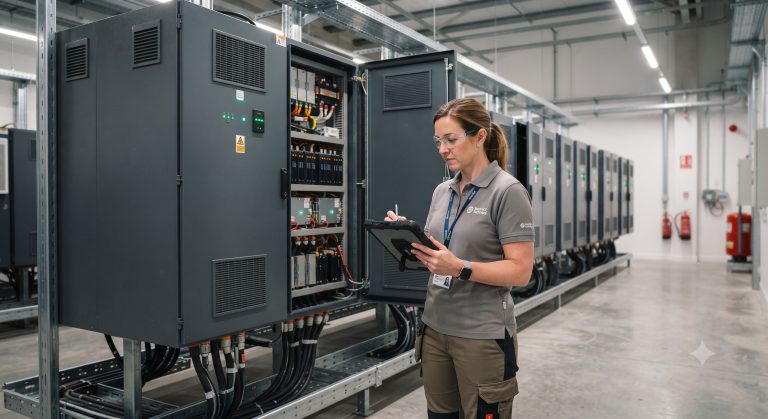
The BMS is the sentinel of safety and longevity. It performs active or passive cell balancing to mitigate State of Charge (SoC) divergence. Without precise balancing, the weakest cell dictates the pack’s usable capacity, eroding ROI. Tier-1 systems employ three-level BMS architecture (BMU, BCU, BAU) to monitor voltage, current, and temperature at the module level, with State of Health (SoH) estimation accuracy exceeding 95%.
Thermal Control: Liquid Cooling vs. Air Cooling in C&I ESS
Thermal runaway prevention and cycle life preservation hinge on thermal management. The debate between liquid cooling and air cooling is settled by energy density and duty cycle.
Liquid Cooling Thermal Control
For high-density C&I ESS operating in ambient temperatures exceeding 35°C or performing multiple daily cycles, liquid cooling is the superior choice. A liquid cooling system maintains cell temperature differentials below 3°C, whereas air cooling may struggle to keep differentials under 8-10°C. This precision directly correlates to cycle life; every 10°C rise above optimal 25°C can halve the calendar life of a Li-ion battery pack technology.
- Coolant Flow Logic: Parallel channel design prevents hot spots in high-C-rate discharge.
- Energy Consumption: Liquid cooling parasitic load is typically 2-3% of system capacity, versus 1.5-2.5% for optimized air cooling, but the longevity gains justify the delta.
Technical Specifications: A Tier-1 Reference Matrix
The following parameters represent a baseline for a 1MW/2MWh commercial cabinet utilizing Tier-1 LFP chemistry. Procurement teams should use this as a benchmark during factory acceptance testing (FAT).
| Key Parameter | Technical Specification |
|---|---|
| Battery Chemistry | Tier-1 LFP (Lithium Iron Phosphate) |
| System Capacity | 1 MW / 2.15 MWh (DC side) |
| Cycle Life | >8,000 cycles @ 90% DoD, 25°C |
| Round-Trip Efficiency | ≥ 92% (AC-AC, nominal) |
| Depth of Discharge (DoD) | 95% usable |
| Thermal Management | Liquid Cooling (Intelligent HVAC) |
| Cooling Temp Differential | < 3°C across module |
| BMS Communication | Modbus TCP / IEC 61850 |
| Certifications | IEC 62619, UL 9540, CE, UN38.3 |
| Fire Suppression | Perfluorohexanone + Aerosol (UL 9540A tested) |
| Operating Temp Range | -20°C to +55°C (derated above 45°C) |
| Ingress Protection | IP54 (Container), IP67 (Modules) |
Commercial ROI & Grid Support: LCOE and Peak Shaving
The financial case for Li-ion battery pack technology rests on peak shaving, demand charge management, and ancillary service revenue. A well-designed C&I BESS can reduce demand charges by 30-50% in markets with high ratchet clauses.
LCOE Calculation Drivers
To achieve an LCOE below $0.10/kWh, the system must exceed 6,000 cycles at 80% Depth of Discharge (DoD). This is achievable with LFP (Lithium Iron Phosphate) chemistry, which offers superior thermal stability and cycle life compared to NMC. Key financial levers include:
- Round-Trip Efficiency: A 2% RTE improvement on a 2MWh system yields ~40kWh additional dispatchable energy daily.
- Demand Response Programs: Fast grid synchronization (under 200ms) allows participation in frequency regulation markets, adding $15-$30/kW-year in revenue.
- Virtual Power Plant (VPP) Readiness: Systems with open protocols (Modbus TCP, IEC 61850) can aggregate into VPPs for wholesale market access.
Deployment Scenarios: From Industrial Parks to EV Supercharging
Li-ion battery pack technology is deployed across three primary C&I archetypes:
1. Industrial Park Energy Independence
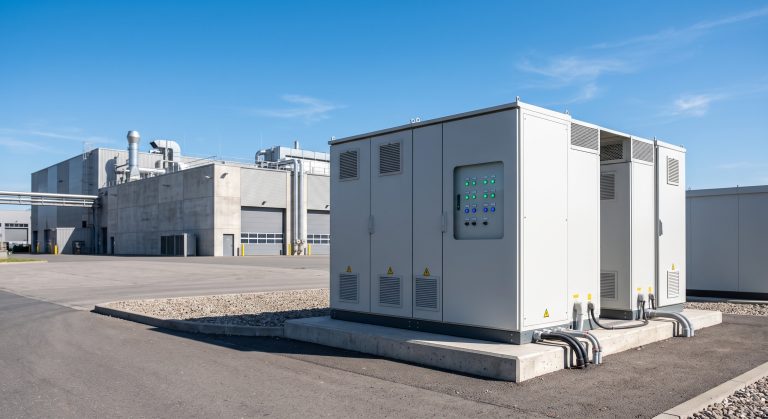
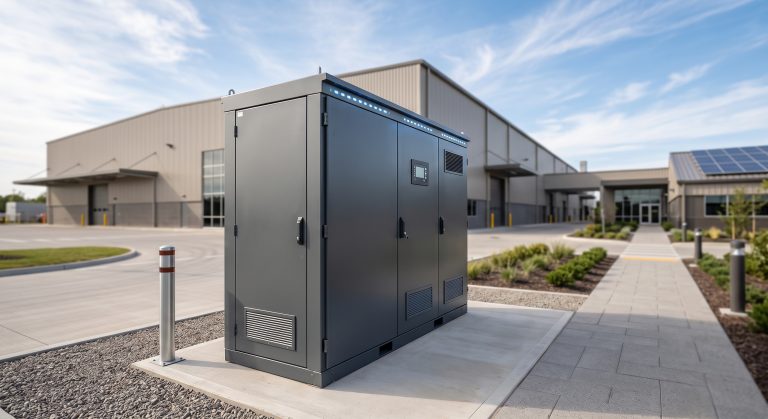
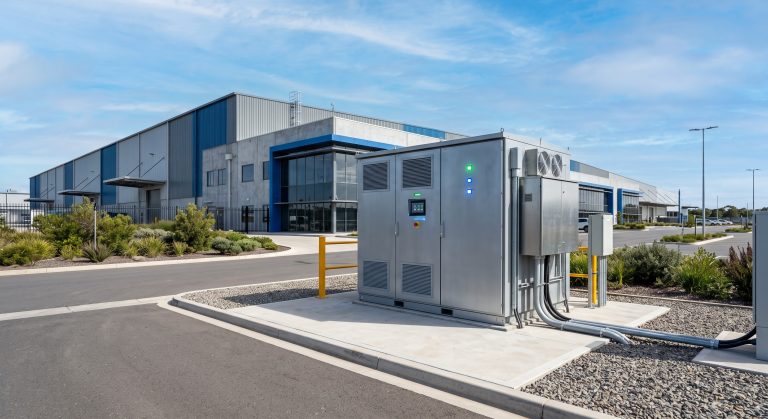
Modular containerized BESS units (20ft or 40ft) are paralleled to create MWh-scale micro-grids. These systems perform peak shaving and provide seamless grid transition during outages, eliminating diesel generator dependency.
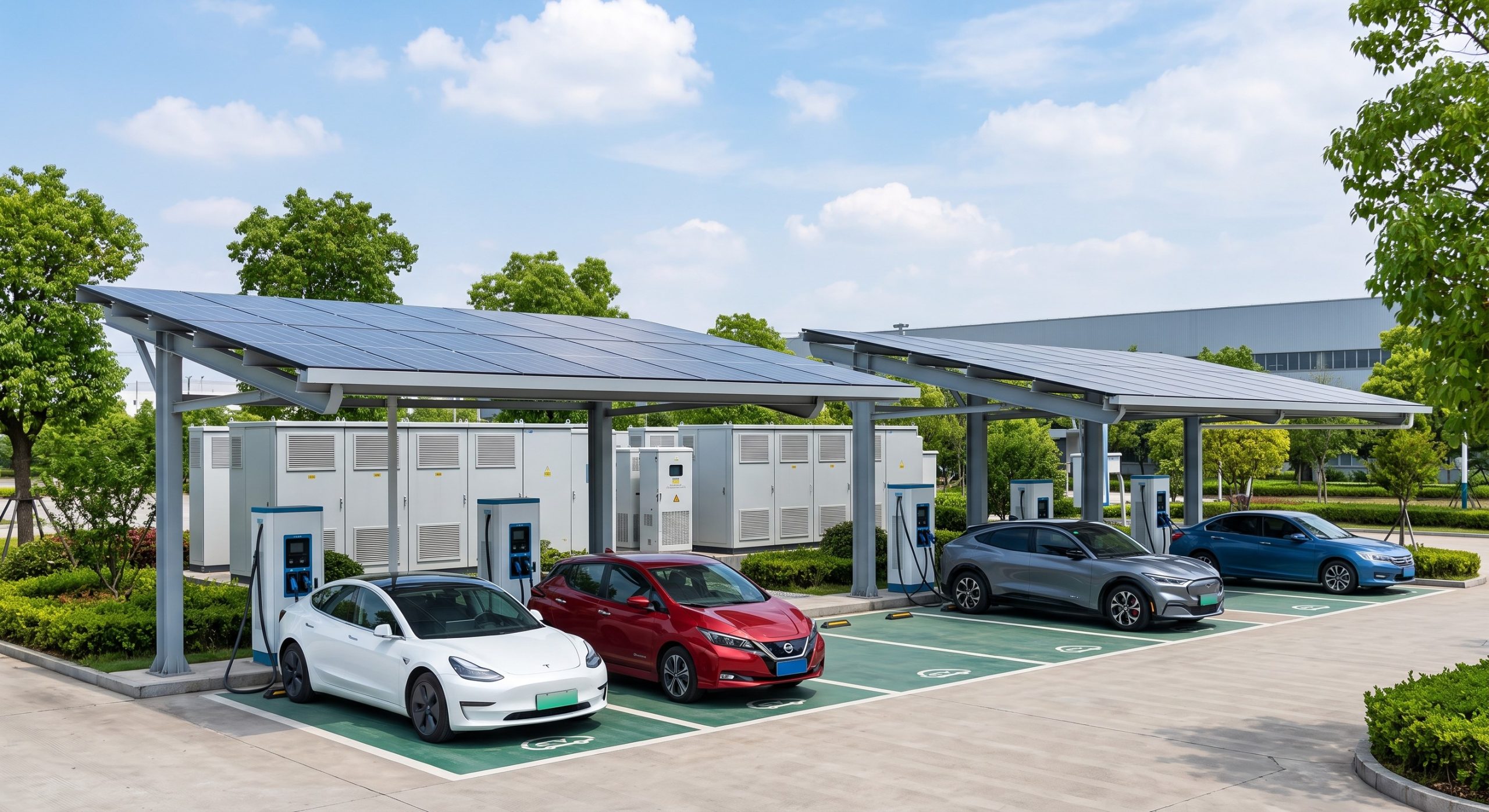
2. PV-Storage-Charging (光储充) Integration
In EV supercharging hubs, Li-ion battery pack technology buffers the grid from high-power 350kW+ charger loads. The storage system charges during low-tariff periods or from on-site solar canopies, then discharges to chargers during peak pricing, avoiding costly demand spikes.
3. Data Center & Cold Storage Resilience
Facilities with high critical loads use Li-ion BESS for UPS-grade backup and peak shaving, achieving UL 9540 compliance for indoor installation with advanced fire suppression (aerosol + water mist).
Conclusion: Sourcing with a System Architect Mindset
Selecting Li-ion battery pack technology for C&I applications demands more than a price-per-kWh comparison. It requires a rigorous audit of cycle life, thermal control strategy, BMS granularity, and compliance with IEC 62619, UL 9540, CE, and UN38.3. By prioritizing round-trip efficiency, DoD parameters, and grid support capabilities, procurement leaders can secure a storage asset that not only shaves peaks but fortifies their facility’s energy resilience for the coming decade of decarbonization.