COMMERCIAL SAFETY POSITIONING
The Clean energy accessible vision compliance report represents a definitive engineering benchmark for organizations pursuing decarbonization without compromising on operational safety, regulatory adherence, or long-term asset value. As global commercial and industrial (C&I) facilities face escalating energy costs, tightening grid codes, and ambitious corporate sustainability mandates, the deployment of Tier-1 battery energy storage systems (BESS) has transitioned from a discretionary capital project to a strategic imperative. This document serves as an authoritative technical register, detailing the compliance architecture, active safety mechanisms, and verified performance parameters of a modular, liquid-cooled LFP storage platform designed explicitly for high-density industrial environments.
Unlike conventional rooftop solar or standalone generator sets, modern C&I energy storage must satisfy a complex matrix of international standards spanning electrical safety, fire propagation resistance, transportation, and grid interconnection. The platform described herein has been engineered from the cell level upward to exceed these requirements, delivering a turnkey solution that simplifies permitting, accelerates commissioning, and provides a defensible compliance posture for insurers, authorities having jurisdiction (AHJs), and executive stakeholders.
ACTIVE EQUALIZATION CAPABILITIES
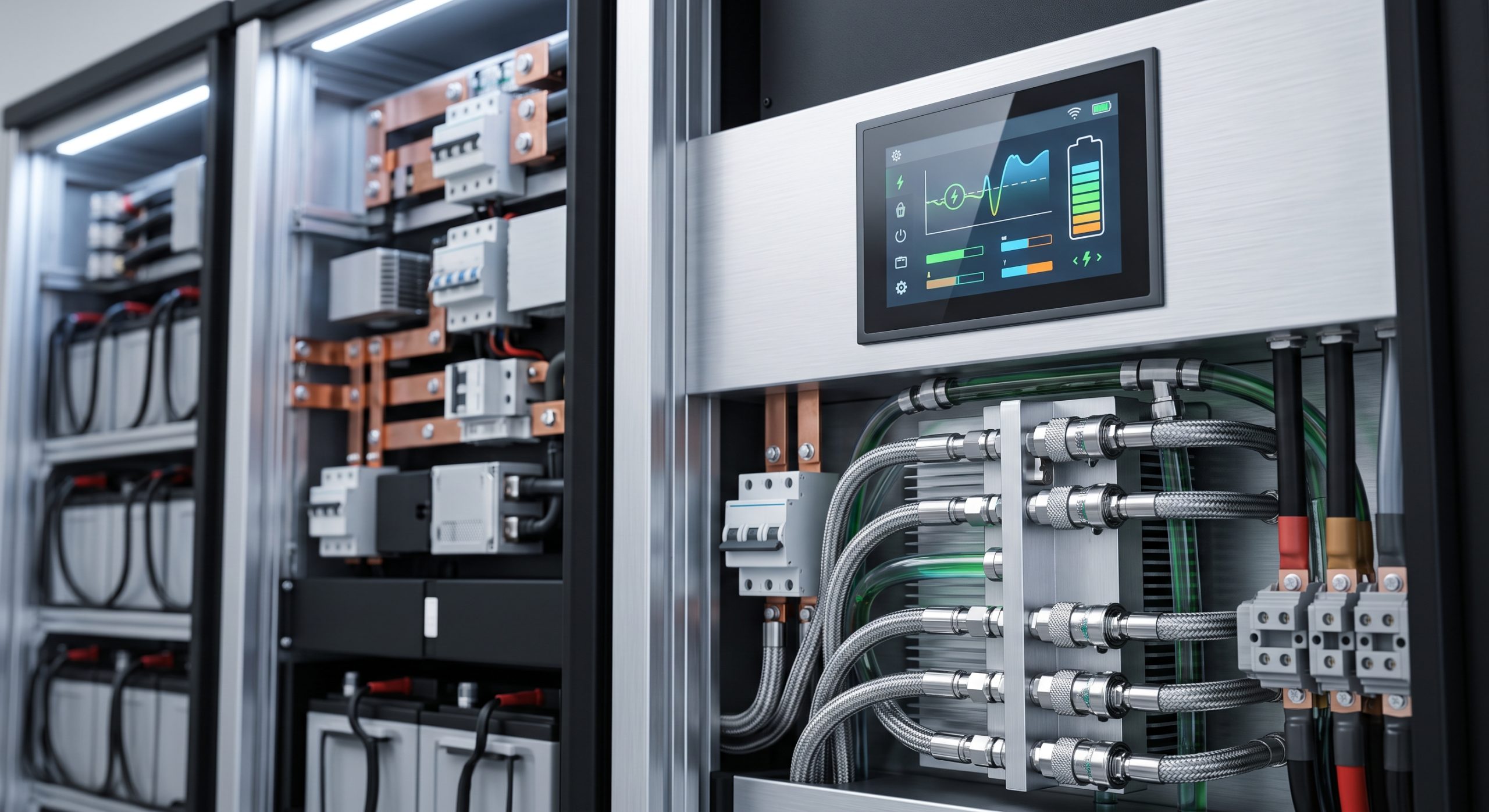
At the heart of the system’s long-term reliability lies an advanced Battery Management System (BMS) featuring active cell equalization. Unlike passive balancing, which dissipates excess energy as heat, active equalization transfers charge between cells to maintain voltage parity across the entire rack. This capability is critical in large-format LFP racks where minor manufacturing variances or thermal gradients can accelerate capacity divergence over thousands of cycles. By continuously redistributing energy, the system maximizes usable capacity, extends pack lifespan, and ensures that the weakest cell does not dictate the performance of the entire string.
The BMS operates on a three-tier architecture: Cell Monitoring Units (CMU) sample voltage and temperature at the module level; Rack Battery Management Units (RBMU) aggregate data and execute balancing logic; and the System Battery Management Unit (SBMU) coordinates across multiple racks, interfacing with the Power Conversion System (PCS) and the site Energy Management System (EMS). This hierarchical design enables sub-second fault detection, precise State of Charge (SOC) and State of Health (SOH) estimation, and seamless integration with third-party dispatch controllers via Modbus TCP/IP and IEC 61850 protocols.
REINFORCED OUTDOOR HOUSING
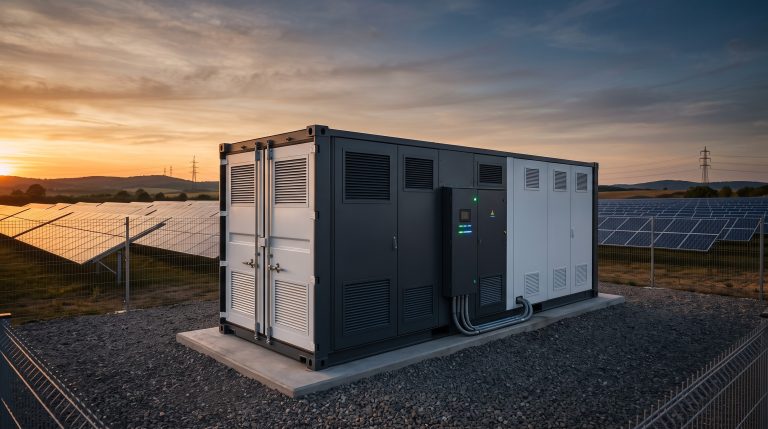
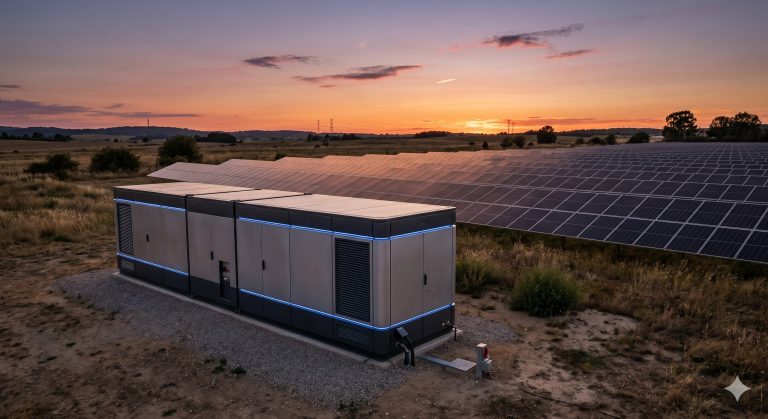
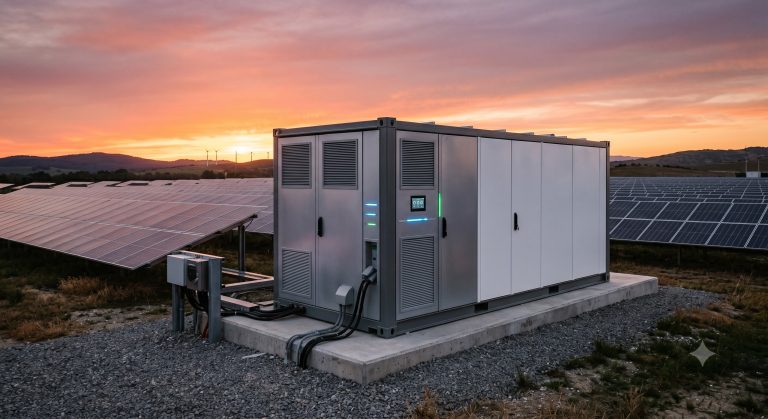
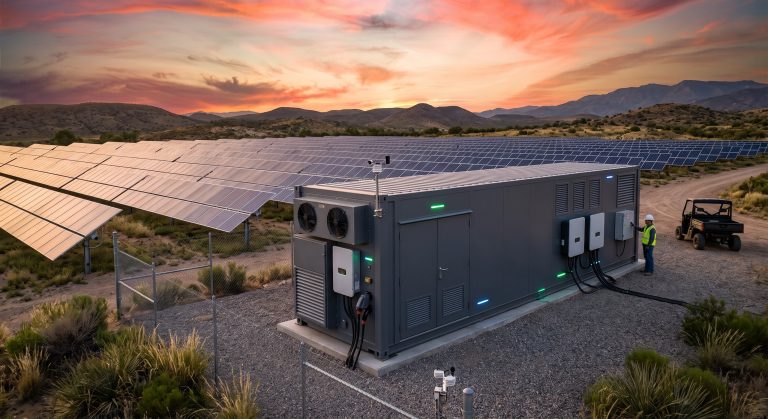
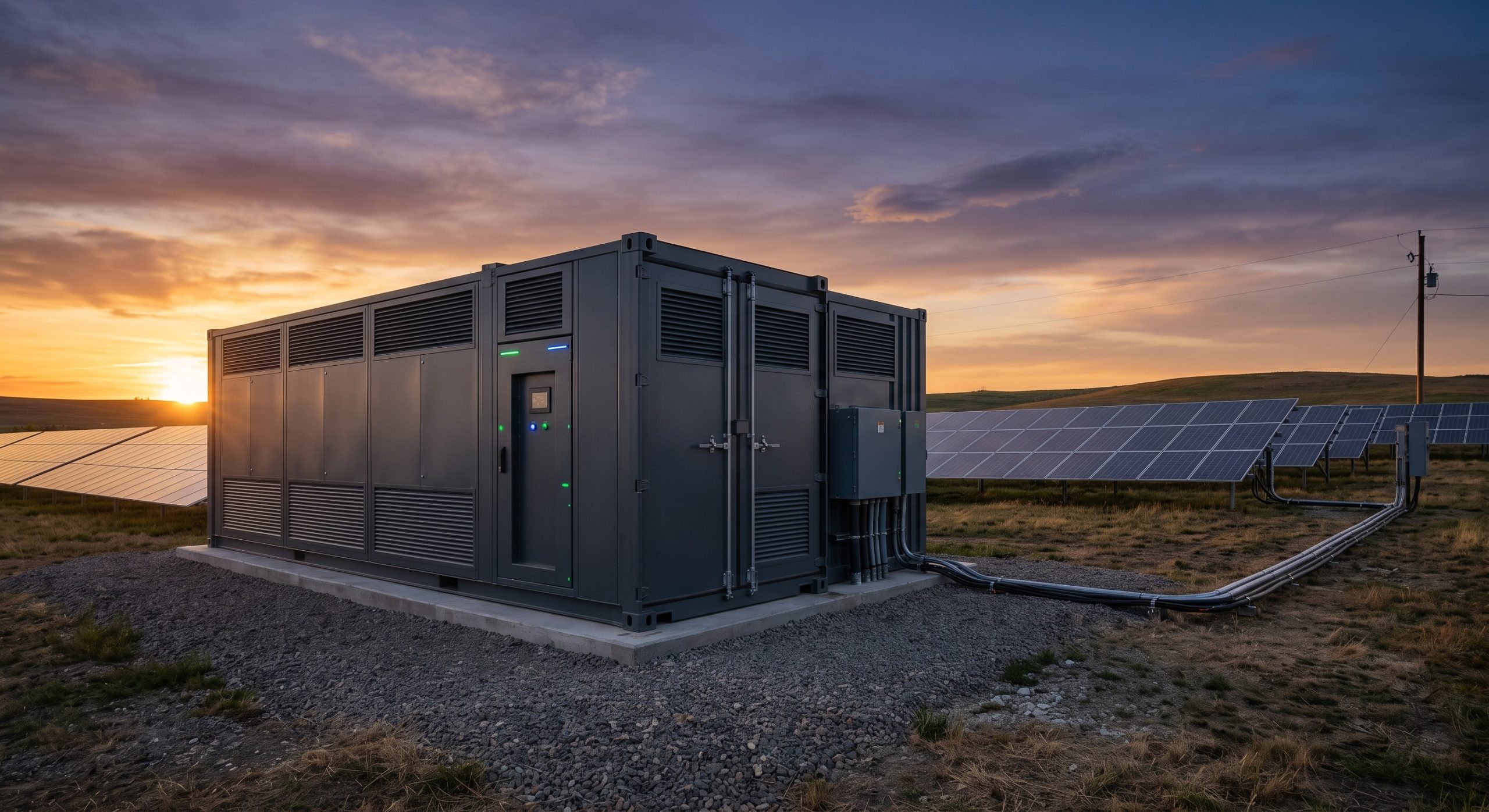
The platform is housed in a reinforced, dual-wall galvanized steel enclosure rated IP55 and NEMA 3R, engineered to withstand harsh industrial environments including high humidity, saline coastal air, blowing dust, and temperature extremes from -20°C to +55°C. The structural chassis incorporates a multi-layer thermal barrier and an integrated aerosol-based fire suppression system, providing a first line of defense against thermal runaway propagation. Cable entry is managed through sealed, compression-style glands, while the front access doors feature reinforced hinges and multi-point locking mechanisms for security and ease of maintenance.
Internally, the cabinet is partitioned into distinct thermal zones: the battery compartment, the liquid cooling skid, and the electrical control bay. This segregation prevents cross-contamination in the unlikely event of a cell vent, while also simplifying serviceability. The liquid cooling plate is integrated directly beneath the cell modules, ensuring uniform temperature distribution across the entire rack and eliminating the hot spots commonly observed in air-cooled designs.
DETAILED PARAMETERS
The following table summarizes the verified technical parameters of the standard 215 kWh and 372 kWh cabinet configurations. All figures represent nominal values at 25°C, 0.5C discharge rate, and beginning-of-life conditions, unless otherwise noted. System integrators should consult the factory for derating curves applicable to specific site conditions.
| Parameter | Specification |
|---|---|
| Nominal Capacity | 215 kWh / 372 kWh per cabinet |
| Cooling Method | Smart Liquid Cooling (Glycol-Water) |
| Cell Chemistry | Tier-1 LFP (Lithium Iron Phosphate) |
| System Voltage Range | 600 VDC – 1500 VDC |
| Round-Trip Efficiency | ≥ 95% (DC-DC), ≥ 88% (AC-AC) |
| Cycle Life | ≥ 8,000 cycles @ 0.5C, 25°C, 80% DOD |
| Operating Temperature | -20°C to +55°C (Derated above +50°C) |
| Enclosure Rating | IP55 / NEMA 3R |
| Fire Suppression | Integrated Aerosol + Optional Novec 1230 |
| Communication Protocols | Modbus TCP/IP, IEC 61850, CAN 2.0B |
| Certifications | UL 9540, UL 9540A, IEC 62619, IEC 62477, UN 38.3 |
| Warranty | 10 Years Standard (Extendable to 15 Years) |
INTERNATIONAL ACCREDITATIONS
The Clean energy accessible vision compliance report platform has been tested and certified to the most stringent international standards for stationary energy storage. These certifications are not merely checkboxes; they represent independent third-party validation of the system’s safety, performance, and quality management systems.
UL 9540: Standard for Energy Storage Systems and Equipment. This certification confirms that the complete system—including batteries, PCS, and controls—has been evaluated for safe operation as an integrated unit.
UL 9540A: Test Method for Evaluating Thermal Runaway Fire Propagation in Battery Energy Storage Systems. The platform achieved a pass rating at the cell, module, unit, and installation levels, demonstrating that a single cell failure will not propagate to adjacent modules or racks.
IEC 62619: Secondary Cells and Batteries Containing Alkaline or Other Non-Acid Electrolytes – Safety Requirements for Industrial Applications. This certifies the LFP cells for use in industrial environments.
IEC 62477-1: Safety Requirements for Power Electronic Converter Systems and Equipment. Applicable to the integrated PCS unit.
UN 38.3: Transportation Testing for Lithium Batteries. Ensures safe global shipping of the battery modules.
ISO 9001:2015 and ISO 14001:2015: Quality and environmental management system certifications at the manufacturing facility.
In addition to product-level certifications, the platform complies with grid interconnection requirements including IEEE 1547 (US), EN 50549 (EU), and AS/NZS 4777.2 (Australia), enabling seamless deployment across major global markets. The integrated PCS supports four-quadrant operation, volt-watt and volt-var reactive power control, and frequency-watt response, ensuring the system remains a grid-supportive asset rather than a liability.
STORAGE ENVIRONMENT
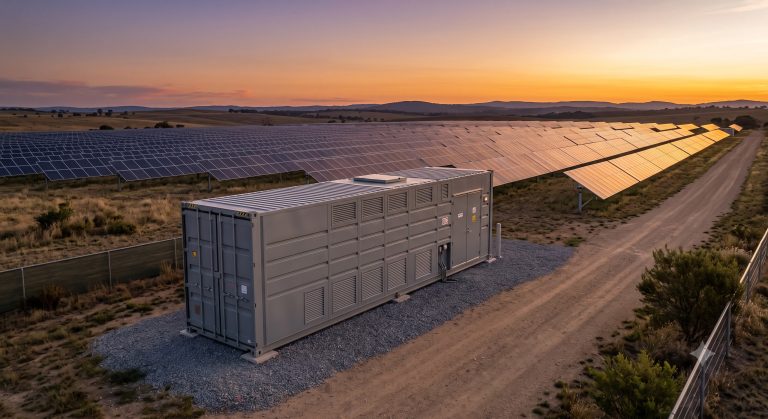
The outdoor cabinet is designed for pad-mounted installation on a level concrete surface, requiring a minimum clearance of 1.5 meters on all sides for maintenance access and thermal dissipation. The recommended ambient temperature range for full-power operation is -10°C to +50°C, with optional cold-weather packages extending the lower limit to -30°C. Relative humidity should not exceed 95% non-condensing. The enclosure is rated for a maximum altitude of 2,000 meters without derating; above this threshold, a factory-approved altitude compensation kit is required.
For sites with high particulate or corrosive atmospheres, an optional C5-M anti-corrosion coating and enhanced filtration package is available. The liquid cooling system utilizes a 50/50 ethylene glycol-water mixture and is designed for a 15-year service life with biennial fluid replacement. The system includes integrated leak detection sensors and automatic shutdown logic to prevent coolant loss from damaging electrical components.
📥 Download Technical Specification
Click the button below to view or download the full official PDF datasheet.