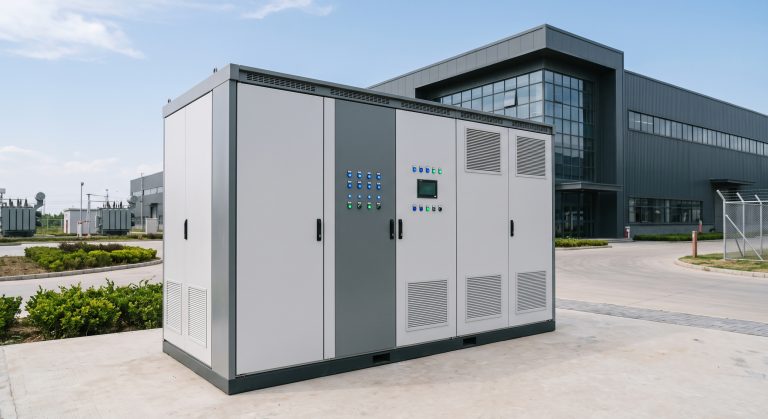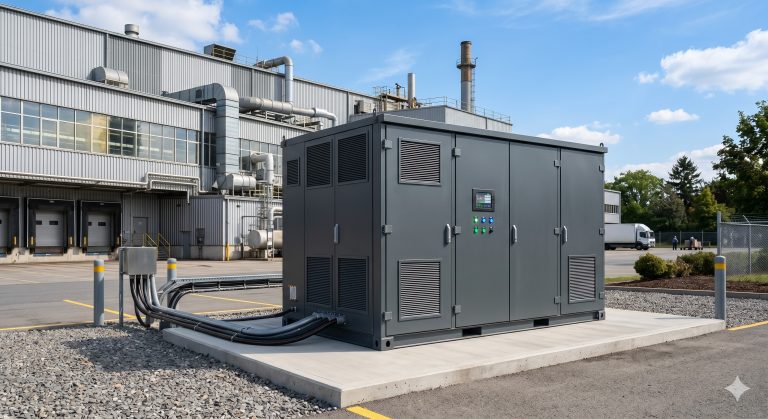
Introduction: The Critical Imperative of Safety in ESS container deployment testing
As the global commercial and industrial (C&I) sector accelerates its transition toward energy independence, the deployment of Battery Energy Storage Systems (BESS) has become a cornerstone of modern micro-grid architecture. However, the inherent energy density of large-scale lithium-ion batteries introduces a non-negotiable operational priority: safety. For facility managers and system architects, ESS container deployment testing is the definitive barrier against catastrophic failures, ensuring that every megawatt-hour of capacity is delivered with absolute reliability. This masterclass focuses on the rigorous engineering protocols, advanced Battery Management Systems (BMS), and multi-layered fire suppression strategies that define best-in-class deployment, aligning with stringent global standards like IEC 62619 and UL 9540.
Multi-Level Fire Suppression Systems & Thermal Control
Active and Passive Defense Mechanisms
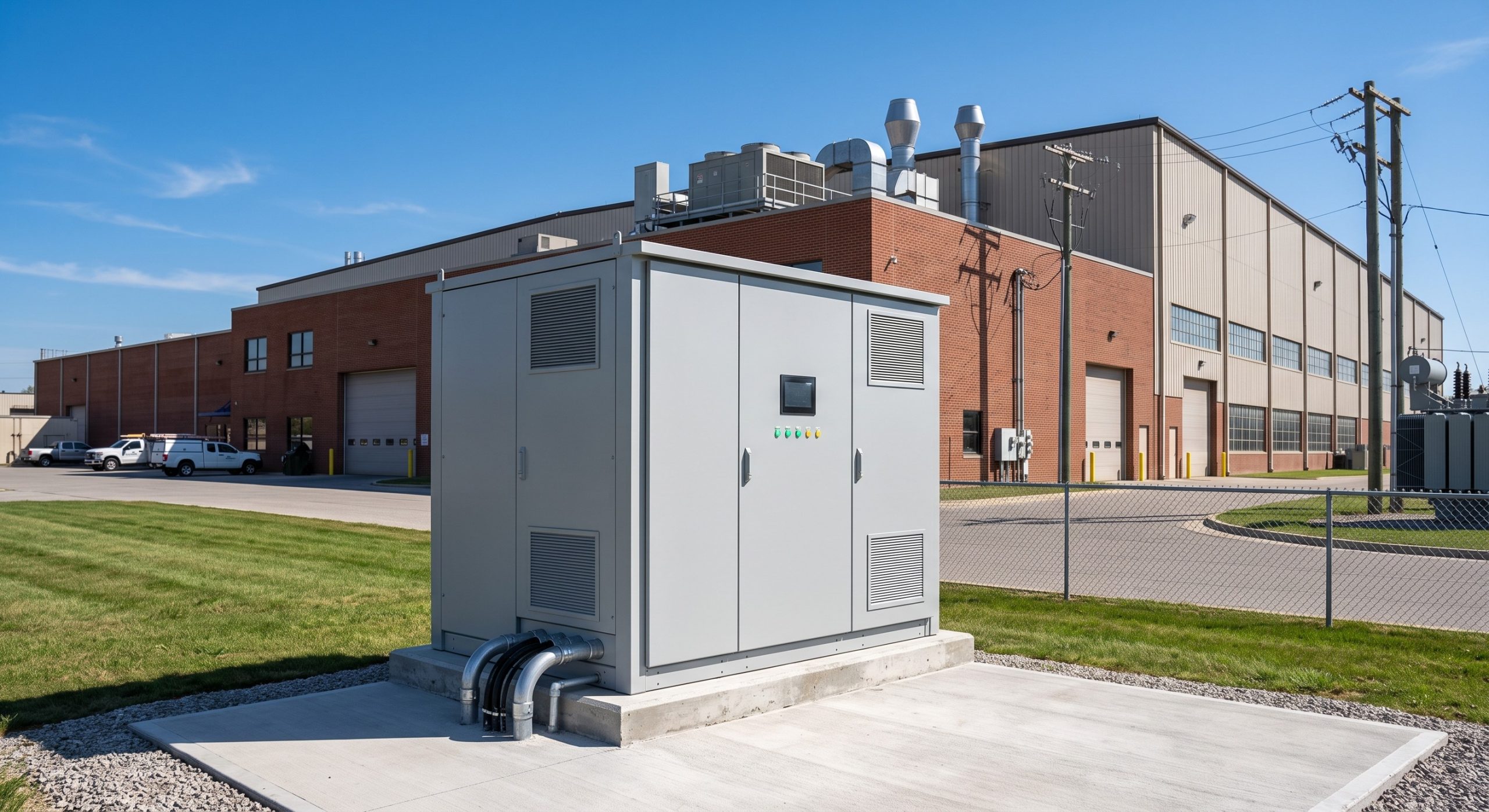
Modern ESS container deployment testing begins with a holistic evaluation of the physical safety infrastructure. A robust system integrates both passive and active fire suppression layers. Passive measures include fire-rated container materials and strategic compartmentalization to prevent thermal propagation between modules. Active systems are where the engineering depth truly shines.
- Aerosol-Based Suppression: Highly effective in enclosed spaces, these systems deploy a micron-sized potassium aerosol that interrupts the combustion chain reaction without causing damage to sensitive electronics.
- Water Mist Systems: Utilizing high-pressure nozzles, these systems create a fine mist that cools the ambient temperature and absorbs thermal energy, specifically designed for high-voltage battery environments.
- Gas-Based Systems (e.g., Novec 1230, FM-200): These are preferred for their clean agent properties, leaving no residue and ensuring that the PCS (Power Conversion System) and control units remain functional post-event.
Liquid Cooling Integration for Thermal Stability
Thermal management is directly correlated to safety. During ESS container deployment testing, the efficiency of the liquid cooling loop is scrutinized. Unlike air cooling, liquid cooling offers superior specific heat capacity, maintaining cell temperature differentials within a stringent +/-2°C range. This precision is vital for preventing the conditions that lead to thermal runaway, effectively extending the cycle life of Tier-1 LFP cells beyond 8,000 cycles at a 90% Depth of Discharge (DoD).
Technical Specifications & Compliance Masterclass
Adherence to international safety and performance standards is the bedrock of credible ESS container deployment testing. These certifications are not mere acronyms; they represent rigorous testing under extreme conditions to ensure grid-tie readiness and insurability. Below is a snapshot of the critical engineering specifications that our testing protocols validate.
| Key Parameter | Technical Specification |
|---|---|
| Battery Chemistry | Tier-1 LFP (Lithium Iron Phosphate) with prismatic cells |
| System Capacity | Up to 5 MWh (expandable via parallel containers) |
| Cycle Life | >8,000 cycles @ 90% DoD (End of Life at 70% SOH) |
| Round-trip Efficiency | >95% (DC/AC conversion inclusive) |
| Thermal Management | Advanced liquid cooling (active) with industrial-grade coolant |
| Safety Compliance | IEC 62619, UL 9540, CE, UN38.3 |
| Fire Suppression | Multi-layer: Aerosol + Water Mist + Gas (Novec 1230) |
| Operating Temperature | -20°C to +50°C (derated above 45°C) |
| Ingress Protection | IP54 (outdoor-rated for dust and water jets) |
Core Output Metrics & BMS Cell Balancing
The intelligence of the BMS is the brain of the operation. During ESS container deployment testing, the BMS’s ability to perform active cell balancing is crucial. This process ensures that all cells within the string maintain uniform voltage and state of charge, preventing weak cells from being overworked or overcharged. The BMS continuously monitors temperature, voltage, and current, utilizing sophisticated algorithms to predict and preempt potential faults. This data-driven approach allows for remote diagnostics and reduces the need for on-site maintenance, a key factor in lowering the Total Cost of Ownership (TCO).
UL 9540 & UN38.3 Deployment Audits
A comprehensive deployment audit during ESS container deployment testing includes a detailed review of the system’s protection against external faults, including short circuits and ground faults. The UL 9540 standard specifically addresses the fire safety of the entire energy storage system, while UN38.3 pertains to the safe transport of the battery cells. Our testing procedures simulate worst-case scenarios to verify the robustness of the disconnect switches, overcurrent protection devices, and the integrity of the insulation monitoring systems. This ensures that the Round-trip efficiency of the system remains high, often exceeding 95%, without compromising on safety margins.
Deployment Scenarios: From Industrial Parks to Data Centers
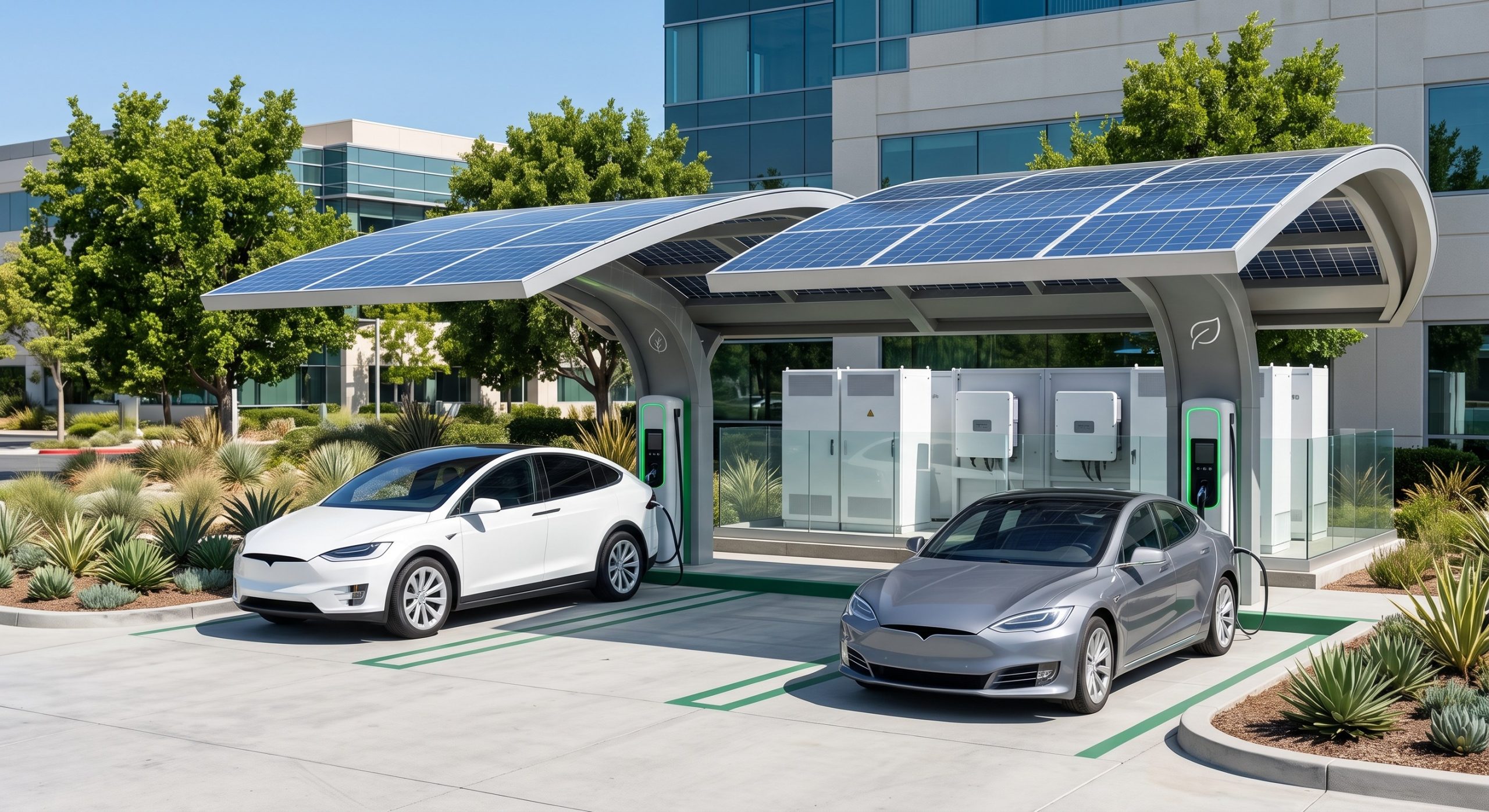
The versatility of a properly tested ESS container allows for seamless integration across diverse commercial landscapes. In industrial parks, these systems facilitate peak shaving, significantly reducing demand charges by intelligently discharging stored energy during peak tariff periods. For data centers, the ESS provides an uninterruptible power supply (UPS) function with instantaneous response times of less than 20 milliseconds, ensuring zero downtime for critical IT loads. Additionally, in PV-Storage-Charging hubs, the ESS smooths the intermittent nature of solar generation, enabling stable high-power charging for electric vehicle fleets. The ESS container deployment testing process certifies the system’s performance under these varying load curves, validating its efficacy in Demand Response and Virtual Power Plant (VPP) aggregation.
Conclusion: Engineering Safety as a Competitive Advantage
In the rapidly evolving landscape of Commercial & Industrial (C&I) energy storage, ESS container deployment testing transcends mere regulatory compliance; it is a strategic imperative that defines asset longevity and operational excellence. By prioritizing advanced liquid cooling, intelligent BMS logic, and certified fire suppression, businesses can achieve the trifecta of high round-trip efficiency, minimal degradation, and absolute safety. As we move toward a zero-carbon future, investing in thorough deployment testing is not just about protecting equipment—it is about protecting people, property, and the integrity of the energy grid. Partner with proven engineering teams that treat safety as the ultimate performance metric.