Introduction: The Non-Negotiable Reality of Hybrid inverter BESS compatibility in Modern C&I Energy Sourcing
For commercial and industrial (C&I) energy buyers, facility managers, and EPC contractors, the transition from passive energy consumption to active energy asset management is no longer a luxury—it is a competitive necessity. The cornerstone of this transition is the commercial energy storage system (ESS), yet one critical variable often determines the difference between a profitable, resilient asset and a costly liability: Hybrid inverter BESS compatibility. As electricity costs surge and grid instability becomes the norm, a turnkey BESS solution is only as effective as its inverter’s ability to communicate, convert, and control power flows across varied load profiles and PV inputs. This guide provides a system architect’s blueprint for evaluating hybrid inverter integration, moving beyond marketing claims to dissect the tangible architecture, LCOE implications, and grid-support capabilities that define bankable C&I storage. We examine the technical specifics of PCS topology, BMS handshakes, and thermal regulation, equipping you with the technical due diligence required for high-value BESS procurement.
Core Architecture & Battery Management: The PCS-BMS-BESS Handshake
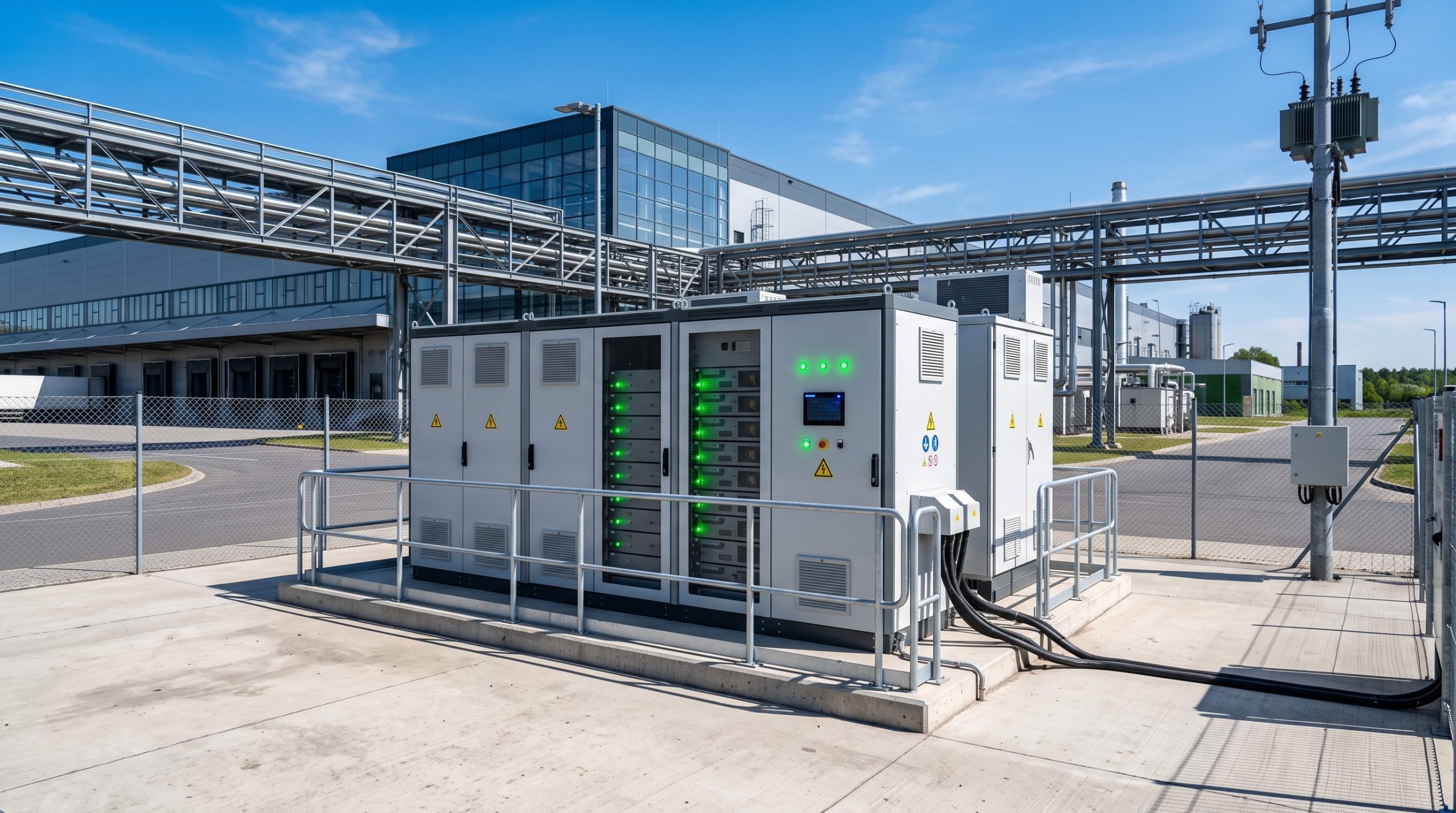
True hybrid inverter BESS compatibility is not a binary checkbox; it is a sophisticated, multi-layered communication protocol that dictates system efficiency, safety, and lifespan. The primary bridge is the Power Conversion System (PCS), which must execute bi-directional DC-to-AC conversion with a round-trip efficiency typically exceeding 92%—with Tier-1 systems targeting 94% or higher. However, the inverter’s intelligence is embedded in its integration with the Battery Management System (BMS). The BMS constantly monitors cell voltages (within ±1% accuracy) and temperatures (to ±0.5°C precision) across all series-parallel strings. Incompatible BMS communication (e.g., protocol mismatch between CAN and RS-485) can lead to asynchronous charge/discharge commands, causing cell imbalance, capacity derating, and accelerated degradation.
PCS Topology and Grid-Forming vs. Grid-Following
BESS architects must prioritize inverters capable of both grid-following and grid-forming modes. Grid-following is standard for peak shaving and load shifting, but grid-forming inverters are mandatory for off-grid operation or micro-grid stability in industrial parks. When specifying hybrid inverter BESS compatibility, request data on the inverter’s fault ride-through (FRT) capabilities and response times (sub-100ms), ensuring conformity with grid codes like IEEE 1547. Compatibility also extends to voltage support and frequency regulation, where advanced inverters provide reactive power (VAR) compensation to stabilize local distribution networks.
Thermal Control and Safety Engineering: Liquid Cooling vs. Air Cooling
Thermal management is the silent arbiter of hybrid inverter BESS compatibility. High ambient temperatures can derate inverter output by up to 30% and reduce LFP cell cycle life from 8,000 to below 4,000 cycles. Liquid cooling systems offer superior thermal control, maintaining temperature differentials within ±2°C across modules, directly optimizing round-trip efficiency and enabling high C-rate (1C) operations. In contrast, air cooling, while simpler, struggles to dissipate heat in compact, high-density cabinet designs common in C&I settings. From a safety standpoint, the BMS must integrate seamlessly with the inverter to trigger automatic derating or shutdown during thermal runaway precursors. This requires compliance with UL 9540, which mandates thermal propagation testing, and IEC 62619 for safety requirements of secondary cells and batteries. When sourcing, demand third-party test reports for UN38.3 transportation safety, as this validates cell robustness under mechanical and thermal stress, directly affecting the viability of shipping fully integrated systems.
Technical Specifications: The Bankable Data Sheet for Hybrid inverter BESS compatibility
Evaluating hybrid inverter BESS compatibility requires a systematic cross-check of core parameters. Use this specification ledger to benchmark potential suppliers; missing or unclear data should be a red flag. The values below represent industry benchmarks for C&I applications, but the critical analysis lies in how these parameters interact with your specific load profile—a 1 MW peak load requires different inverter sizing than a 2 MW data center with stringent uptime requirements.
| Key Parameter | Technical Specification | Compatibility Impact |
|---|---|---|
| Battery Chemistry | Tier-1 LFP (Lithium Iron Phosphate) | Cell voltage range (2.5V-3.65V) determines inverter DC input window. |
| Cycle Life | >8000 cycles @ 90% DoD, 25°C | High cycle life requires BMS algorithms to manage imbalance; inverter must execute precise charge termination. |
| Round-Trip Efficiency (RTE) | >92% (AC-DC-AC) | Inverter topology impacts heat loss; liquid cooling maintains higher RTE over time. |
| Cooling System | Liquid Cooling (active) / Air Cooling (passive) | Liquid systems allow tighter thermal control, enabling 1C continuous rate with ≤±2°C cell variance. |
| Communication Protocol | CAN 2.0B, RS485, Modbus TCP/IP | Protocol mismatch is a primary compatibility failure point; ensure BMS and EMS share native protocol. |
| Safety Certifications | UL 9540, IEC 62619, UN38.3 | Certifications validate thermal propagation containment and transport safety, affecting insurance underwriting. |
| System Voltage | 800Vdc – 1500Vdc | Higher voltage reduces current and losses; inverter must support bi-directional conversion at the specified DC link. |
Depth of Discharge (DoD) and Cycle Life Economics
The specification table highlights the critical trade-off between DoD and cycle life. While operating at 100% DoD yields greater daily usable energy, it increases the rate of capacity fade. Most C&I projects optimally target an 80-90% DoD to balance immediate revenue from peak shaving with long-term asset longevity. For example, an 8000-cycle LFP system at 90% DoD with an RTE of 92% amortizes to a levelized cost of storage (LCOS) significantly lower than a 6000-cycle system at the same price point. Ensure the inverter’s control algorithms support dynamic DoD adjustment based on time-of-use (TOU) pricing and grid signals, a feature that differentiates advanced hybrid inverter BESS compatibility from legacy systems.
Commercial ROI & Grid Support: From Peak Shaving to Virtual Power Plants
The commercial justification for a BESS is predicated on capturing multiple revenue streams, which hinges on advanced inverter capabilities. A hybrid inverter BESS compatibility strategy must prioritize fast dispatch (<50ms) for primary frequency regulation and participation in Demand Response programs. Beyond standard peak shaving (reducing demand charges by up to 40%), modern inverters enable participation in wholesale energy markets through VPP (Virtual Power Plant) aggregation. This requires the inverter to support advanced EMS (Energy Management System) protocols like Modbus TCP/IP and MQTT, enabling cloud-based dispatch. When calculating Total Cost of Ownership (TCO), factor in the inverter’s auxiliary consumption (standby losses) and the cost of forced cooling; a liquid-cooled system with a superior RTE may have a 10-15% lower LCOS over a 15-year project life despite higher upfront CapEx.
Deployment Scenarios: Synergy with EV Supercharging and Solar PV
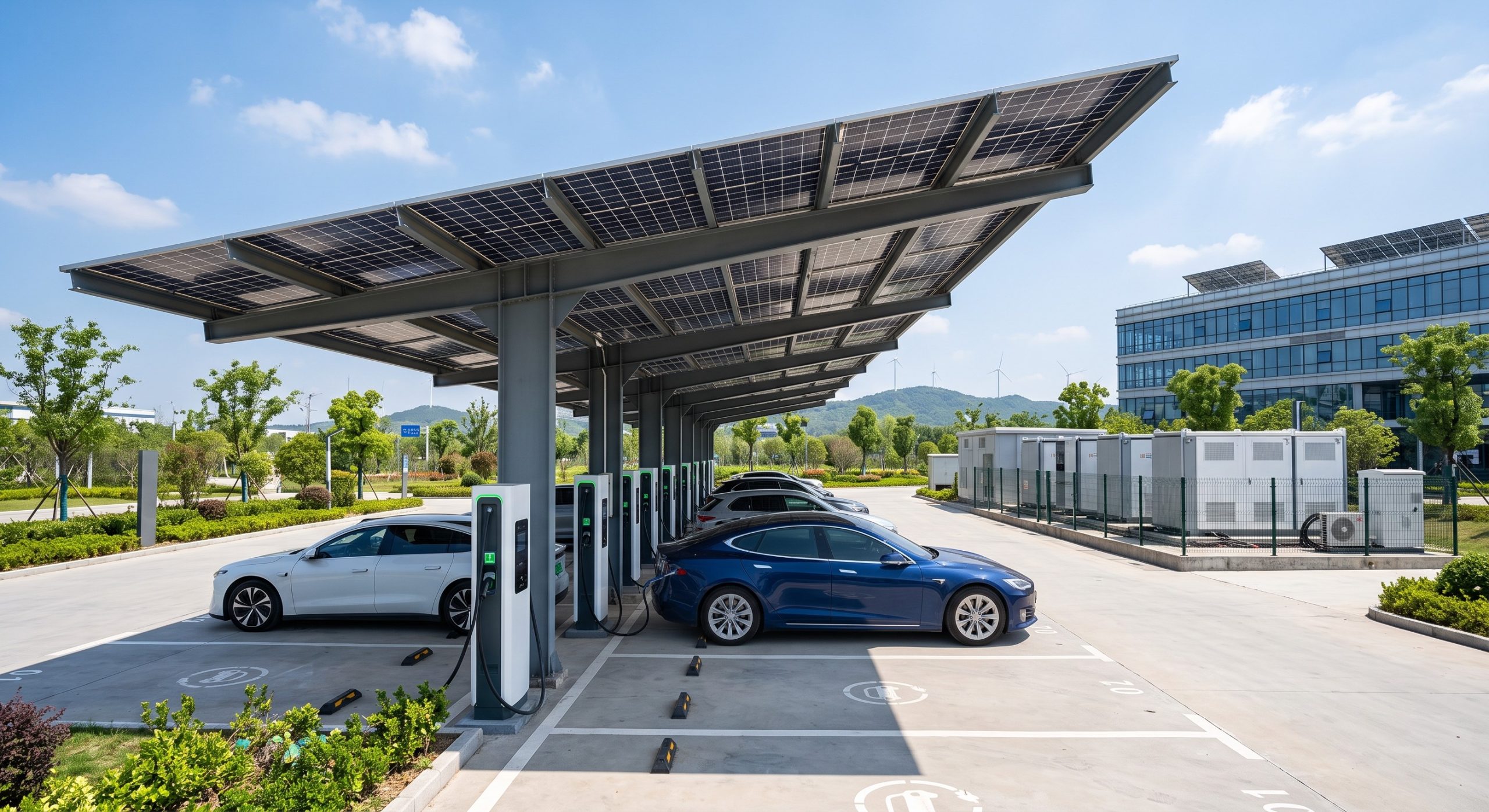
The most demanding use case for hybrid inverter BESS compatibility is the integrated PV-Storage-Charging hub. EV supercharging stations require massive, intermittent power draws that can trigger exorbitant demand spikes. Here, the inverter must synchronize solar PV (via MPPT trackers) and the battery to smooth the load curve, ensuring the facility avoids transformer upgrades. In these scenarios, the inverter’s grid-export limit functionality must be precise, preventing reverse power flow that violates utility interconnection agreements. Conversely, in isolated industrial zones, the inverter operates in grid-forming mode, becoming the primary voltage reference—a task that requires robust current control and harmonic filtering to protect sensitive manufacturing equipment. Ultimately, the success of these high-stakes deployments rests on ironclad hybrid inverter BESS compatibility that is validated through rigorous factory acceptance testing (FAT) and site acceptance testing (SAT) overseen by independent engineers.
Conclusion: Architecting Your Sourcing Strategy
As the C&I energy storage market matures, hybrid inverter BESS compatibility is emerging as the primary differentiator between high-performance assets and stranded investments. The ideal system is not simply an assembly of Tier-1 LFP cells; it is a fully validated ecosystem where the PCS, BMS, and EMS operate in a deterministic loop, governed by precise thermal and electrical parameters. This guide emphasizes that professional sourcing must go beyond the battery chemistry to scrutinize the PCS topology, communication protocols, and thermal strategy. Demand data, demand transparency, and demand compliance (UL9540 & IEC 62619). In doing so, you transform a procurement process into a strategic asset acquisition that delivers measurable resilience, decarbonization, and bottom-line returns.