Introduction
As global energy markets pivot toward sustainable infrastructure, the demand for high-capacity, utility-scale storage solutions has never been greater. For commercial and industrial (C&I) enterprises, the shift from peak-load management to full-scale energy independence is now economically viable thanks to advancements in battery chemistry and smart grid integration. Large-scale solar-storage projects represent a paradigm shift, enabling facilities to achieve energy security while significantly reducing their Levelized Cost of Electricity (LCOE). This guide provides a system architect’s blueprint for deploying multi-megawatt storage systems, focusing on the critical factors of capacity sizing, turnkey delivery, and long-term asset optimization.
In today’s landscape, a standard grid-tied solar PV system is no longer sufficient. The integration of a commercial energy storage battery creates a resilient micro-grid capable of peak shaving, frequency regulation, and demand response. As renewable penetration increases, the ability to store and dispatch solar energy efficiently becomes the cornerstone of corporate sustainability. This comprehensive analysis covers the engineering specifications, financial modeling, and safety compliance required to successfully execute large-scale solar-storage projects.
Core Architecture & Battery Management
Power Conversion System (PCS) & Bi-Directional Inverters
The heart of any large-scale solar-storage project is the Power Conversion System (PCS). Unlike standard solar inverters, the PCS in a BESS is bi-directional, allowing for seamless conversion between AC and DC power. For MWh-scale systems, PCS units are typically rated between 500 kW and 2.5 MW, deployed in parallel to reach total system capacities of 10 MW or more. These systems must offer high efficiency, typically >98.5%, to minimize losses during the charge-discharge cycle. Integration with the solar PV array requires precise synchronization to handle fluctuating solar irradiance and grid frequency variations.
Battery Management System (BMS) and Cell Balancing
Safety and longevity in large-scale solar-storage projects are governed by the Battery Management System (BMS). The BMS monitors individual cell voltage, temperature, and State of Charge (SoC) to ensure optimal performance. Advanced BMS platforms utilize passive or active cell balancing to maintain voltage parity across thousands of cells. This is critical for maintaining system capacity and preventing premature degradation of the battery pack. Systems equipped with intelligent BMS can extend cycle life beyond 8000 cycles, even at high Depth of Discharge (DoD) levels. The BMS also communicates directly with the Energy Management System (EMS) to execute dispatch commands based on real-time energy pricing and grid demands.
Technical Specifications & Compliance
When sourcing components for large-scale solar-storage projects, adherence to international safety and performance standards is non-negotiable. The key certifications to look for include IEC 62619 (safety requirements for industrial batteries), UL 9540 (energy storage systems and equipment), UN38.3 (transportation safety), and CE marking for European markets. These certifications ensure that the system can withstand thermal events, short circuits, and environmental stressors. Furthermore, tier-1 cell manufacturers typically provide detailed test reports verifying capacity retention and internal resistance (IR) over the product’s lifetime.
| Key Parameter | Technical Specification |
|---|---|
| Battery Chemistry | Tier-1 LFP (Lithium Iron Phosphate) |
| System Capacity | 2.5 MWh – 10 MWh (Scalable per project) |
| Cycle Life | >8000 cycles @ 90% DoD |
| Round-trip Efficiency | ≥ 92% (AC/AC) |
| Cooling System | Intelligent Liquid Cooling (Temp. differential < 3°C) |
| Safety Standards | IEC 62619, UL 9540, UN38.3, CE |
| Response Time | < 30 ms (Full power dispatch) |
Commercial ROI & Grid Support
Peak Shaving and Total Cost of Ownership (TCO)
The economic model for large-scale solar-storage projects relies heavily on peak shaving capabilities. By discharging stored energy during periods of high demand, facilities can avoid punitive demand charges and time-of-use (TOU) tariffs. A typical deployment of 10 MWh of storage can reduce monthly electricity costs by 20-30%, depending on regional utility rates. When calculating the TCO, it is essential to factor in the degradation curve of the battery. High-quality LFP batteries with a cycle life of >8000 cycles at 90% DoD provide a stable internal rate of return (IRR) over a 15-year project lifespan. The integration with an advanced EMS ensures that the system operates at the highest possible round-trip efficiency, typically between 92% and 95%.
Demand Response and Frequency Regulation
Beyond load management, large-scale solar-storage projects offer revenue-generating opportunities through grid ancillary services. Fast-responding BESS can provide primary frequency regulation, reacting within milliseconds to grid imbalances. Additionally, participation in utility demand response programs allows system owners to monetize the stored capacity during grid peaks. Smart EMS dispatch algorithms optimize the battery usage to balance the immediate financial benefits of arbitrage against the long-term need to preserve battery health. This dual-use strategy significantly reduces the payback period compared to standalone solar installations.
Deployment Scenarios & Integration
Industrial Parks and Micro-Grids
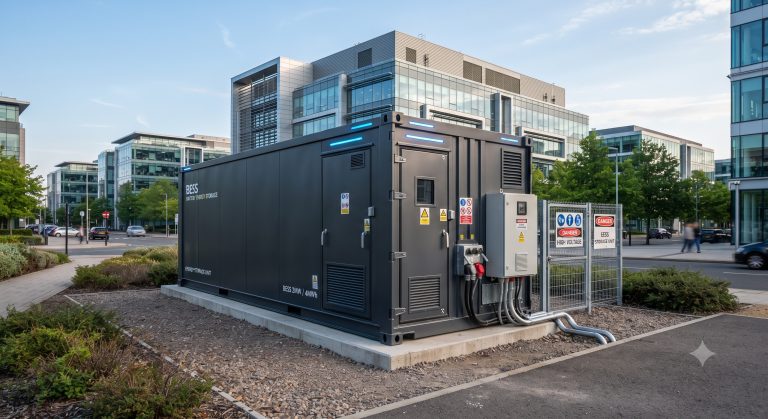
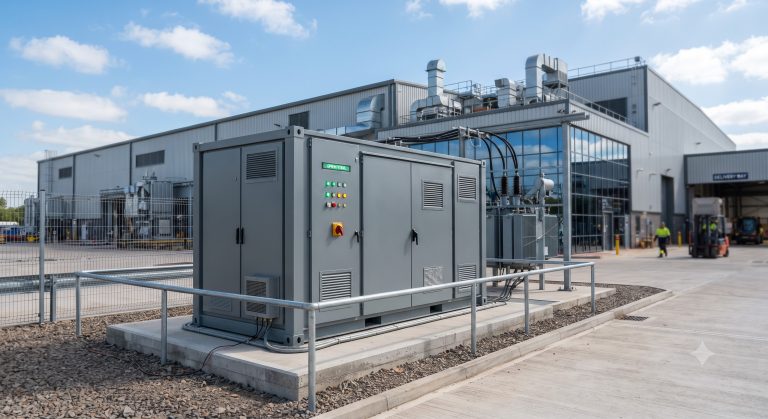
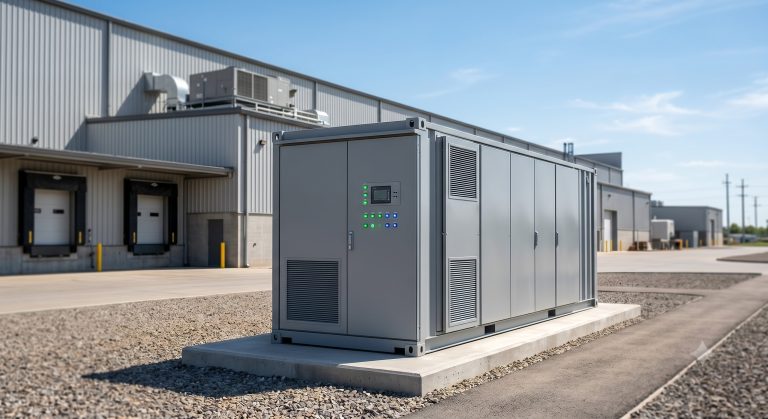
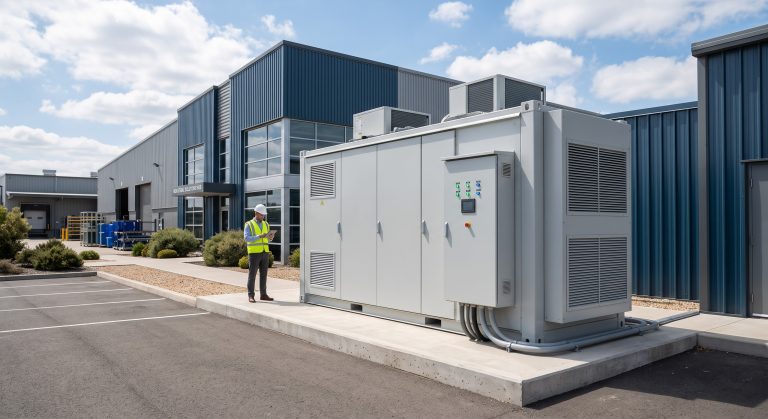
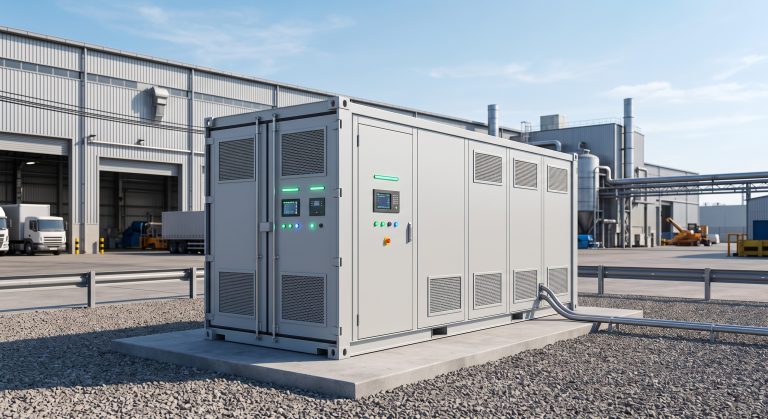
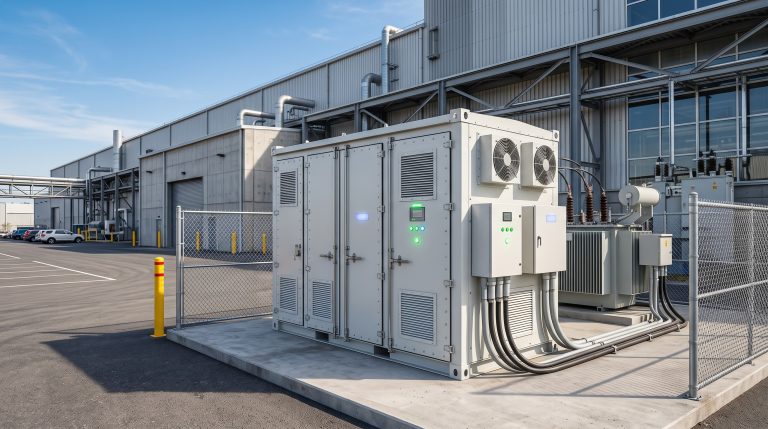
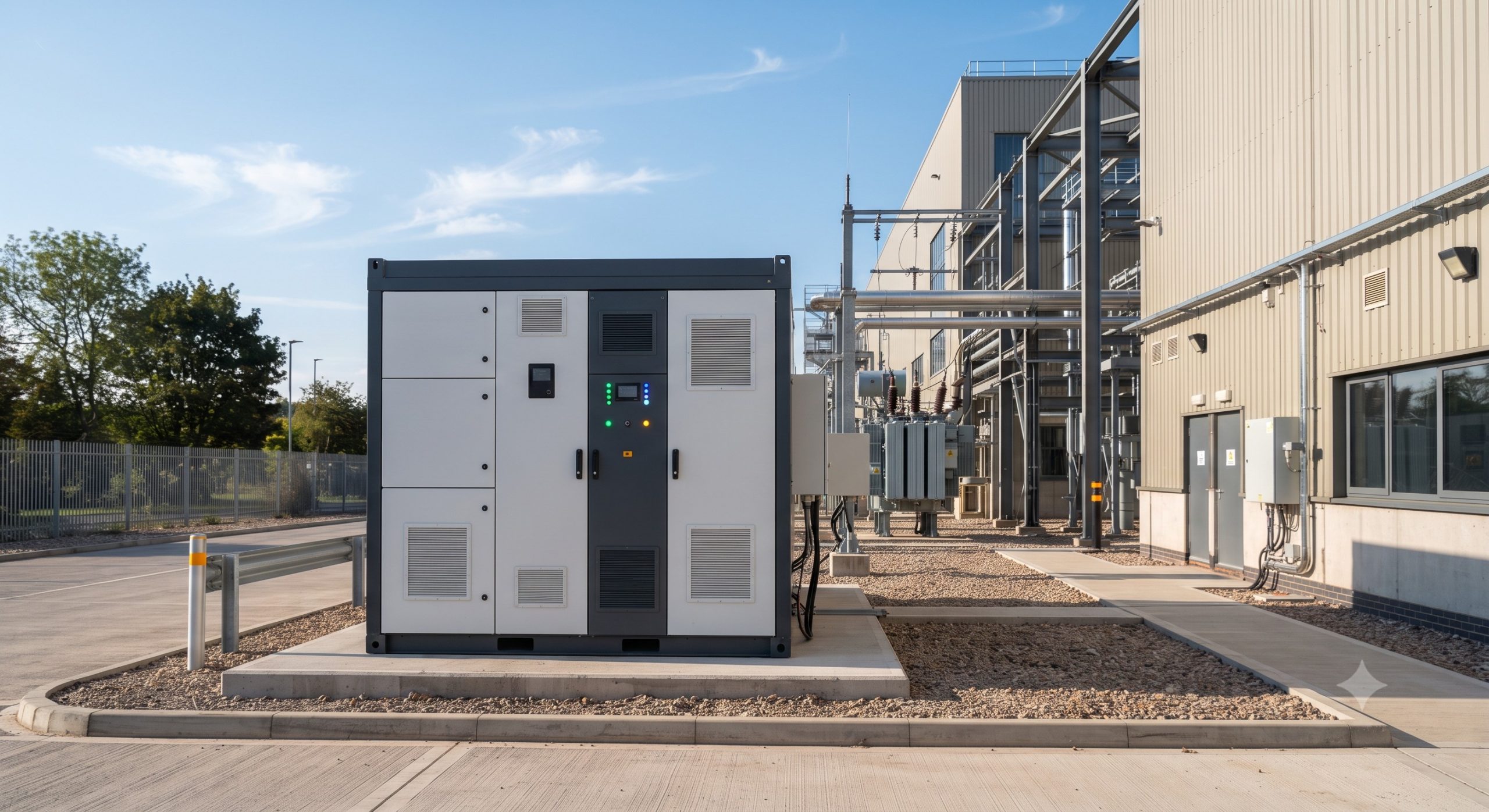
Large-scale solar-storage projects are the backbone of modern industrial parks. Containerized BESS solutions offer plug-and-play deployment, drastically reducing construction timelines and site disruption. These systems are designed for outdoor installation, often featuring IP55 or higher ratings for dust and water resistance. For industrial micro-grids, the BESS works in parallel with solar canopies or rooftop arrays, creating a self-contained islandable grid. This setup guarantees operational continuity during power outages, which is critical for manufacturing and data center operations.
EV Supercharging Stations
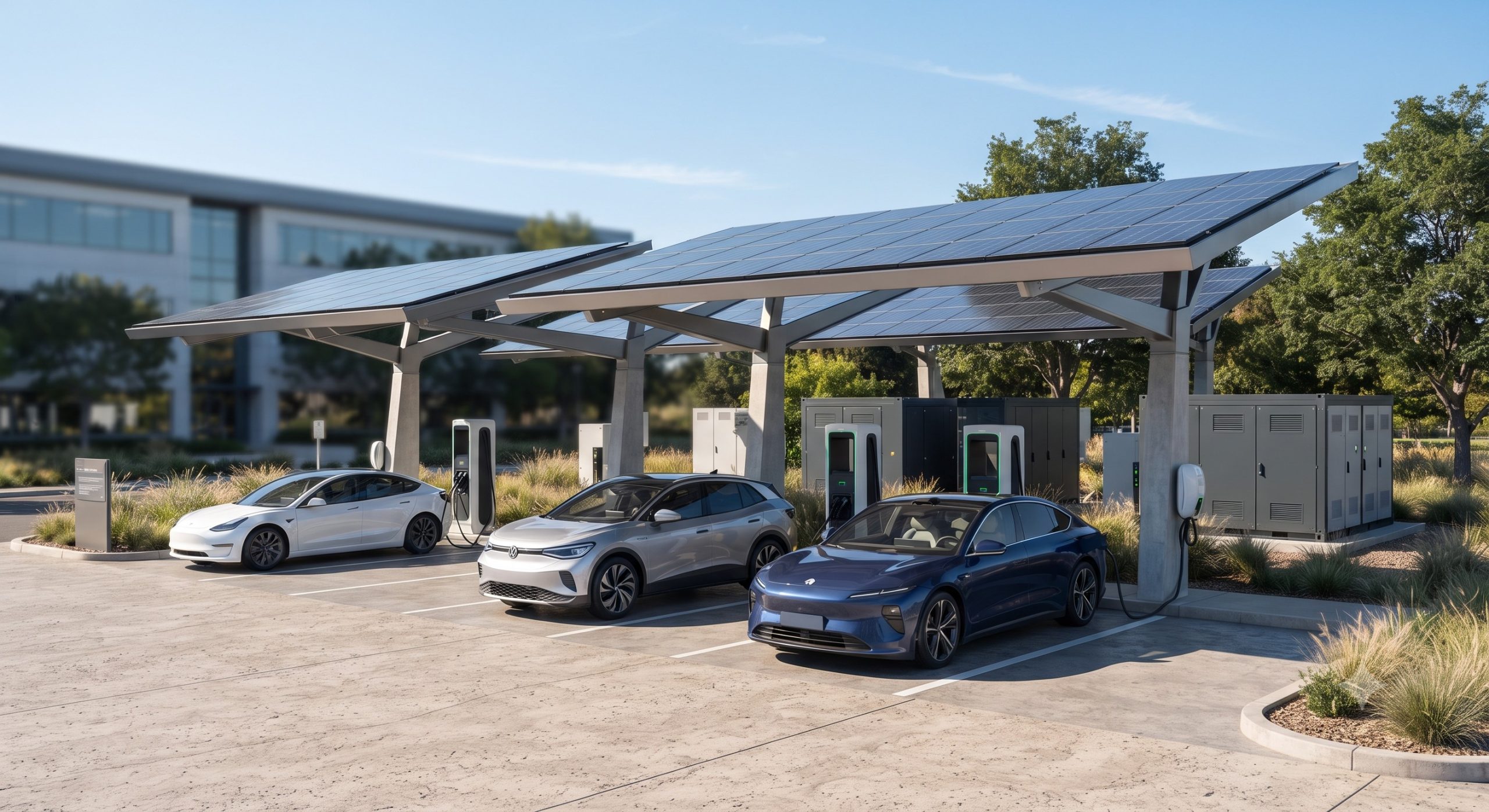
The synergy between PV-storage-charging (光储充) is transforming the electric vehicle ecosystem. Deploying large-scale solar-storage projects at EV supercharging stations alleviates the strain on the distribution grid. By coupling a 1-2 MWh storage system with a solar canopy, stations can provide high-speed charging without requiring expensive grid upgrades. This architecture also captures excess solar energy during the day for use during evening peak hours, ensuring a high renewable energy fraction for EV users.
Conclusion
Deploying large-scale solar-storage projects is a complex but highly rewarding endeavor. The combination of falling battery prices, stringent safety standards (UL 9540, IEC 62619), and advanced EMS algorithms has made MWh-scale energy storage a commercial reality. For businesses looking to secure their energy future, the blueprint involves rigorous capacity sizing, careful vendor selection, and a focus on long-term asset performance. As the world moves toward decarbonization, the ability to efficiently integrate solar PV with high-capacity storage will differentiate industry leaders from followers. The time to invest in turnkey storage solutions is now, promising not only significant cost savings but also a tangible commitment to a zero-carbon future.