Overview
When the grid goes down, the resilience of your facility hinges on a single critical metric: the autonomous runtime of your Battery Energy Storage System (BESS). For engineers and procurement specialists, the answer isn’t just a single number; it involves battery chemistry, Depth of Discharge (DoD), cooling efficiency, and the specific load profile of your operations. This FAQ cuts through the marketing noise to provide the technical data needed to accurately size a BESS and understand its performance limits during a grid outage, covering everything from Tier-1 LFP cells to smart load management.
Frequently Asked Questions
- Q1: How long will a home battery last during a grid blackout based on standard load profiles?
- For a standard 10 kWh home battery (like those using Tier-1 LFP cells), the runtime during a blackout is typically 6 to 12 hours when powering essential loads (fridge, lights, internet). However, this drops to 2-3 hours if you attempt to run high-draw appliances like central AC or EV charging. For a larger commercial 1 MWh BESS, runtime extends to 8-12+ hours for critical industrial infrastructure, depending on the kW load and the Depth of Discharge (DoD) limit set in the Battery Management System (BMS).
- Q2: How does the battery chemistry (LFP vs. NMC) impact backup duration and cycle life?
- Lithium Iron Phosphate (LFP) chemistry provides a longer calendar life and cycle life (typically 6,000+ cycles at 80% DoD), making it ideal for daily blackout preparedness. While LFP has a slightly lower energy density than NMC, it supports a higher Depth of Discharge (up to 100%) without significant degradation, effectively offering the same usable capacity over a 10-year lifespan and superior safety, which is critical for maintaining long-term backup reliability.
- Q3: Can I scale my battery capacity to ensure a 72-hour runtime for my facility?
- Yes, modular BESS architectures allow for seamless scalability via parallel cabinet connectivity and DC busbar linkage. To achieve a 72-hour runtime, you must conduct a rigorous load audit of your facility, then calculate the total kWh requirement. For example, a 50 kW continuous load requires 3.6 MWh for 72 hours. This is achieved by paralleling multiple high-capacity cabinets (e.g., 500kW/1.5MWh units), which is a standard pre-sales engineering service we offer.
- Q4: How does the battery cooling system (Liquid vs. Air) affect blackout endurance?
- Advanced liquid cooling systems are superior for long-duration blackouts. Air cooling is often insufficient for extended high-load discharge, leading to thermal derating—where the system reduces power output to prevent overheating. Liquid cooling ensures uniform cell temperature, maintaining high continuous discharge power (C-Rate) for hours, preventing thermal runaway and ensuring the BESS delivers its full rated capacity until the final hour of the outage.
- Q5: What happens if the grid returns while the BMS is managing a discharge cycle?
- The Energy Management System (EMS) handles this automatically with a seamless grid re-sync sequence. The BMS first checks the grid phase and voltage; upon validation, the bi-directional PCS transitions from islanding mode (off-grid) to grid-tie mode. The system then reverts to charging the battery from the grid (if needed) or enters peak-shaving mode. This transition is engineered to be instantaneous (< 20ms) to prevent flicker in sensitive industrial equipment.
- Q6: What are the fire safety mechanisms that prevent thermal runaway during a prolonged outage?
- Our BESS units feature a multi-tier fire safety system compliant with UL 9540A. This includes proactive gas/smoke detection at the cell level, which triggers an automatic rapid-shutdown before a thermal event escalates. The liquid cooling system acts as a thermal barrier, and an integrated fire suppression system (aerosol or FM-200) provides the final layer of protection, ensuring that a cell failure does not propagate to adjacent cells during an extended, unattended discharge period.
- Q7: What is the ROI calculation for a BESS when considering blackout avoidance costs?
- The ROI is calculated by considering the Levelized Cost of Energy (LCOE) and the Cost of Unserved Energy (CoUE). For a facility facing power outages, the annual savings include avoided production downtime and perishable inventory losses. For a 500kW/2MWh system, the payback period can be as low as 4-5 years if peak-shaving arbitrage is combined with blackout insurance, effectively making the battery a revenue-generating asset during normal operation and a critical lifeline during emergencies.
- Q8: How does the O&M support structure handle post-blackout diagnostic checks?
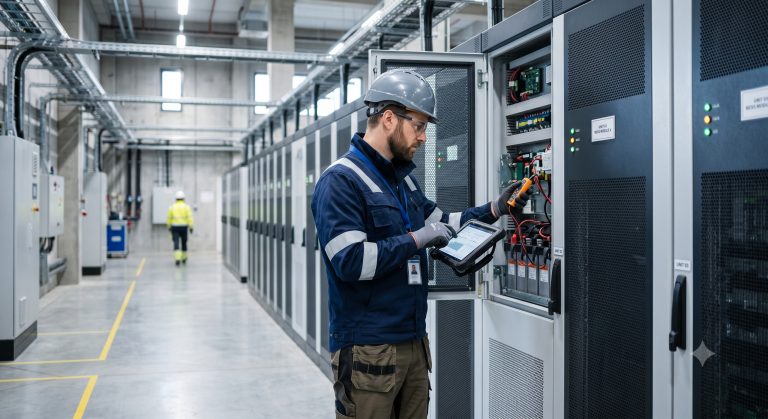
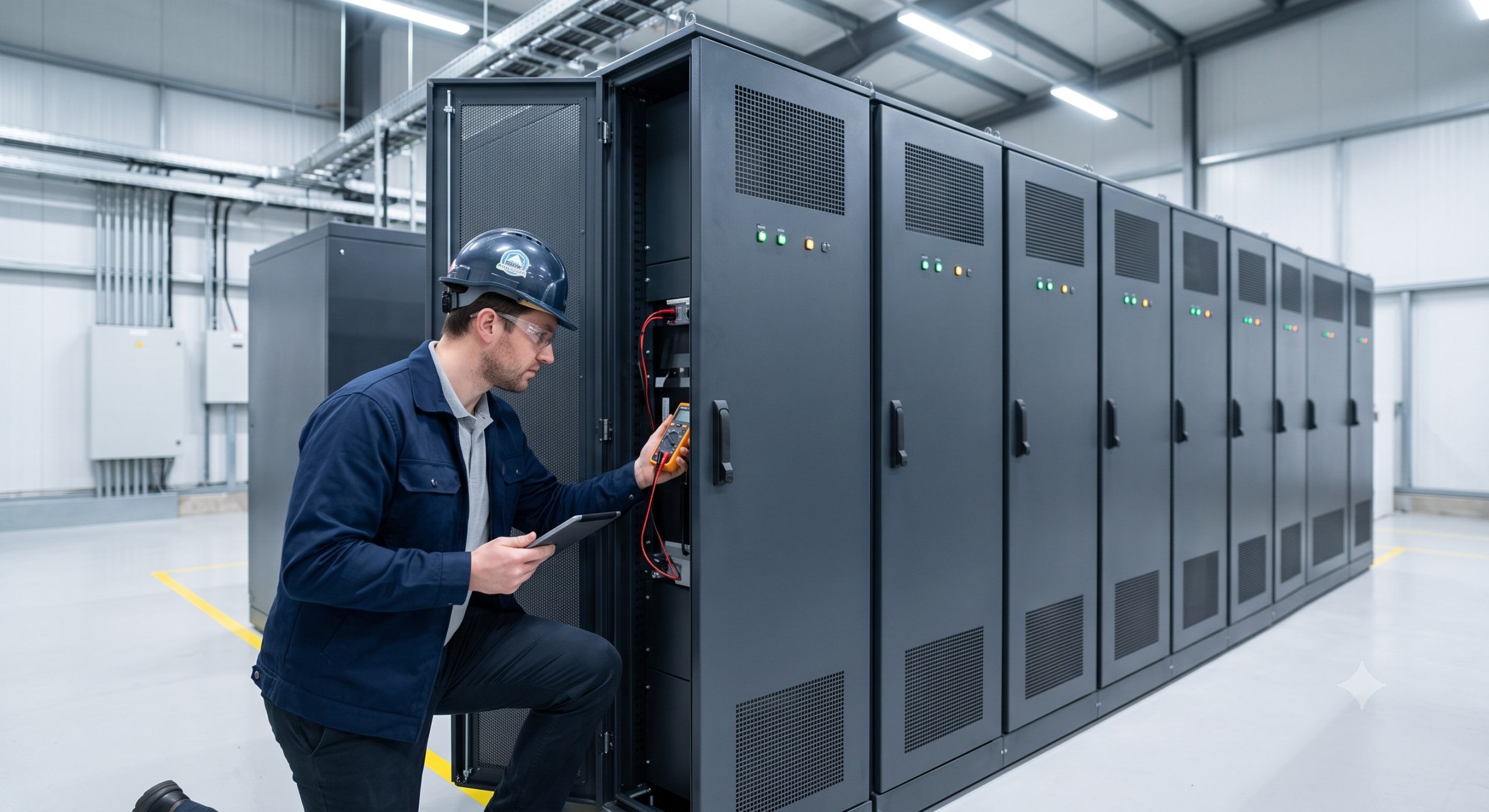
- Post-blackout, our O&M protocol requires a remote BMS diagnostic check to analyze inter-cell balancing and state-of-health (SOH). Our local lifecycle service includes a mandatory preventative maintenance visit after a significant deep discharge event (e.g., > 90% DoD) to verify contactor integrity and perform a full capacity test. This ensures the system remains robust for the next outage, backed by a 10-year performance guarantee on Tier-1 cells.