PRODUCT IDENTIFICATION
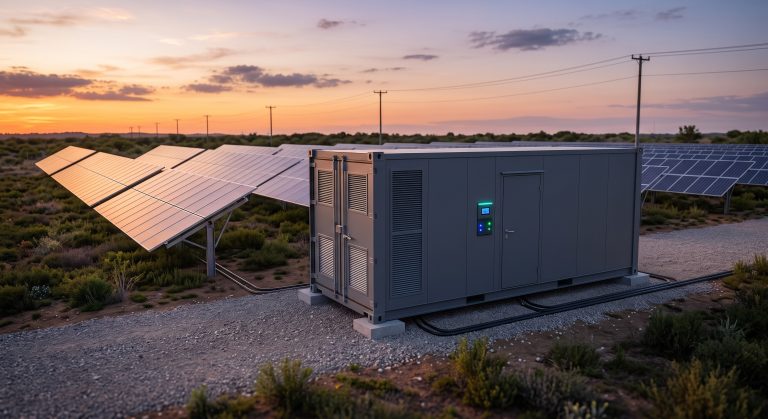
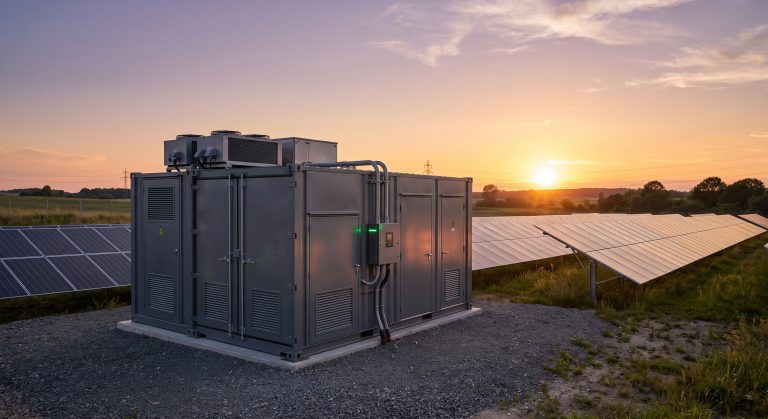
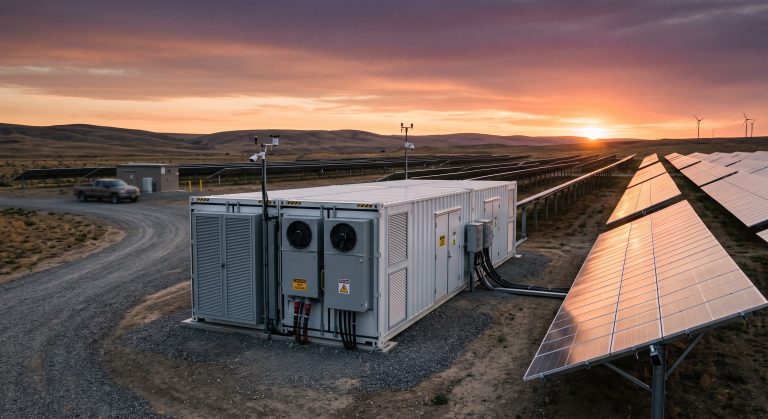
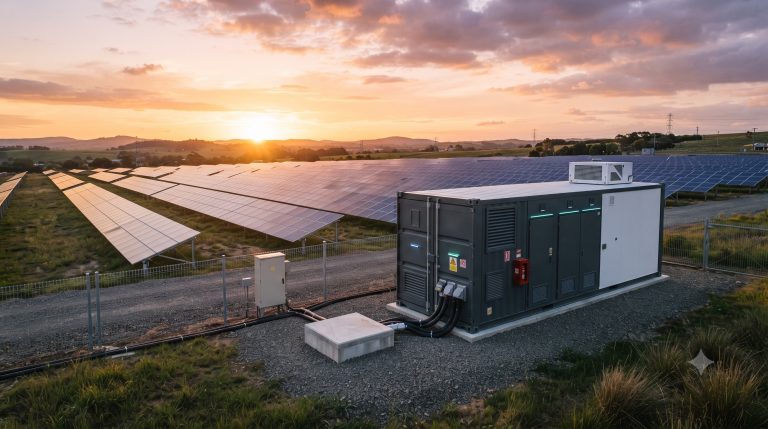
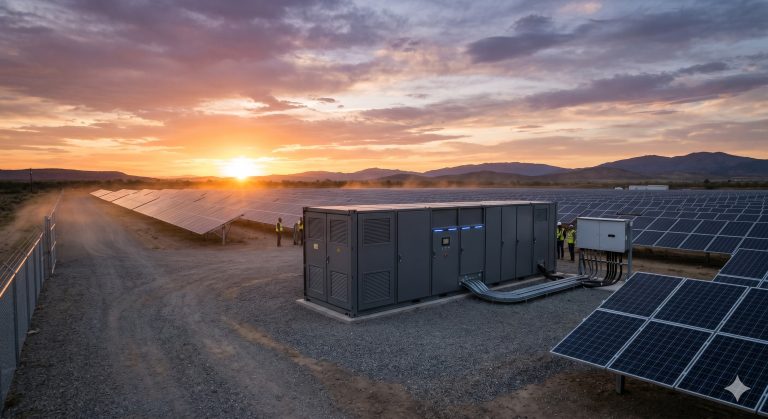
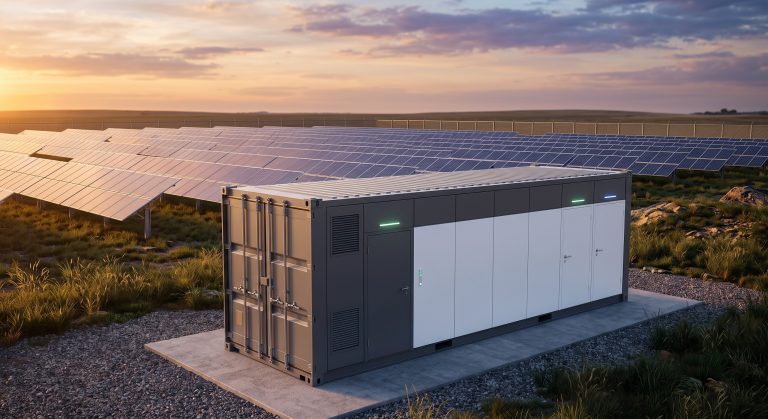
This engineering reference manual formally defines the architecture, performance envelope, and safety systems of our latest-generation Commercial Battery Energy Storage System (BESS). Designed for high-duty C&I, micro-grid, and PV-storage-charging infrastructure, this platform integrates Tier-1 prismatic LFP cells with a proprietary liquid thermal management system. The system is delivered as a fully integrated, factory-assembled unit, optimized for peak shaving, demand response, and backup power applications, ensuring a 20-year operational design life.
INTERNAL BESS TOPOLOGY
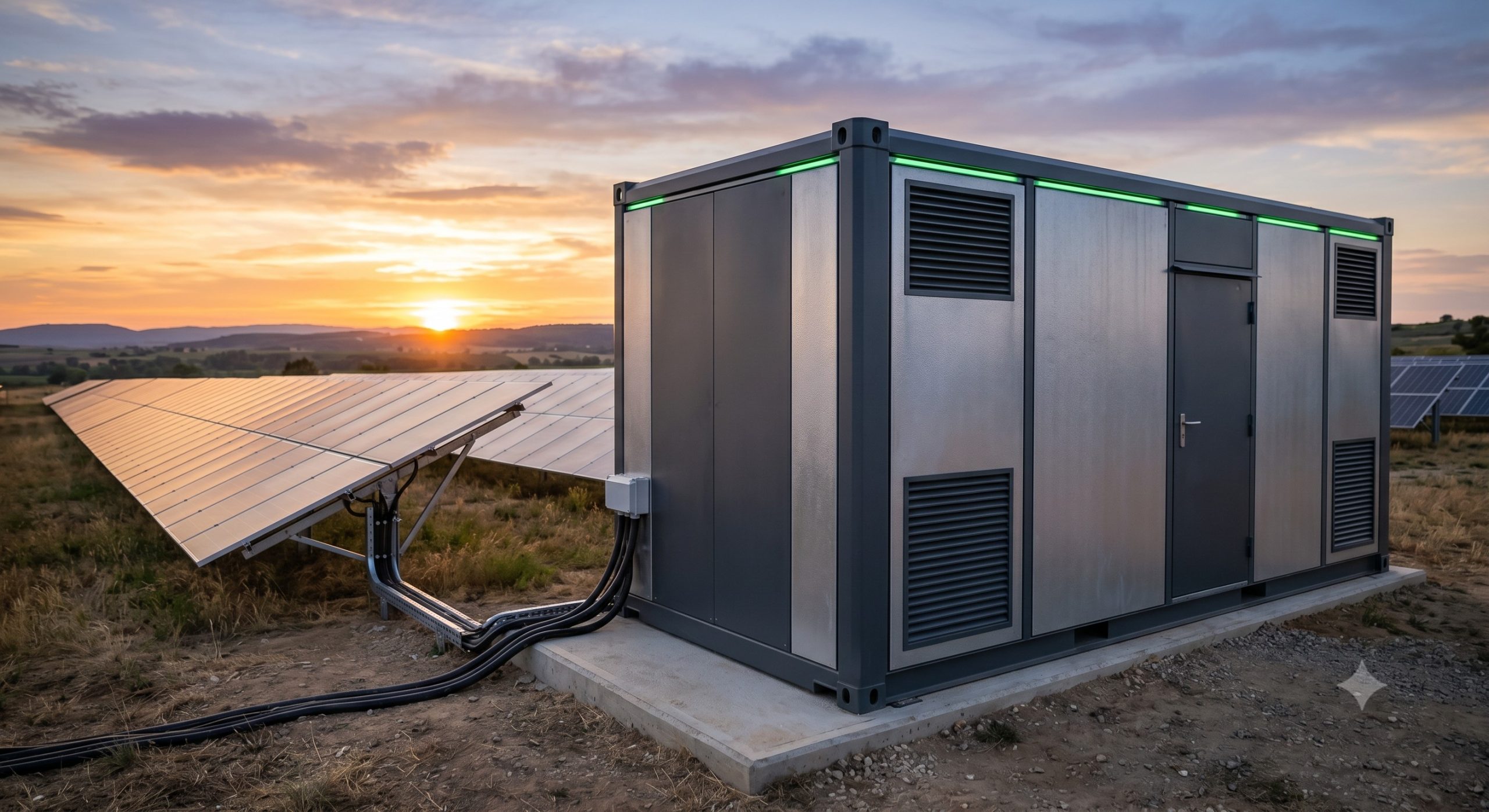
The internal architecture is structured around a high-voltage DC bus, managed by a three-level BMS. This centralized topology connects battery racks in parallel to a bi-directional PCS. The PCS features a SiC-based design for enhanced efficiency and grid-forming capability. All power and control connections are pre-wired, terminating at standard IP65-rated junction boxes for simplified site integration.
THERMAL PROTECTION MECHANISMS
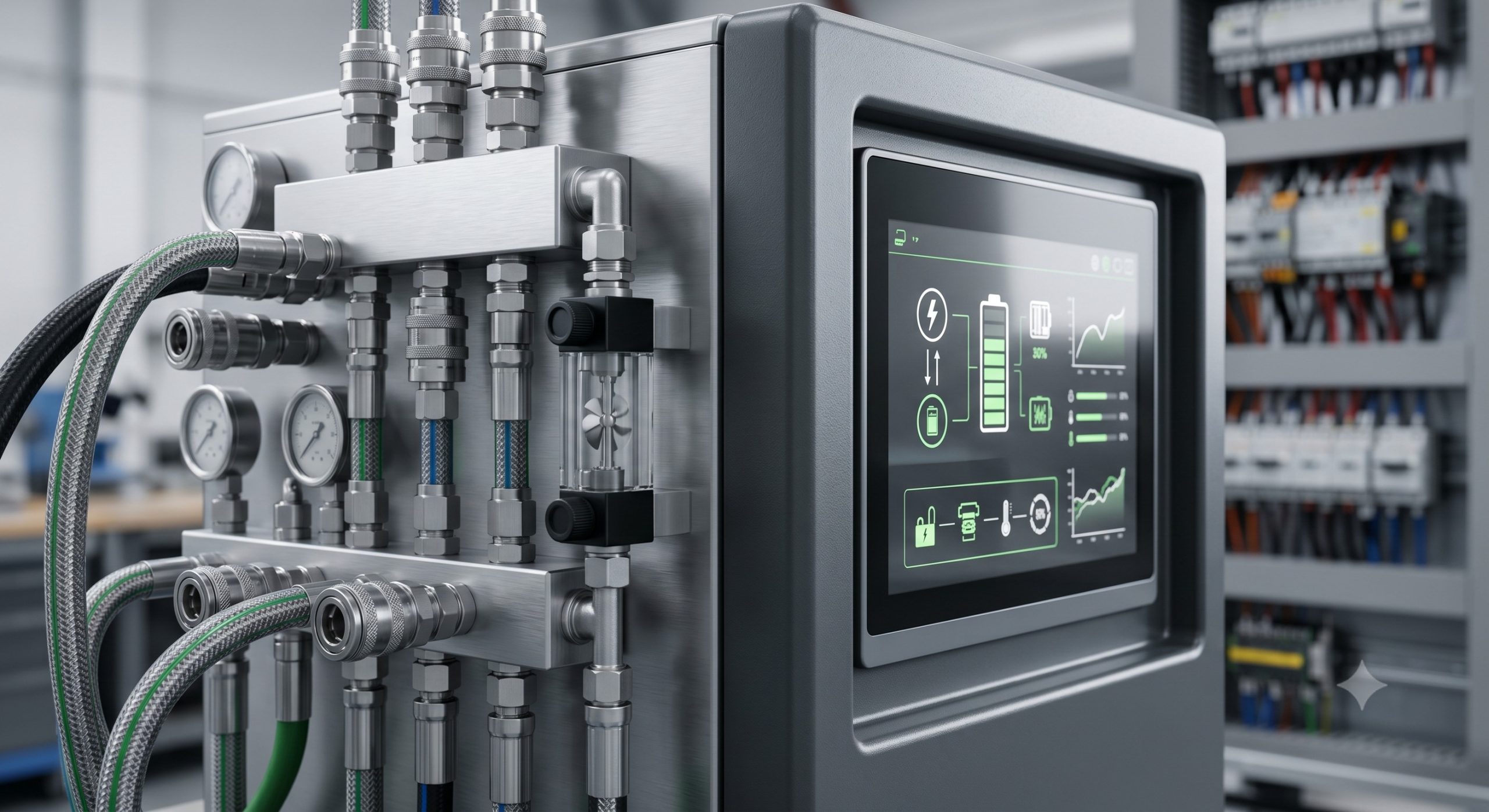
The system employs an advanced liquid cooling architecture, circulating a dielectric fluid through cold plates embedded within each battery module. This ensures cell temperature uniformity within ±2°C, significantly enhancing cycle life and safety. A multi-level protection strategy includes:
– Cell-level overcurrent and over-temperature fusing.
– Module-level gas detection and pressure relief vents.
– Rack-level pyro-fuses for rapid DC isolation.
– System-level fire suppression with aerosol and FM-200 agent.
OPERATIONAL ADVANTAGES
Key operational advantages include a high round-trip efficiency of 92%, a modular capacity range from 215 kWh to over 1 MWh per block, and seamless parallel expansion. The intelligent EMS enables dynamic demand charge management and can be configured for time-of-use arbitrage, peak shaving, and participation in frequency regulation markets.
SPECIFICATION MATRIX
The core specifications are detailed in the matrix below, covering electrical, mechanical, and environmental parameters for standard configurations.
| Parameter | Specification |
|---|---|
| Nominal Capacity | 215 kWh / 372 kWh per cabinet (standard configurations) |
| System Voltage | 768 V DC / 1500 V DC (optional high-voltage variant) |
| Cooling Method | Active Liquid Cooling (Dielectric Fluid) |
| Cell Chemistry | Tier-1 LFP (Prismatic) |
| Operating Temperature | -20°C to 55°C (derated above 45°C) |
| Ingress Protection | IP65 (outdoor rated) |
| BMS Protocol | Modbus TCP/IP, CAN 2.0, IEC 61850 |
| Round-Trip Efficiency | >92% (DC to AC) |
| Cycle Life | >6000 cycles at 80% DoD (25°C) |
| Weight | Approx. 2,800 kg per 215 kWh cabinet |
REGULATORY COMPLIANCE
This system is fully compliant with UL 9540, UL 1973, IEC 62619, and IEC 62477-1. It has successfully passed rigorous thermal runaway propagation tests (UL 9540A) and is certified for installation in NFPA 70-compliant environments. The design is also compliant with IEEE 1547 and IEEE 2030.5 for grid interconnection.
📥 Download Technical Specification
Click the button below to view or download the full official PDF datasheet.