Overview
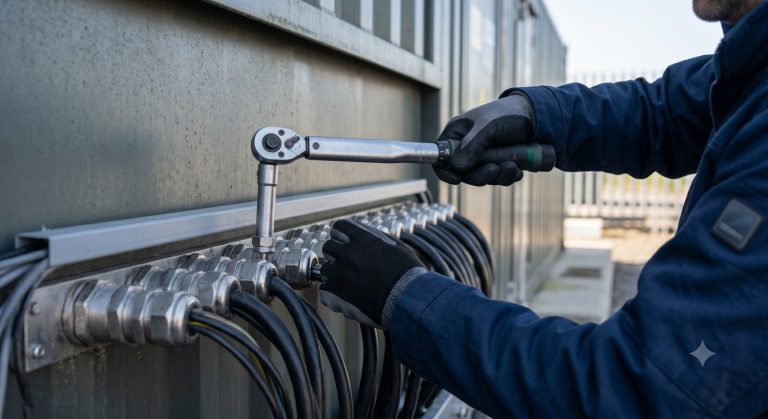
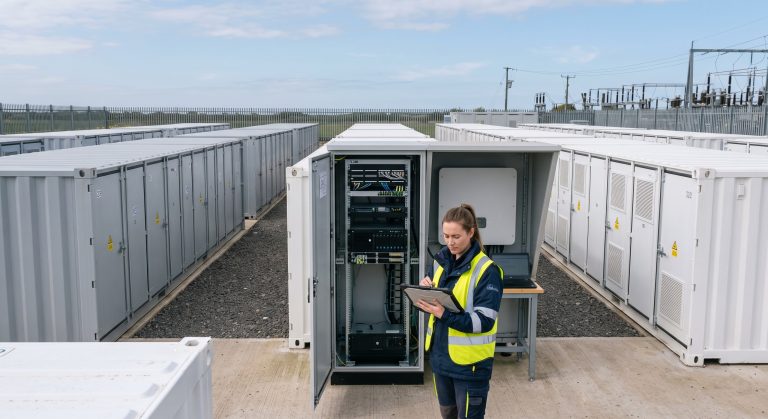
DC power connectors are the critical electromechanical interface in Battery Energy Storage Systems (BESS), transferring high currents between battery racks, inverters, and busbars. Incorrect connector selection leads to arc faults, thermal events, and efficiency losses. This FAQ addresses pre-sales engineering, safety compliance, and post-deployment monitoring for BESS integrators, EPCs, and plant operators.

Frequently Asked Questions
- Q1: What is the maximum ampacity and cycle life rating for a DC power connector in a BESS application?
- The maximum continuous ampacity typically ranges from 150A to 500A per contact pair at 85°C ambient, with cycle life exceeding 10,000 mating cycles under dry circuit conditions. For high-throughput ESS (2-hour daily cycling), wear-rated connectors using silver-plated copper alloys achieve <0.5 mOhm contact resistance after 5,000 cycles. Always de-rate by 20% for cabinet operating temperatures above 65°C.
- Q2: How does the DC power connector affect thermal runaway propagation and fire safety compliance?
- Connectors with UL 4128 or IEC 61984 Class II creepage/clearance distances (≥3.2mm per 100V) prevent surface tracking and arc ignition. For UL 9540A thermal runaway mitigation, use finger-proof IP2X housings with integrated thermal fuses (85°C to 120°C trip) and V-0 flame-rated PA66 or PBT materials. Connectors must pass glow-wire test (GWT 750°C) and show no flaming drip per EN 60695.
- Q3: What BMS monitoring parameters can be integrated through a DC power connector?
- Smart DC connectors embed up to 6 auxiliary pins for daisy-chained CAN bus or Modbus RTU, transmitting per-string voltage (0-1500V), temperature (NTC 10kΩ), and current (hall-effect or shunt-derived). For BMS cell balancing, use connectors with isolated signal return (≥500V dielectric withstand). Real-time connector temperature rise monitoring triggers pre-emptive current throttling before reaching 105°C limit per IEC 60512-5-2.
- Q4: What IP protection rating is required for DC power connectors in outdoor BESS enclosures?
- Outdoor DC connectors must meet IP67 (dust-tight and immersion up to 1m for 30 min) when mated, and IP2X (finger-proof) when unmated per IEC 60529. For coastal or high-humidity sites (ISO 9223 corrosivity category C4+), specify connectors with nickel underplate + 3μm gold flash on contacts, plus silicone rubber seals (not EPDM) to resist ozone cracking. UL 50E Type 4X adds salt spray resistance.
- Q5: Can DC power connectors be paralleled for modular BESS scalability from 100kWh to 10MWh?
- Yes, using multi-pole connector layouts (2 to 8 identical contacts per housing) with balanced busbar impedance. For every 500A per contact, use a common DC busbar with <5% current sharing deviation. When adding cabinets, maintain connector service loop slack (minimum 150mm) and separate power from signal contacts by ≥15mm to prevent EMI. Always recalc short-circuit withstand (Icw) for the added parallel path per UL 508A.
- Q6: What is the ROI calculation impact of DC power connector contact resistance on round-trip efficiency?
- Every 0.1 mOhm increase in contact resistance reduces round-trip efficiency by 0.025% per 100A. For a 1MWh/day cycling BESS (365 days/year, $0.15/kWh), upgrading from 0.5 mOhm to 0.3 mOhm connectors saves $2,190 annually. Use 4-wire Kelvin sensing during commissioning to verify initial <0.25 mOhm per mated pair and schedule annual thermal imaging to detect resistance drift >20%.
- Q7: What international standards govern DC power connector procurement for grid-tie vs. off-grid BESS?
- Grid-tie systems require UL 4128 (US/CAN), IEC 61984 (global low-voltage), or EN 50547 (railway-adjacent storage). Off-grid microgrids accept IEC 62852 (PV DC connectors) but must add reverse polarity protection (mechanical keying). For both, demand third-party test reports for vibration (IEC 60068-2-6, 5g to 500Hz), thermal shock (-40°C to +85°C, 100 cycles), and mixed flowing gas (IEC 60068-2-60, method 4).
- Q8: How do I validate connector OEM quality for a 10-year BESS performance warranty?
- Request supplier PPAP Level 3 documentation including: 1) Contact resistance vs. thermal cycle data (100 cycles per LV 124), 2) Salt spray test report (≥720h, ISO 9227), 3) Pull-out force validation (50N min per contact), and 4) Certificate of Conformity to RoHS/REACH. Require destructive cross-section samples from initial production batches to verify crimp height and concentricity per USCAR-21 Class 1.