Overview
In high-vibration, high-current Battery Energy Storage Systems (BESS), a properly terminated wire ferrule (also known as a bootlace ferrule or cord end terminal) is not optional—it is a critical safety and reliability component. Frayed stranded wires cause high resistance, hot spots, and eventual BMS communication faults. This FAQ addresses pre-sales specification questions and post-sales troubleshooting for wire ferrules in utility-scale and C&I BESS installations, ensuring UL 508A and IEC 60947 compliance.

Frequently Asked Questions
- Q1: Why does BESS wiring require insulated wire ferrules instead of bare stranded wire under screw terminals?
- Insulated wire ferrules are mandatory in BESS because stranded wire compresses unevenly under screw terminals, increasing contact resistance by up to 300%, causing thermal runaway risks. The ferrule provides a solid, gas-tight sleeve that maintains low millivolt drop across all 200A-500A DC power connections. For example, a 10mm² ferrule reduces contact resistance to below 0.1mΩ, while bare strands can exceed 0.5mΩ, leading to 15W+ local heating per terminal in a 100A circuit.
- Q2: How do I select the correct wire ferrule size for BESS power cables (AWG/kcmil to metric conversion)?
- The correct ferrule size is determined by the conductor cross-section (AWG or mm²) and the insulation diameter. First, strip the wire to exactly 8-10mm (no more, no less). Then match the ferrule’s metal tube to the wire gauge: for 6 AWG (16mm²) use a 16mm² ferrule; for 2/0 AWG (70mm²) use a 70mm² ferrule. Always use a UL listed or IEC 60947-7-8 ferrule. A quick reference: 14-12 AWG (2.5-4mm²) -> red insulated ferrule; 10-8 AWG (6-10mm²) -> yellow; 6-4 AWG (16-25mm²) -> blue; 2-1/0 AWG (35-50mm²) -> metallic with colored collar.
- Q3: What is the correct crimping tool and method for BESS-grade wire ferrules to prevent vibration loosening?
- Use a ratcheting, square or trapezoidal-profile crimping tool (not a standard plier or hexagonal die). The ratchet ensures full-cycle compression, achieving a defined crimp height (e.g., for 10mm² ferrule: crimp height 2.2mm +/-0.1mm). The square profile creates four indentations, cold-welding the ferrule to strands, eliminating air gaps. A hexagonal crimp is acceptable for smaller gauges but square/trapezoidal is preferred for BESS battery rack connections because it resists torque relaxation from thermal cycling (-20°C to +55°C).
- Q4: Are insulated or non-insulated wire ferrules better for high-voltage BESS connections (1500V DC)?
- Insulated ferrules (with nylon or polypropylene color collars) are strongly preferred for 1500V DC BESS because they provide finger-safe protection, prevent flashover between adjacent terminals, and color-code wire sizes (e.g., gray = 16mm², blue = 25mm²). However, for crimps inside sealed terminal blocks or enclosed DC disconnect switches, non-insulated ferrules with a separate insulating boot can be used. Always verify the ferrule’s rated voltage: standard insulated ferrules are rated to 1000V AC/1500V DC; high-voltage variants up to 3000V DC are available for MV BESS connections.
- Q5: How often should wire ferrule connections be torque-checked in a BESS preventive maintenance plan?
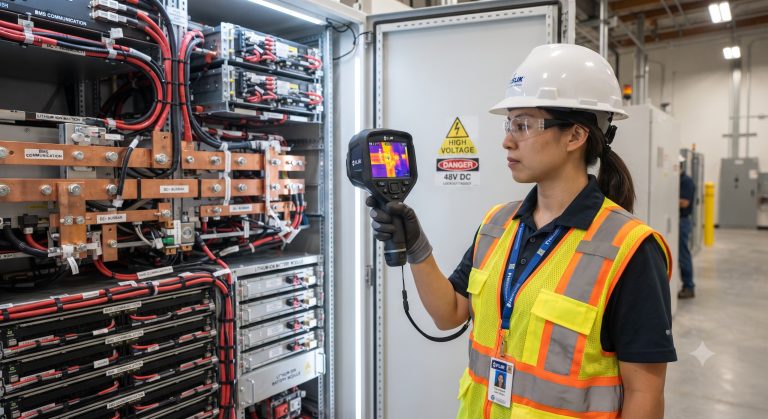
- In a BESS, torque-check wire ferrule connections at three critical intervals: (1) Initial deployment after 1 week of operation (thermal cycling settles strands), (2) Quarterly for the first year, then (3) Bi-annually. Use a calibrated torque screwdriver at values per terminal block spec (e.g., M6 screw: 4-5 Nm for 25mm² ferrule). More importantly, perform thermal imaging annually: any ferrule connection showing delta-T > 15°C above ambient requires recrimping or replacement. Do not simply retorque; recrimp with a fresh ferrule if the wire has been deformed.
- Q6: What UL/IEC certifications must a wire ferrule have for BESS projects (UL 486F, IEC 60947-7-8)?
- For BESS projects, demand wire ferrules with UL 486F (for use in UL 508A panels) and IEC 60947-7-8 (low-voltage switchgear and controlgear). UL 486F specifically tests ferrules for temperature cycling, vibration, and pull-out force. Additionally, for fire safety in thermal runaway scenarios, ferrules should pass UL 94 V-0 flammability rating for the insulating collar. REACH and RoHS compliance is standard for all EU BESS markets. Ferrules with cULus mark are accepted in both US and Canadian BESS installations.
- Q7: Can mixing different metal types (copper ferrule on aluminum wire) cause BMS ground fault errors?
- Yes, absolutely. Never use a copper wire ferrule on aluminum BESS battery interconnect cables. The galvanic corrosion (copper-aluminum couple) increases contact resistance by 200% within 6 months in humid environments, leading to false BMS ground fault detection and nuisance tripping. Instead, use bi-metallic ferrules (tin-plated aluminum or aluminum with copper transition) or specify copper-coded aluminum (CCAW) ferrules. For copper conductors, use tin-plated or bare copper ferrules—never use aluminum ferrules on copper wire.
- Q8: What is the field-proven method to prevent ferrule wire strands from breaking during BESS maintenance recrimping?
- To prevent strand breakage when recrimping a ferrule in the field: (1) Cut off the old ferrule 5mm behind the crimp mark using a sharp cable cutter—never pull it off. (2) Strip fresh insulation using a self-adjusting stripper to exactly 8mm (strand damage occurs with manual strippers). (3) Twist strands clockwise lightly before inserting into the new ferrule. (4) Apply a 0.1-0.2mm length of heat shrink over the ferrule collar if the original insulation is damaged. Do not reuse a ferrule; recrimping a used ferrule causes strand fatigue fracture within 200 vibration cycles.