The EV Infrastructure Bottleneck: Why Dynamic Load Balancing is Non-Negotiable
As commercial fleet electrification accelerates, facility managers face a critical challenge: existing grid connections cannot simultaneously handle high-power EV charging, facility baseloads, and on-site generation without costly upgrades. Dynamic load balancing (DLB) has emerged as the essential EMS-level intelligence that enables PV-storage-charging (光储充) synergy, slashing peak demand charges by up to 40% while avoiding transformer overloading. Unlike static power allocation, modern DLB algorithms adjust in real-time (sub-100ms latency) based on live CT metering, battery state-of-charge (SoC), solar irradiance forecasts, and EV session priorities. This technical deep dive quantifies how dynamic load balancing integrated with UL 9540-certified BESS delivers a bankable total cost of ownership (TCO) for EV supercharging hosts.
Hardware-In-The-Loop Architecture for C&I Applications
Real-Time EMS Dispatch Logic
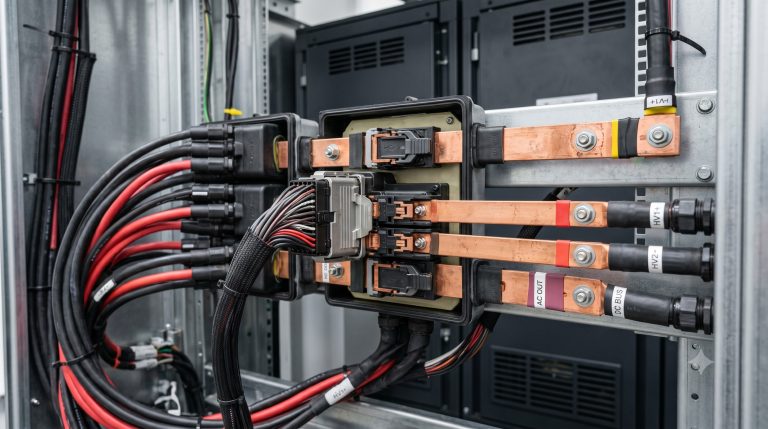
At the core of dynamic load balancing lies a bi-directional power conversion system (PCS) with grid-forming capability. Tier-1 integrators deploy IEC 62619-compliant LFP battery racks (e.g., 280Ah prismatic cells) connected via CAN bus to an EMS that processes >1000 data points per second. The algorithm continuously calculates: Available grid headroom = (Main breaker capacity × 0.9) − (Current facility load). When EV chargers request power, the EMS dynamically sources from: (1) PV inverters via MPPT tracking, (2) BESS at up to C1 discharge rates (e.g., 100kW per 100kWh cabinet), or (3) grid only as last resort. This prevents demand spikes exceeding 90% of transformer nameplate—a key UL 9540 requirement for grid-tied systems.
PCS Bi-Directional Integration Metrics
High-efficiency silicon carbide (SiC) PCS modules achieve 98.2% round-trip efficiency at 50% load, with <30ms seamless islanding transition for micro-grid resilience. For a typical 500kW EV supercharging node, integrating dynamic load balancing reduces transformer upgrade costs (typically $50k–$150k) by actively capping site import to 250kW while sourcing the balance from a 500kWh liquid-cooled BESS. Liquid cooling maintains cell delta-T below 3°C, crucial for >8000 cycle life at 90% depth of discharge (DoD).
| Key Parameter | Technical Specification |
|---|---|
| Battery Chemistry | Tier-1 LFP (Lithium Iron Phosphate), prismatic 280Ah cells |
| System Capacity | 100kWh–5MWh modular, scalable in 100kWh increments |
| Cycle Life | >8000 cycles @ 90% DoD, 25°C ±2°C |
| Round-Trip Efficiency | 98.2% (DC-DC) / 92% (AC-AC with PCS) |
| Thermal Management | Liquid cooling, cell delta-T <3°C, operating range -20°C to 50°C |
| PCS Rating | 100kW–500kW bi-directional, grid-forming, 30ms islanding |
| Safety Certifications | UL 9540, UL 9540A, IEC 62619, CE, UN38.3 |
| EMS Protocols | Modbus TCP, IEC 61850, IEEE 2030.5, CAN bus |
Technical Specifications & Compliance Matrix
Below are benchmark specifications for a commercial dynamic load balancing-ready BESS designed for EV supercharging integration.
| Key Parameter | Technical Specification |
|---|---|
| Battery Chemistry | Tier-1 LFP (Lithium Iron Phosphate), prismatic 280Ah cells |
| System Capacity | 100kWh–5MWh modular, scalable in 100kWh increments |
| Cycle Life | >8000 cycles @ 90% DoD, 25°C ±2°C |
| Round-Trip Efficiency | 98.2% (DC-DC) / 92% (AC-AC with PCS) |
| Thermal Management | Liquid cooling, cell delta-T <3°C, operating range -20°C to 50°C |
| PCS Rating | 100kW–500kW bi-directional, grid-forming, 30ms islanding |
| Safety Certifications | UL 9540, UL 9540A, IEC 62619, CE, UN38.3 |
| EMS Protocols | Modbus TCP, IEC 61850, IEEE 2030.5, CAN bus |
Demand Charge Mitigation and VPP Readiness
Peak Shaving ROI Quantified
Commercial EV charging stations face demand charges of $15–$30/kW in markets like California (PG&E B-19 tariff). A 300kW DC fast charger with uncontrolled charging could incur $4,500/month in demand charges alone. Dynamic load balancing combined with a 500kW / 1000kWh BESS reduces peak import by 220kW (shaving to 80kW), saving $3,300/month. With a turnkey BESS costing ~$250/kWh, payback period drops to 3.2 years before factoring in energy arbitrage or frequency regulation revenues. Systems compliant with UL 9540 and IEC 62619 qualify for state incentives (e.g., California SGIP at $0.15–0.20/kWh).
Virtual Power Plant Dispatch Capability
Advanced EMS with IEEE 2030.5 communication enables VPP aggregation. During grid stress events, dynamic load balancing can pause non-critical EV charging and reverse BESS flow to inject up to 80% of rated power back to the grid. For a 1MWh asset, frequency regulation (RegD) markets pay $50–200/MW-hour, generating $2,000–8,000 monthly ancillary service revenue while preserving cycle life via limited DoD (70% for grid services).
Deployment Scenarios: From Highway Hubs to Urban Depots
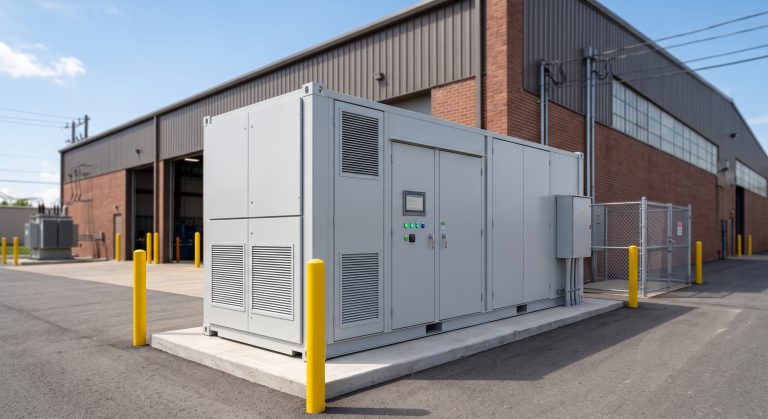
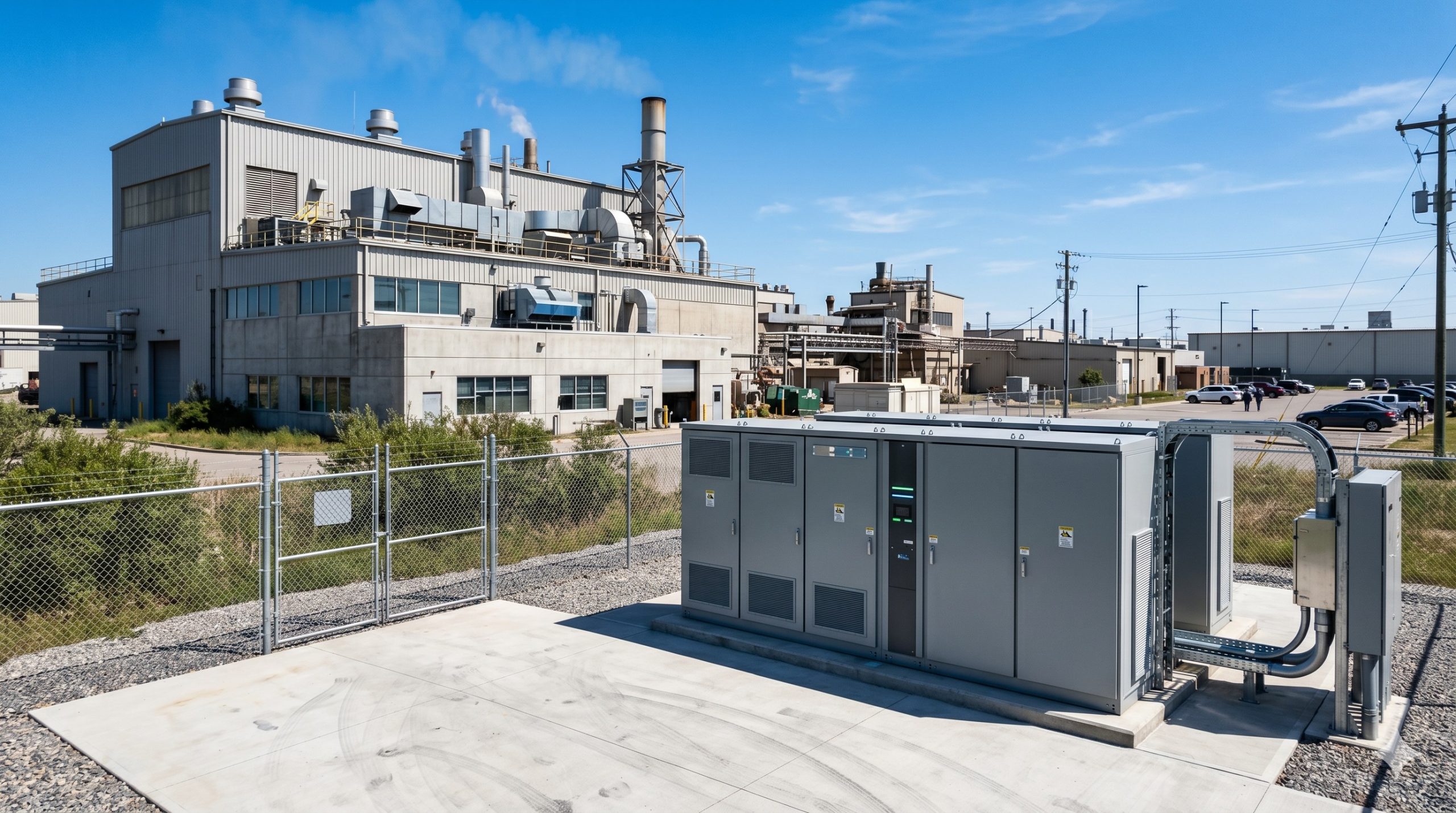
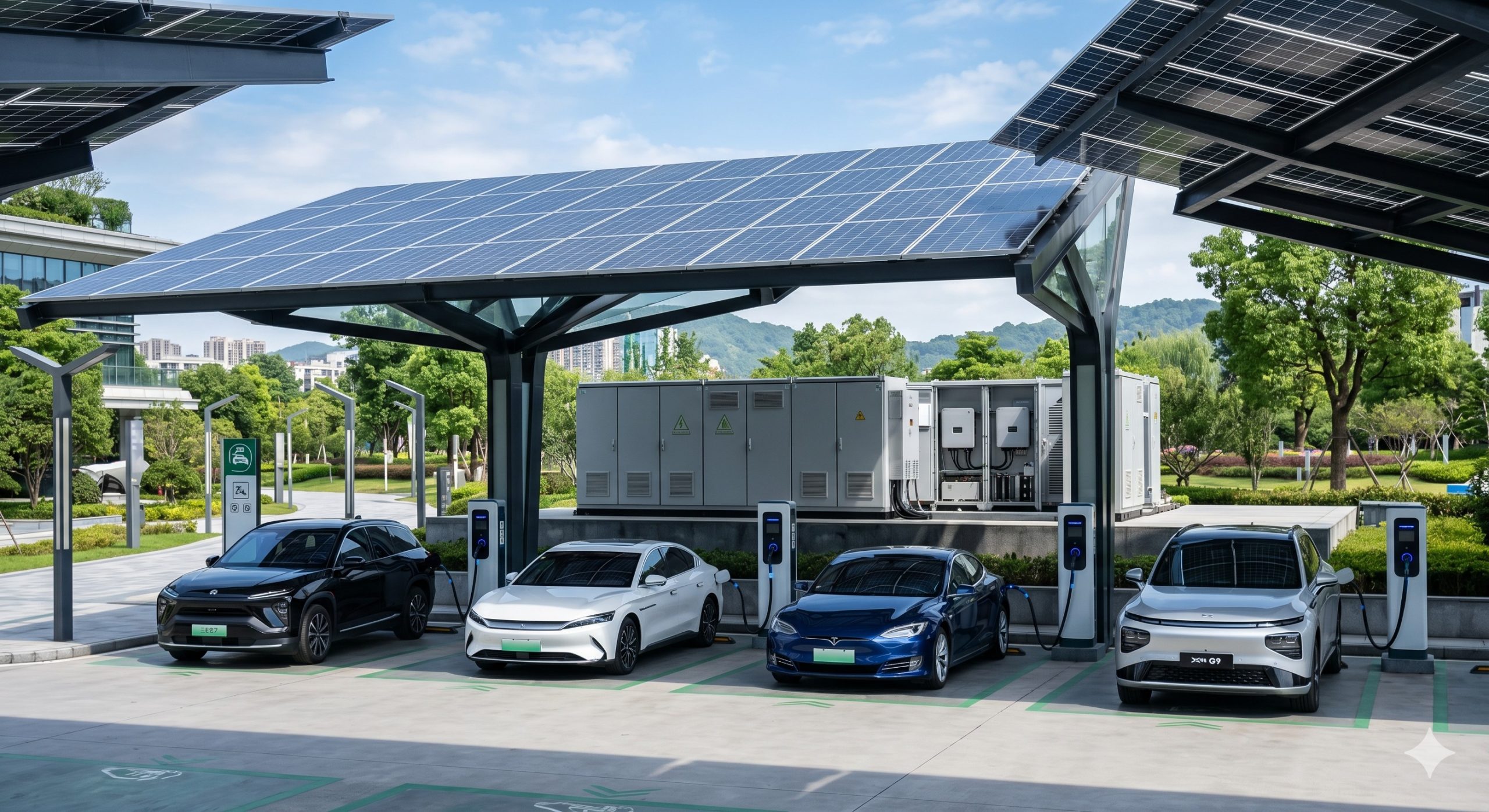
Real-world deployments of dynamic load balancing excel in three high-growth segments: (1) Highway supercharging plazas with colocated solar canopies (1MWp PV + 2MWh BESS), achieving >90% renewable fraction during daylight hours; (2) Logistics depots with overnight fleet charging, where DLB prioritizes battery charging during low-rate periods (11pm–7am) and shaves peaks during morning dispatch; (3) Urban fast-charging hubs constrained by utility transformer limits (e.g., 500kVA max), where a 250kW/500kWh BESS doubles effective charging capacity without grid upgrade. Each scenario requires UN38.3-certified transport, IP55 outdoor-rated cabinets, and remote O&M protocol with <4hr mean time to repair (MTTR).
Conclusion: De-risking EV Infrastructure with Intelligent Load Control
Dynamic load balancing has shifted from a feature to a non-negotiable core competency for C&I energy storage systems serving EV supercharging. By dynamically allocating PV, storage, and grid inputs, operators eliminate transformer upgrade capital expenditure, capture demand charge savings exceeding $40,000 annually per site, and unlock VPP revenue streams. When procuring, demand proof of field-proven EMS algorithms (5+ years of remote firmware updates), liquid cooling with delta-T <5°C, and full cell-level monitoring via BMS. With global EV sales growing at 30% CAGR, early adoption of dynamic load balancing offers a durable competitive advantage.