Overview
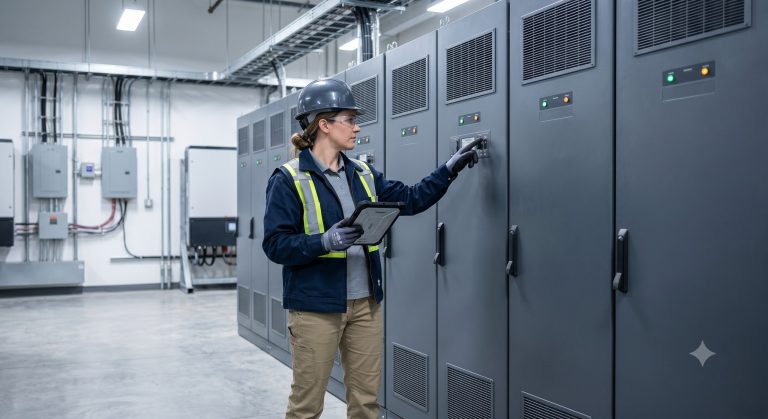
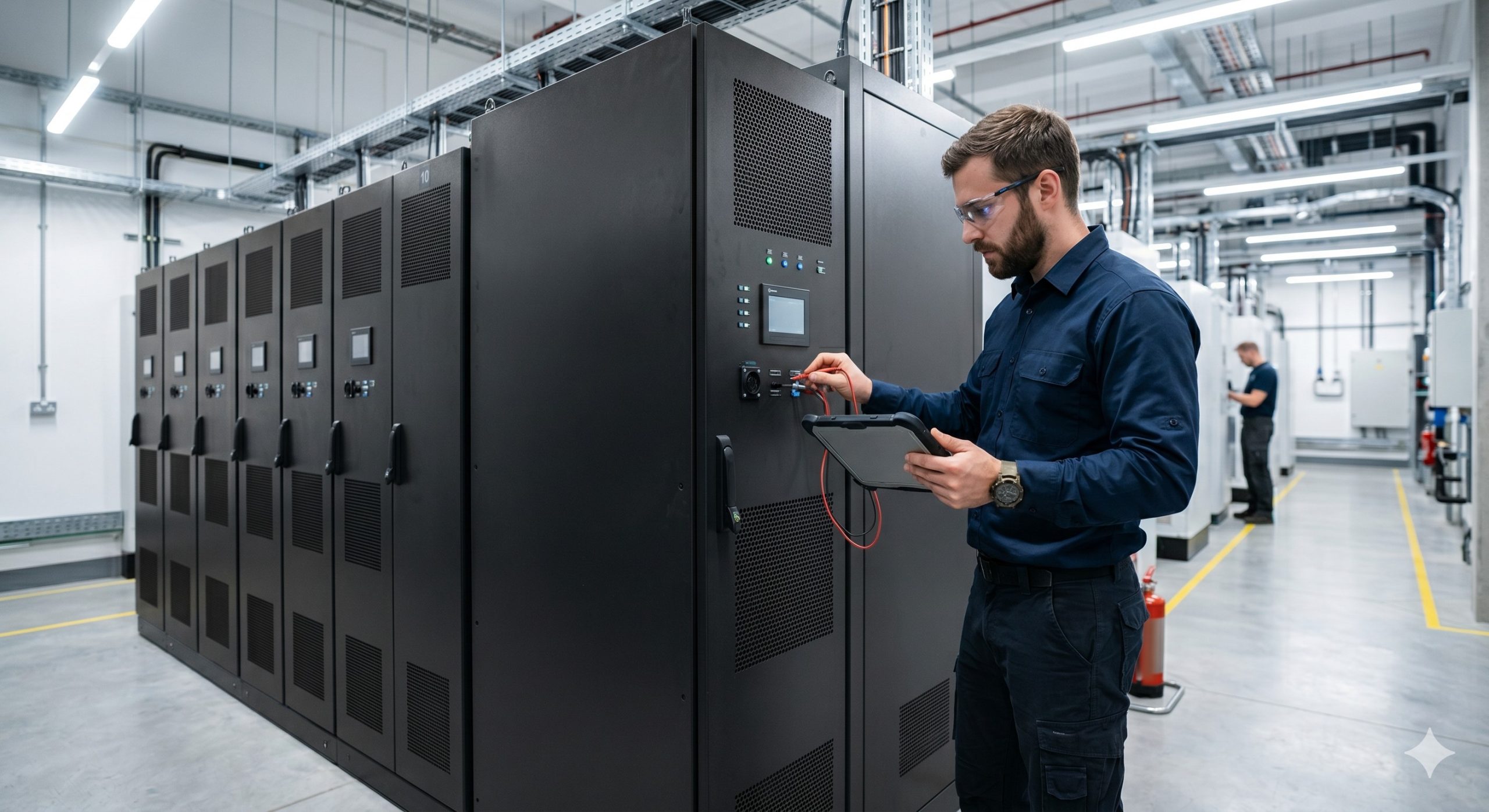
The ST255CS-2H PowerStack is a next-generation commercial and industrial (C&I) liquid-cooled energy storage system designed for high-cycle applications, peak shaving, and grid support. Built around automotive-grade LFP cells and an intelligent 3-tier BMS, this cabinet-level solution offers scalable capacity from 255kWh to multi-MWh parallel configurations. The following FAQs address the most critical pre-sales and post-sales questions from plant engineers, procurement managers, and system integrators.
Frequently Asked Questions
- Q1: What battery chemistry and cycle life does the ST255CS-2H use, and how does liquid cooling extend its lifespan?
- The ST255CS-2H uses automotive-grade Lithium Iron Phosphate (LFP) prismatic cells. Its standard cycle life is 8,000 cycles at 90% Depth of Discharge (DoD), reaching 12,000 cycles at 80% DoD. The integrated liquid cooling system maintains cell temperature differentials below 3°C, directly preventing lithium plating and calendar aging. Compared to natural cooling, liquid cooling reduces thermal-induced degradation by over 40%, ensuring 70% capacity retention after 10 years of daily cycling.
- Q2: How scalable is the PowerStack system – can I start with one cabinet and expand later?
- Yes, the ST255CS-2H is fully modular and parallel-ready. Each base cabinet provides 255kWh usable energy and a 100kW PCS. You can parallel up to 32 cabinets via a common DC busbar or AC-coupled configuration, reaching 8.16MWh total capacity. Expansion requires only adding cabinets, updating the EMS node mapping, and verifying busbar ampacity – no redesign of the core BMS or liquid cooling loop is needed. Field upgrades typically take 2-3 days per additional cabinet.
- Q3: How does the BMS monitor cell health, and can I access data remotely?
- The 3-tier BMS (cell-module-rack) performs real-time voltage, current, and impedance tracking on every cell, with passive balancing accuracy of ±5mV. The system triggers automatic alerts for cell voltage divergence >30mV, temperature anomalies, or insulation resistance drops below 500Ω/V. Remote monitoring is standard via the integrated Energy Management System (EMS) using Modbus TCP/IP, CAN 2.0, or optional 4G gateway. You can view SOC, SOH, individual cell voltages, and historical fault logs through a web dashboard or via API integration into your existing SCADA.
- Q4: Can the ST255CS-2H operate in both grid-tied and off-grid (islanding) modes, and what is the switchover time?
- Yes, the integrated bi-directional PCS supports seamless grid-tied, off-grid, and UPS backup modes. Switchover from grid-tied to off-grid (islanding) occurs automatically within <20ms upon grid failure, ensuring sensitive industrial loads do not drop. In grid-tied mode, it performs peak shaving, load shifting, and demand response. In off-grid mode, it acts as a virtual synchronous generator (VSG) accepting diesel or PV inputs. You must configure the external automatic transfer switch (ATS) and enable islanding detection in the EMS settings prior to deployment.
- Q5: What fire safety and thermal runaway prevention mechanisms are built into the PowerStack?
- The ST255CS-2H uses a 5-layer safety hierarchy: (1) LFP chemistry inherently resists thermal runaway above 270°C; (2) Cell-level CID and venting mechanisms; (3) Distributed aerosol fire suppression (aerosol generator per module) combined with FM-200 gas at cabinet level; (4) Early gas detection (H2, CO, VOC) that triggers pre-alarm at 50ppm and full suppression at 200ppm; (5) Passive thermal isolation with 1200°C-rated ceramic fiber between cells. The liquid cooling loop also acts as a heat sink, absorbing initial exothermic energy and delaying thermal propagation by >30 minutes compared to air-cooled designs.
- Q6: How do I calculate the ROI for peak shaving and arbitrage with the ST255CS-2H?
- A simplified ROI formula is: Annual Savings = (Peak Demand Reduction × Demand Charge) + (Arbitrage Cycles × Price Spread × System Efficiency). Assume a 255kWh system discharging 1 cycle/day at 90% DoD with 91% round-trip efficiency. Example: 100kW peak reduction × $15/kW demand charge = $1,500/month; plus 255kWh × $0.07/kWh spread × 0.91 × 30 days = $487/month. Total monthly savings ≈ $1,987. With installed cost of ~$55,000 (approx. $0.21/Wh), simple payback = 27-30 months. Longer-duration arbitrage (2-3 cycles/day) or participation in grid frequency regulation services can reduce payback to under 20 months.
- Q7: What are the installation requirements for grid interconnection and site preparation?
- For grid-tied operation, the ST255CS-2H requires a dedicated 100A–400A 480V/3-phase AC breaker panel (depending on parallel count). You must provide (1) a 4-wire plus ground electrical feed; (2) External disconnect switch with visible blade; (3) Utility-grade revenue meter if doing net metering. Site prep needs: Level concrete pad (minimum 1.5× load rating), clearance of 1m front for door swing, 0.5m sides for airflow, and ambient temperature range of -20°C to 45°C. The system complies with UL 9540, UL 1973, IEC 62619, and IEEE 1547. A licensed electrician must commission the protective relay coordination with your utility.
- Q8: What kind of O&M and warranty support is included after purchase?
- The standard warranty package includes: 10-year/8,000-cycle performance warranty (70% EOL capacity) for LFP cells, 5-year on BMS and PCS, and 3-year on the liquid cooling pump and aerosol generators. O&M services include remote diagnostics via EMS cloud (response within 24h), annual on-site inspection of contactors, coolant pH and conductivity check, and BMS firmware updates. Optional extended service contracts provide 4-hour priority dispatch and spare cell modules kept at your site. Global sea freight is included for warranty replacements, with local service hubs in North America, EU, and Southeast Asia.