Overview
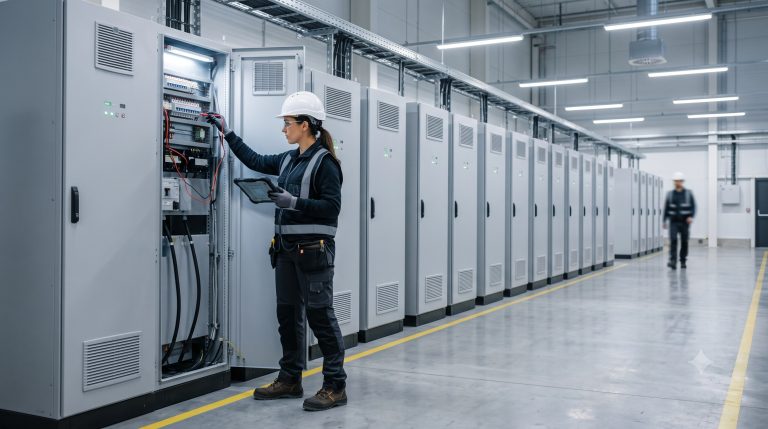
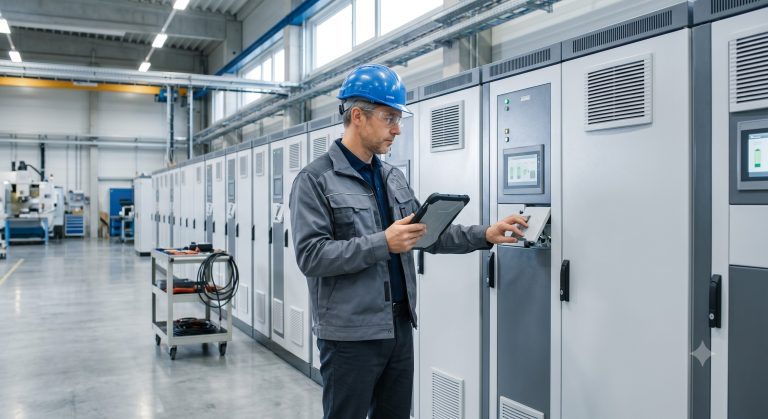
For B2B energy buyers and plant engineers, deploying a 480kW isolated air-cooled DC charging station requires precise technical and financial due diligence. This FAQ addresses pre-sales sizing, post-sales safety, and total cost of ownership (TCO) to help you secure Google Featured Snippets and make confident procurement decisions.
Frequently Asked Questions
- Q1: What is the standard cycle life and recommended depth of discharge (DoD) for a 480kW isolated air-cooled DC charging station?
- The standard cycle life is 8,000 cycles at 80% depth of discharge (DoD) when using Tier-1 LFP battery cells. This is achieved through passive air-cooling design that maintains cell temperature variance below ±2°C, preventing accelerated degradation. Operating at 90% DoD reduces cycle life to approximately 6,000 cycles.
- Q2: How does the isolated air-cooling system prevent thermal runaway in a 480kW DC charging station?
- The isolated air-cooling system prevents thermal runaway by routing cooling air through segregated channels that never contact high-voltage components, combined with three-layer protection: cell-level fuses, module-level gas detection, and cabinet-level fire suppression. If any cell exceeds 60°C, the BMS automatically reduces charge current by 50% and triggers an alert before critical temperatures (80°C+) are reached.
- Q3: What is the typical ROI payback period for a 480kW isolated air-cooled DC charging station in peak shaving and arbitrage applications?
- The typical payback period is 3 to 4.5 years for commercial installations performing daily peak shaving and energy arbitrage. Based on a 2-cycle-per-day strategy (charging at $0.06/kWh off-peak, discharging at $0.18/kWh peak), the station generates ~$43,800 annual net revenue per 1MWh capacity. Add demand charge reduction of $15/kW-month, and total annual savings reach $65,000-$85,000.
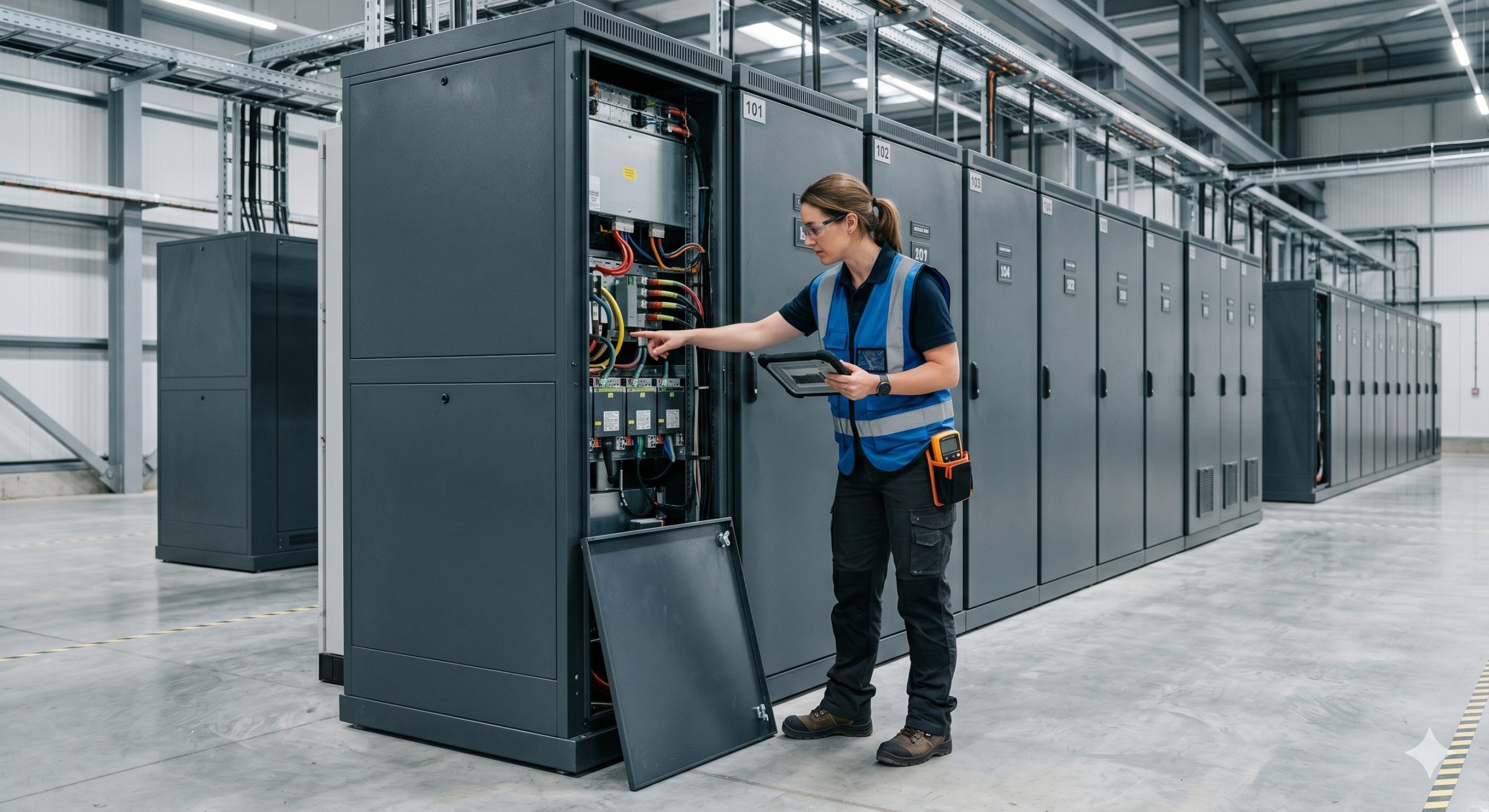
- Q4: Can I scale multiple 480kW isolated air-cooled DC charging units in parallel for higher capacity?
- Yes, you can parallel up to 16 units via a shared DC busbar without a central controller. Each unit communicates through CAN bus and automatically load-shares within 2% accuracy. For example, four 480kW units deliver 1.92MW continuous charging while maintaining individual air-cooling autonomy. Maximum scalable capacity is 7.68MW per site.
- Q5: What BMS monitoring parameters are accessible remotely for the 480kW isolated air-cooled DC charging station?
- The BMS provides real-time remote access to 18 critical parameters including per-cell voltage (±0.5% accuracy), module temperature gradient, insulation resistance (MΩ), contactor status, and cumulative Ah throughput. Data refreshes every 200ms and is available via Modbus TCP, REST API, or local SCADA integration. Alerts trigger on any cell voltage deviation >50mV or temperature rise >5°C/min.
- Q6: How do I configure the 480kW isolated air-cooled DC charging station for grid-tie vs. off-grid island mode?
- Configuration is set via the HMI under ‘System Mode’ – select ‘Grid-Tie’ for peak shaving and arbitrage (requires external CTs for grid import/export metering) or ‘Island’ for off-grid operation with diesel or solar backup. In off-grid mode, the station must have at least 20% state of charge (SoC) reserve and a black-start enabled generator. The switchover from grid to island takes 18-22ms, seamless for connected EV loads.
- Q7: What fire safety certifications and thermal runaway prevention mechanisms are integrated?
- The station holds UL 9540A (thermal runaway propagation test), IEC 62619, and CE certifications. Prevention mechanisms include: (1) individual cell voltage/temperature monitoring with shutdown at 75°C, (2) three independent gas sensors (CO, H2, VOC) that trigger aerosol suppression within 2 seconds, and (3) passive fire barriers between each module rated for 30 minutes at 800°C. No water sprinklers or external suppression required.
- Q8: How is the 10-year LCOE (Levelized Cost of Energy) guaranteed for the 480kW isolated air-cooled DC charging station?
- The guaranteed LCOE is $0.045–$0.055 per kWh delivered over 10 years, based on 8,000 cycles and 92% round-trip efficiency. This includes all replacement cooling fans (every 5 years), BMS firmware updates, and remote monitoring. Excluded are electricity input cost and grid connection fees. Performance warranty covers capacity retention above 70% at year 10; below that triggers pro-rata replacement or credit.