EXECUTIVE SUMMARY
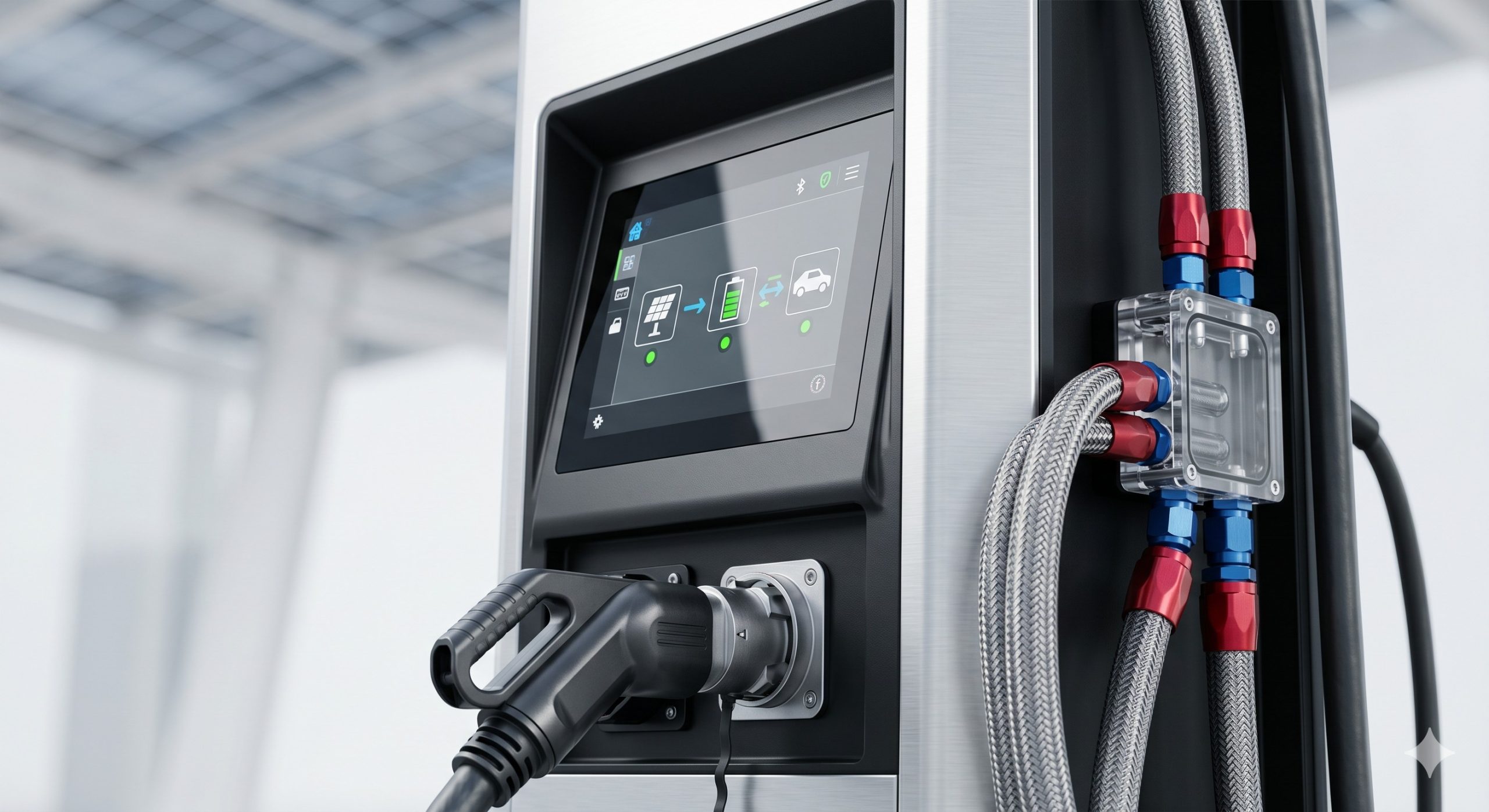
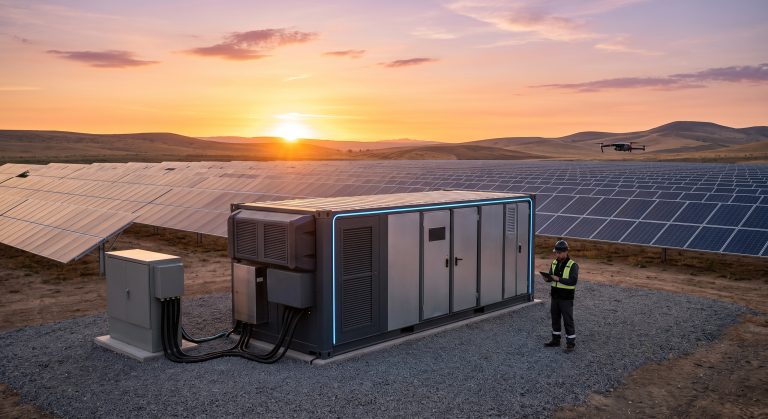
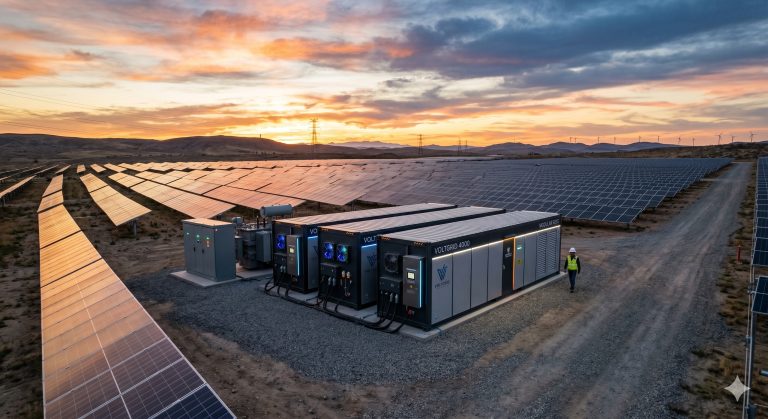
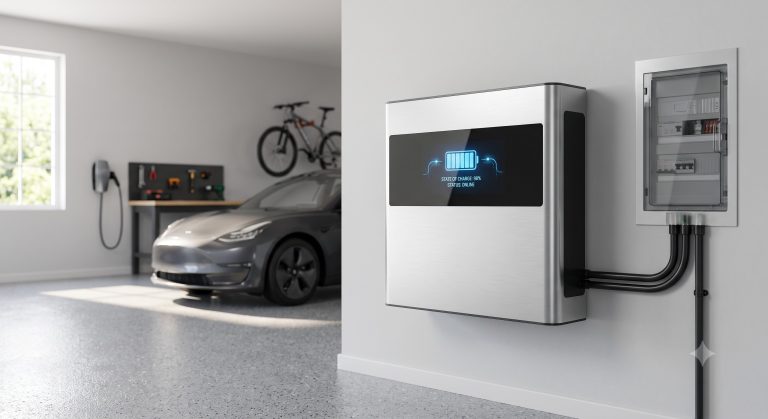
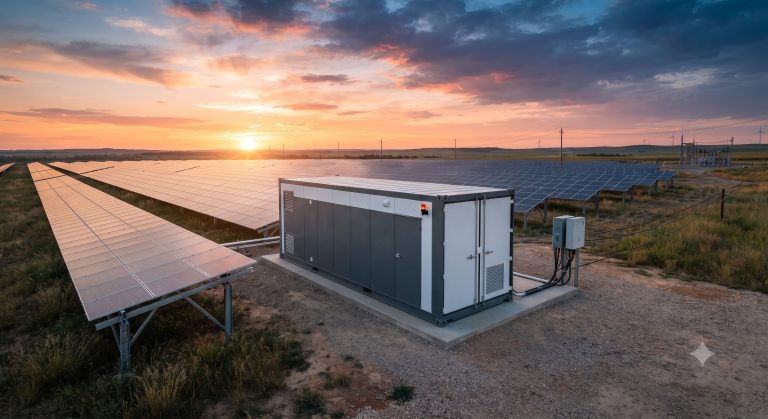
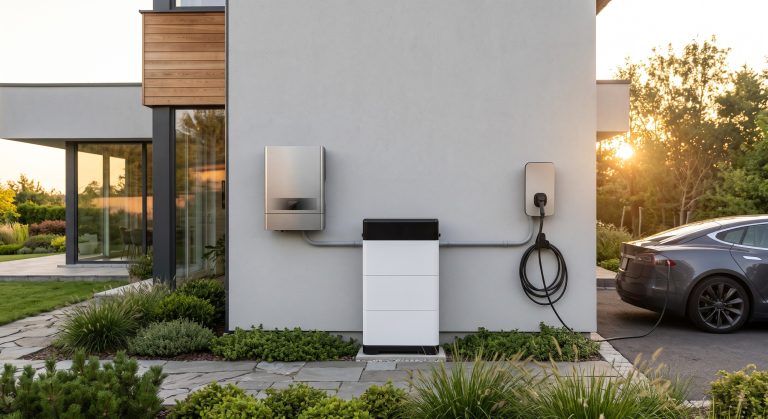
The PV-Storage-EV Charging Station is a next-generation, ultra-compact energy ecosystem designed for Commercial & Industrial (C&I) facilities, high-utilization EV supercharging hubs, and remote micro-grids. By integrating photovoltaic generation, battery energy storage, and electric vehicle fast charging into a unified DC-coupled architecture, this solution eliminates traditional conversion losses while enabling zero-carbon mobility and grid independence. The system fundamentally addresses the mismatch between peak solar generation and peak EV demand, transforming intermittent renewable energy into a dispatchable, high-reliability power source for both vehicles and facility loads.
Built for operators seeking to capitalize on time-of-use arbitrage, demand charge reduction, and resilient backup power, the station delivers a complete energy transition in a single footprint. Its primary value proposition centers on peak shaving (reducing grid demand by up to 45%), emergency black-start capability, and 100% renewable-powered EV charging. With predictive EMS (Energy Management System) that integrates weather forecasts and charging behavior analytics, the station achieves a system efficiency of 91% DC-to-DC (battery to vehicle), outperforming traditional AC-coupled solutions by 8-12%.
SYSTEM ARCHITECTURE & SAFETY
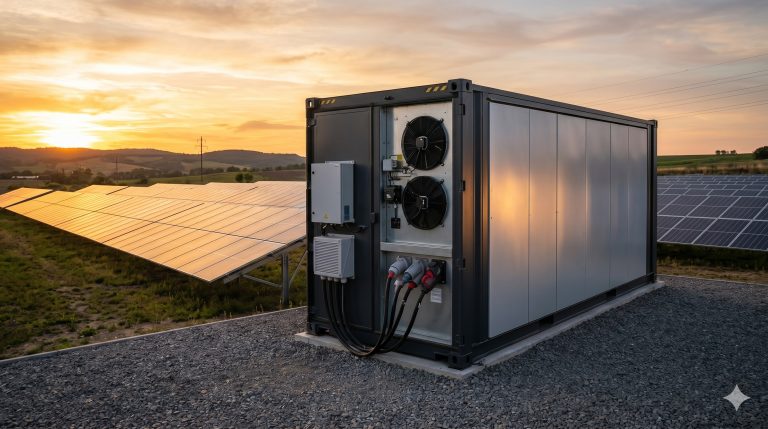
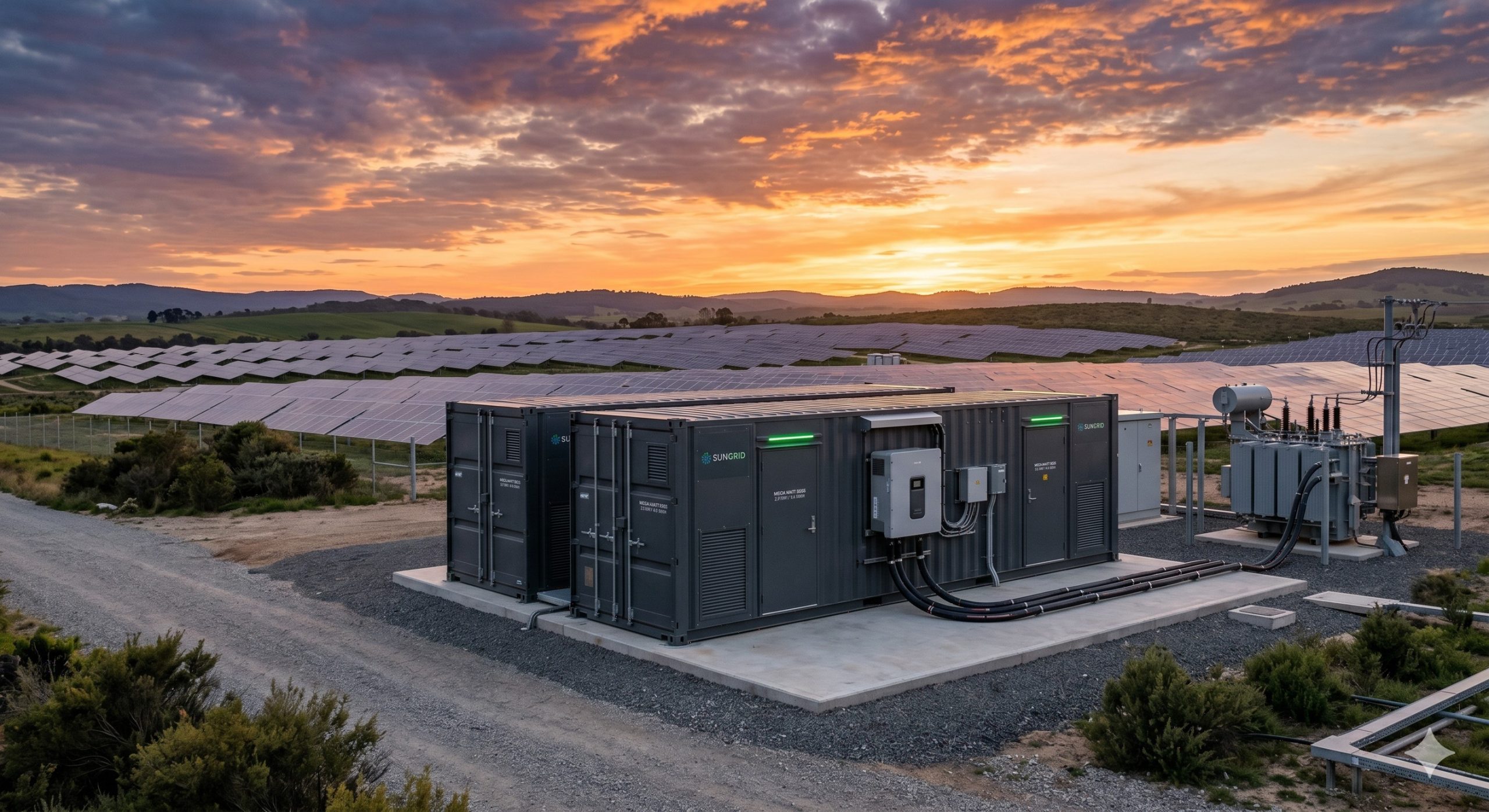
The hardware design employs a modular, Tier-1 prismatic LFP (Lithium Iron Phosphate) cell architecture with a cell-to-pack energy density of 170 Wh/kg and a design lifetime exceeding 8,000 cycles at 25°C. The battery cluster operates at a nominal DC voltage of 768V to 896V, directly compatible with 800V-class EV fast chargers and bi-directional inverters. A dual-stage liquid cooling and heating system (operating range -25°C to +55°C) maintains cell temperature uniformity within ±2°C, drastically reducing thermal runaway risk and ensuring calendar life of 15 years.
Safety is governed by a three-level active fire suppression system: (Level 1) aerosol-based cell-level mitigation within each module, (Level 2) FM-200 or Novec 1230 gas release upon gas detection, and (Level 3) external water deluge trigger via independent thermal camera and H2/CO sensor suite. Additionally, each PMIC (Power Module Integrated Controller) monitors insulation resistance, contactor welding, and arc faults in real time. The IP55-rated outdoor enclosure includes blast-resistant pressure relief vents and a sealed cable entry compartment, meeting NFPA 855 requirements for urban installations.
KEY FEATURES
– Seamless Grid Transition & Black Start: The built-in grid-forming inverter executes sub-20ms transition from on-grid to islanded mode upon utility loss. In black-start scenarios, the battery system independently energizes the local micro-grid, synchronizing PV inverters and EV chargers within 30 seconds, supporting 100% unbalanced load operation for critical C/I loads.
– EMS Smart Dispatch & AI Load Prediction: The on-board Energy Management System integrates deep learning models that forecast 24-hour solar generation (using local irradiance data), EV charging demand (based on historical session patterns), and facility load profiles. The system automatically optimizes between three modes: self-consumption (max PV usage), time-of-use arbitrage (grid charge during off-peak), and demand response (export to grid upon peak price signal).
– Modular Scalability & Parallel Redundancy: Each station supports up to 16 battery cabinets (1.5 MWh to 6 MWh) and 8 power conversion cabinets (150 kW to 1.2 MW total charge capacity) in a parallel, N+1 redundant configuration. Hot-swappable PCS modules allow non-disruptive maintenance. Expansion from 100 kW/250 kWh to 1 MW/2.5 MWh requires no redesign of LV/MV switchgear.
– Direct PV-Storage-Charging Integration: The unified DC bus architecture allows solar PV (up to 800 Vdc) to directly charge batteries and EVs without double AC-DC conversion, achieving a round-trip DC-to-DC efficiency of >94%. When EVs are connected, the system prioritizes direct PV-to-vehicle DC charging, bypassing the battery and eliminating conversion losses entirely.
– Grid Support & V2G Readiness: Bi-directional charging enables Vehicle-to-Grid (V2G) and Vehicle-to-Building (V2B) operation for compatible EVs. The station can aggregate multiple EV batteries as virtual storage, providing frequency regulation and peak shaving services to the utility at $100-$150/kW-year, generating additional revenue for the site owner.
COMPLIANCE & STANDARDS
The PV-Storage-EV Charging Station and all subsystems are fully certified to international safety, transport, and grid-interconnection standards. Battery system compliance: UL 1973 (energy storage), UL 9540A (thermal runaway fire propagation testing), IEC 62619 (industrial safety), IEC 60730 (automatic controls), UN38.3 (transportation). Grid and electrical compliance: UL 1741 SB (grid support, smart inverter), IEEE 1547 (interconnection), IEC 61000-6-2/-4 (EMC immunity and emissions). EV charging compliance: ISO 15118 (Plug & Charge and V2G communication), IEC 61851-23 (DC fast charging safety), CHAdeMO 3.0 and CCS Combo 2 (connector standards). Additionally, the complete system holds CE marking for European markets, UKCA for Great Britain, and CEC (Chinese) certification for bi-directional applications. Installation adheres to NFPA 855 (ESS fire code) and IBC 2021 seismic Zone 4 requirements.
TECHNICAL SPECIFICATIONS
The following table summarizes the core electrical and mechanical parameters for the standard configuration. Customized voltages, capacities, and grid interconnection standards (e.g., grid code compliance for Australia, Germany, California) are available upon request.
| Parameter | Specification |
|---|---|
| Nominal Battery Capacity | 250 kWh | 500 kWh | 1 MWh (expandable to 6 MWh) |
| Battery Chemistry & Cells | Prismatic LFP (Lithium Iron Phosphate), Tier-1 Grade A, 8,000 cycles @ 80% DoD |
| System Voltage (DC) | 768 Vdc nominal / 896 Vdc max (common DC bus) |
| PV Input Capacity | Up to 300 kWp per PCS, 800 Vdc max input, 2 MPPT channels |
| EV Charging Output | Up to 4 x 150 kW DC fast chargers (CCS2/CHAdeMO), 1 x 22 kW AC charger |
| Cooling Method | Dual-loop liquid cooling (water-glycol) plus refrigerant heat pump, operating range -25°C to +55°C |
| Round-trip Efficiency (DC-DC) | 94.2% (battery to EV, nominal) |
| Grid-tied Inverter (PCS) | 150 kW / 200 kVA, 480V/60Hz or 400V/50Hz, grid-forming capable |
| Island-mode Transfer Time | <20 ms seamless, <30 sec black start |
| Communication Protocols | Modbus TCP, IEC 61850, OCPP 2.0.1, CAN 2.0B |
| Fire Suppression | Level 1: Aerosol modules (per cell cluster) | Level 2: Novec 1230 gas | Level 3: External water deluge interface |
| Enclosure Rating | Outdoor IP55 (NEMA 3R), stainless steel 304, IK10 impact resistance |
| Dimensions (per cabinet) | 1,200 mm (W) x 1,800 mm (D) x 2,200 mm (H) – Battery cabinet; 800 mm x 800 mm x 2,000 mm – PCS cabinet |
| Weight (per cabinet) | 2,200 kg (battery cabinet, fully populated); 450 kg (PCS cabinet) |
| Certifications | UL 1973, UL 9540, UL 9540A, IEC 62619, UN38.3, UL 1741 SB, IEEE 1547, CE, ISO 15118 |