Overview
As a B2B Energy Storage System (BESS) technical support team, one of the most common engineering questions we receive is about sleep mode power consumption of the battery management system (BMS). The answer directly impacts round-trip efficiency, standby losses and long-term return on investment for commercial and industrial installations. This FAQ covers pre-sales and post-sales topics including battery chemistry, cycle life, liquid cooling, scalability, ROI, BMS monitoring, grid-tie configuration and thermal runaway prevention.
Frequently Asked Questions
- Q1: What is the sleep mode power consumption of your battery management system?
- The sleep mode power consumption of our BMS is typically 5 to 15 watts per cabinet, depending on the monitoring features enabled. This low standby draw is achieved through a dedicated low-power MCU and periodic cell voltage sampling. For a 1 MWh system, this represents less than 0.02% of nominal capacity per day, minimizing parasitic losses during idle periods.
- Q2: Which battery chemistry do you use and what cycle life can I expect?
- We use Tier-1 LFP (lithium iron phosphate) cells with a standard cycle life of 6,000 to 8,000 cycles at 80% depth of discharge (DoD). This chemistry offers superior thermal stability and a longer calendar life than NMC. With proper liquid cooling and BMS balancing, capacity retention remains above 80% after 10 years of daily cycling.
- Q3: How does the liquid cooling system manage thermal runaway prevention?
- The liquid cooling system maintains cell temperature within a 3°C delta across the module, preventing hotspot formation that can lead to thermal runaway. It integrates with multi-tier fire safety mechanisms including early gas and smoke detection, per-module isolation and optional aerosol or water-based suppression. The BMS triggers an emergency shutdown and coolant flow boost if cell temperature exceeds safe thresholds.
- Q4: Can the system scale from a single cabinet to multi-MWh installations?
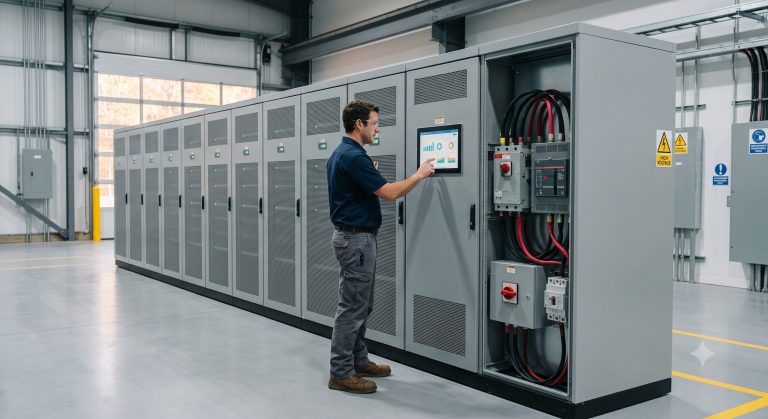
- Yes, the system scales modularly from 100 kWh to over 100 MWh using parallel cabinet connectivity and custom DC busbar linkage. Each cabinet operates independently with its own BMS, and the central EMS aggregates data for coordinated dispatch. This design allows incremental capacity upgrades without replacing existing infrastructure.
- Q5: How do you calculate ROI for peak shaving and arbitrage applications?
- ROI is calculated by comparing peak demand reduction savings plus time-of-use arbitrage revenue against installed cost and O&M expenses over a 10-year horizon. A typical C&I project in a high tariff region achieves payback in 4 to 6 years. Our team provides a free LCOE and cash flow model based on your load profile and local electricity rates.
- Q6: What BMS monitoring and calibration protocols are supported post-sales?
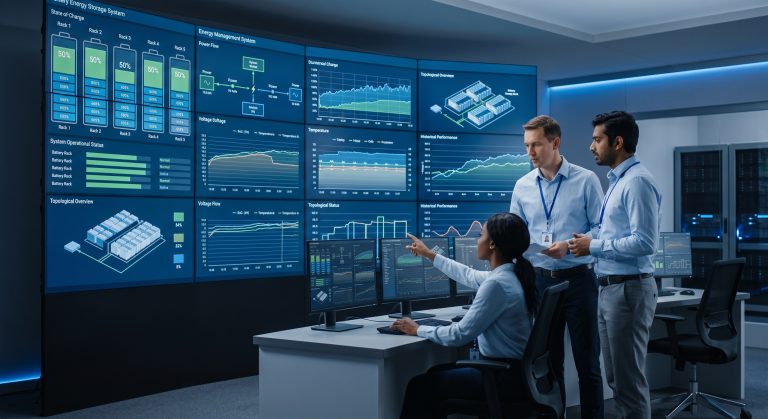
- The BMS supports active cell balancing, state-of-charge (SOC) calibration, state-of-health (SOH) reporting and remote firmware updates via the EMS platform. Calibration is automatic every 30 days or can be triggered manually. All data is accessible through Modbus TCP, SNMP or a secure cloud API for integration with SCADA systems.
- Q7: How does the system handle grid-tie versus off-grid configuration?
- The bi-directional PCS supports seamless grid-tie and off-grid switching with a transfer time of less than 20 milliseconds. In grid-tie mode it performs peak shaving, demand response and frequency regulation. In off-grid mode it forms a stable micro-grid, managing generator support and renewable input for continuous power.
- Q8: What safety and interconnection standards does the BESS comply with?
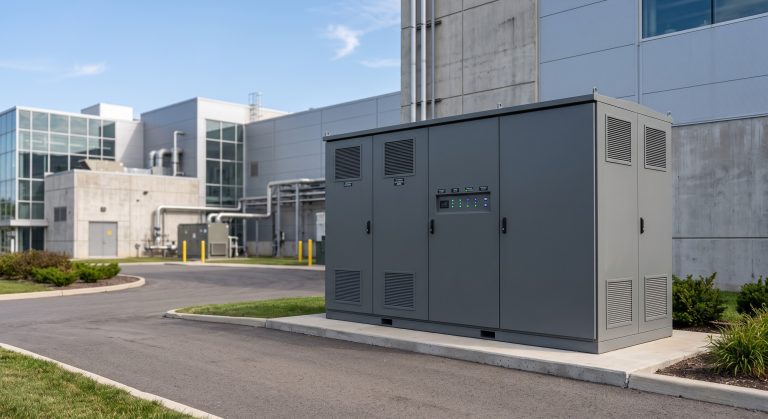
- The system complies with UL 9540, IEC 62619, CE and UN 38.3 for safe transport and installation. Enclosures are rated IP65 or higher for harsh outdoor environments, with anti-corrosion treatment for coastal or industrial sites. Fire suppression and gas detection are factory-integrated and tested to NFPA 855 guidelines.