LOW-VOLTAGE HOME BESS SPECIFICATION GUIDE
OFFICIAL COMMERCIAL TECHNICAL OVERVIEW & DATASHEET
Document ID: LV-HBESS-2026-07-EN | Version: 2.1 | Classification: Public
EXECUTIVE SUMMARY
This document serves as the definitive technical overview and specification guide for the Low-voltage Home Battery Energy Storage System (LV-HBESS) platform. Engineered for seamless integration with residential photovoltaic (PV) arrays and grid-tied inverters, this next-generation system delivers reliable, silent, and efficient energy storage for households demanding energy independence and optimized self-consumption. The LV-HBESS platform leverages Tier-1 Lithium Iron Phosphate (LFP) cell technology, a modular low-voltage architecture, and a sophisticated Battery Management System (BMS) to ensure the highest standards of safety, longevity, and performance. This datasheet provides all necessary technical parameters, compliance certifications, and system architectural details required for procurement, installation, and commissioning by certified installers and system integrators.
SYSTEM ARCHITECTURE & SAFETY
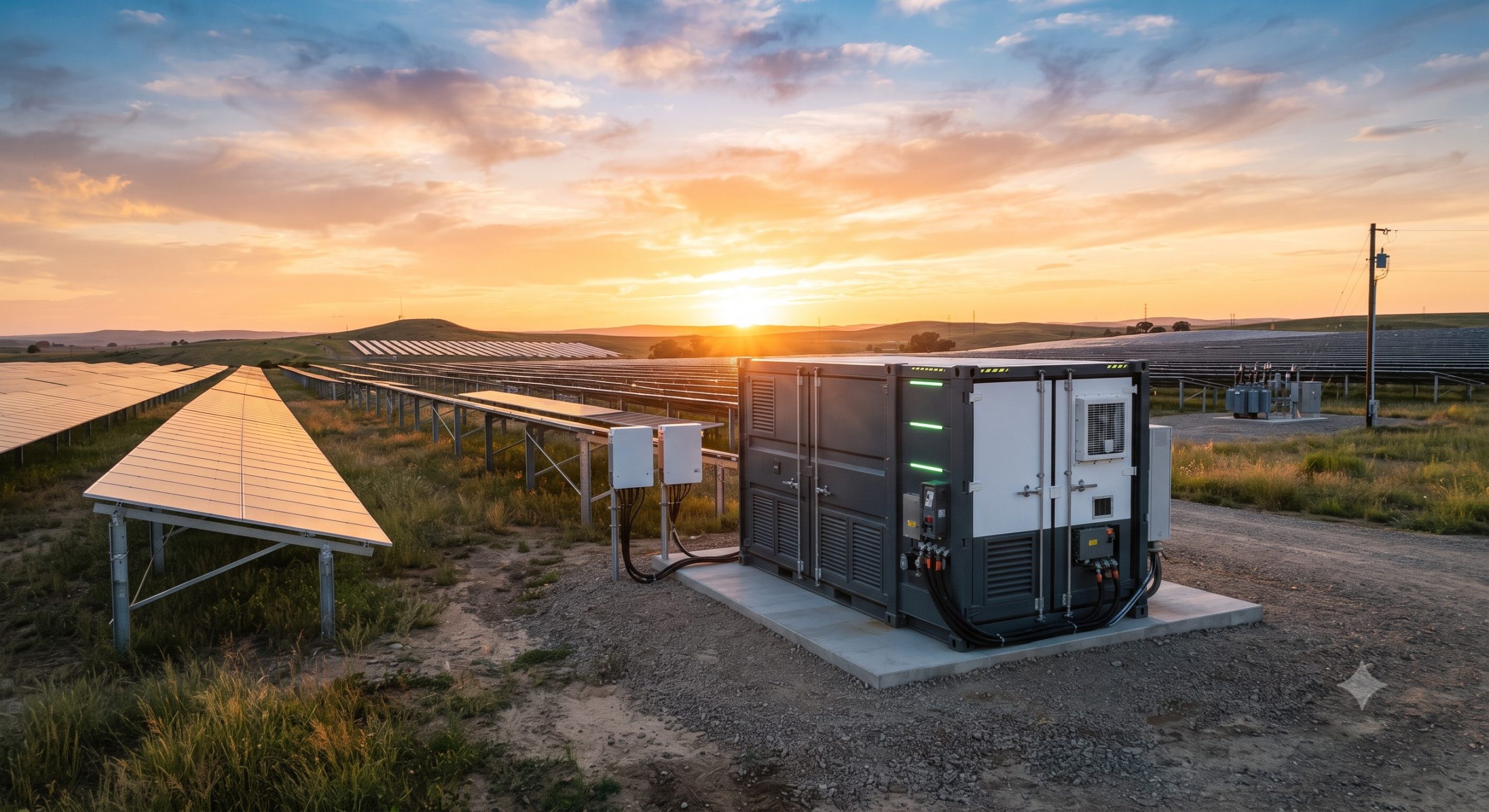
The LV-HBESS is predicated on a modular, scalable design philosophy, allowing for flexible capacity configurations to meet diverse household energy profiles. The core architecture revolves around a high-voltage DC bus, managed by an integrated, multi-layer Battery Management System (BMS).
Key architectural components include:
– Battery Modules: High-density modules composed of prismatic LFP cells, configured for optimal thermal distribution and electrical performance.
– High-Voltage Battery Control Unit (HVBCU): The central control hub that monitors pack-level voltage, current, and temperature, ensuring safe and efficient operation.
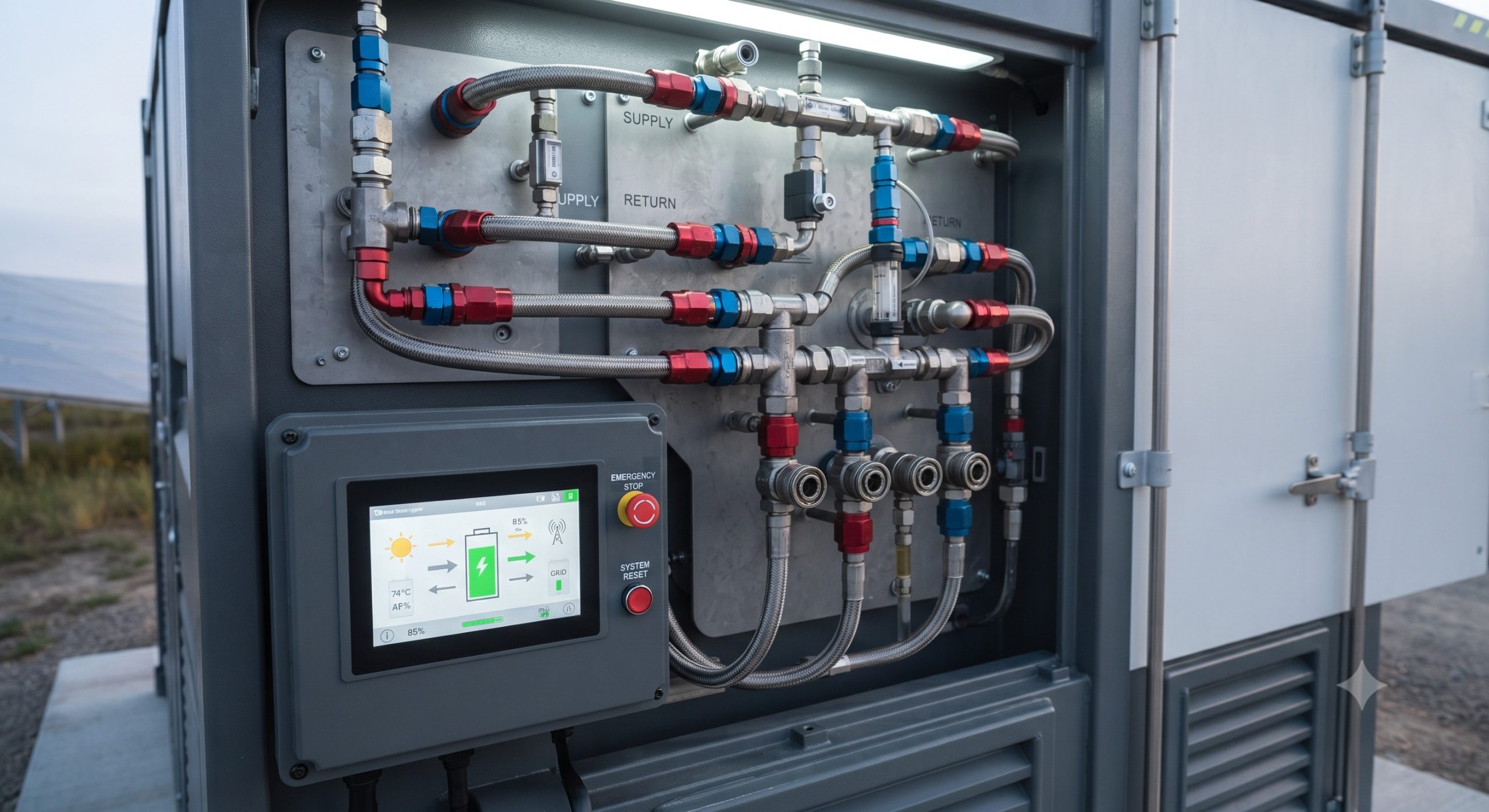
– Integrated Fire Suppression System: A passive, aerosol-based fire suppression system (compliant with NFPA 855 and UL 9540A) that provides localized protection without the need for external water or gas piping.
– Automatic Disconnect Switches: Redundant, high-speed DC contactors that isolate the battery from the inverter and loads upon detection of any fault condition, ensuring personnel and equipment safety.
– Communication Interface: A robust communication gateway supporting standard protocols (Modbus TCP/RTU, CAN bus) for seamless integration with the hybrid inverter and home energy management system (HEMS).
SAFETY & COMPLIANCE INTEGRITY
Safety is the cornerstone of the LV-HBESS design. The system undergoes rigorous testing and validation to meet and exceed international safety standards, including IEC 62619, UL 9540, and UN 38.3 for transportation. The LFP chemistry is inherently safe, possessing a high thermal runaway threshold and zero risk of cobalt-related thermal events.
KEY FEATURES
– Feature 1: Tier-1 LFP Cell Chemistry – Ensures exceptional thermal stability and a cycle life exceeding 6,000 cycles at 90% DoD, delivering a 15-year lifespan and a robust 10-year standard warranty.
– Feature 2: Modular Low-Voltage Architecture – Allows for simple and rapid capacity expansion from 5 kWh to 30+ kWh in a single cabinet, matching user-specific energy consumption patterns. This design provides seamless scalability.
– Feature 3: Smart Active Balancing – An integrated active balancer within the BMS continuously equalizes cell voltages, optimizing pack capacity utilization and extending the overall system lifetime.
– Feature 4: Seamless Backup Power (UPS) – Provides instant (sub-20ms) automatic switchover to backup power during grid outages, ensuring critical household loads remain operational.
– Feature 5: Intelligent Thermal Management – Utilizes a passive air cooling system with forced-air assistance, guided by an intelligent thermal sensor array to maintain optimal operating temperatures, regardless of ambient conditions. This maximizes safety and efficiency.
– Feature 6: PV-Storage-Charging Integration – Native compatibility with most major hybrid inverters allows for straightforward system design for PV self-consumption, time-of-use (ToU) arbitrage, and emergency backup.
TECHNICAL SPECIFICATIONS
The following section provides a detailed breakdown of the electrical, mechanical, and environmental specifications for the LV-HBESS. All data is based on standard test conditions (25°C ambient temperature, 100% DoD).
Nominal Energy: 5.12 kWh (per module) / 10.24 kWh (dual-stack base) / Configurable up to 30.72 kWh (six modules)
Usable Energy (90% DoD): 4.61 kWh (per module) / 9.22 kWh / 27.65 kWh
Nominal Voltage: 51.2 V DC
Operating Voltage Range: 40 V DC – 57.6 V DC
Nominal Capacity: 100 Ah (per module)
Peak Power (Charge/Discharge): 6 kW / 10 kW (for 10s)
Continuous Power (Charge/Discharge): 5 kW / 5 kW
Round-trip Efficiency (DC-DC): ≥ 96% @ 25°C
Cell Chemistry: Lithium Iron Phosphate (LFP) – Prismatic
Cycle Life: ≥ 6,000 cycles @ 90% DoD, 25°C, 0.5C rate, EOL 80% capacity
Depth of Discharge (DoD): 90% (Recommended) / 100% (Emergency)
Communication Protocol: CAN bus (default), RS485 (Modbus RTU) – Optional
Enclosure Rating: IP 65 (Indoor/Outdoor rated)
Cooling Method: Passive with forced-air management (Intelligent temperature control)
Operating Temperature Range: -20°C to +50°C (Charge) / -30°C to +55°C (Discharge)
Storage Temperature Range: -20°C to +45°C (Recommended)
Relative Humidity: 5% – 95% (non-condensing)
Max. Altitude: < 2,000 m (above sea level)
Acoustic Noise (at 1m): < 40 dB(A) @ Normal Operation
Weight (per module): 48.5 kg (approx.)
Dimensions (per module) (W x D x H): 450 mm x 350 mm x 180 mm
Dimensions (cabinet, base) (W x D x H): 600 mm x 400 mm x 1,150 mm (with electronics and mounting plate)
| Parameter | Specification |
|---|---|
| Nominal Capacity (Per Module) | 5.12 kWh |
| Usable Energy (90% DoD) | 4.61 kWh |
| Nominal Voltage | 51.2 V DC |
| Operating Voltage Range | 40 V DC – 57.6 V DC |
| Continuous Power (Charge/Discharge) | 5 kW / 5 kW |
| Peak Power (Charge/Discharge) | 6 kW / 10 kW (10s) |
| Round-trip Efficiency (DC-DC) | ≥ 96% |
| Cycle Life (to 80% EOL) | ≥ 6,000 cycles @ 90% DoD |
| Cell Chemistry | Tier-1 LFP (Prismatic) |
| Cooling Method | Passive + Forced-air management |
| Enclosure Rating | IP65 (Indoor/Outdoor) |
| Operating Temperature Range | -20°C to +50°C (Charge) / -30°C to +55°C (Discharge) |
| Communication Protocol | CAN bus (default) / RS485 (Modbus RTU) |
| Warranty | 10 Years (Standard) / 15 Years (Extended) |
INDUSTRIAL DEPLOYMENT & INSTALLATION GUIDELINES
Proper installation is crucial for ensuring optimal performance, longevity, and safety. The LV-HBESS is designed for flexibility and can be deployed in both indoor (garage, utility room) and outdoor (shaded wall mount) environments.
Key Installation Prerequisites:
– Mounting: The system must be wall-mounted on a fire-resistant, non-combustible surface capable of supporting the total unit weight (up to 300 kg for a six-module system).
– Clearance: A minimum clearance of 300 mm must be maintained around all sides of the unit for airflow and maintenance access.
– Ambient Environment: The installation site must be dry, well-ventilated, and protected from direct sunlight and extreme temperature fluctuations.
– Electrical Requirements: The system must be connected to a dedicated, appropriately rated AC breaker within the main distribution panel, with a minimum rating of 32A. The inverter must be certified for use with the LV-HBESS.
– Communication Wiring: A shielded twisted-pair cable (CAT5e or higher) is required for the communication link between the BMS and the inverter/HEMS.
📥 Download Technical Specification
Click the button below to view or download the full official PDF datasheet.