Overview
After a commercial or industrial BESS is delivered, local technical teams require structured, hands-on training to ensure safe commissioning, optimal dispatch, and long-term reliability. The following FAQ addresses the most common pre-sales and post-sales questions plant engineers ask about BESS training, from Tier-1 LFP cell behavior and liquid cooling maintenance to BMS calibration, grid-tie switching, and thermal runaway prevention.
Frequently Asked Questions
- Q1: What kind of training is provided to local technical teams after delivery?
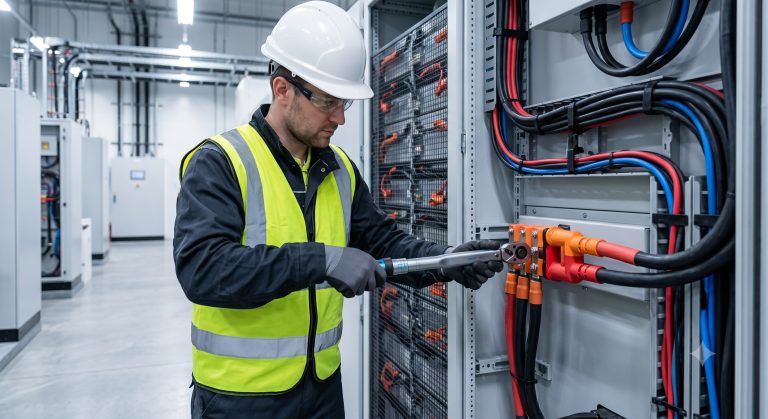
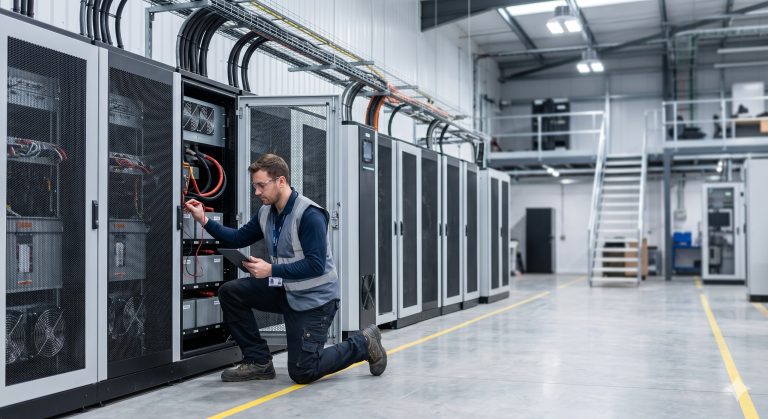
- Standard post-delivery training combines 2-3 days of on-site commissioning instruction, hands-on BMS/EMS operation workshops, and a 12-month remote engineering support retainer. The program covers battery chemistry behavior, liquid cooling circuit maintenance, grid-tie and off-grid switching drills, and emergency thermal runaway response. Local teams also receive digital O&M manuals, torque and torque-check logs, and access to a 24/7 technical hotline.
- Q2: Which battery chemistry is used in your BESS, and how does it affect training?
- The systems use Tier-1 LFP (lithium iron phosphate) chemistry, which offers superior thermal stability and a longer cycle life than NMC. Training focuses on LFP-specific voltage windows, safe charging cut-offs, and cell balancing routines, because LFP flat-curve behavior requires precise BMS calibration to avoid over-discharge. Engineers learn how to interpret degradation curves and schedule capacity tests at 6-month intervals.
- Q3: What is the cycle life and depth of discharge (DoD) of the BESS?
- The BESS delivers 6,000-8,000 cycles at 80% DoD with a 10-year performance warranty. Training explains how temperature, C-rate, and average state of charge influence real-world cycle life. Local teams are taught to log daily DoD, keep operating temperatures between 15-35°C, and use the EMS to avoid sustained 100% DoD cycling that accelerates LFP degradation.
- Q4: How is the liquid cooling system maintained, and what training is provided?
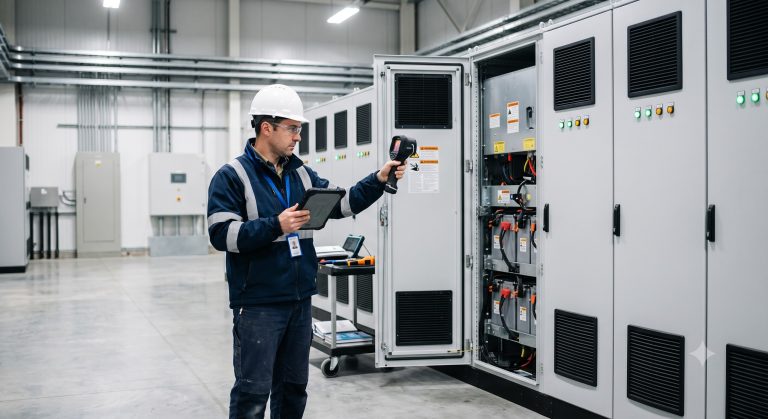
- Liquid cooling maintenance training covers coolant level checks, glycol concentration testing, pump and fan inspection, and leak detection every 6 months. Engineers learn to read differential pressure alarms, clean heat exchanger fins, and verify that cell temperature spread stays below 3°C. The training also includes winterization steps and safe coolant replacement procedures to prevent freezing or corrosion in outdoor enclosures.
- Q5: Can the BESS be scaled after delivery, and what training supports expansion?
- Yes, the modular architecture allows parallel cabinet expansion from 100 kWh to multi-MWh capacity. Training includes DC busbar linkage procedures, cabinet addressing, and EMS reconfiguration for added strings. Local teams practice hot-swap isolation, rebalancing the new cluster, and updating the site single-line diagram. Scalability training also covers inverter/PCS matching and protection coordination after each expansion.
- Q6: How do engineers calculate ROI and peak shaving savings after training?
- Training includes a spreadsheet-based ROI model that uses local demand charges, time-of-use tariffs, and round-trip efficiency (typically 88-92%) to estimate payback. Engineers learn to pull interval meter data, simulate peak shaving dispatch, and quantify LCOE over a 10-year horizon. The session also covers demand response revenue stacking and how to validate savings against the EMS dispatch logs.
- Q7: What BMS monitoring and grid-tie vs off-grid training is provided?
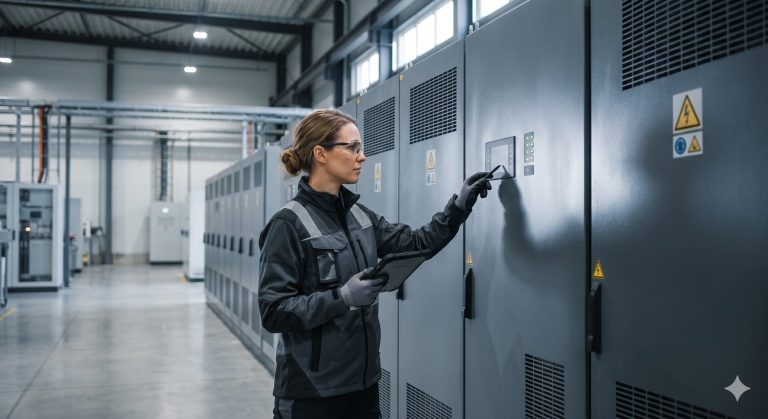
- BMS training covers real-time cell voltage, temperature, SOC/SOH dashboards, alarm thresholds, and inter-cell balancing protocols. For grid-tie, engineers learn synchronization checks, anti-islanding settings, and seamless transfer to off-grid mode within 20 ms. Off-grid drills include black-start sequencing, load prioritization, and generator-assisted recharge, with practical switching exercises on the actual equipment.
- Q8: How is fire safety and thermal runaway prevention taught to local teams?
- Fire safety training covers multi-tier protection: cell-level venting, pack-level gas and smoke detection, aerosol or clean-agent suppression, and cabinet-level isolation. Engineers learn to interpret early warning signals, trigger emergency shutdown, and follow evacuation and incident reporting protocols. Drills include simulated thermal runaway scenarios, suppression system checks, and coordination with local fire departments.