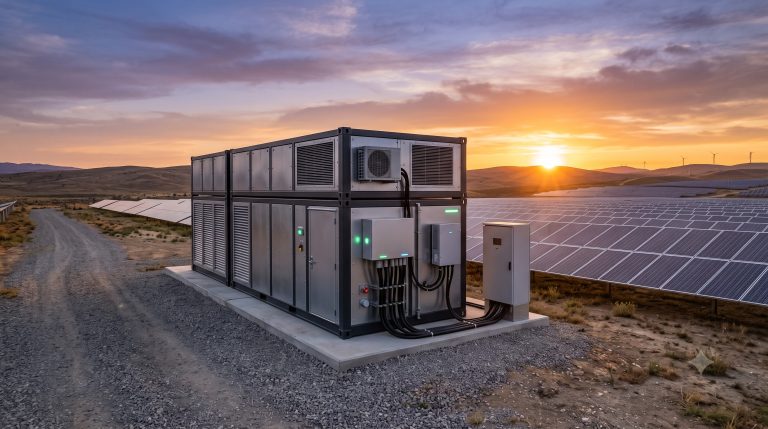
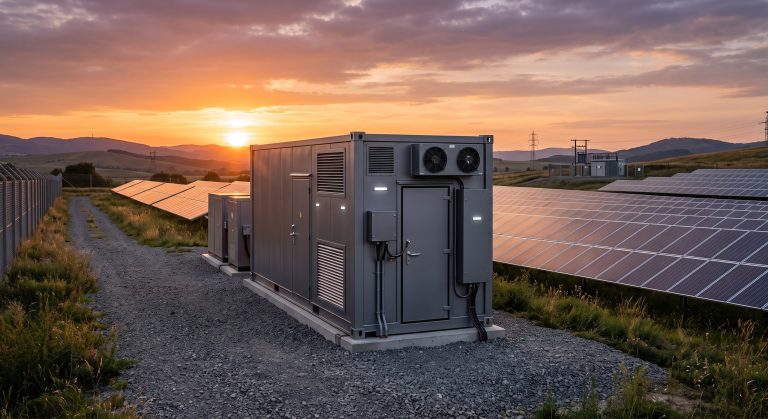
PRODUCT IDENTIFICATION
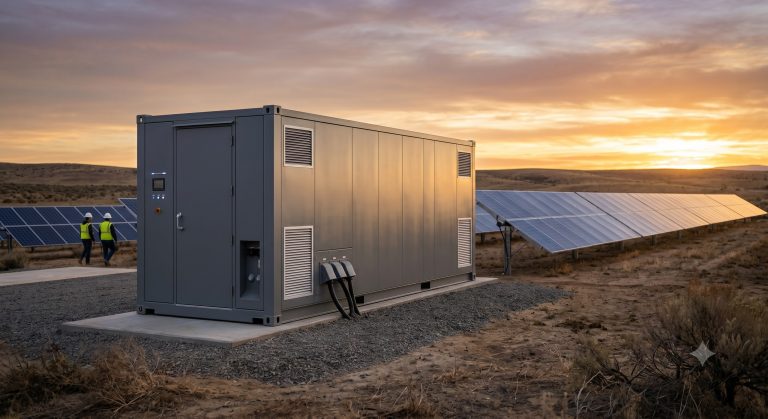
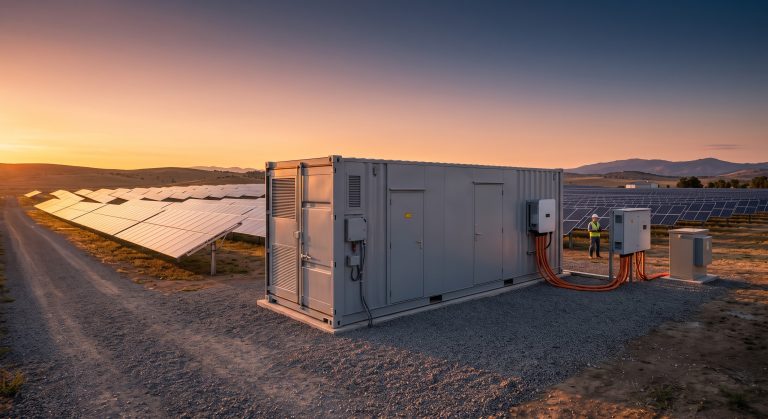
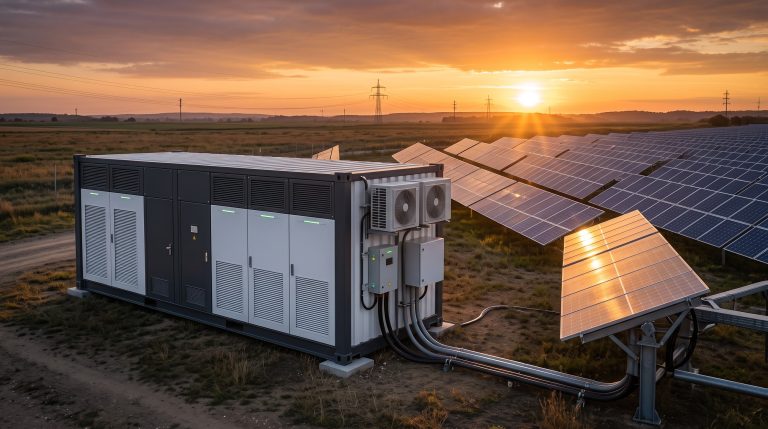
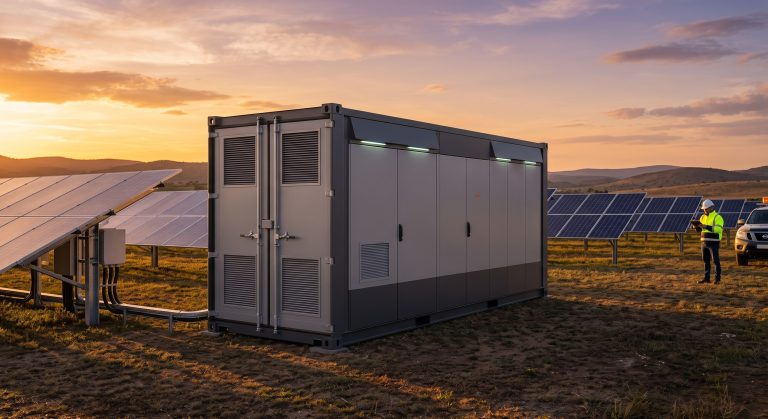
The C&I Energy Storage Platform is a modular, liquid-cooled Battery Energy Storage System (BESS) engineered for commercial and industrial applications. This reference manual provides a comprehensive technical overview of the platform’s architecture, performance characteristics, and integration capabilities. The system is designed to deliver reliable peak shaving, demand charge management, backup power, and renewable energy integration for facilities ranging from manufacturing plants to data centers.
The platform is built around Tier-1 LFP (Lithium Iron Phosphate) battery cells, housed in a robust outdoor-rated enclosure. It integrates a bi-directional Power Conversion System (PCS), advanced Battery Management System (BMS), and intelligent Energy Management System (EMS) into a single, factory-assembled unit. This turnkey design minimizes on-site installation time and ensures consistent quality and performance.
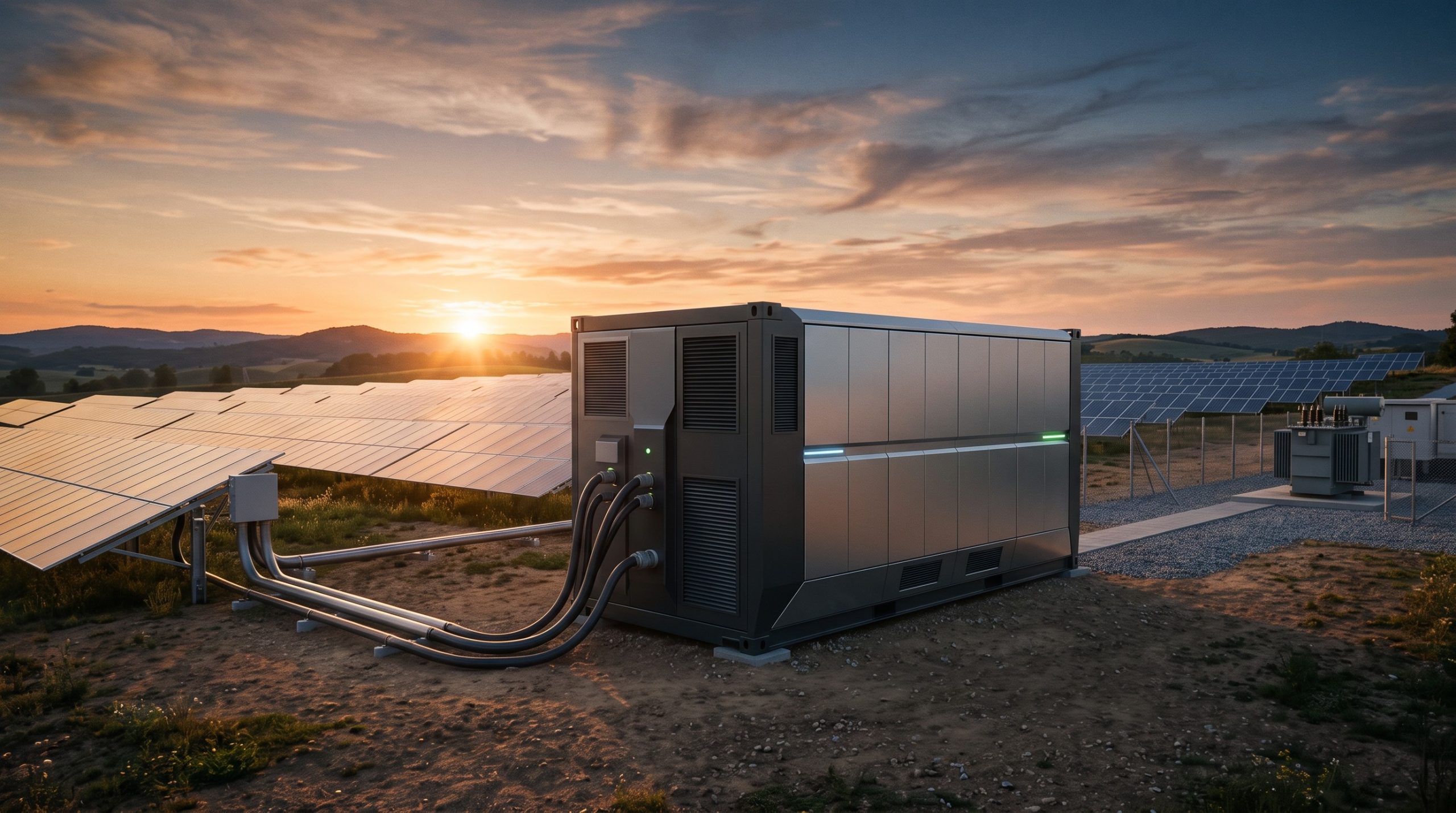
INTERNAL BESS TOPOLOGY
The internal topology of the C&I Energy Storage Platform is engineered for maximum efficiency, safety, and scalability. The system comprises several key subsystems:
BATTERY MODULES: High-density LFP battery modules are arranged in series and parallel configurations to achieve the desired voltage and capacity. Each module contains multiple prismatic cells with integrated voltage and temperature sensing.
BATTERY MANAGEMENT SYSTEM (BMS): A three-tier BMS architecture (cell, module, rack) provides real-time monitoring and active balancing. The BMS ensures safe operating limits, prevents overcharge/overdischarge, and reports state of charge (SOC) and state of health (SOH) with high accuracy.
POWER CONVERSION SYSTEM (PCS): A high-efficiency, bi-directional PCS converts DC power from the battery to AC power for grid or load supply, and vice versa. The PCS supports multiple operating modes, including grid-tied, islanded, and reactive power compensation.
THERMAL MANAGEMENT SYSTEM: A dedicated liquid cooling circuit maintains optimal battery temperature, ensuring uniform cell temperature and extending system lifespan. The system includes coolant pumps, heat exchangers, and redundant temperature sensors.
FIRE SUPPRESSION SYSTEM: An integrated aerosol or Novec 1230 fire suppression system is triggered by multi-stage smoke, heat, and gas detection. The system is designed to suppress thermal runaway events and prevent propagation.
ENERGY MANAGEMENT SYSTEM (EMS): The EMS acts as the central control interface, enabling remote monitoring, scheduling, and optimization. It supports Modbus TCP/IP, IEC 61850, and other communication protocols for seamless integration with SCADA and building management systems.
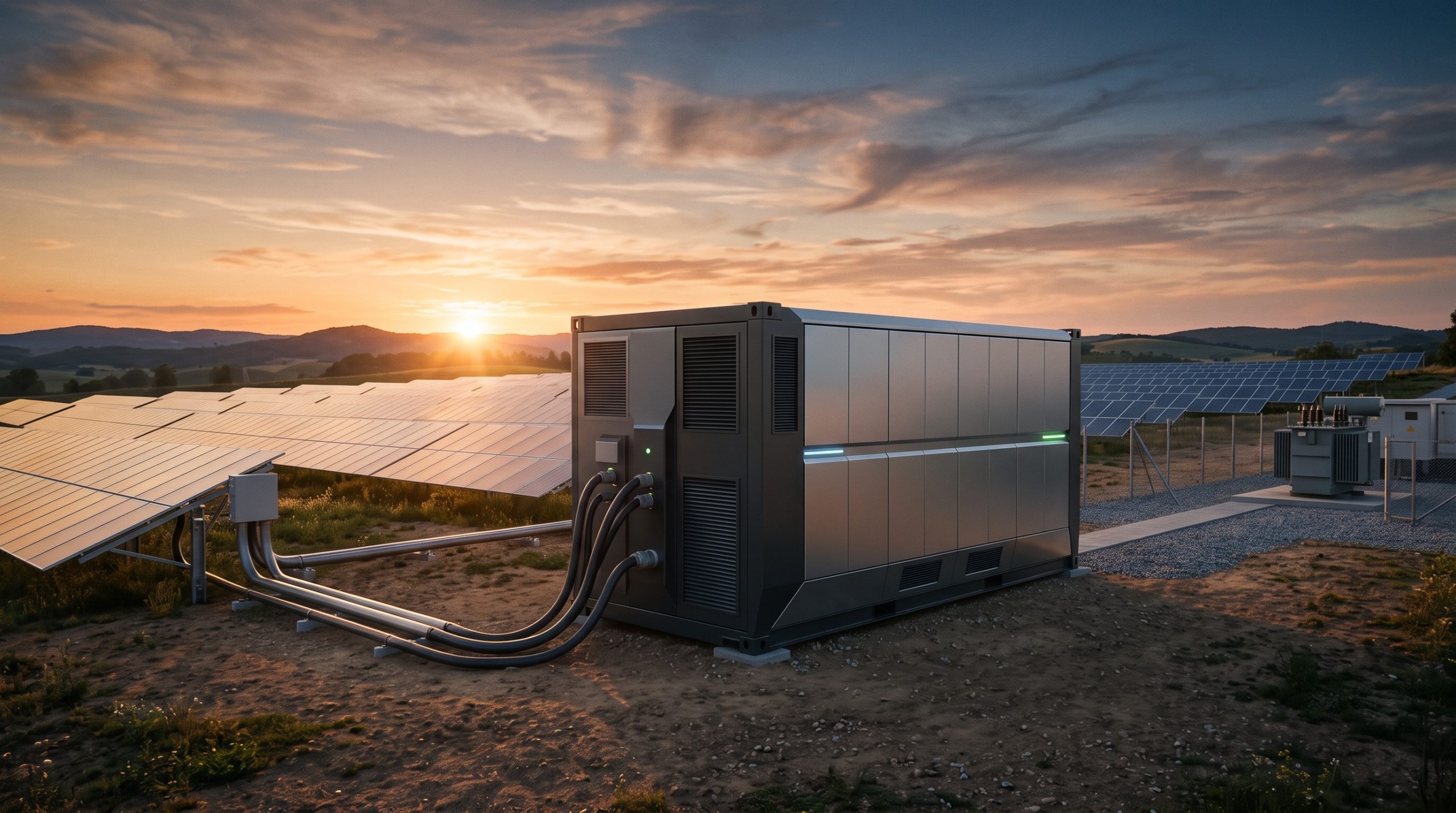
THERMAL PROTECTION MECHANISMS
The C&I Energy Storage Platform employs a multi-layered thermal protection strategy to ensure safe and reliable operation under all conditions.
LIQUID COOLING: The primary thermal management is achieved through a closed-loop liquid cooling system. A glycol-water mixture is circulated through cold plates attached to battery modules. The coolant absorbs heat and is pumped to an external heat exchanger, where heat is dissipated to the ambient air. This method provides superior temperature uniformity compared to air cooling, reducing cell degradation and improving overall system efficiency.
TEMPERATURE MONITORING: Each battery module is equipped with multiple temperature sensors. The BMS continuously monitors temperature gradients and adjusts cooling output or charge/discharge rates to prevent overheating.
THERMAL RUNAWAY SUPPRESSION: In the unlikely event of a cell thermal runaway, the fire suppression system activates. Additionally, the enclosure is designed with venting panels to safely release pressure and prevent explosion. The system complies with UL 9540A and NFPA 855 standards for fire safety.
OPERATIONAL ADVANTAGES
The C&I Energy Storage Platform offers a range of operational advantages that make it an ideal choice for commercial and industrial facilities.
PEAK SHAVING: By discharging during peak demand periods, the system reduces facility demand charges, lowering monthly electricity bills. The EMS can automatically predict and respond to peak loads.
DEMAND RESPONSE: The platform can participate in demand response programs, providing grid services and generating additional revenue.
BACKUP POWER: In the event of a grid outage, the system can seamlessly transition to island mode, providing backup power to critical loads.
RENEWABLE INTEGRATION: The system can store excess solar or wind generation, maximizing self-consumption and reducing carbon footprint.
SCALABILITY: The modular design allows for parallel expansion, enabling capacity growth from 215 kWh to multiple MWh.
SPECIFICATION MATRIX
The following table summarizes the key technical specifications of the C&I Energy Storage Platform. For detailed parameters, refer to the official datasheet.
| Parameter | Specification |
|---|---|
| Nominal Capacity | 215 kWh / 372 kWh per cabinet |
| Cooling Method | Smart Liquid Cooling |
| Cell Chemistry | Tier-1 LFP |
| DC Voltage Range | 600 V – 1500 V |
| AC Output Voltage | 400 V / 480 V (3-phase) |
| Max Efficiency | ≥ 95% |
| Cycle Life | ≥ 6000 cycles @ 80% DoD |
| Operating Temperature | -20°C to +55°C |
| Protection Rating | IP54 / IP55 |
| Communication | Modbus TCP/IP, IEC 61850 |
| Certifications | UL 9540, IEC 62619, CE |
REGULATORY COMPLIANCE
The C&I Energy Storage Platform is designed and certified to meet the most stringent international standards for safety, performance, and grid interconnection.
SAFETY CERTIFICATIONS:
– UL 9540: Energy Storage Systems and Equipment
– UL 9540A: Test Method for Evaluating Thermal Runaway Fire Propagation
– IEC 62619: Secondary Cells and Batteries for Industrial Applications
– IEC 62477-1: Safety Requirements for Power Electronic Converter Systems
– NFPA 855: Standard for the Installation of Stationary Energy Storage Systems
GRID INTERCONNECTION:
– IEEE 1547: Standard for Interconnection and Interoperability of Distributed Energy Resources
– UL 1741 SA: Inverters, Converters, Controllers for Use With Distributed Energy Resources
– IEC 61727: Photovoltaic Systems – Characteristics of the Utility Interface
ENVIRONMENTAL:
– RoHS Compliant
– REACH Compliant
📥 Download Technical Specification
Click the button below to view or download the full official PDF datasheet.