Introduction: The Industrial Energy Crisis and the Microgrid Imperative
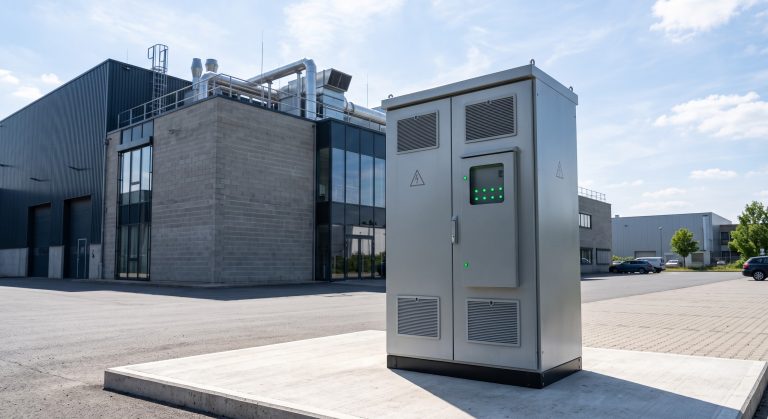
Industrial facilities across North America, Europe, and Asia-Pacific are facing a compounding energy trilemma: volatile electricity tariffs, increasing grid instability, and aggressive decarbonization mandates. For plant managers, EHS directors, and procurement heads, the Industrial Microgrid Battery has transitioned from a niche resilience asset to a core infrastructure investment. Unlike traditional diesel backup, a modern Battery Energy Storage System (BESS) integrated into an industrial microgrid delivers continuous peak shaving, demand response, and power quality conditioning with zero emissions and minimal maintenance.
This B2B sourcing guide dissects the engineering architecture, commercial LCOE models, and grid-support capabilities of industrial microgrid batteries. We will analyze Tier-1 LFP chemistry, liquid cooling thermal management, and the critical role of the Power Conversion System (PCS) and Energy Management System (EMS) in maximizing return on investment. Whether you are evaluating a 500 kWh cabinet for a manufacturing plant or a multi-megawatt containerized system for an industrial park, this guide provides the data-driven framework required for a successful procurement cycle.
Core Architecture & Battery Management: PCS, BMS, and Cell Chemistry
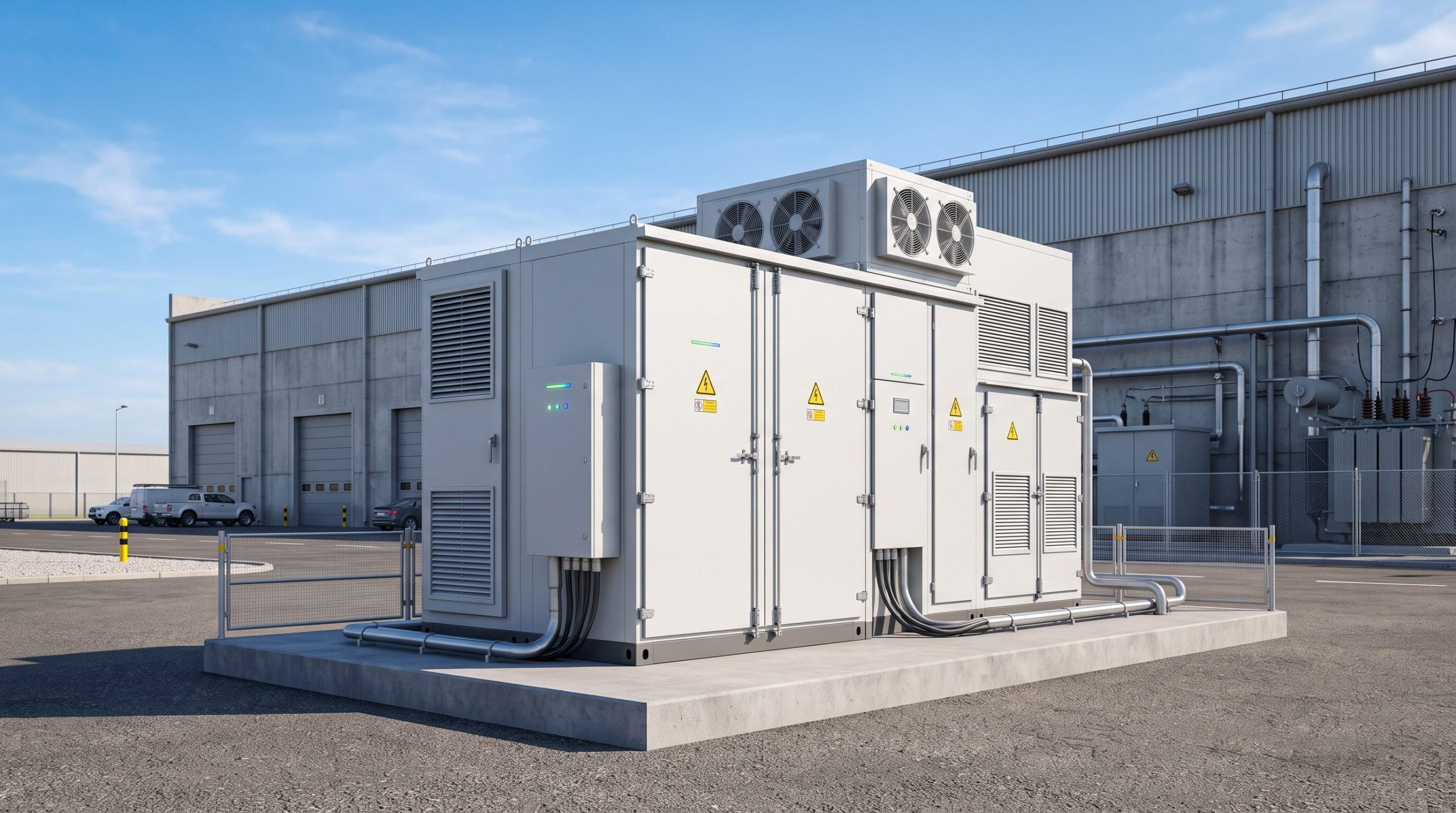
The technical backbone of any industrial microgrid battery is a tightly integrated stack of lithium-ion cells, a Battery Management System (BMS), a bi-directional PCS, and a supervisory EMS. At the cell level, Tier-1 LFP (Lithium Iron Phosphate) chemistry dominates the commercial and industrial (C&I) segment due to its superior thermal stability, long cycle life, and cost-per-kWh advantage over NMC variants.
PCS Integration and Bi-Directional Conversion
The PCS is the gatekeeper between the DC battery stack and the AC microgrid. Modern industrial microgrid batteries utilize high-efficiency, bi-directional PCS units with efficiencies exceeding 98.5%. These units must support grid-forming and grid-following modes, enabling seamless transition to islanded operation during utility outages. Advanced PCS architectures also provide reactive power compensation and harmonic filtering, which are critical for facilities with heavy inductive loads such as welding equipment or large motors.
BMS and Cell Balancing
The BMS is responsible for cell-level monitoring, state-of-charge (SoC) estimation, state-of-health (SoH) tracking, and active balancing. A robust BMS ensures that the Depth of Discharge (DoD) is managed within safe limits—typically 90% for LFP in C&I applications—to maximize cycle life without compromising usable capacity. Active balancing circuits reduce thermal drift and extend the operational lifespan of the battery pack by equalizing voltage across series-connected cells.
Thermal Control: Liquid Cooling vs. Air Cooling in Industrial Microgrid Batteries
Thermal management is the single most critical factor influencing the safety, efficiency, and longevity of an industrial microgrid battery. While air cooling remains common in smaller residential systems, liquid cooling has become the standard for high-density C&I and utility-scale applications.
Liquid Cooling Thermal Control
Liquid cooling systems circulate a glycol-water mixture through cold plates integrated into the battery modules. This approach offers a heat transfer coefficient up to 3,000 times higher than air, enabling precise temperature control within ±2°C across the entire pack. The benefits are quantifiable:
- Extended Cycle Life: Reducing cell temperature by 10°C can double the cycle life of LFP cells.
- Higher C-Rates: Liquid cooling supports continuous 0.5C to 1C charge/discharge rates without derating.
- Uniformity: Minimizes temperature gradients, preventing localized degradation and thermal runaway propagation.
- Footprint Efficiency: Higher energy density per square meter, critical for space-constrained industrial sites.
Air Cooling Limitations
Air cooling relies on fans and HVAC systems to dissipate heat. While simpler and lower in CapEx, air cooling struggles with high ambient temperatures, dust ingress in industrial environments, and the high heat flux of dense battery packs. For a 1 MWh+ industrial microgrid battery, liquid cooling is the recommended specification for ensuring UL 9540 compliance and long-term reliability.
Technical Specifications and Compliance Standards
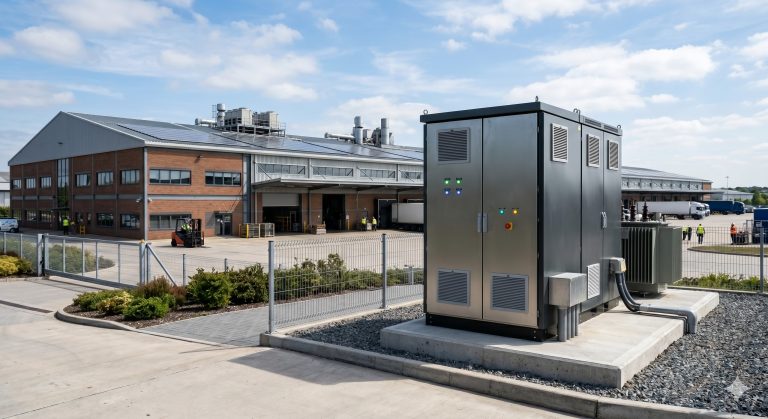
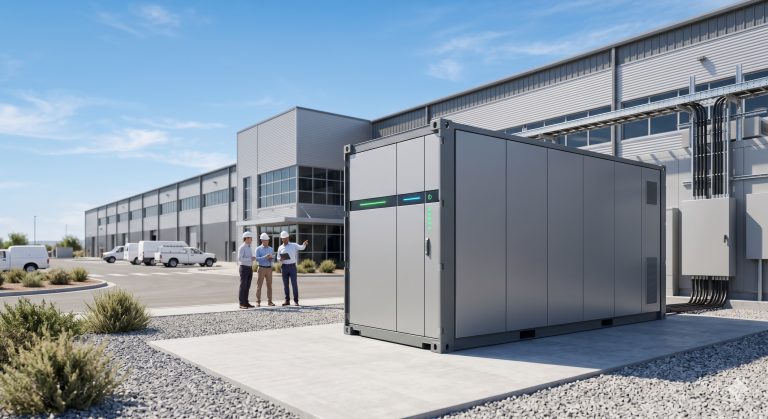
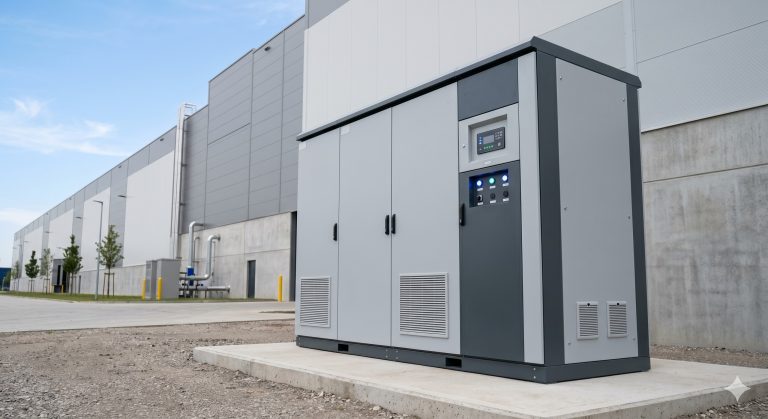
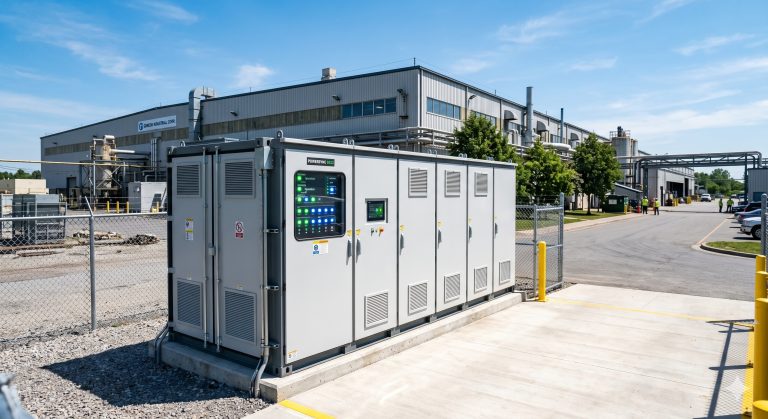
When sourcing an industrial microgrid battery, procurement teams must evaluate a matrix of technical parameters against international safety and performance standards. The table below outlines the key specifications for a typical 500 kWh commercial cabinet and a 2.5 MWh containerized system.
| Key Parameter | 500 kWh Cabinet Specification | 2.5 MWh Container Specification |
|---|---|---|
| Battery Chemistry | Tier-1 LFP (Lithium Iron Phosphate) | Tier-1 LFP (Lithium Iron Phosphate) |
| Nominal Capacity | 500 kWh | 2.5 MWh (expandable to 5 MWh) |
| Cycle Life | >8,000 cycles @ 90% DoD, 25°C | >8,000 cycles @ 90% DoD, 25°C |
| Round-Trip Efficiency | ≥92% (DC-DC) | ≥92% (DC-DC) |
| Depth of Discharge (DoD) | 90% | 90% |
| Thermal Management | Liquid Cooling (Glycol-Water) | Liquid Cooling (Glycol-Water) |
| PCS Rated Power | 250 kW (Bi-directional) | 1.25 MW (Bi-directional) |
| Grid Synchronization | <20 ms | <20 ms |
| Communication Protocol | Modbus TCP, IEC 61850 | Modbus TCP, IEC 61850 |
| Ingress Protection | IP54 (Outdoor) | IP55 (Containerized) |
| Safety Certifications | IEC 62619, UL 9540, UN38.3, CE | IEC 62619, UL 9540, UN38.3, CE |
| Operating Temperature | -20°C to +55°C | -20°C to +55°C |
| Design Life | 15 years | 15 years |
| Fire Suppression | Aerosol + Perfluorohexanone (Novec 1230) | Aerosol + Perfluorohexanone (Novec 1230) |
| Warranty | 10 years / 8,000 cycles | 10 years / 8,000 cycles |
Compliance is non-negotiable. Ensure your supplier provides certifications for IEC 62619 (safety of industrial batteries), UL 9540 (energy storage systems), UN38.3 (transportation), and CE marking for European deployments. Factory Acceptance Tests (FAT) and Site Acceptance Tests (SAT) should verify capacity, round-trip efficiency, and emergency shutdown protocols.
Commercial ROI and Grid Support: LCOE and Peak Shaving Economics
The financial case for an industrial microgrid battery is built on three revenue streams: peak shaving, demand response, and energy arbitrage. In regions with demand charges exceeding $20/kW, peak shaving alone can yield a payback period of 3 to 5 years.
LCOE Analysis
The Levelized Cost of Storage (LCOS) for a Tier-1 LFP industrial microgrid battery ranges from $0.08 to $0.15 per kWh over a 10-year horizon, assuming 8,000 cycles at 90% DoD and a round-trip efficiency of 92%. This is significantly lower than the marginal cost of diesel generation, which often exceeds $0.30/kWh.
Grid Support and Demand Response
Industrial microgrid batteries equipped with advanced EMS can participate in utility demand response programs, curtailing load during grid stress events in exchange for incentive payments. Fast grid synchronization (<20 ms) enables the battery to provide frequency regulation and voltage support, transforming the asset from a cost center into a revenue-generating grid asset.
Deployment Scenarios: From EV Supercharging to Industrial Parks
The versatility of industrial microgrid batteries is demonstrated across a range of deployment scenarios:
- EV Supercharging Hubs: Pairing a 1 MWh BESS with a 480 kW DC fast charger eliminates demand charge spikes and enables off-grid charging during peak hours.
- Industrial Parks: Modular cabinets can be paralleled to create multi-megawatt microgrids, providing energy independence and resilience for entire manufacturing zones.
- Data Centers: Liquid-cooled BESS provides ride-through power and power quality conditioning, reducing reliance on diesel rotary UPS systems.
- Cold Storage Facilities: Peak shaving during compressor start-up cycles reduces demand charges and extends equipment life.
- Remote Mining Operations: Off-grid microgrids with PV and BESS replace diesel gensets, cutting fuel logistics costs by up to 70%.

Conclusion: Strategic Procurement for Industrial Microgrid Batteries
The industrial microgrid battery is no longer a discretionary investment—it is a strategic asset for managing energy costs, ensuring operational resilience, and achieving sustainability targets. When sourcing, prioritize Tier-1 LFP cells, liquid cooling thermal control, and UL 9540 / IEC 62619 certified systems. Evaluate suppliers on their ability to provide turnkey delivery, local O&M support, and advanced EMS integration for demand response and VPP participation. By adopting a data-driven LCOE framework and rigorously auditing technical specifications, C&I buyers can secure a 10-to-15-year asset that delivers measurable financial and operational returns.