Introduction: The New Economics of Commercial Power
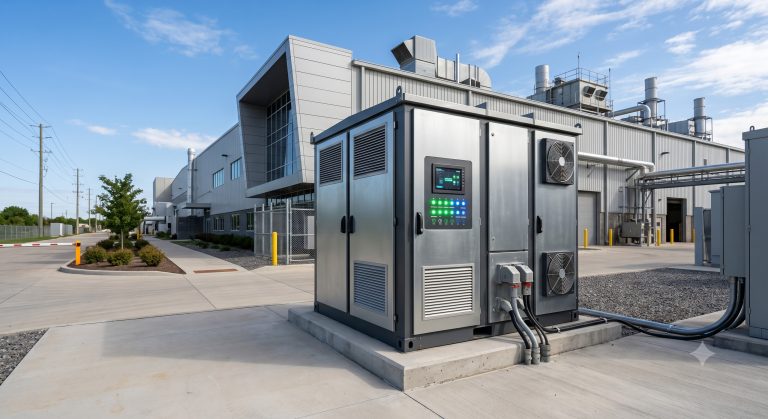
For today’s commercial and industrial (C&I) facility managers, the electricity bill is no longer a fixed operational cost—it is a volatile, high-stakes financial variable. With industrial peak demand charges rising and grid instability becoming a boardroom concern, B2B commercial energy solutions have shifted from a sustainability gesture to a core infrastructure investment. This guide provides an engineering-led procurement framework for evaluating, specifying, and deploying Commercial & Industrial Battery Energy Storage Systems (C&I BESS).
Core Architecture: PCS, BMS, and the Power Stack
The Bi-Directional Power Conversion System (PCS)
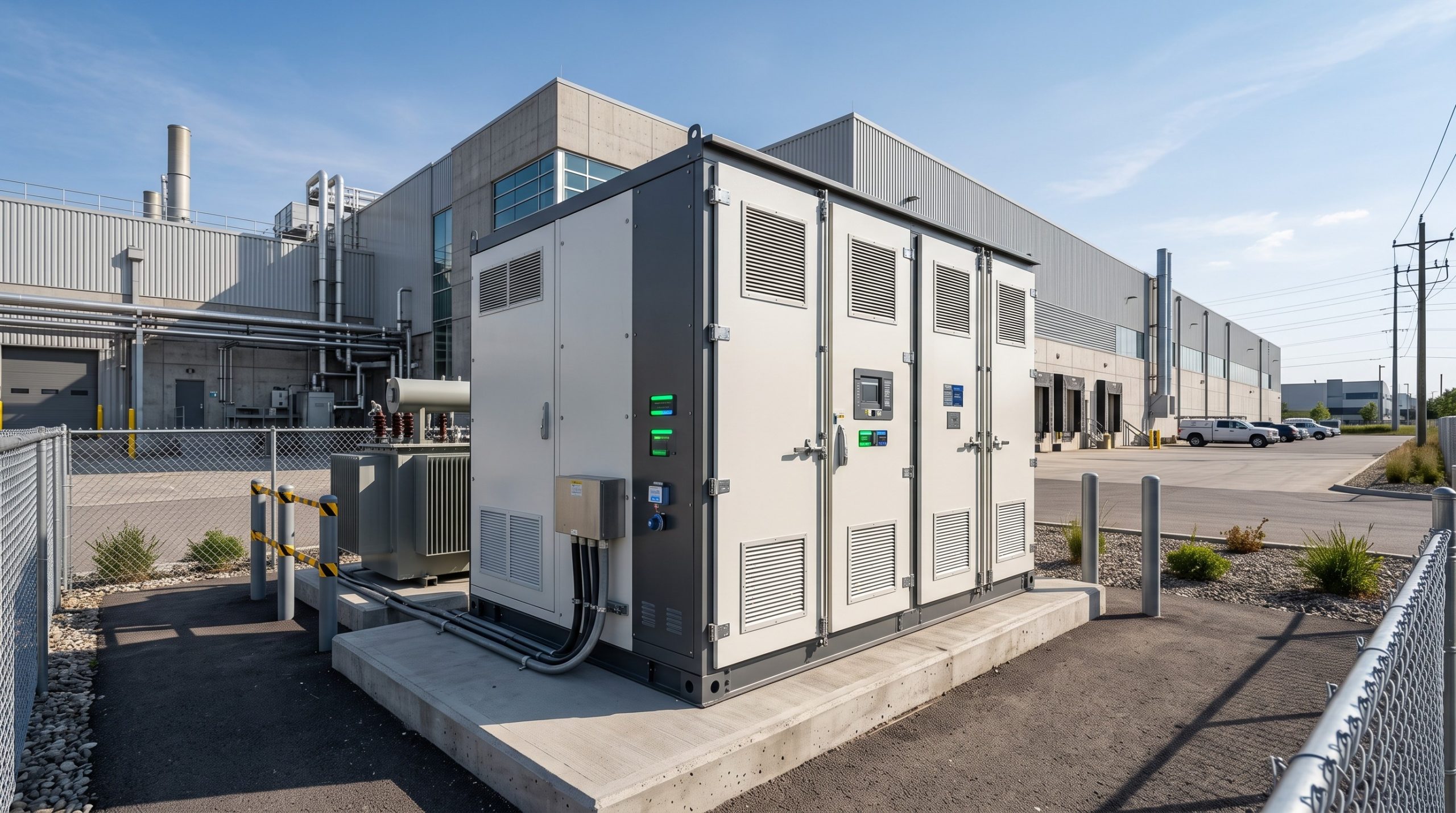
At the heart of any commercial energy storage solution is the Power Conversion System (PCS). Unlike a simple inverter, a grid-tied PCS manages bi-directional energy flow, performs active and reactive power compensation, and executes seamless grid-to-off-grid transitions in under 20 milliseconds. For B2B energy storage, the PCS must be rated for 100% unbalanced load handling and support parallel expansion for multi-megawatt micro-grids.
Battery Management System (BMS) and Cell Balancing
The Battery Management System (BMS) is the intelligence layer that ensures safety, longevity, and performance. A Tier-1 BMS for commercial energy storage must perform active cell balancing, State of Charge (SoC) estimation with ±3% accuracy, and State of Health (SoH) monitoring. The BMS communicates via CAN or Modbus TCP to the Energy Management System (EMS), enabling precision dispatch for peak shaving and demand response.
Liquid Cooling vs. Air Cooling: Thermal Control
Thermal management is the single largest determinant of system lifespan. Liquid cooling maintains cell temperature differentials within ±2°C, compared to ±8°C for air cooling. This precision reduces degradation and allows for higher Depth of Discharge (DoD) without compromising safety. For high-cycle commercial applications, liquid-cooled C&I BESS is the new standard.
Technical Specifications & Compliance Ledger
The following table represents the baseline engineering metrics required for a bankable B2B commercial energy solution. All parameters must be validated through third-party Factory Acceptance Testing (FAT) and Site Acceptance Testing (SAT).
| Key Parameter | Technical Specification |
|---|---|
| Battery Chemistry | Tier-1 LFP (Lithium Iron Phosphate) |
| System Capacity Range | 100 kWh to 5 MWh (Modular) |
| Cycle Life | >8000 cycles @ 90% DoD, 25°C |
| Round-Trip Efficiency | ≥95% (DC-DC), ≥88% (AC-AC) |
| Depth of Discharge (DoD) | 90% (Standard), 100% (Emergency) |
| Thermal Management | Liquid Cooling (Intelligent Thermal Control) |
| Communication Protocol | CAN 2.0, Modbus TCP/IP, IEC 61850 |
| Safety Standards | IEC 62619, UL 9540, UL 1973, CE, UN38.3 |
| Ingress Protection | IP54 (Cabinet), IP67 (Battery Pack) |
| Operating Temperature | -20°C to +55°C |
| Fire Suppression | Multi-level (Aerosol + Water Mist) |
| Grid Support Functions | Peak Shaving, Demand Response, VPP, Frequency Regulation |
Commercial ROI, LCOE, and Grid Support
Peak Shaving and Demand Charge Management
The primary revenue stream for commercial energy storage is peak shaving. By discharging during high-tariff periods, a 500 kWh system can reduce a facility’s monthly demand charge by 30-50%. The Levelized Cost of Storage (LCOS) must be calculated against the facility’s specific load curve.
Demand Response and VPP Readiness
Modern C&I BESS must be Virtual Power Plant (VPP) ready. Through smart EMS dispatch, the system can aggregate with other distributed assets to provide frequency regulation and grid support services. Utilities increasingly offer lucrative incentive programs for fast-responding storage assets.
Round-Trip Efficiency (RTE) and Cycle Life Economics
Round-trip efficiency (RTE) directly impacts the arbitrage spread. A system with 95% RTE loses only 5% of energy per cycle, whereas a 85% RTE system loses 15%. Over 6,000 cycles, this difference compounds dramatically. Tier-1 LFP cells with >8000 cycles @ 90% DoD are now the industry benchmark for commercial energy storage.
Deployment Scenarios: From Industrial Parks to EV Supercharging
Industrial Park Energy Independence
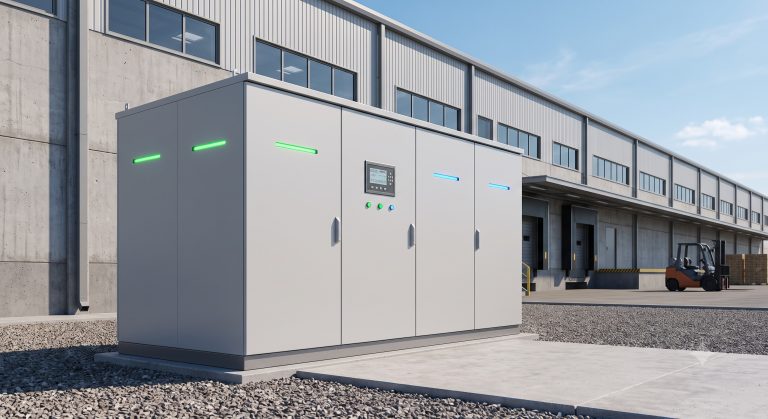
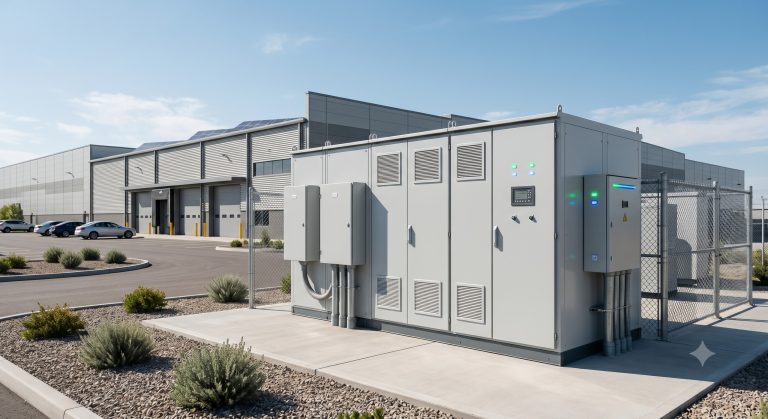
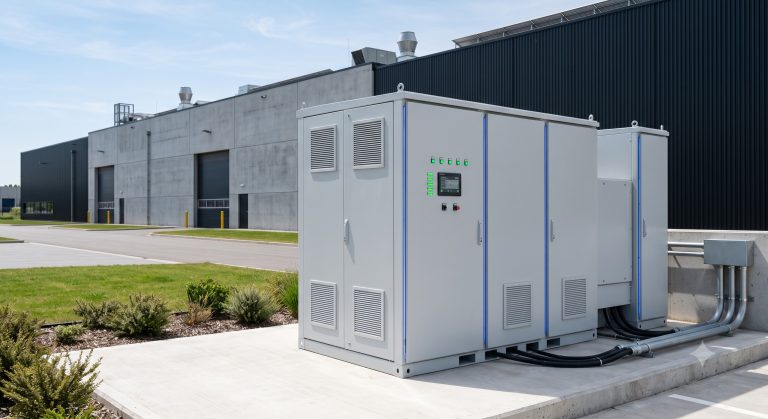
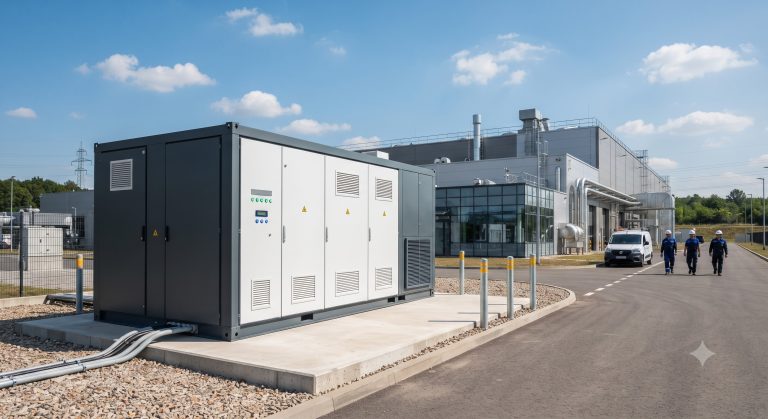
Modular C&I BESS cabinets can be paralleled to achieve MWh-scale capacity, enabling industrial parks to achieve energy independence and hedge against grid outages. The containerized outdoor installation reduces civil works and accelerates deployment.
PV-Storage-Charging (光储充) Synergy
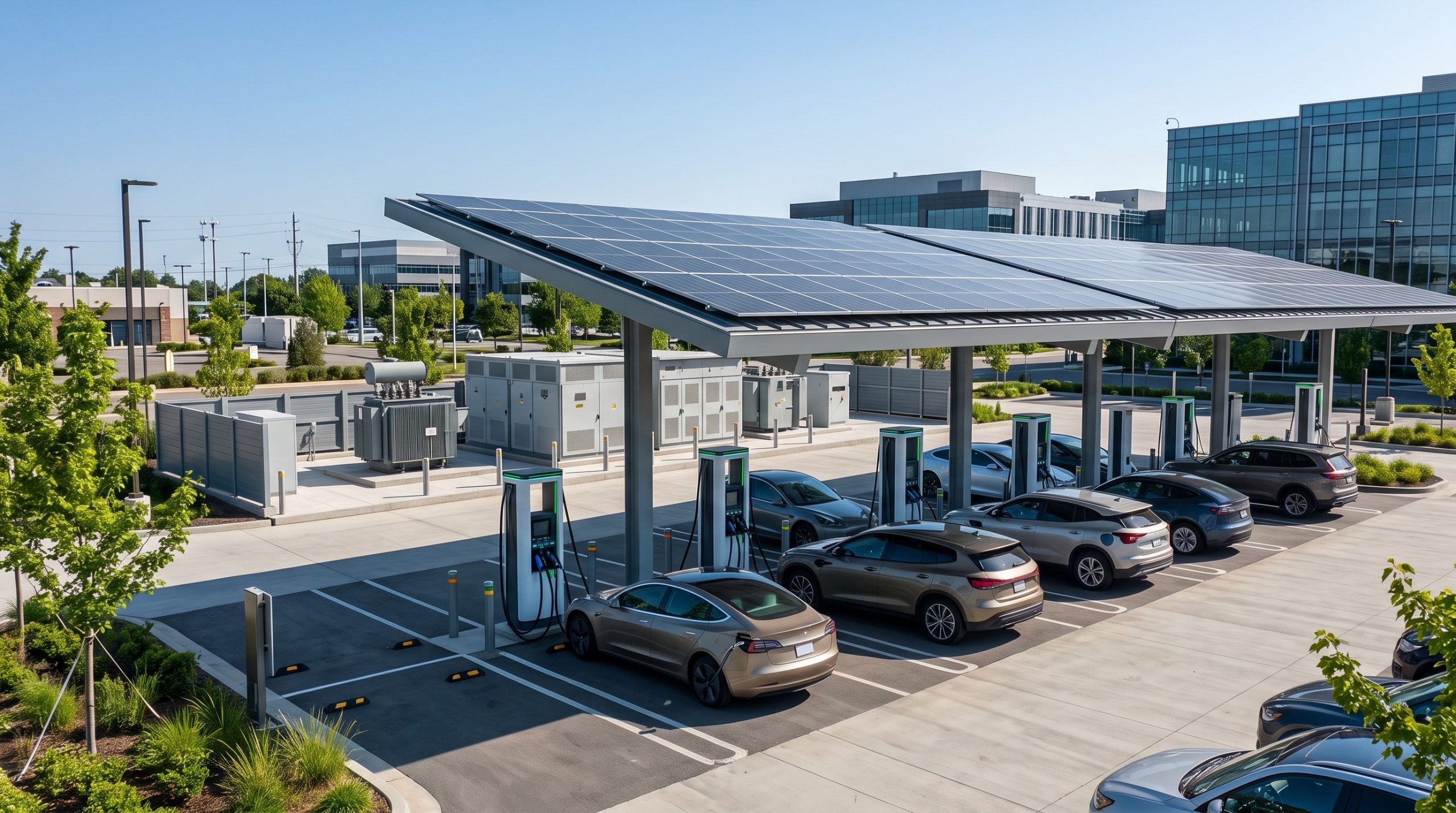
The integration of solar PV, commercial energy storage, and EV supercharging is the fastest-growing application for B2B energy solutions. By buffering PV intermittency and shaving supercharger peaks, the BESS prevents demand charge spikes while maximizing renewable self-consumption.
Replacing Diesel Gensets
For facilities requiring backup power, C&I BESS outperforms diesel generators on total cost of ownership, emissions, and response time. With UL 9540 and IEC 62619 compliance, B2B commercial energy solutions can be deployed indoors or outdoors with full fire suppression and insurance compliance.
Conclusion: Your Procurement Action Plan
Sourcing B2B commercial energy solutions requires a data-driven approach. Prioritize liquid-cooled architectures, verify Tier-1 LFP cell provenance, demand UL 9540 and UN38.3 certifications, and model your LCOS against actual load data. The right C&I BESS partner will provide turnkey delivery, local O&M support, and a performance warranty that protects your investment for 15+ years.