Wantage BESS Lithium Cell Chemistry: Expert FAQ for B2B Energy Storage Projects
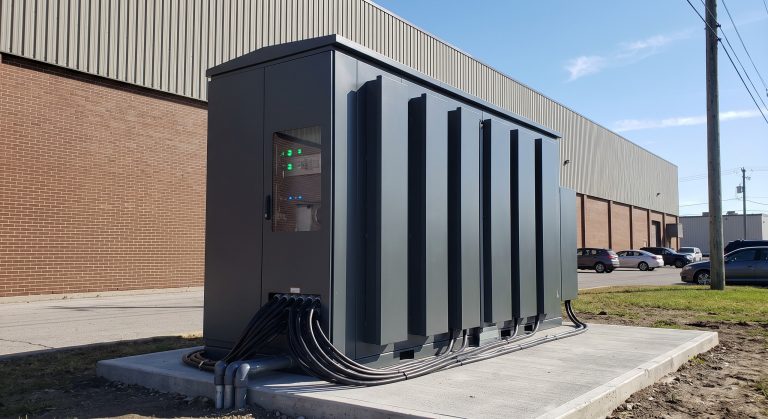
As a Tier-1 BESS manufacturer, Wantage primarily deploys lithium iron phosphate (LFP) cell chemistry across its commercial and industrial energy storage cabinets. This FAQ addresses the most common pre-sales and post-sales technical questions about Wantage’s LFP cell selection, degradation profile, cycle life, thermal management, and system integration. Whether you are sizing a peak shaving project, evaluating turnkey lead times, or planning grid-tie and off-grid configurations, the answers below provide the definitive specifications procurement teams and plant engineers need.
Frequently Asked Questions
- Q1: What type of lithium cell chemistry does Wantage primarily use in its BESS cabinets?
- Wantage primarily uses lithium iron phosphate (LFP) cell chemistry, specifically Tier-1 prismatic LFP cells with a nominal voltage of 3.2V and capacities ranging from 280Ah to 314Ah. LFP is selected over NMC for stationary energy storage because its olivine crystal structure provides superior thermal stability, a longer cycle life, and zero cobalt content. This chemistry choice directly supports Wantage’s 10-year performance warranty and enables safe operation in high-ambient industrial environments.
- Q2: What is the maximum cycle life and depth of discharge (DoD) of Wantage LFP BESS?
- The maximum cycle life of Wantage LFP BESS is 8,000 cycles at 80% depth of discharge (DoD) under standard 25°C operating conditions, with a capacity retention of 70% at end-of-warranty. This is achieved through advanced liquid cooling and precise BMS cell balancing, which minimize cell-to-cell divergence. For lower DoD profiles such as 60%, cycle life can exceed 10,000 cycles, making LFP the most cost-effective chemistry for daily cycling commercial arbitrage.
- Q3: How does Wantage prevent thermal runaway in its LFP battery cabinets?
- Wantage prevents thermal runaway through a multi-tier safety architecture: Tier-1 LFP cells with high thermal runaway onset temperatures (above 200°C), cell-level fusing, module-level gas and smoke detection, pack-level liquid cooling, and cabinet-level aerosol fire suppression. The system also includes an active BMS that triggers early isolation and disconnect upon detecting abnormal voltage, current, or temperature deviations. This layered design meets UL 9540A and IEC 62619 safety standards for stationary storage.
- Q4: What cooling system does Wantage use for its LFP BESS, and why?
- Wantage uses an advanced liquid cooling system with a closed-loop coolant circuit and intelligent variable-speed pumps to maintain cell temperature uniformity within ±3°C. Liquid cooling is preferred over air cooling because it extends LFP cycle life by reducing thermal degradation, enables higher power density in a smaller footprint, and supports continuous high-rate discharging for EV supercharging integration. The cooling system is designed for IP65 outdoor enclosures and operates reliably in ambient temperatures from -20°C to 50°C.
- Q5: Can Wantage BESS be scaled in parallel for larger MWh projects?
- Yes, Wantage BESS is modular and supports parallel cabinet connectivity through custom DC busbar linkage, allowing scalability from 100kWh to multi-MWh installations. Each cabinet includes an independent BMS and PCS, and the master EMS coordinates charge/discharge dispatch across all paralleled units. This modular architecture simplifies capacity upgrades, reduces initial capital outlay, and ensures N+1 redundancy for mission-critical commercial facilities.
- Q6: How does the Wantage BMS monitor and balance LFP cells after installation?
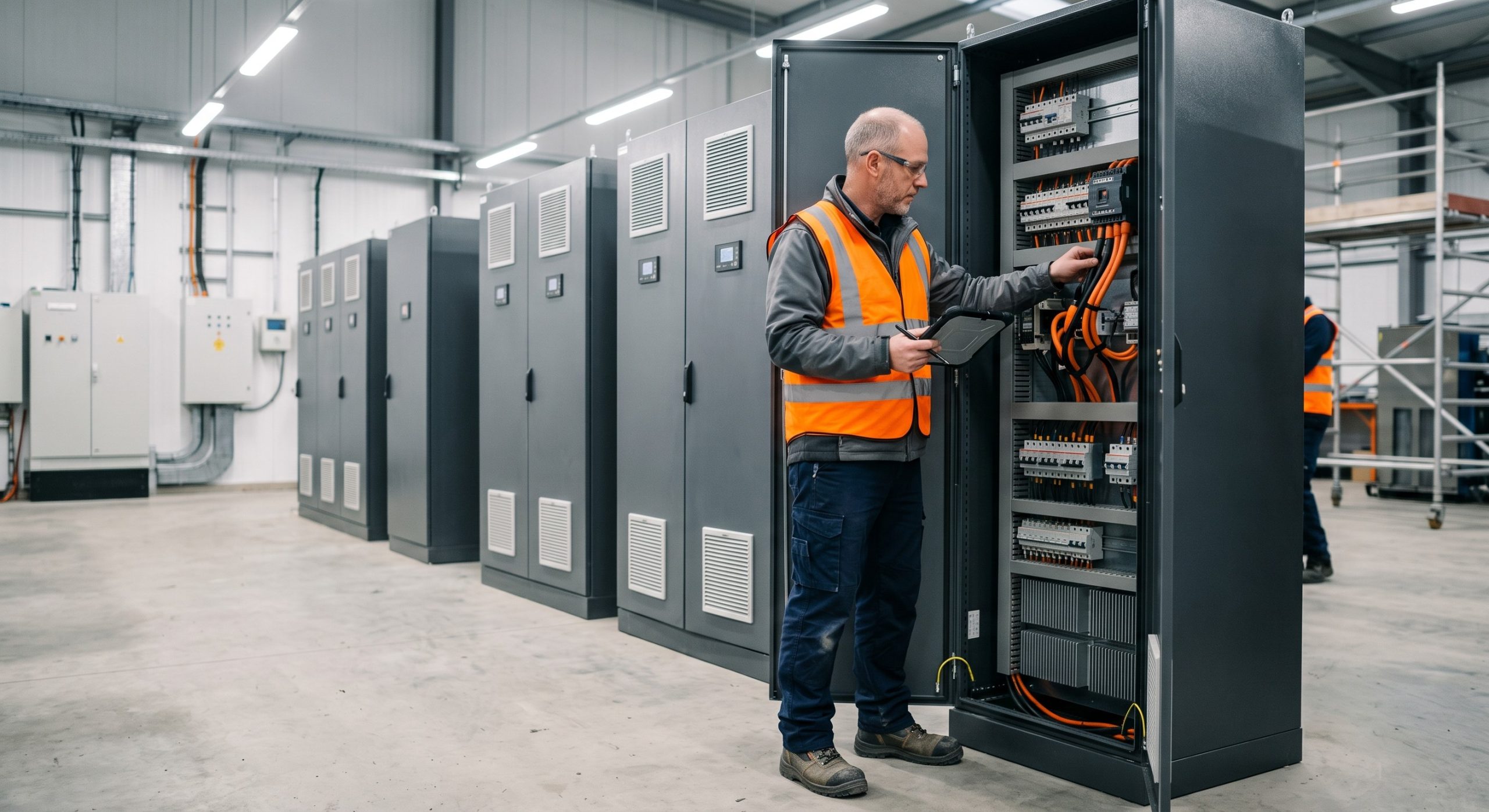
- The Wantage active BMS continuously monitors cell voltage, current, temperature, and state-of-charge (SOC) at 1-second intervals, and performs active cell balancing to within 10mV across the entire pack. Post-sales monitoring is available through a local EMS dashboard and a secure cloud API, enabling remote diagnostics, firmware updates, and predictive maintenance alerts. This level of monitoring reduces on-site O&M visits and ensures LFP cells remain within optimal degradation limits throughout the 10-year warranty period.
- Q7: What is the typical ROI and LCOE for a Wantage LFP BESS in commercial peak shaving?
- The typical ROI for a Wantage LFP BESS in commercial peak shaving is 4 to 6 years, depending on local demand charges and arbitrage spreads, with a levelized cost of energy (LCOE) of approximately $0.05 to $0.08 per kWh over a 10-year lifespan. LFP chemistry contributes to this favorable LCOE because its 8,000-cycle life and low degradation rate reduce replacement costs and downtime. Wantage provides a free ROI calculation tool that models your facility’s load profile, demand charges, and utility rate structure.
- Q8: Does Wantage BESS support both grid-tie and off-grid configurations?
- Yes, Wantage BESS supports both grid-tie and off-grid configurations through its bi-directional power conversion system (PCS) and EMS. In grid-tie mode, the system performs peak shaving, demand response, and seamless transfer to backup power within 20ms. In off-grid mode, it forms a micro-grid with solar arrays and diesel generators, enabling 100% renewable dispatch and diesel fuel reduction. This flexibility makes Wantage suitable for industrial facilities, EV supercharging hubs, and remote commercial edge deployments.